Definition
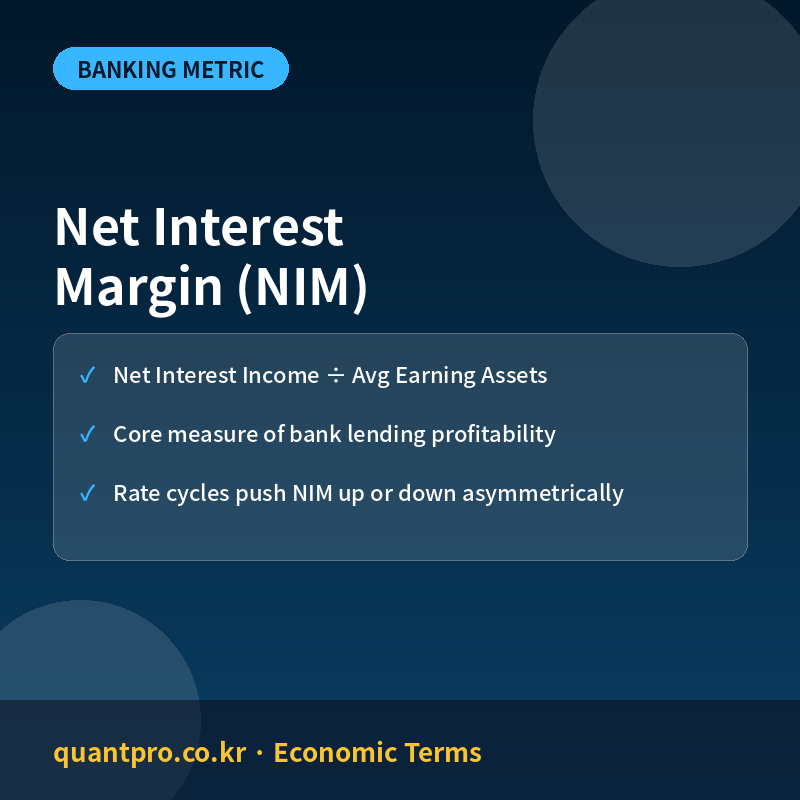
Net interest margin (NIM) is a profitability ratio used mainly for banks and other lenders that measures the difference between the interest income a bank earns on its loans and investments and the interest it pays out on deposits and other funding, expressed as a percentage of its average interest-earning assets. NIM is one of the most closely watched metrics in bank earnings reports because it captures the core profitability of a bank’s lending and funding operations, separate from fees or trading income.
How It’s Calculated
The formula is: Net Interest Margin = Net Interest Income / Average Earning Assets. Net interest income is interest income (from loans, securities, and other earning assets) minus interest expense (paid on deposits, borrowings, and other funding). Average earning assets is the average balance, typically over a quarter or year, of assets that generate interest, such as loans and investment securities. For example, if a bank earns $500 million in interest income and pays $200 million in interest expense, giving $300 million in net interest income, on average earning assets of $10 billion, its NIM is $300 million / $10 billion = 3.0%.
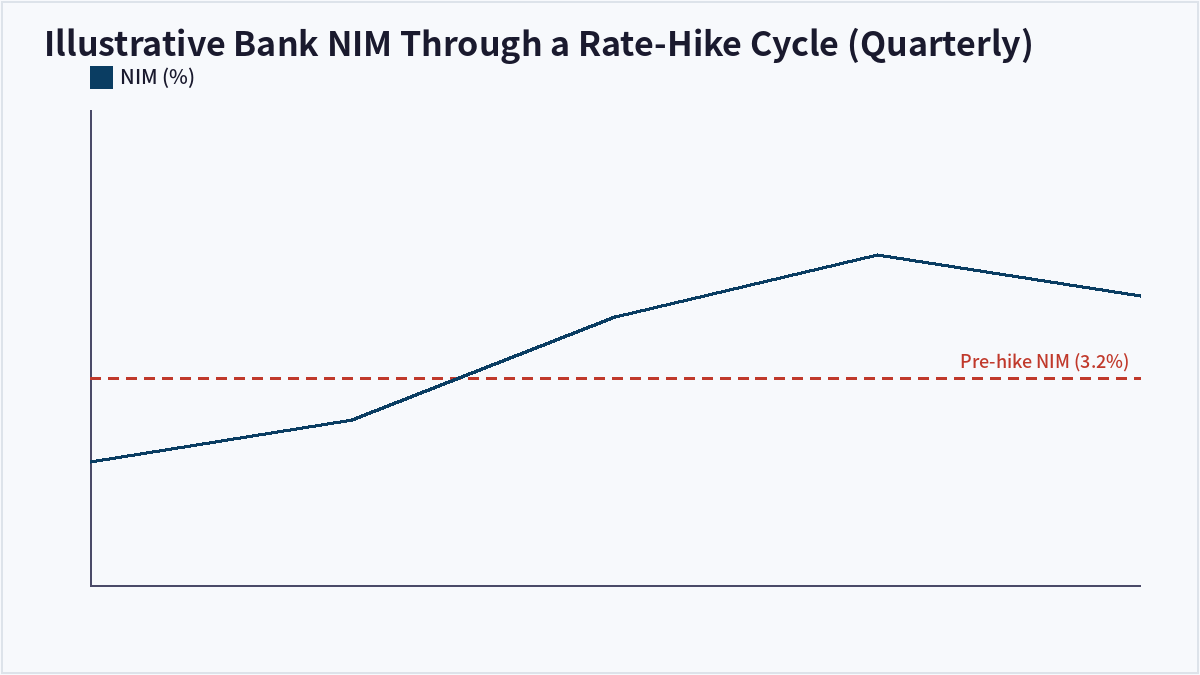
In an illustrative rate-hike cycle, a bank’s NIM might move from 3.0% before the cycle begins, up to 3.1% as its loan yields start repricing higher, peaking around 3.5% a few quarters in because loan rates reprice faster than deposit rates, and then settling back to about 3.4% as deposit costs catch up and competition for deposits pushes funding costs higher.
Why It Matters
NIM matters because it directly drives a bank’s core earnings: a wider margin generally means more profit per dollar of assets, all else equal, while a narrower margin compresses profitability even if loan volume stays the same. Interest rate cycles move NIM asymmetrically because a bank’s assets (loans) and liabilities (deposits) reprice at different speeds. When central banks raise rates, banks with loans that reprice quickly (like variable-rate loans) but sticky, slow-to-reprice deposits often see NIM expand initially. When rates fall, the same dynamic can compress NIM if loan yields drop faster than deposit costs. Investors and analysts watch NIM trends closely as a leading indicator of bank earnings, and it is one of the first things scrutinized in quarterly bank earnings calls.
Comparison
| Rate Environment | Typical Effect on NIM | Underlying Driver |
|---|---|---|
| Rates rising (early) | NIM tends to widen | Loan yields reprice faster than deposit costs |
| Rates rising (late) | NIM growth slows or reverses | Deposit competition pushes funding costs up |
| Rates falling (early) | NIM tends to narrow | Loan yields drop faster than deposit costs |
| Rates falling (late) | NIM stabilizes | Deposit rates eventually also decline |
Frequently Asked Questions
What is considered a healthy net interest margin?
There is no universal threshold, since NIM varies by bank business model and country, but for many traditional commercial banks a NIM in the range of roughly 3% to 4% is often viewed as healthy. Larger, more diversified banks with significant fee-based or trading revenue may operate with lower NIM without it signaling weakness, while smaller community banks reliant on lending typically need a higher NIM to be profitable.
Why doesn’t NIM move immediately when central banks change rates?
Loans and deposits reprice on different schedules. Many loans have fixed terms or reset periodically, and deposits — especially checking and savings accounts — often lag market rates because banks are slow to raise what they pay depositors. This repricing lag is exactly why NIM tends to expand or contract gradually over several quarters rather than instantly.
How is NIM different from net interest spread?
Net interest spread is simply the difference between the average yield earned on interest-earning assets and the average rate paid on interest-bearing liabilities, calculated as a difference of two rates. NIM, by contrast, divides net interest income by average earning assets, which also folds in the effect of assets funded by non-interest-bearing sources (like equity), so the two figures are related but not identical.
Can NIM be negative?
In principle, NIM would only turn negative if a bank’s interest expense exceeded its interest income, which is rare for a functioning bank since it would imply the core lending business is losing money before overhead. It is far more common to see NIM merely compress to a thinner but still positive level during unfavorable rate or competitive environments.
Key Takeaways
Net interest margin distills a bank’s lending profitability into one ratio — net interest income divided by average earning assets — and it moves with interest rate cycles because loans and deposits reprice at different speeds, typically widening early in a rate-hike cycle and narrowing early in a rate-cut cycle before stabilizing. Because it drives core bank earnings, NIM is one of the first metrics investors check each quarter. This article is for informational purposes only and does not constitute investment advice.

QuantPro: AI Finds the Trade Before You Do
From AI-powered chart analysis to real-time market intelligence — everything a serious investor needs, in one platform.
- Automated AI chart analysis with precision trend timing
- Bull Radar: real-time visualization of geopolitical & economic shifts
- Live market-moving news and insights, curated for you
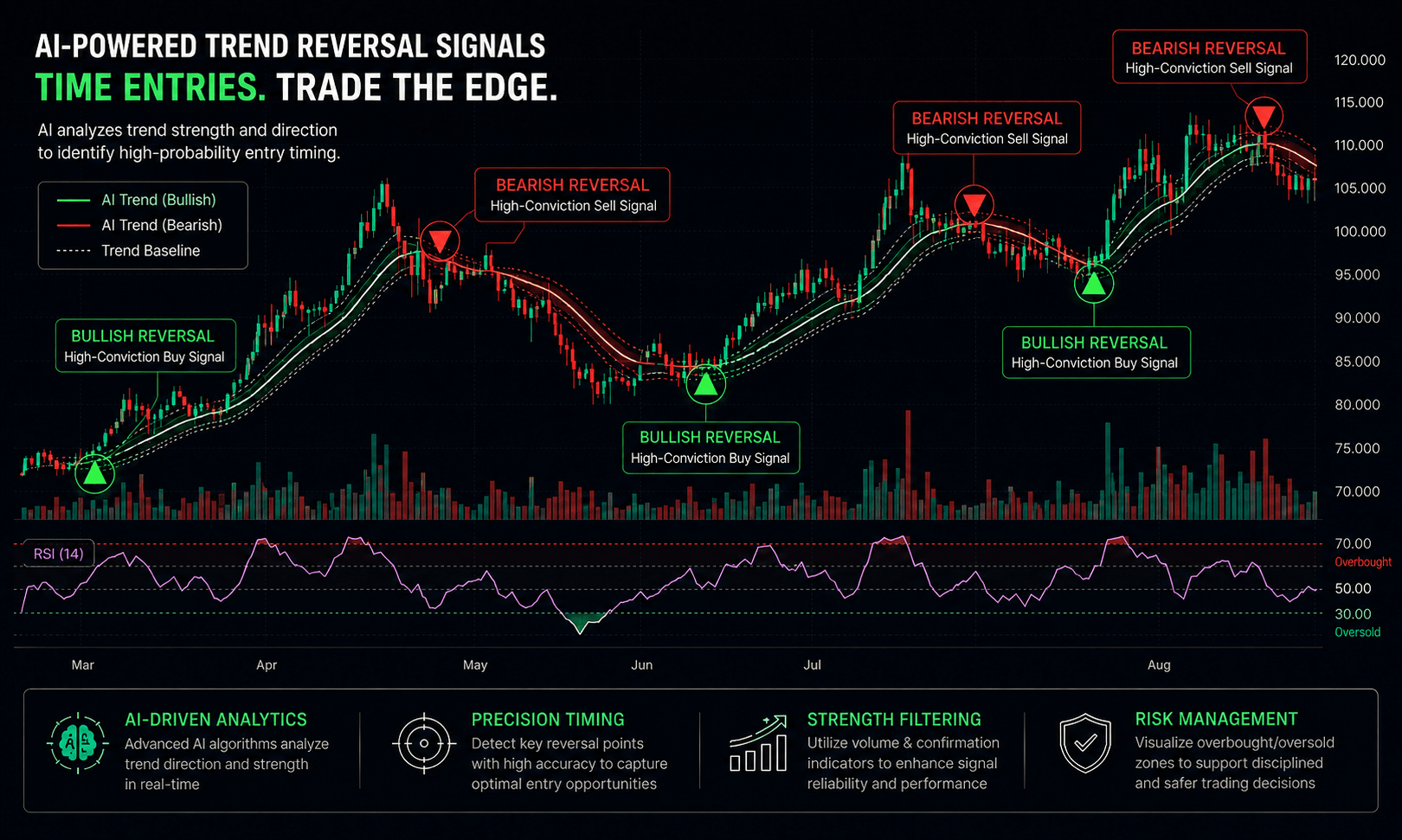
Bull Wave / Bear Wave Forecast Model
Engineered to help you read market direction and momentum faster than the crowd.
- Instantly separate bullish momentum from bearish pressure
- Pinpoint high-probability entry zones with confidence
- Chart signals clear enough for beginners, sharp enough for pros
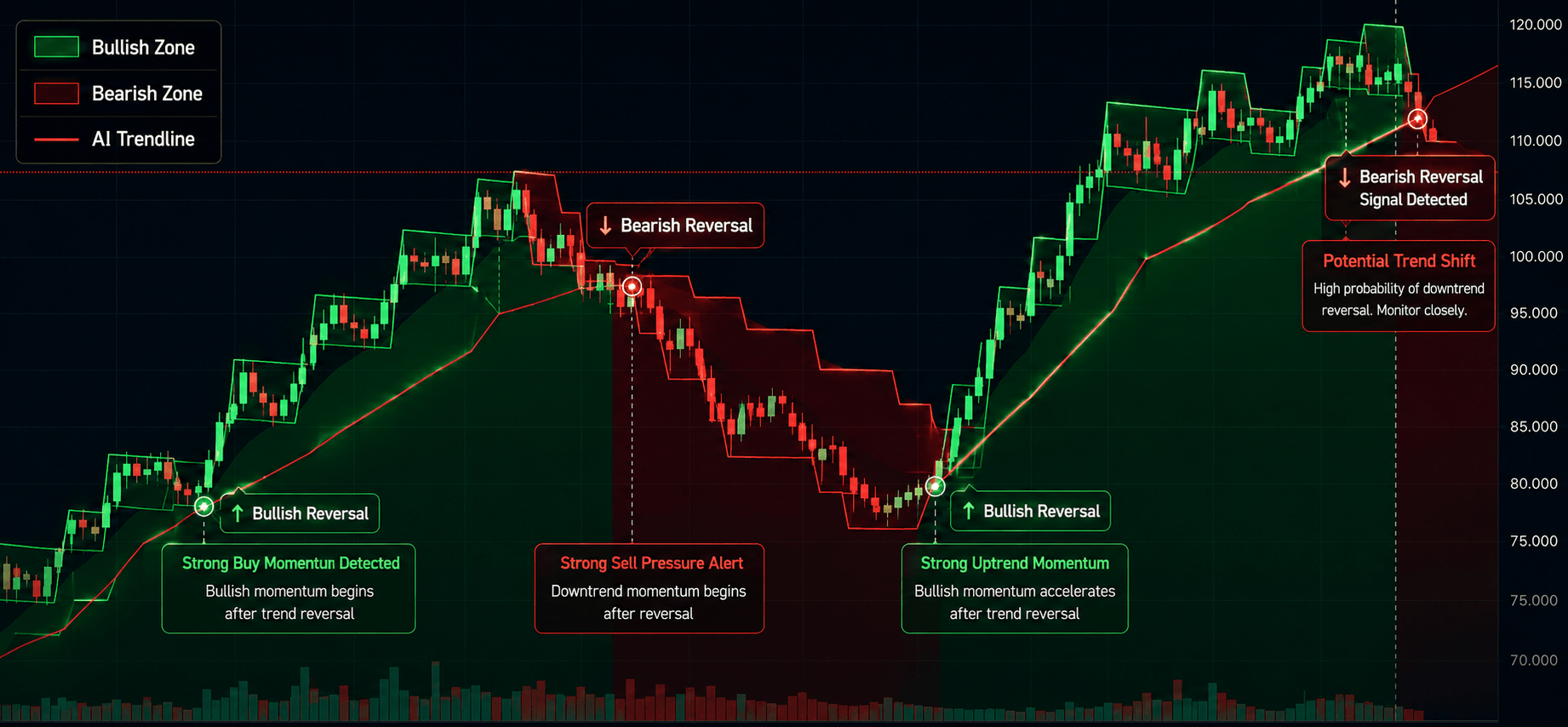
Winning Pattern Detection
Instantly surfaces the high-probability setups that repeat across the charts — a trusted edge for timing your entries and exits.
- Spot momentum building in real time
- Catch trend-reversal points before they break
- Built for active traders who need results, not theory

AI Live Economic Dashboard
AI analyzes real-time market data — turning complex, global investment flows into clear insight in seconds.
- Track global stock markets in real time
- See exactly which assets are strong — and which are fading
- Watch how geopolitical events move the markets
About the Author