What Is a Strangle?
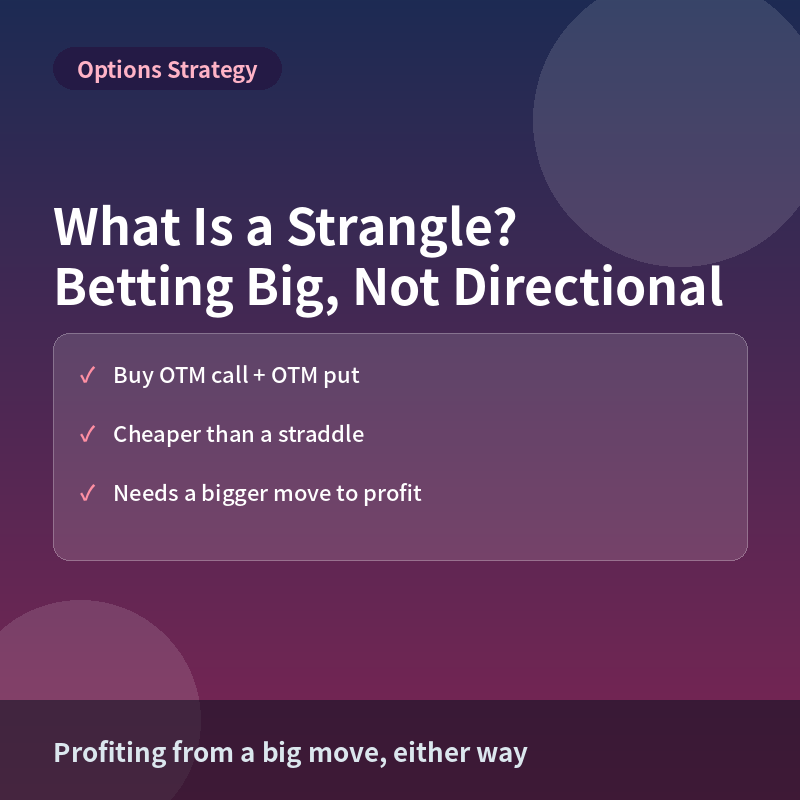
A strangle is an options strategy built by buying an out-of-the-money (OTM) call option and an out-of-the-money put option on the same underlying asset, with the same expiration date but different strike prices. It profits when the underlying makes a large move in either direction, without requiring the trader to predict which way.
How the Payoff Works
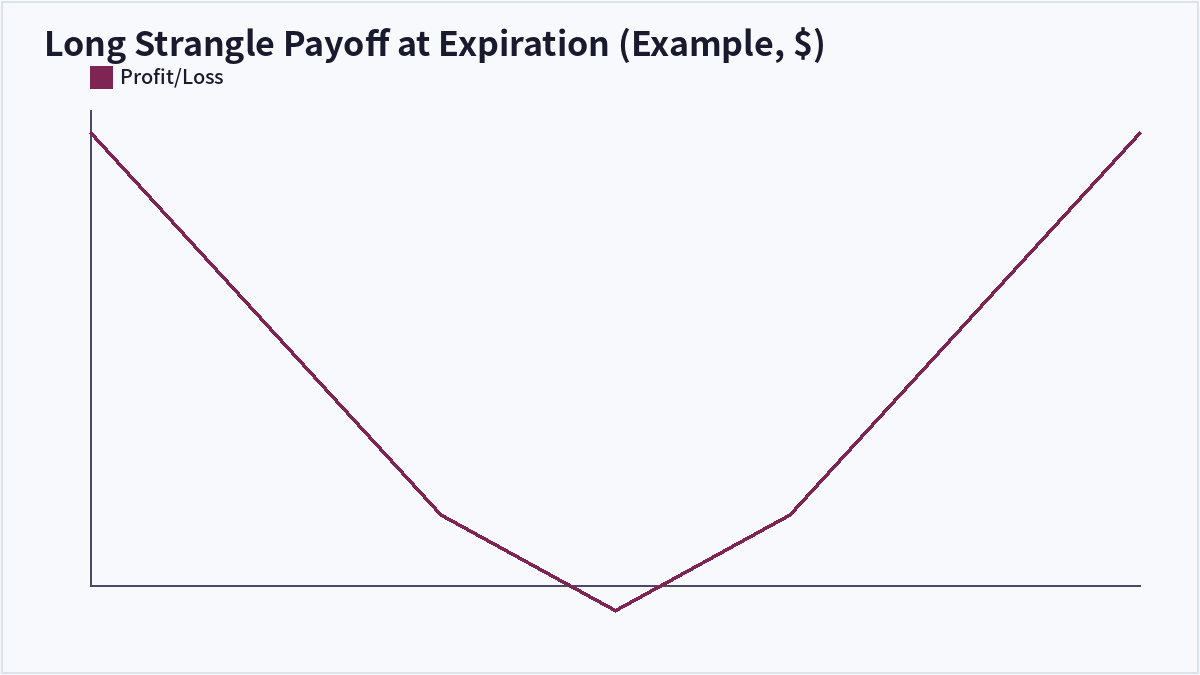
If the stock stays between the two strike prices through expiration, both options can expire worthless and the trader loses the total premium paid. If the stock moves sharply above the call strike or below the put strike, the corresponding option gains intrinsic value that can exceed the combined premium, producing a profit.
Strangle vs. Straddle
A straddle uses the same at-the-money strike for both the call and put, making it more expensive but quicker to reach breakeven. A strangle spreads the strikes apart using cheaper out-of-the-money options, which lowers the upfront cost but requires a larger price swing before the position turns profitable.
When Traders Use It
Strangles are commonly used ahead of events with uncertain but potentially large outcomes, such as earnings releases or major economic announcements, when a trader expects volatility but has no strong directional view. Because both legs lose value from time decay, the strategy works best when the move happens relatively soon after entry.
| Feature | Long Strangle | Long Straddle |
|---|---|---|
| Strike prices | Different (OTM call + OTM put) | Same (ATM call + put) |
| Upfront cost | Lower | Higher |
| Move needed to profit | Larger | Smaller |
| Max loss | Limited to premium paid | Limited to premium paid |
Frequently Asked Questions
Is the maximum loss on a long strangle limited?
Yes. Because the trader only buys options rather than selling them, the maximum loss is capped at the total premium paid for both legs, regardless of how little the underlying moves.
What is the maximum profit on a strangle?
Profit potential is theoretically unlimited on the call side if the stock keeps rising, and substantial (though capped at the strike price minus the premium) on the put side if the stock falls toward zero.
Why would a trader choose a strangle over a straddle?
A strangle costs less upfront because both options are out-of-the-money, which appeals to traders who want to reduce cost even though it means the underlying needs to move further to become profitable.
Does implied volatility affect strangle pricing?
Yes. Higher implied volatility makes both the call and put more expensive, so strangles are typically cheaper to open when implied volatility is low relative to the expected move.
Key Takeaways
A strangle lets a trader profit from a large price swing in either direction by buying out-of-the-money call and put options, at a lower upfront cost than a straddle but requiring a bigger move to break even. Understanding the tradeoff between cost and required movement is key to using it effectively. This article is for informational purposes only and does not constitute investment advice.

QuantPro: AI Finds the Trade Before You Do
From AI-powered chart analysis to real-time market intelligence — everything a serious investor needs, in one platform.
- Automated AI chart analysis with precision trend timing
- Bull Radar: real-time visualization of geopolitical & economic shifts
- Live market-moving news and insights, curated for you
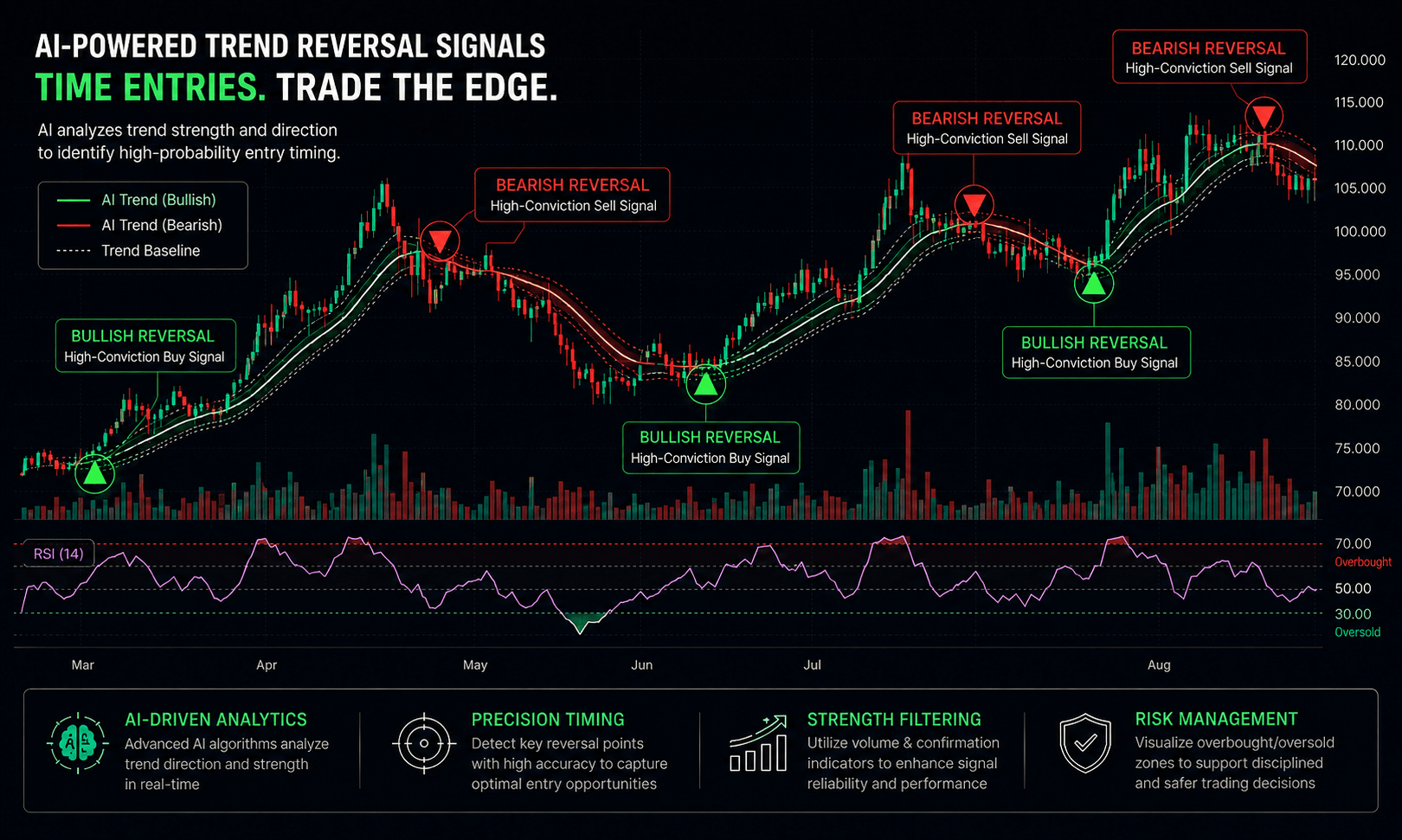
Bull Wave / Bear Wave Forecast Model
Engineered to help you read market direction and momentum faster than the crowd.
- Instantly separate bullish momentum from bearish pressure
- Pinpoint high-probability entry zones with confidence
- Chart signals clear enough for beginners, sharp enough for pros
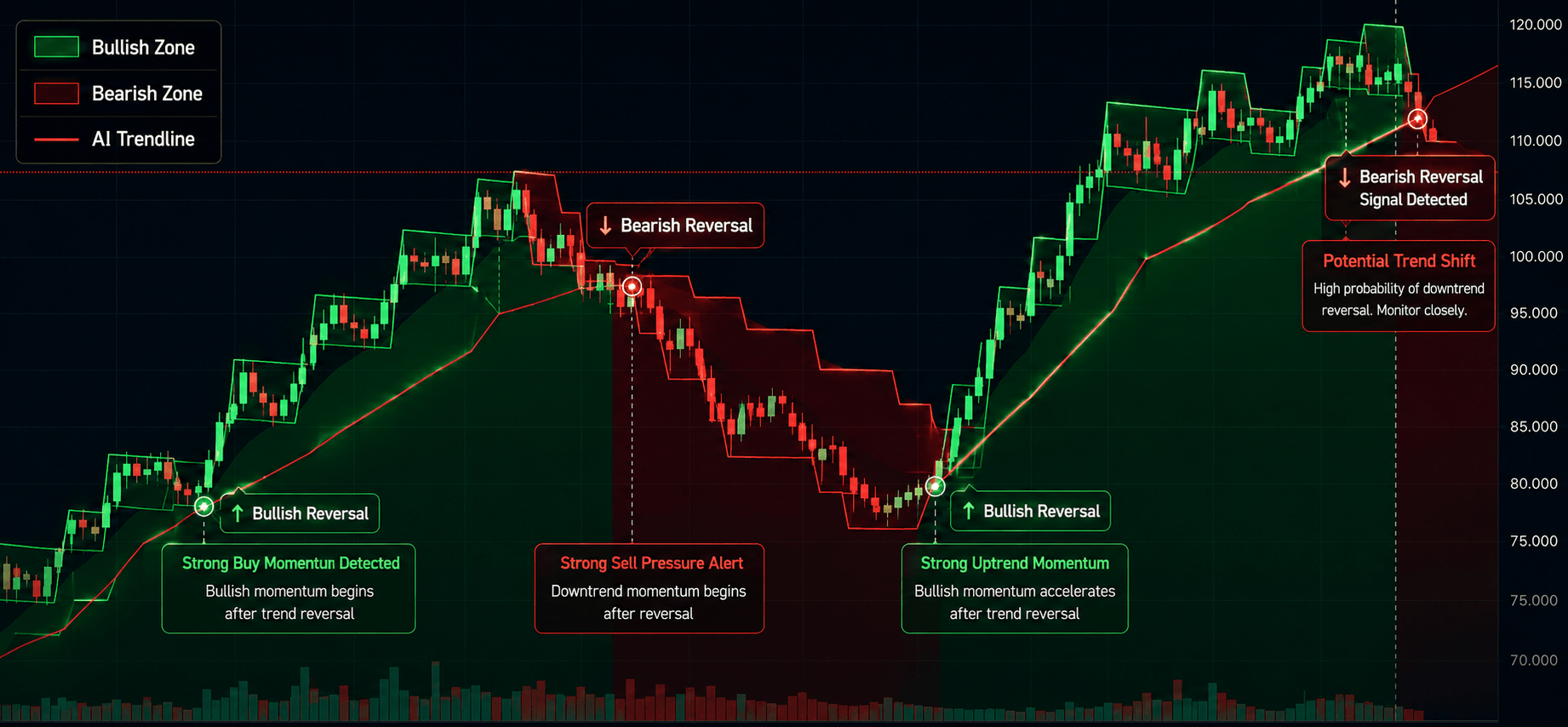
Winning Pattern Detection
Instantly surfaces the high-probability setups that repeat across the charts — a trusted edge for timing your entries and exits.
- Spot momentum building in real time
- Catch trend-reversal points before they break
- Built for active traders who need results, not theory
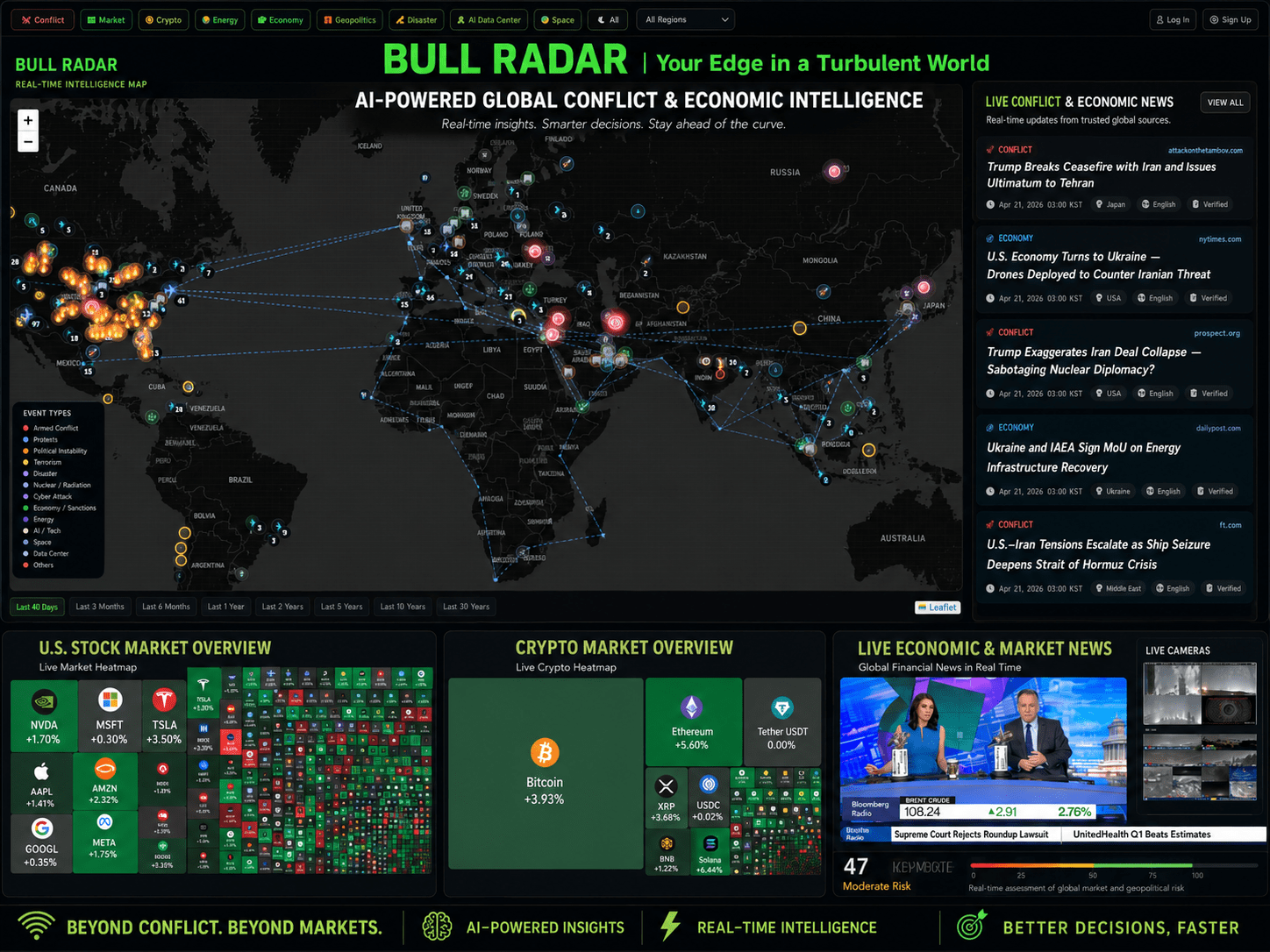
AI Live Economic Dashboard
AI analyzes real-time market data — turning complex, global investment flows into clear insight in seconds.
- Track global stock markets in real time
- See exactly which assets are strong — and which are fading
- Watch how geopolitical events move the markets
About the Author