What Is the Sortino Ratio?
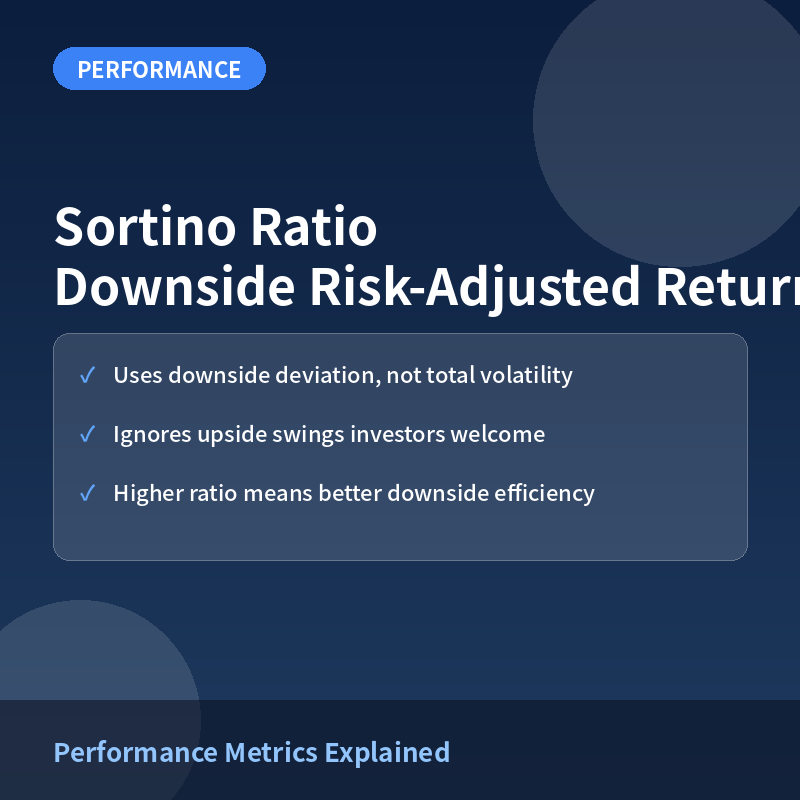
The Sortino Ratio is a risk-adjusted performance metric that measures excess return per unit of downside risk, calculated by dividing a portfolio’s return above a minimum acceptable return (often the risk-free rate) by its ‘downside deviation’ — the standard deviation of only the negative returns. It was developed as a refinement of the Sharpe Ratio, which treats all volatility, both up and down, as equally undesirable.
Why the Sharpe Ratio Can Be Misleading
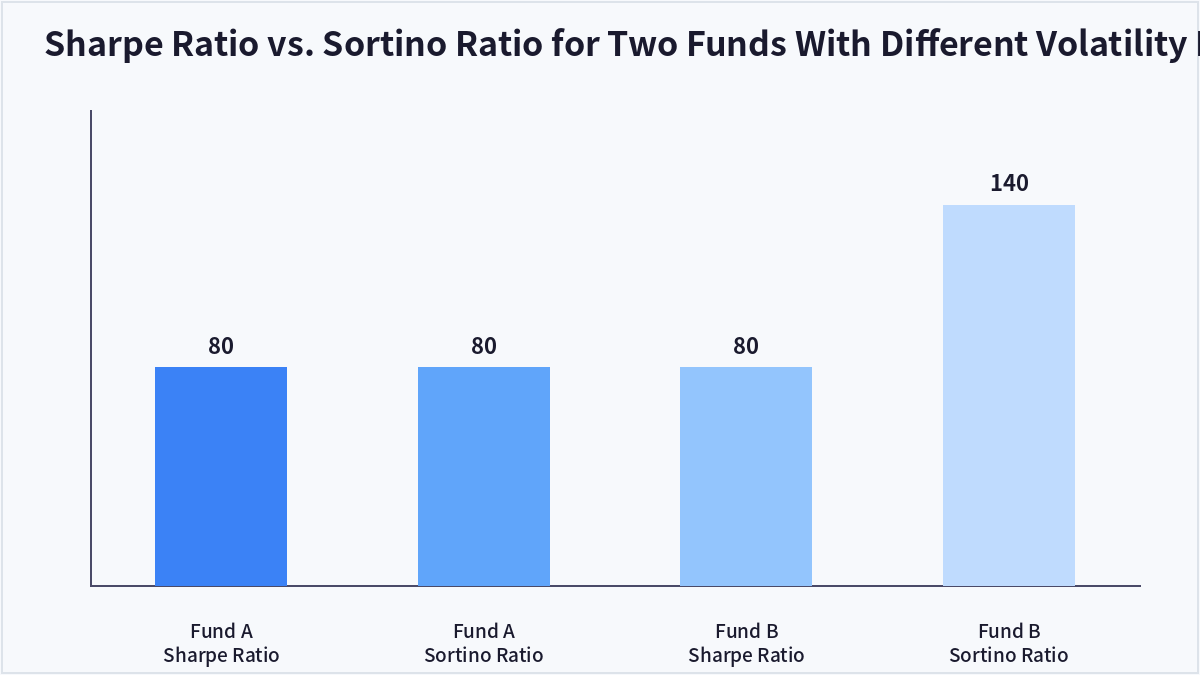
Consider two funds with identical Sharpe Ratios of 0.80. If Fund A’s volatility is symmetric while Fund B’s volatility comes disproportionately from large upside months, the Sharpe Ratio penalizes both funds equally for their total volatility — even though investors don’t actually mind Fund B’s upside swings. Once downside deviation alone is used, Fund B’s Sortino Ratio jumps to 1.40, revealing that its risk-adjusted performance is meaningfully better once only the downside risk investors actually care about is counted.
Why Investors Use the Sortino Ratio
The Sortino Ratio is particularly useful for evaluating strategies with asymmetric or skewed return distributions, such as trend-following strategies, options-selling strategies, or funds that use downside hedges — cases where the Sharpe Ratio’s symmetric treatment of volatility can distort the true risk picture. A higher Sortino Ratio indicates a fund is generating more return for each unit of downside risk actually taken.
| Metric | Sharpe Ratio | Sortino Ratio |
|---|---|---|
| Risk measure used | Total standard deviation (up + down) | Downside deviation only |
| Treats upside volatility as risk | Yes | No |
| Best suited for | Symmetric return distributions | Skewed or asymmetric distributions |
Frequently Asked Questions
What counts as the ‘minimum acceptable return’ in the Sortino Ratio?
It’s typically set to the risk-free rate, but some analysts use zero or a specific target return relevant to the investor’s goals, which changes what counts as a ‘downside’ deviation.
Is a higher Sortino Ratio always better?
Generally yes, since it indicates more return per unit of downside risk, but as with any single ratio, it should be considered alongside other metrics and qualitative factors rather than in isolation.
Can the Sortino Ratio be negative?
Yes, if a fund’s return falls below the minimum acceptable return, the numerator becomes negative, resulting in a negative Sortino Ratio that signals underperformance relative to the target.
How is downside deviation different from standard deviation?
Standard deviation measures dispersion of all returns around the mean, both positive and negative, while downside deviation only measures the dispersion of returns that fall below the minimum acceptable return threshold.
Key Takeaways
The Sortino Ratio refines the Sharpe Ratio by measuring risk-adjusted return using only downside deviation, avoiding the penalty the Sharpe Ratio places on desirable upside volatility. It’s especially useful for comparing strategies with asymmetric return profiles. This article is for informational purposes only and does not constitute investment advice.

QuantPro: AI Finds the Trade Before You Do
From AI-powered chart analysis to real-time market intelligence — everything a serious investor needs, in one platform.
- Automated AI chart analysis with precision trend timing
- Bull Radar: real-time visualization of geopolitical & economic shifts
- Live market-moving news and insights, curated for you
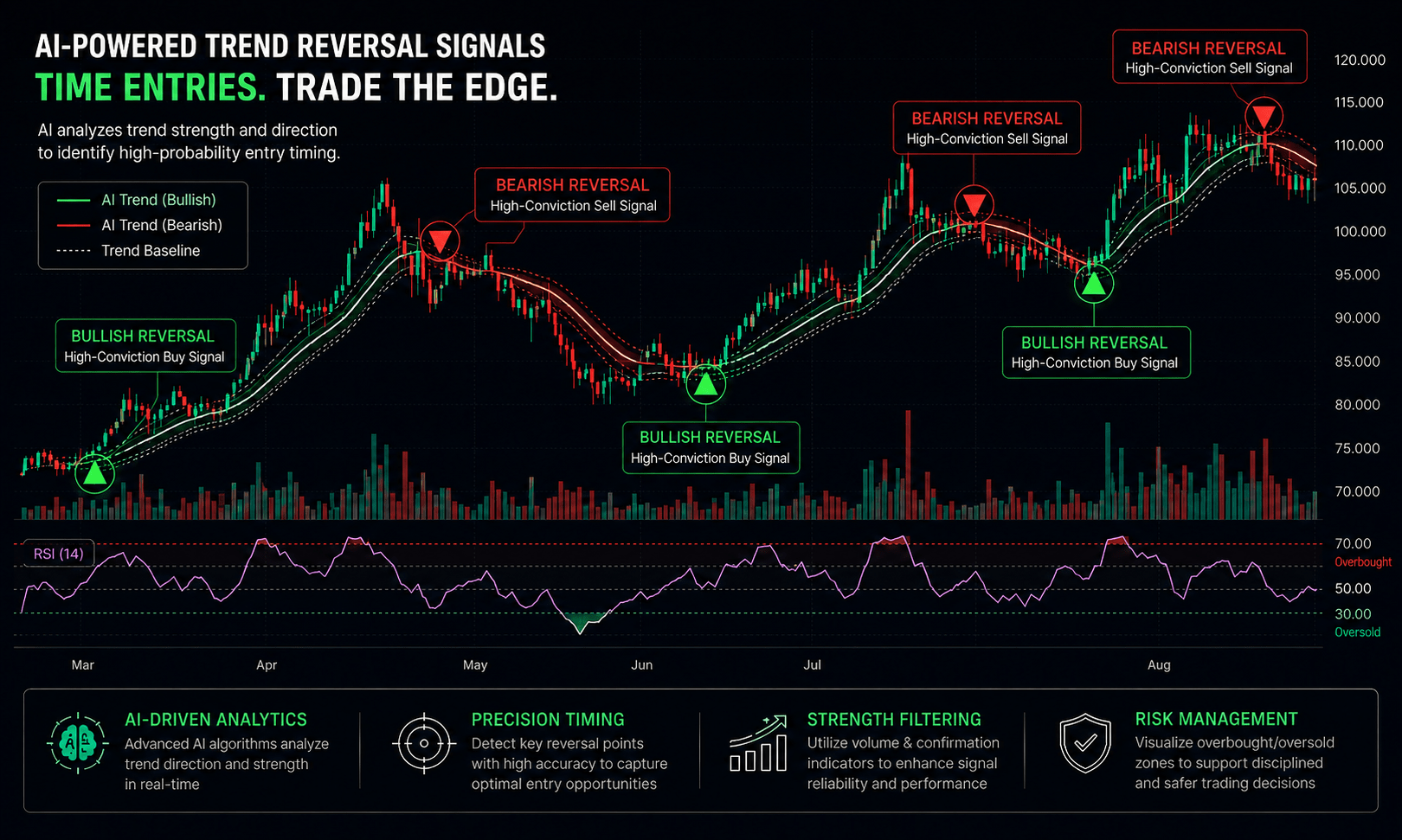
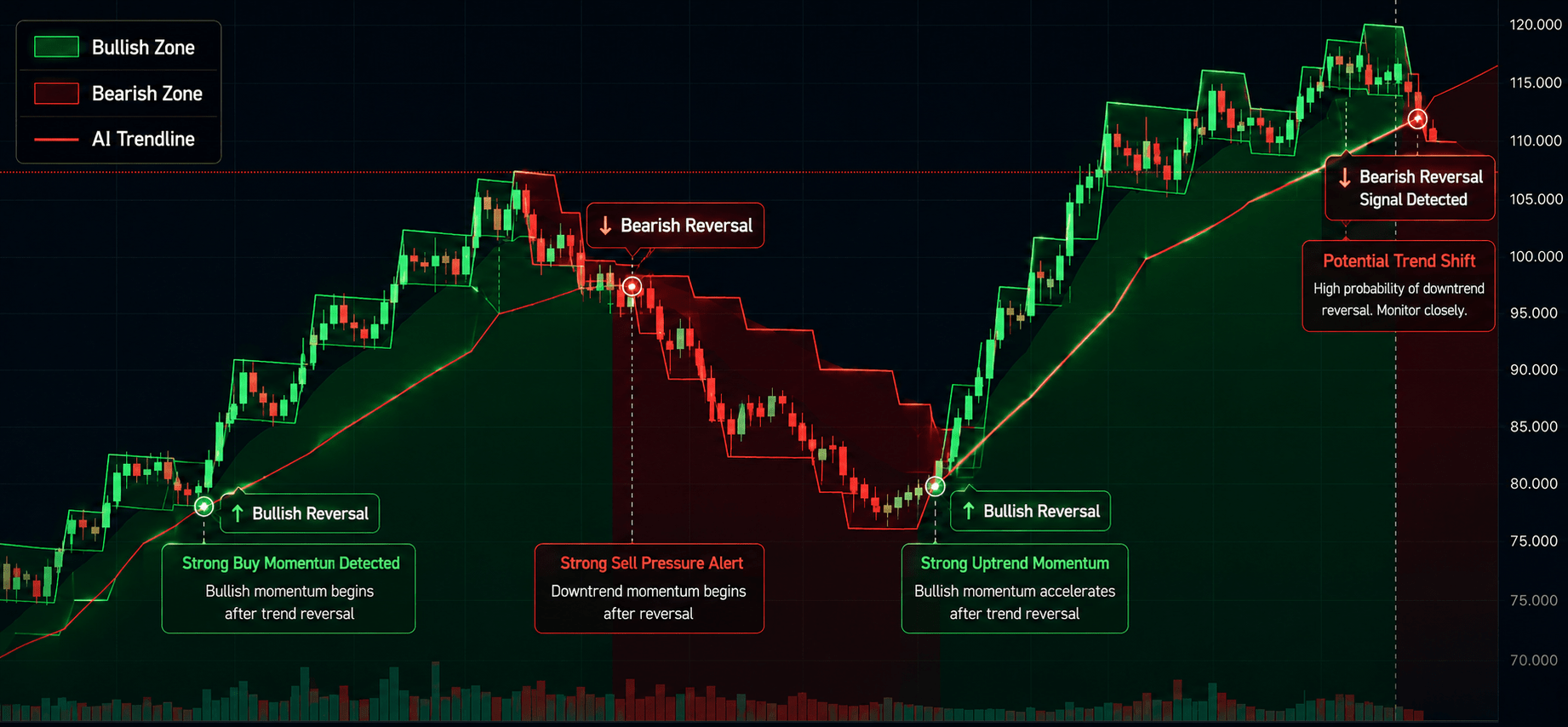
Bull Wave / Bear Wave Forecast Model
Engineered to help you read market direction and momentum faster than the crowd.
- Instantly separate bullish momentum from bearish pressure
- Pinpoint high-probability entry zones with confidence
- Chart signals clear enough for beginners, sharp enough for pros
Winning Pattern Detection
Instantly surfaces the high-probability setups that repeat across the charts — a trusted edge for timing your entries and exits.
- Spot momentum building in real time
- Catch trend-reversal points before they break
- Built for active traders who need results, not theory

AI Live Economic Dashboard
AI analyzes real-time market data — turning complex, global investment flows into clear insight in seconds.
- Track global stock markets in real time
- See exactly which assets are strong — and which are fading
- Watch how geopolitical events move the markets
About the Author