What Defines a Bull Market and a Bear Market?
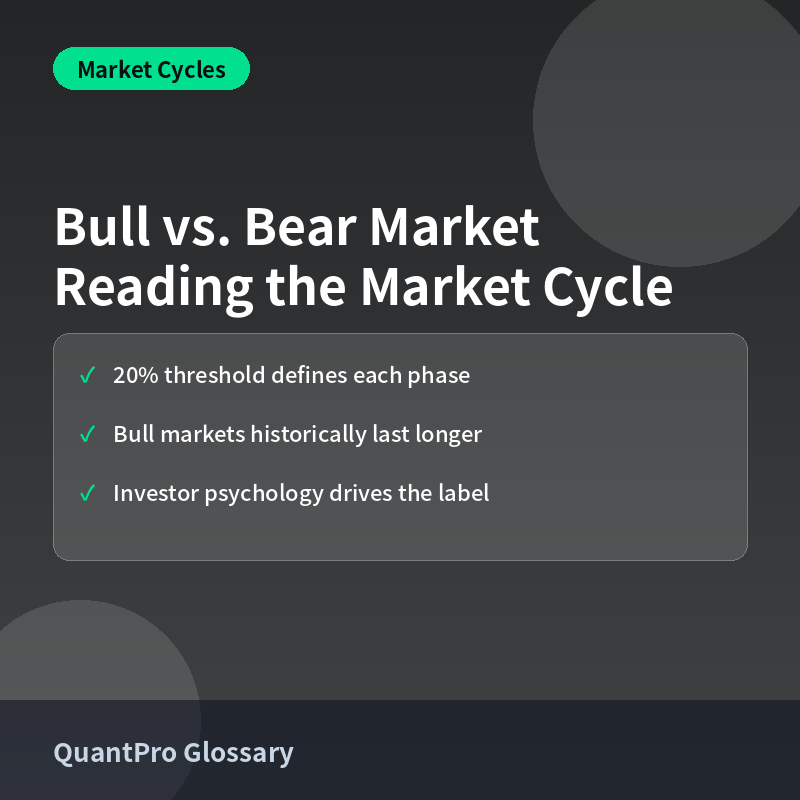
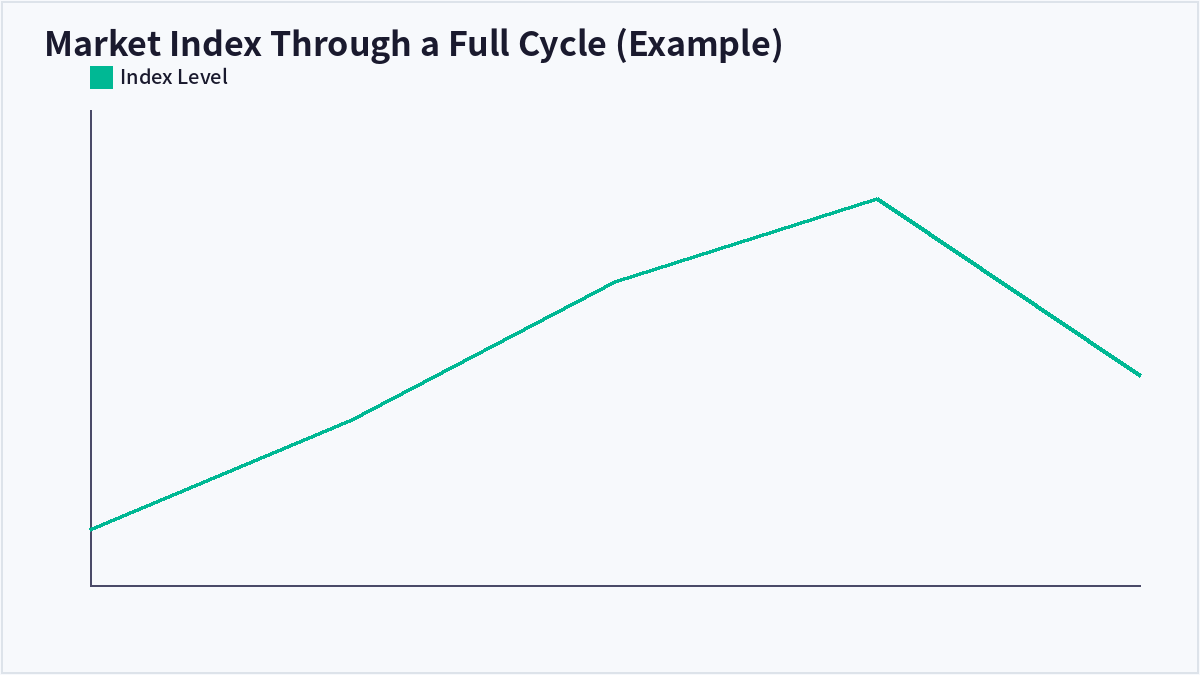
A bull market refers to a sustained period in which asset prices, particularly stock indices, rise by 20% or more from a recent low, typically accompanied by strong investor optimism and economic growth. A bear market is the inverse — a sustained decline of 20% or more from a recent high, usually driven by widespread pessimism, economic contraction, or a major shock to investor confidence.
Why the 20% Threshold?
The 20% figure is a widely accepted market convention (not a rigid law) used to distinguish a genuine trend reversal from a normal, short-term pullback or correction, which is typically defined as a decline of 10% to 20%. This threshold helps investors and analysts communicate clearly about the broader phase the market is in, even though the exact starting and ending points of a bull or bear market are often only identifiable in hindsight.
Historical Patterns
Bull Markets Tend to Last Longer
Historically, bull markets in major indices like the S&P 500 have tended to last significantly longer on average — often several years — compared to bear markets, which have historically been shorter but often sharper in terms of the speed of decline.
Investor Psychology Plays a Central Role
Beyond the raw percentage move, the terms reflect the dominant sentiment among market participants — ‘bullish’ investors expect prices to rise, while ‘bearish’ investors expect prices to fall, and this collective psychology often reinforces the prevailing trend.
| Phase | Price Movement | Typical Sentiment |
|---|---|---|
| Bull Market | +20% or more from a low | Optimism, growth expectations |
| Bear Market | -20% or more from a high | Pessimism, risk aversion |
| Correction | -10% to -20% from a high | Short-term caution, not necessarily a trend reversal |
Frequently Asked Questions
Can we know we’re in a bull or bear market in real time?
It can be challenging — since the threshold requires measuring from a specific high or low point, market phases are often only clearly identified and labeled after the fact, once the trend has fully played out.
What typically triggers a bear market?
Common triggers include economic recessions, aggressive central bank rate hikes, geopolitical shocks, or bursting asset bubbles, though bear markets can sometimes occur even without an accompanying recession.
Should I sell everything during a bear market?
This depends heavily on individual circumstances, time horizon, and risk tolerance — many long-term investors choose to remain invested through bear markets, as historically, markets have eventually recovered, though past performance never guarantees future results.
Do bull and bear markets happen only in stocks?
No, the terms are also commonly applied to other asset classes like bonds, commodities, real estate, and cryptocurrencies whenever those markets experience sustained directional moves of a similar magnitude.
Key Takeaways
A bull market is a sustained rise of 20% or more, while a bear market is a sustained decline of the same magnitude, with both terms reflecting broader shifts in investor sentiment. Because these phases are often only clearly identifiable in hindsight, they’re best used as descriptive labels rather than precise real-time trading signals. This article is for informational purposes only and does not constitute investment advice.

QuantPro: AI Finds the Trade Before You Do
From AI-powered chart analysis to real-time market intelligence — everything a serious investor needs, in one platform.
- Automated AI chart analysis with precision trend timing
- Bull Radar: real-time visualization of geopolitical & economic shifts
- Live market-moving news and insights, curated for you
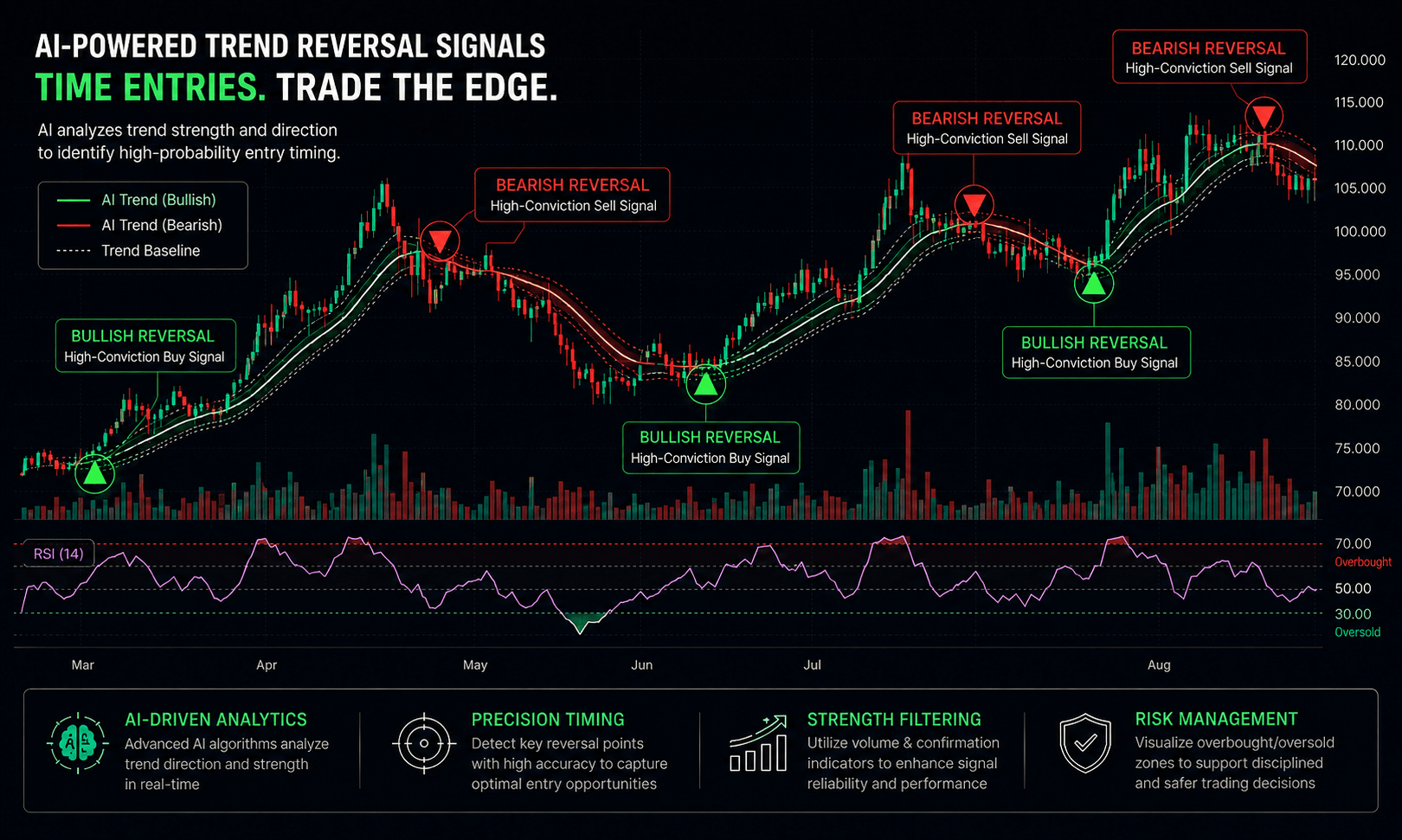
Bull Wave / Bear Wave Forecast Model
Engineered to help you read market direction and momentum faster than the crowd.
- Instantly separate bullish momentum from bearish pressure
- Pinpoint high-probability entry zones with confidence
- Chart signals clear enough for beginners, sharp enough for pros
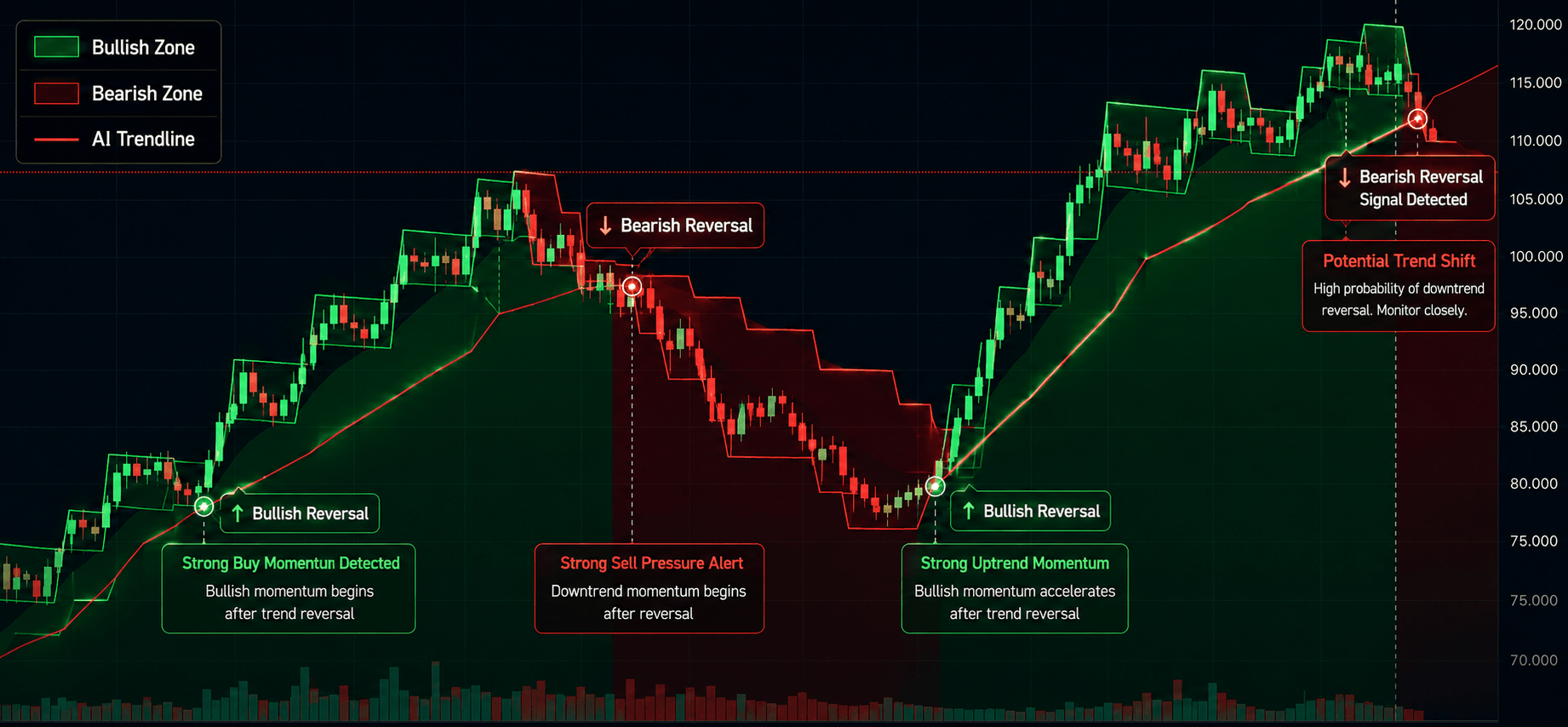
Winning Pattern Detection
Instantly surfaces the high-probability setups that repeat across the charts — a trusted edge for timing your entries and exits.
- Spot momentum building in real time
- Catch trend-reversal points before they break
- Built for active traders who need results, not theory
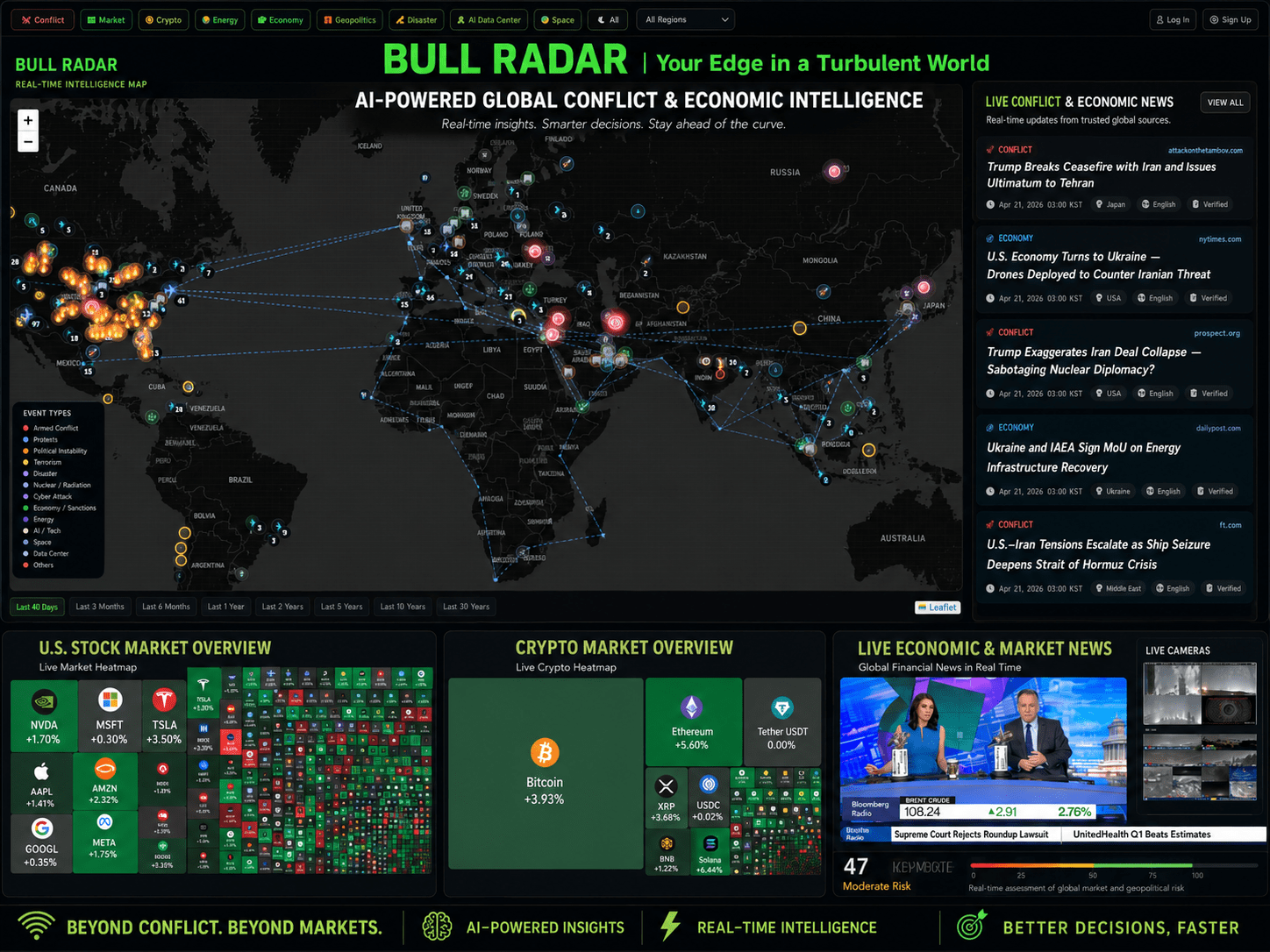
AI Live Economic Dashboard
AI analyzes real-time market data — turning complex, global investment flows into clear insight in seconds.
- Track global stock markets in real time
- See exactly which assets are strong — and which are fading
- Watch how geopolitical events move the markets
About the Author