What ROE Measures
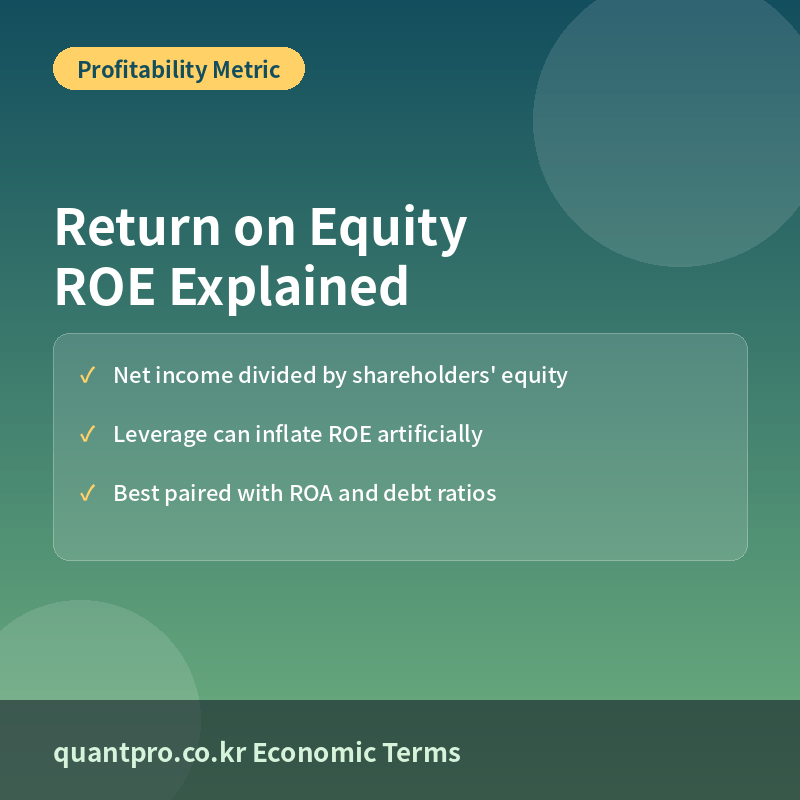
Return on Equity (ROE) shows how efficiently a company generates profit from the capital shareholders have invested. It is calculated as ROE = Net Income ÷ Shareholders’ Equity × 100. A consistently high ROE is often seen as a sign of a well-run, competitively advantaged business, which is why investors like Warren Buffett have historically favored companies that sustain strong ROE over many years.
How Leverage Can Distort ROE
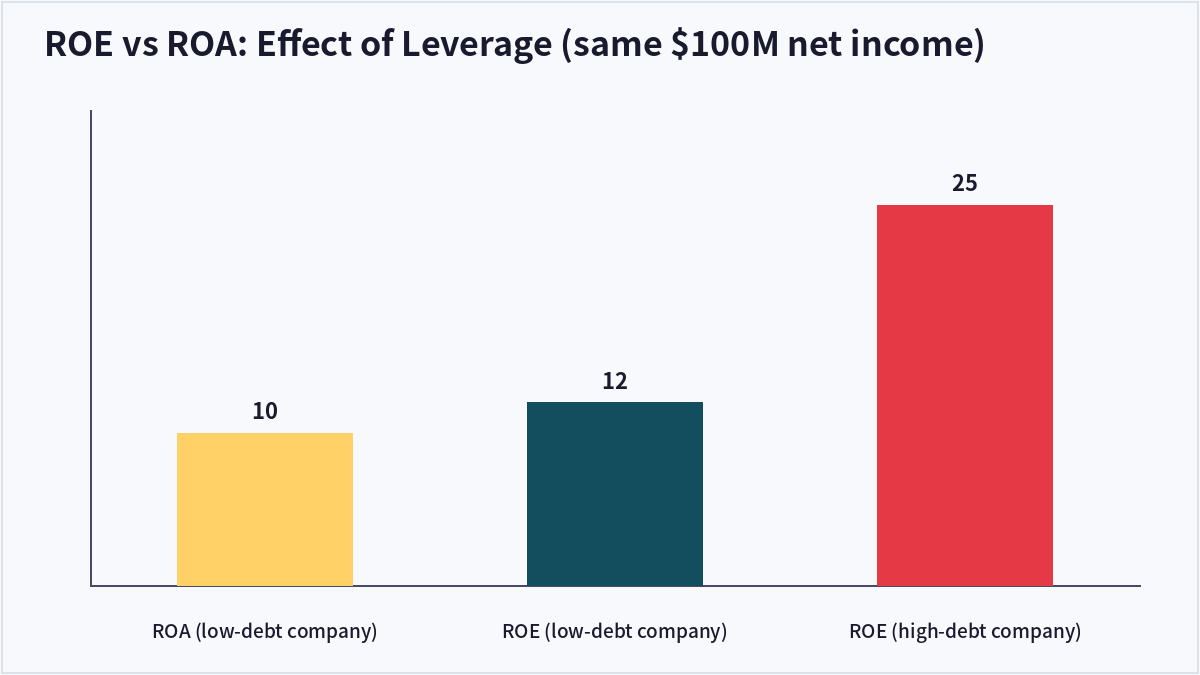
Because ROE’s denominator is equity alone, a company that finances more of its assets with debt rather than equity will show a higher ROE even if its underlying operating profitability hasn’t improved. This is why a spike in ROE driven mainly by rising debt, rather than better margins or asset efficiency, deserves a closer look before it’s read as a positive signal.
Pairing ROE With ROA
Return on Assets (ROA) divides net income by total assets rather than equity alone, so it isn’t affected by how much debt a company carries. Comparing ROE and ROA together — along with the debt-to-equity ratio — helps investors judge whether a high ROE reflects genuine operational strength or simply aggressive use of leverage.
| Metric | Formula | Debt Sensitivity |
|---|---|---|
| ROE | Net Income ÷ Shareholders’ Equity | Can be inflated by leverage |
| ROA | Net Income ÷ Total Assets | Not affected by capital structure |
| Debt-to-Equity | Total Debt ÷ Shareholders’ Equity | Shows leverage level directly |
Frequently Asked Questions
Is a higher ROE always better?
Not always — a very high ROE driven mainly by heavy debt financing rather than strong operating performance can actually signal elevated financial risk, so it should be checked alongside ROA and the debt ratio.
What ROE level is considered strong?
There’s no single universal benchmark since typical ROE levels vary by industry, but companies that sustain an ROE meaningfully above their sector average over multiple years are often viewed as having a durable competitive advantage.
How is ROE different from ROI?
ROE specifically measures the return generated on shareholders’ equity within a company’s financial statements, while ROI (return on investment) is a broader, more generic measure of the return on any particular investment or project.
Where can I find a company’s ROE?
ROE can be calculated directly from a company’s income statement and balance sheet, or found pre-calculated on most financial data platforms and brokerage research tools.
Key Takeaways
ROE measures how efficiently a company turns shareholders’ equity into profit, but because debt can inflate the ratio, it’s most useful when analyzed together with ROA and the company’s leverage level rather than in isolation. This article is for informational purposes only and does not constitute investment advice.

QuantPro: AI Finds the Trade Before You Do
From AI-powered chart analysis to real-time market intelligence — everything a serious investor needs, in one platform.
- Automated AI chart analysis with precision trend timing
- Bull Radar: real-time visualization of geopolitical & economic shifts
- Live market-moving news and insights, curated for you
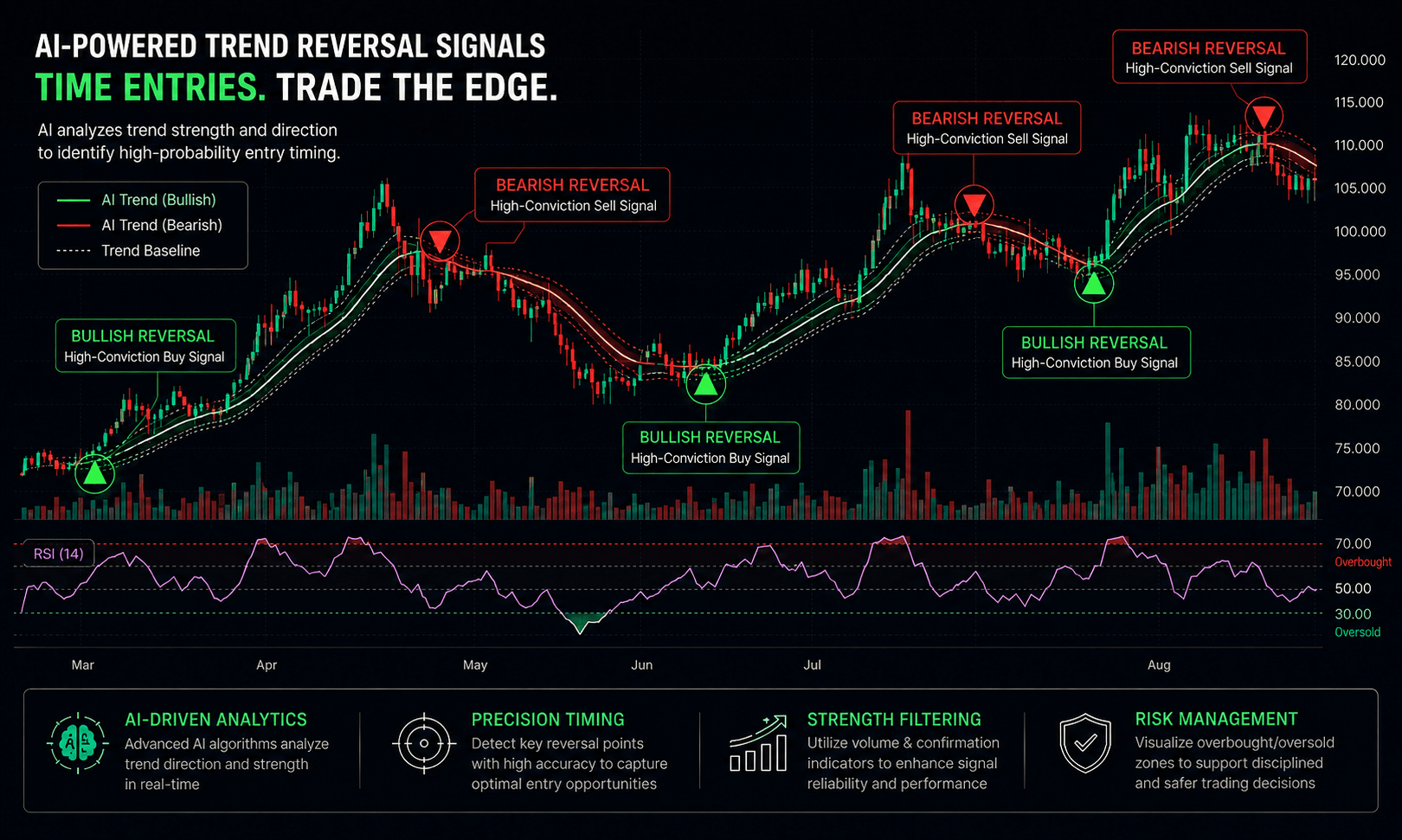
Bull Wave / Bear Wave Forecast Model
Engineered to help you read market direction and momentum faster than the crowd.
- Instantly separate bullish momentum from bearish pressure
- Pinpoint high-probability entry zones with confidence
- Chart signals clear enough for beginners, sharp enough for pros
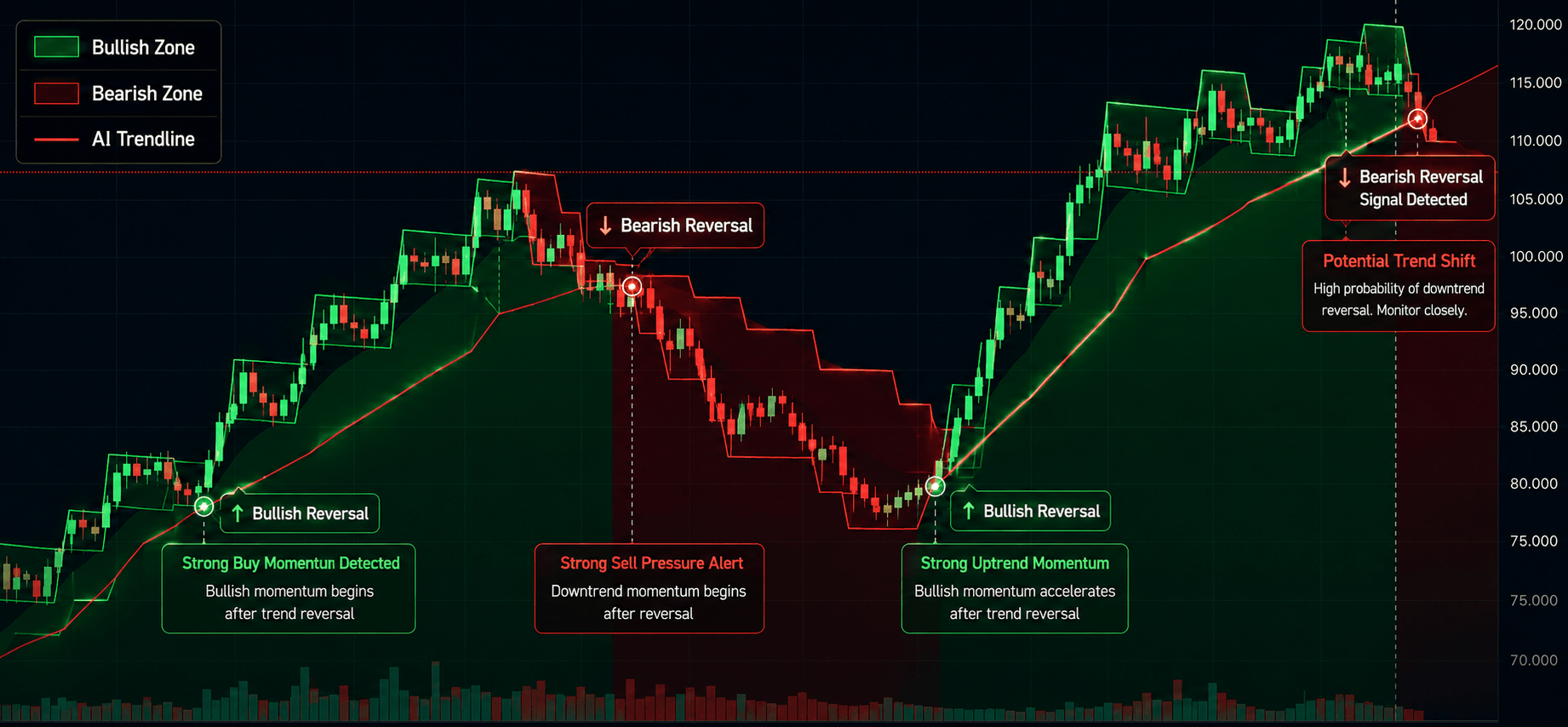
Winning Pattern Detection
Instantly surfaces the high-probability setups that repeat across the charts — a trusted edge for timing your entries and exits.
- Spot momentum building in real time
- Catch trend-reversal points before they break
- Built for active traders who need results, not theory

AI Live Economic Dashboard
AI analyzes real-time market data — turning complex, global investment flows into clear insight in seconds.
- Track global stock markets in real time
- See exactly which assets are strong — and which are fading
- Watch how geopolitical events move the markets
About the Author