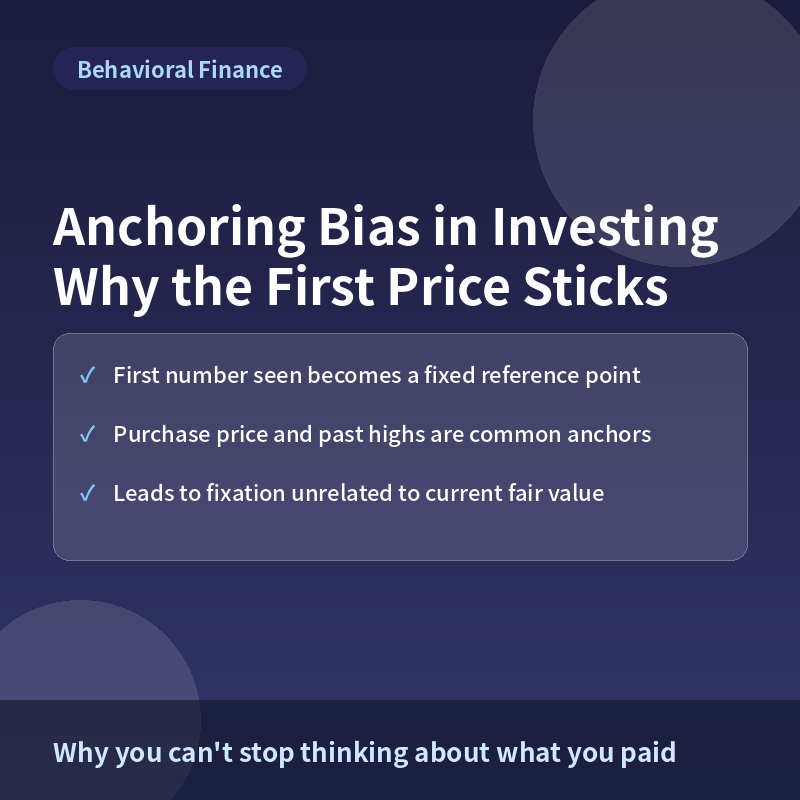
What Anchoring Bias Is
Anchoring bias is the tendency to rely too heavily on the first piece of information encountered — the anchor — when making subsequent judgments, even after new, more relevant information becomes available. The concept was popularized by psychologists Daniel Kahneman and Amos Tversky.
Common Anchors in Investing
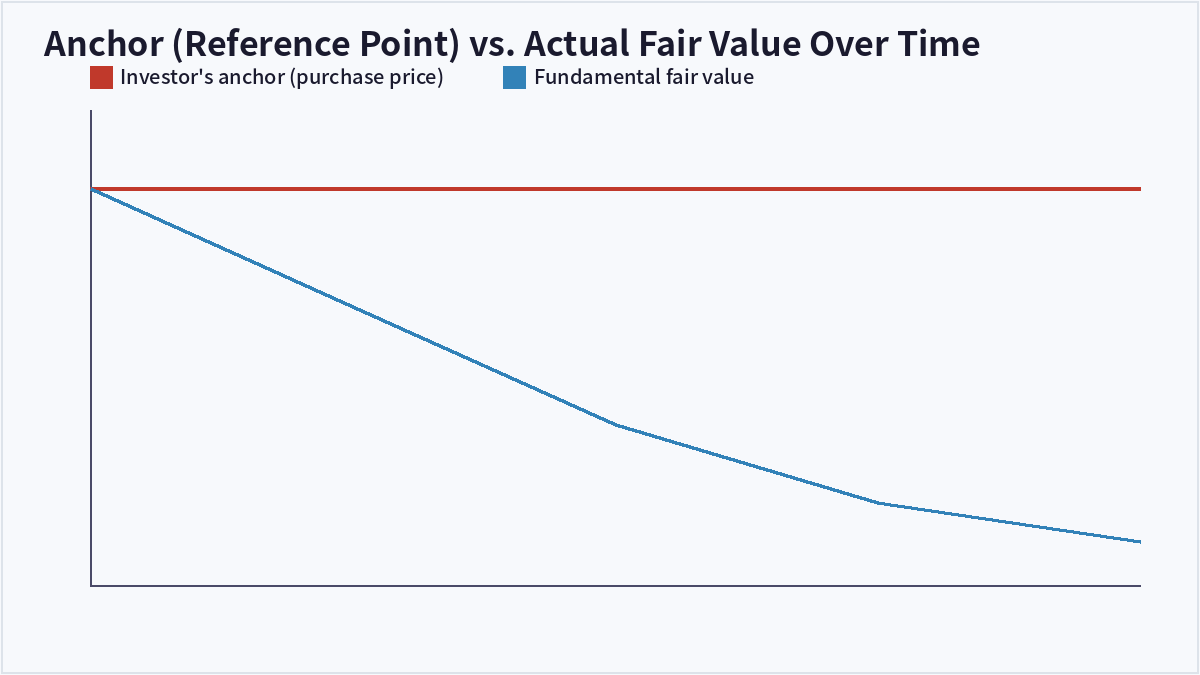
The most common anchor is an investor’s own purchase price. When a stock falls below that price, investors often delay selling while waiting to “get back to even,” and when it rises above that price, they feel a sense of relief — even though the purchase price has no bearing on the stock’s current fair value.
| Common Anchor | Resulting Distortion |
|---|---|
| Purchase price | Delaying a sale until reaching break-even |
| All-time high | Mistaking a large drawdown for being “cheap” |
| Analyst’s initial price target | Underreacting to subsequent changes in fundamentals |
The All-Time-High Anchor
Judging a stock as “cheap” purely because it has fallen far from its all-time high is another classic anchoring trap. If the company’s fundamentals — earnings power, growth outlook — have deteriorated significantly since that high was set, the old peak carries no useful information about the stock’s current fair value.
Why It’s So Hard to Escape
Research suggests the human mind tends to form judgments by adjusting away from an already-known reference point rather than starting fresh, and that adjustment is typically insufficient — leaving the final judgment anchored close to the original number.
Practical Ways to Reduce Anchoring
Deliberately ignoring your purchase price and reframing the question as “would I buy this today, at this price, with what I know now” — or resetting a price target using only the latest fundamentals and valuation metrics — are commonly cited techniques for reducing anchoring’s influence.
Frequently Asked Questions
Do professional investors fall for anchoring too?
Yes — studies have found that even sell-side analysts tend to adjust their initial price targets only incrementally over time, suggesting professionals are not immune to the bias.
How does anchoring differ from confirmation bias?
Confirmation bias is selectively favoring information that supports an existing belief, while anchoring is fixating on a specific reference number — though in practice, a purchase-price anchor combined with loss aversion often makes it even harder to sell at a loss.
Does anchoring show up outside of investing?
Yes — anchoring is widely observed in negotiations and consumer pricing, where the first number mentioned tends to shape the entire subsequent range of discussion.
Can an IPO price become an anchor?
Yes — investors often use the IPO price as a psychological reference point for judging whether a stock is “cheap” or “expensive” post-listing, even though it may have little connection to current fair value.
Key Takeaways
Anchoring bias causes investors to fixate on reference points like purchase price or past highs, and deliberately reframing decisions around current fundamentals is a practical way to reduce its influence. This article is for informational purposes only and does not constitute investment advice.

QuantPro: AI Finds the Trade Before You Do
From AI-powered chart analysis to real-time market intelligence — everything a serious investor needs, in one platform.
- Automated AI chart analysis with precision trend timing
- Bull Radar: real-time visualization of geopolitical & economic shifts
- Live market-moving news and insights, curated for you
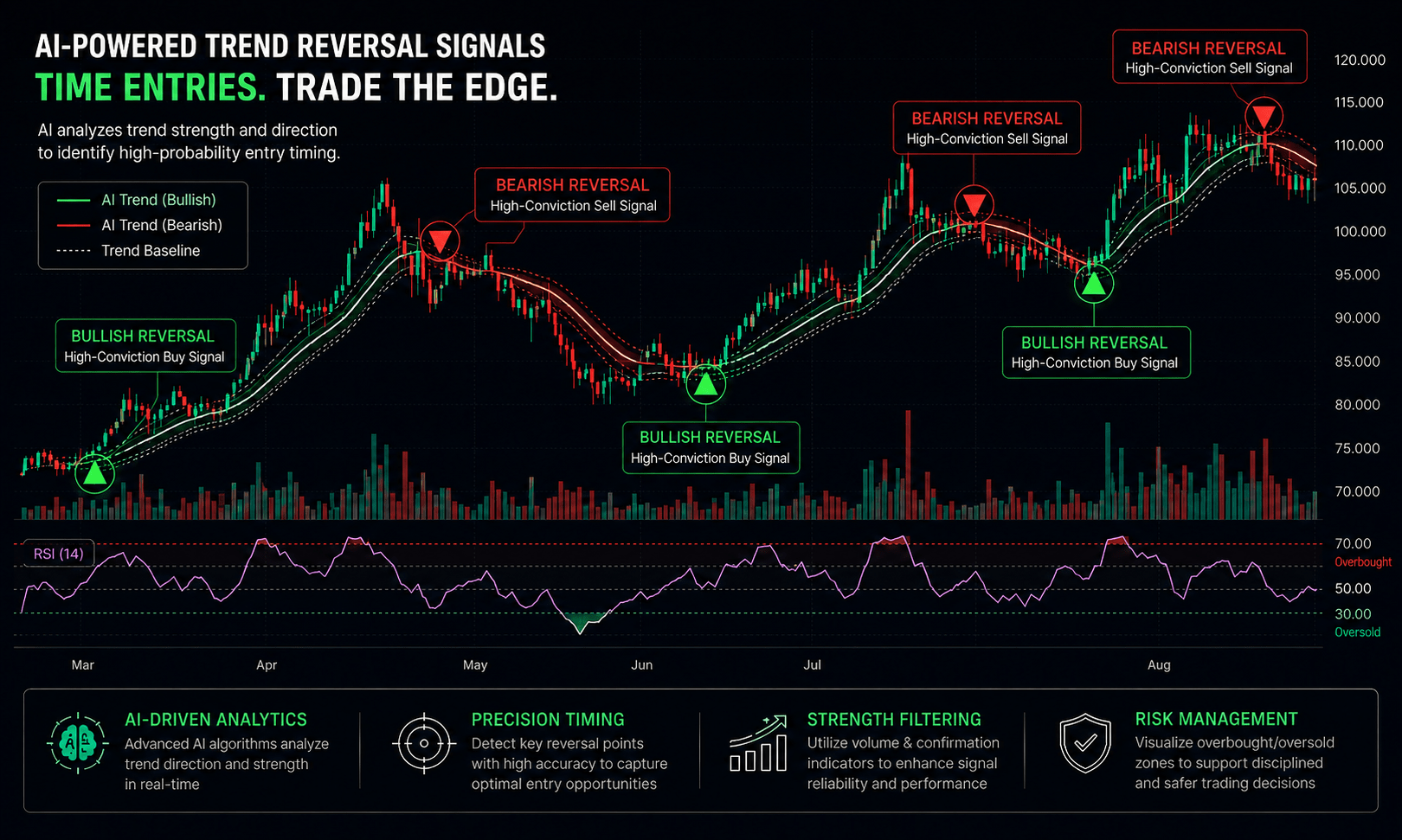
Bull Wave / Bear Wave Forecast Model
Engineered to help you read market direction and momentum faster than the crowd.
- Instantly separate bullish momentum from bearish pressure
- Pinpoint high-probability entry zones with confidence
- Chart signals clear enough for beginners, sharp enough for pros
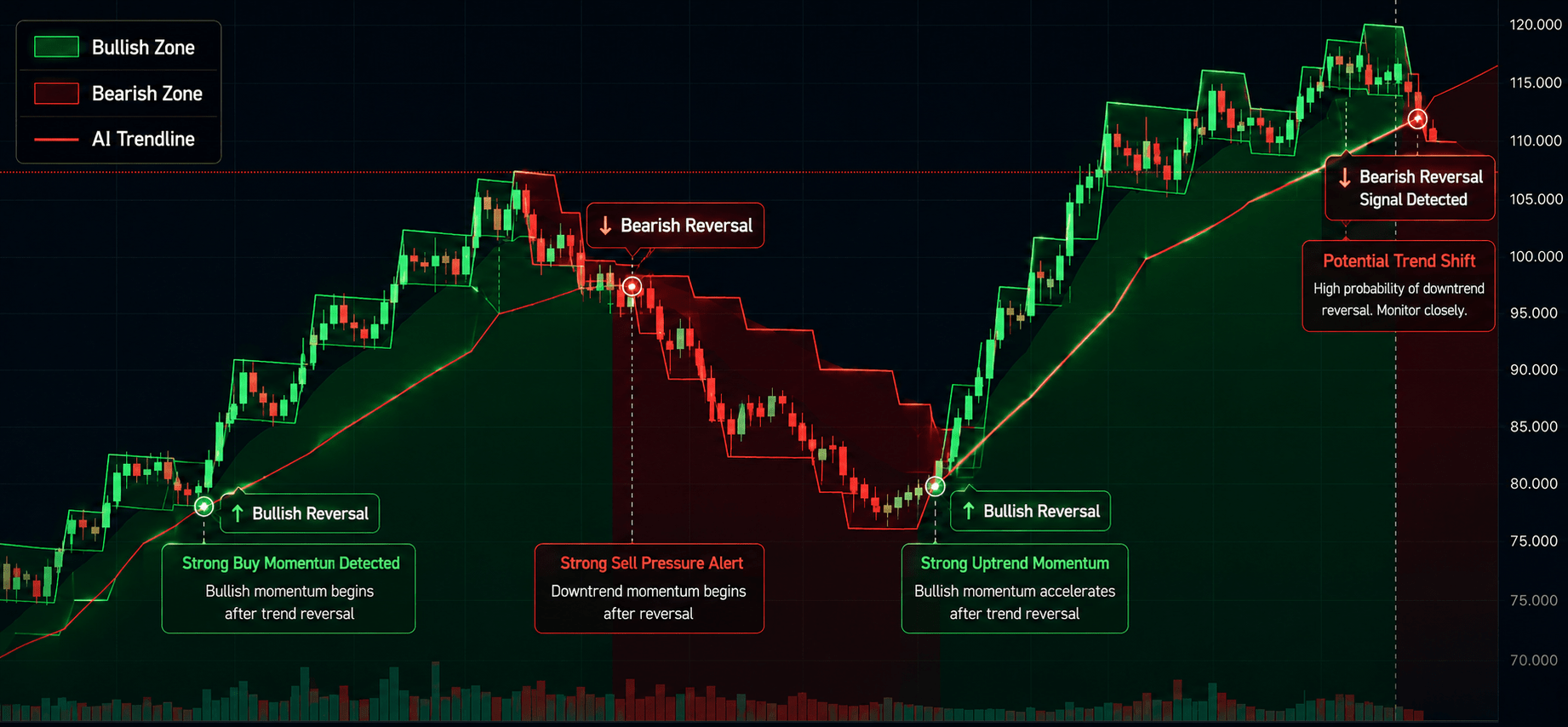
Winning Pattern Detection
Instantly surfaces the high-probability setups that repeat across the charts — a trusted edge for timing your entries and exits.
- Spot momentum building in real time
- Catch trend-reversal points before they break
- Built for active traders who need results, not theory
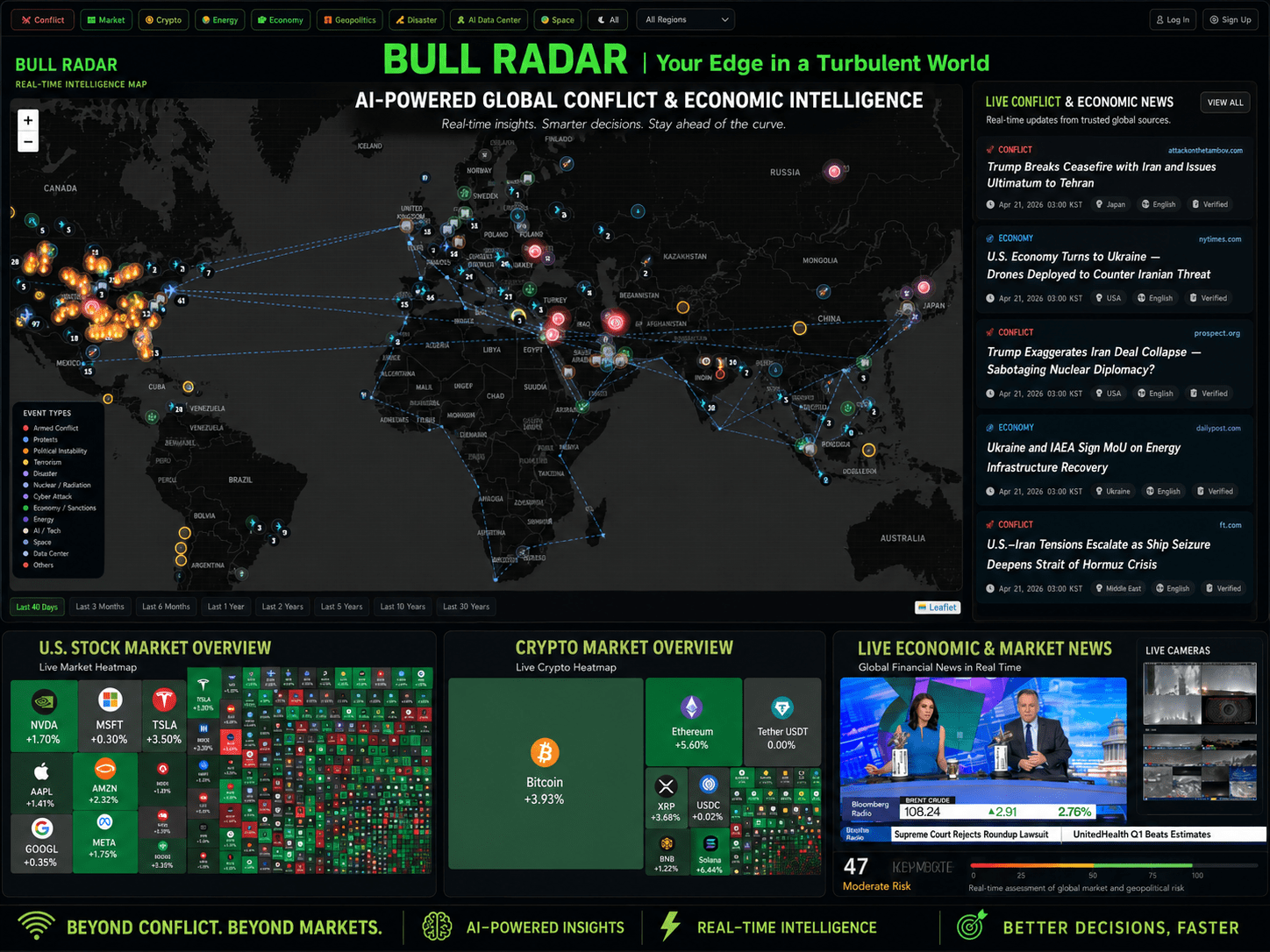
AI Live Economic Dashboard
AI analyzes real-time market data — turning complex, global investment flows into clear insight in seconds.
- Track global stock markets in real time
- See exactly which assets are strong — and which are fading
- Watch how geopolitical events move the markets
About the Author