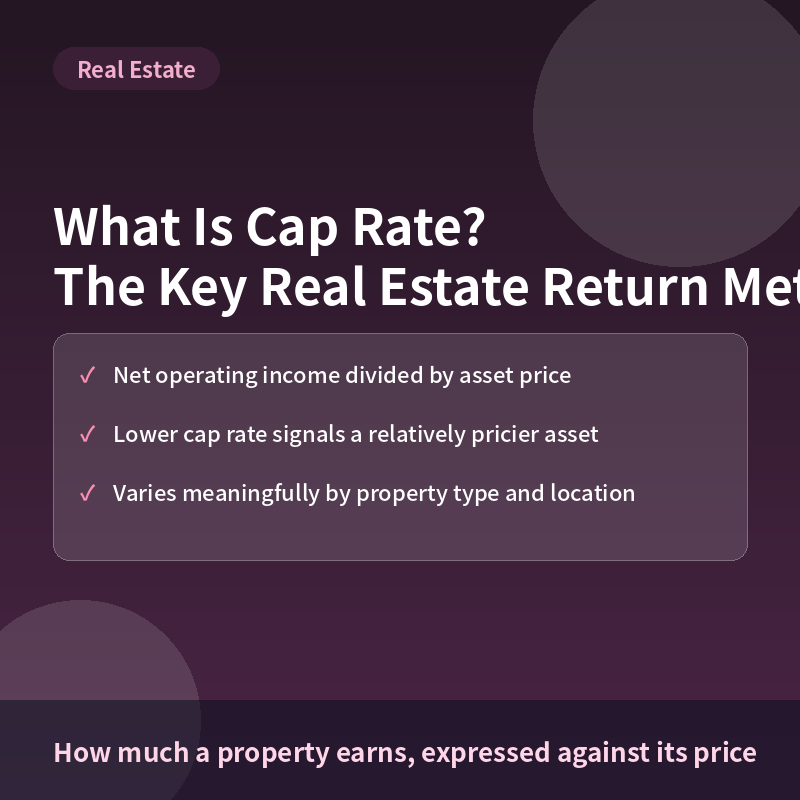
Defining Cap Rate
The capitalization rate (cap rate) divides a property’s annual net operating income (NOI) by its purchase price or current market value, producing a measure of the property’s unlevered return — stripped of the effects of financing and taxes.
The Formula and a Worked Example
Cap Rate = Net Operating Income (NOI) ÷ Asset Price × 100. If a property generates $8M in annual rental income, incurs $3M in operating costs, leaving $5M in NOI, and is priced at $100M, its cap rate is $5M ÷ $100M × 100 = 5.0%.
| Component | Example Value |
|---|---|
| Annual Rental Income | $8M |
| Operating Expenses (taxes, management, etc.) | $3M |
| Net Operating Income (NOI) | $5M |
| Asset Price | $100M |
| Cap Rate | 5.0% |
What a Low Cap Rate Means
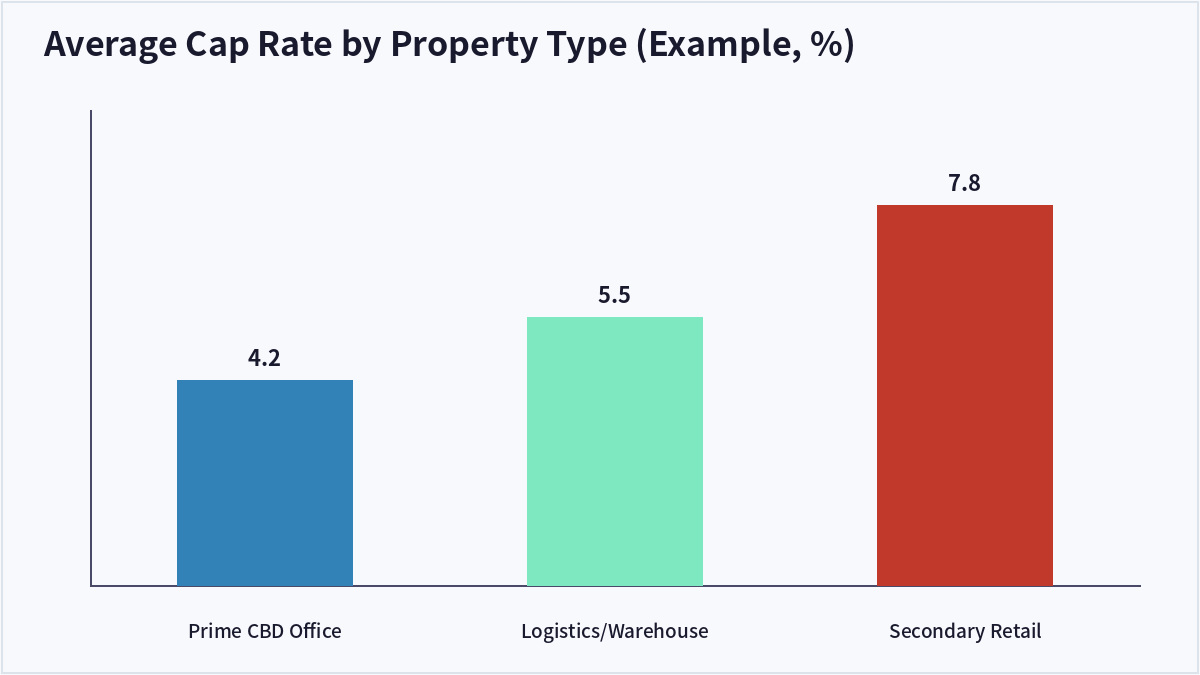
A lower cap rate means the market is paying a higher price for the same amount of income — typically because the asset is seen as lower risk, in a prime location, with low vacancy risk and creditworthy tenants. A higher cap rate signals the opposite: a relatively cheaper, higher-risk asset.
How Interest Rates Affect Cap Rates
When interest rates rise, borrowing costs increase and alternative investments like bonds become more attractive, pushing real estate investors to demand higher returns — and therefore higher cap rates — which tends to put downward pressure on property values.
Limitations of Cap Rate
Cap rate is a snapshot at the time of purchase and doesn’t capture future rent growth or changes in property value, which is why it’s typically used alongside discounted cash flow analysis for more comprehensive, long-term return evaluations.
Frequently Asked Questions
Why compare cap rate to the borrowing rate?
If the cap rate is lower than the mortgage rate, adding leverage can actually reduce the investor’s return on equity — a situation known as negative leverage — so comparing the two is an essential check.
What’s excluded from net operating income?
NOI excludes interest expense, income taxes, depreciation, and major capital expenditures — it only reflects rental income minus the costs directly tied to operating the property.
Why do cap rates differ across property types?
Lease terms, vacancy risk, management complexity, and growth expectations all vary by property type, which is why office, logistics, retail, and residential assets in the same city can trade at meaningfully different cap rates.
Is cap rate alone enough to decide on a purchase?
Cap rate is a useful first screening tool, but a full evaluation should also weigh tenant mix, lease expiration schedules, and anticipated capital expenditures before reaching a purchase decision.
Key Takeaways
Cap rate divides net operating income by asset price to measure unlevered real estate returns, with lower cap rates signaling safer, pricier assets and higher cap rates signaling cheaper, riskier ones. This article is for informational purposes only and does not constitute investment advice.

QuantPro: AI Finds the Trade Before You Do
From AI-powered chart analysis to real-time market intelligence — everything a serious investor needs, in one platform.
- Automated AI chart analysis with precision trend timing
- Bull Radar: real-time visualization of geopolitical & economic shifts
- Live market-moving news and insights, curated for you
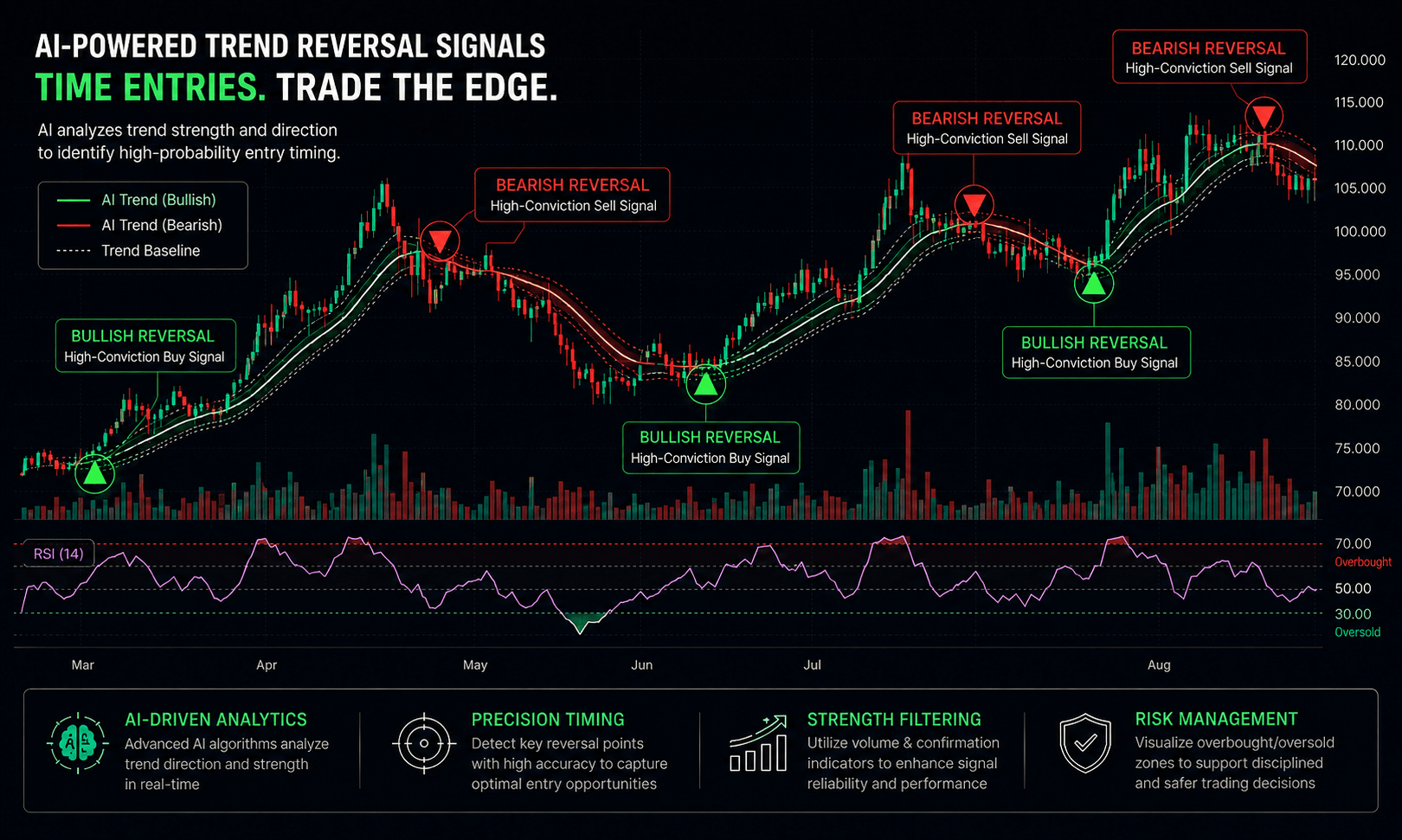
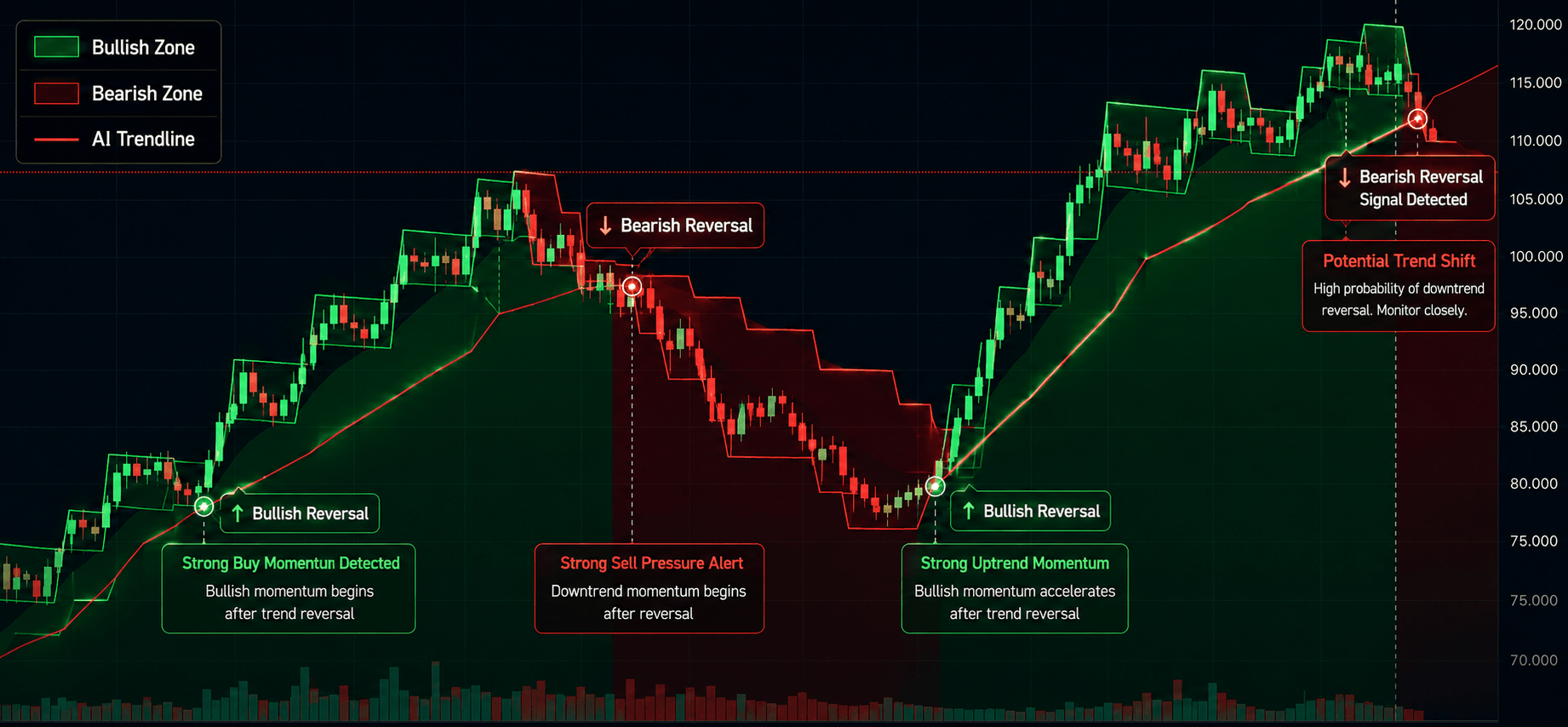
Bull Wave / Bear Wave Forecast Model
Engineered to help you read market direction and momentum faster than the crowd.
- Instantly separate bullish momentum from bearish pressure
- Pinpoint high-probability entry zones with confidence
- Chart signals clear enough for beginners, sharp enough for pros
Winning Pattern Detection
Instantly surfaces the high-probability setups that repeat across the charts — a trusted edge for timing your entries and exits.
- Spot momentum building in real time
- Catch trend-reversal points before they break
- Built for active traders who need results, not theory

AI Live Economic Dashboard
AI analyzes real-time market data — turning complex, global investment flows into clear insight in seconds.
- Track global stock markets in real time
- See exactly which assets are strong — and which are fading
- Watch how geopolitical events move the markets
About the Author