Duration: Price Sensitivity to Interest Rates
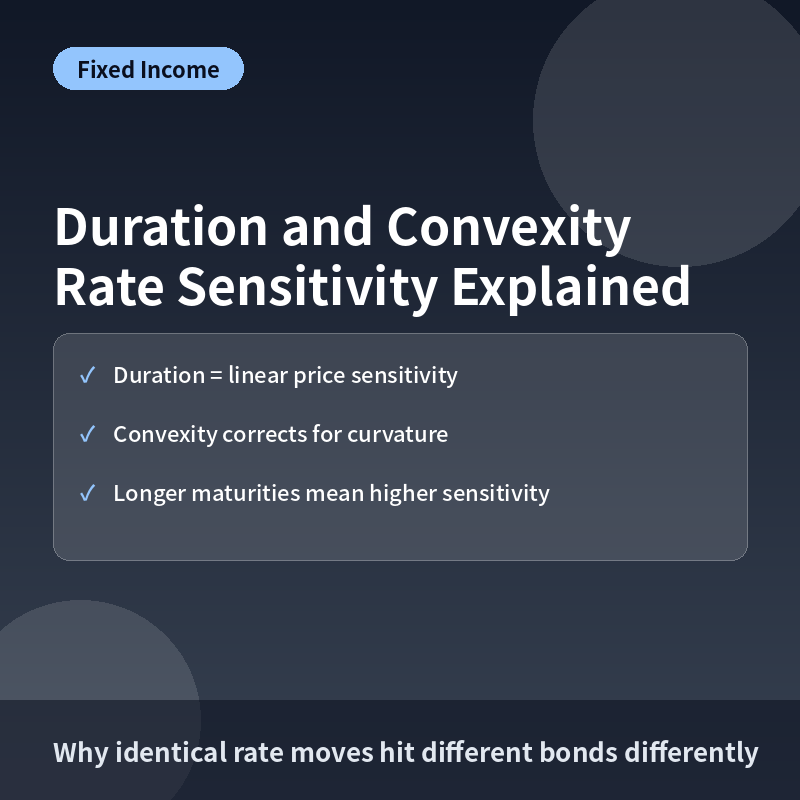
Duration estimates roughly how much a bond’s price will change for a 1 percentage point move in interest rates. A modified duration of 7, for example, implies the bond’s price will fall by approximately 7% if rates rise by 1 percentage point.
Why Longer Maturities Mean Higher Duration
The longer an investor must wait for a cash flow, the more that cash flow’s present value is affected by a change in the discount rate, so the effects compound across a longer bond’s life. Lower coupon bonds also tend to have higher duration, since more of their value comes from the final principal repayment, which is the most distant cash flow.
Why Duration Alone Isn’t Enough: Convexity
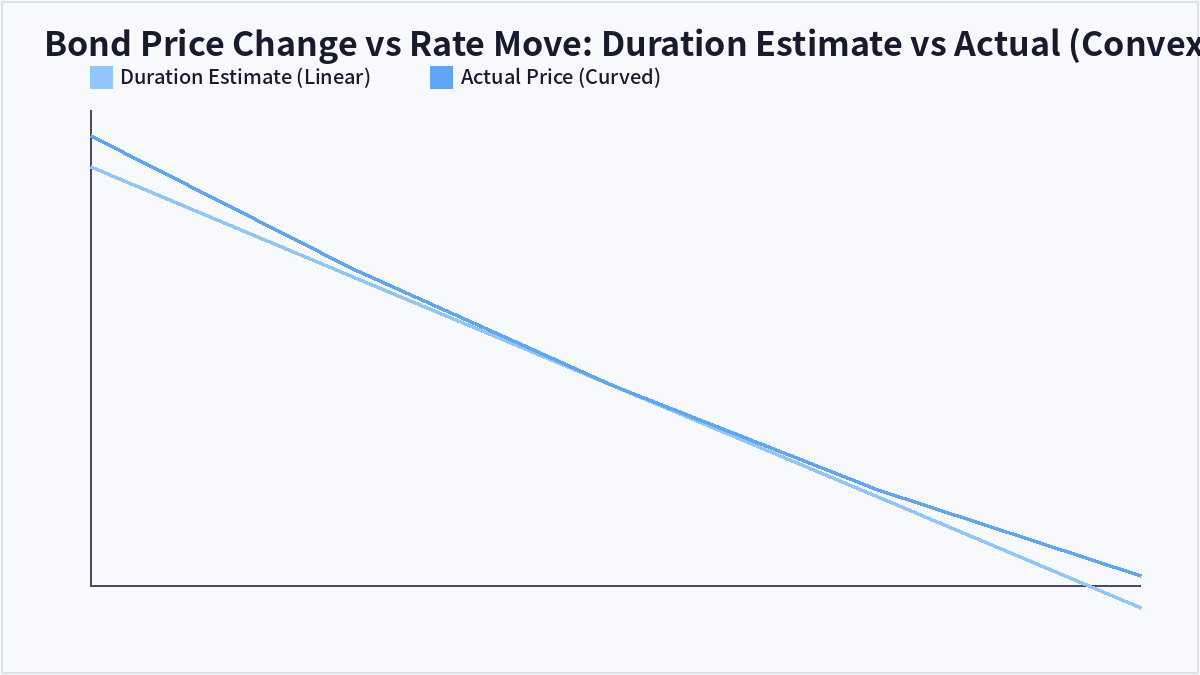
Duration assumes a linear (straight-line) relationship between rates and price, but the real relationship is curved (convex). Convexity corrects for that curvature, reducing the error between duration’s price estimate and the bond’s actual price change as the size of the rate move grows.
Why Higher Convexity Is Favorable
Positive convexity means that when rates fall, the price gain exceeds what duration alone predicts, and when rates rise, the price loss is smaller than duration alone predicts — an asymmetric benefit. Between two bonds with identical duration, the one with higher convexity is more attractive to holders.
| Measure | What It Estimates | Approximation Type | Accuracy in Large Rate Moves |
|---|---|---|---|
| Duration | First-order price change | Linear | Lower (error grows) |
| Convexity | Curvature correction to duration | Second-order | Higher |
Frequently Asked Questions
Is a bond with long duration always risky?
It carries larger price swings when rates rise, which is a risk in a rising-rate environment, but the same sensitivity becomes an advantage if rates are expected to fall — so the assessment depends on the rate outlook.
Why do lower-coupon bonds have longer duration?
With a lower coupon, more of the bond’s value comes from the principal repaid at maturity — the most distant cash flow — which pulls the weighted-average duration out further.
How is convexity actually calculated?
It’s the second derivative of the bond’s price with respect to yield, divided by the price; in practice, investors typically reference values from bond analytics platforms rather than calculating it by hand.
Should everyday investors care about duration?
Checking a bond fund or ETF’s average duration gives a useful, practical sense of how much its value might move for a given change in interest rates.
Key Takeaways
Duration measures a bond’s price sensitivity to rate changes, while convexity corrects for the curvature in that relationship. Used together, they give a more accurate picture of how bond prices will actually respond to interest rate movements. This article is for informational purposes only and does not constitute investment advice.

QuantPro: AI Finds the Trade Before You Do
From AI-powered chart analysis to real-time market intelligence — everything a serious investor needs, in one platform.
- Automated AI chart analysis with precision trend timing
- Bull Radar: real-time visualization of geopolitical & economic shifts
- Live market-moving news and insights, curated for you
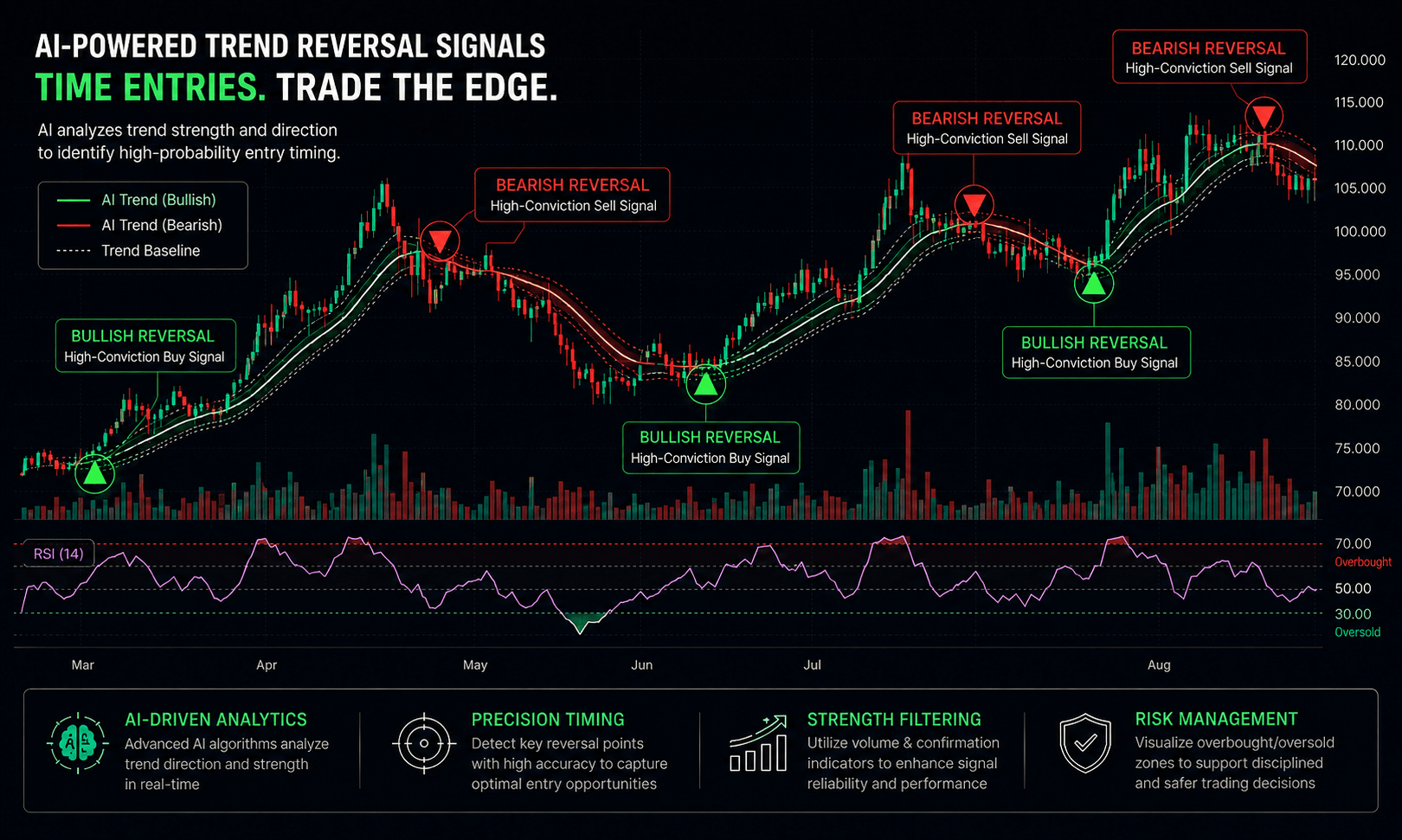
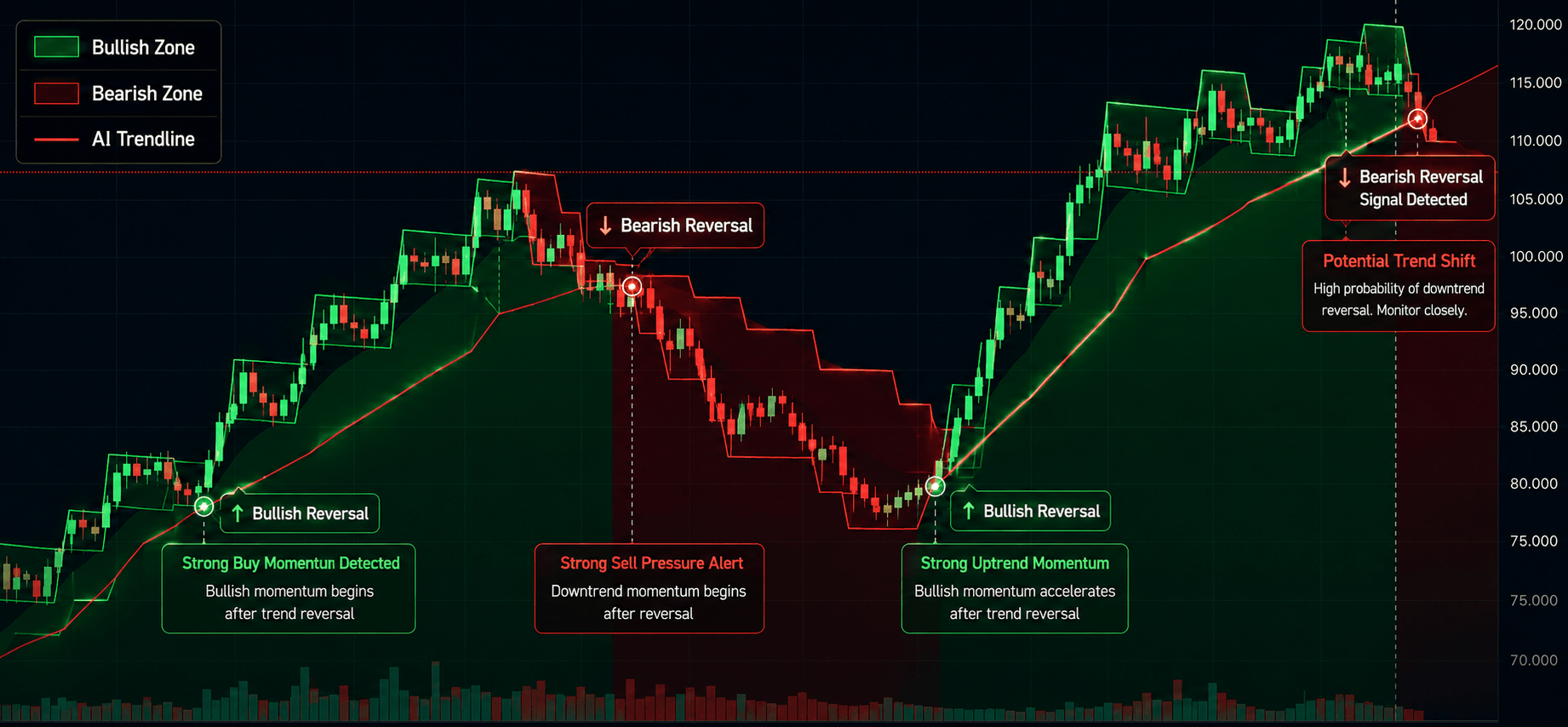
Bull Wave / Bear Wave Forecast Model
Engineered to help you read market direction and momentum faster than the crowd.
- Instantly separate bullish momentum from bearish pressure
- Pinpoint high-probability entry zones with confidence
- Chart signals clear enough for beginners, sharp enough for pros
Winning Pattern Detection
Instantly surfaces the high-probability setups that repeat across the charts — a trusted edge for timing your entries and exits.
- Spot momentum building in real time
- Catch trend-reversal points before they break
- Built for active traders who need results, not theory

AI Live Economic Dashboard
AI analyzes real-time market data — turning complex, global investment flows into clear insight in seconds.
- Track global stock markets in real time
- See exactly which assets are strong — and which are fading
- Watch how geopolitical events move the markets
About the Author