What Mezzanine Debt Is
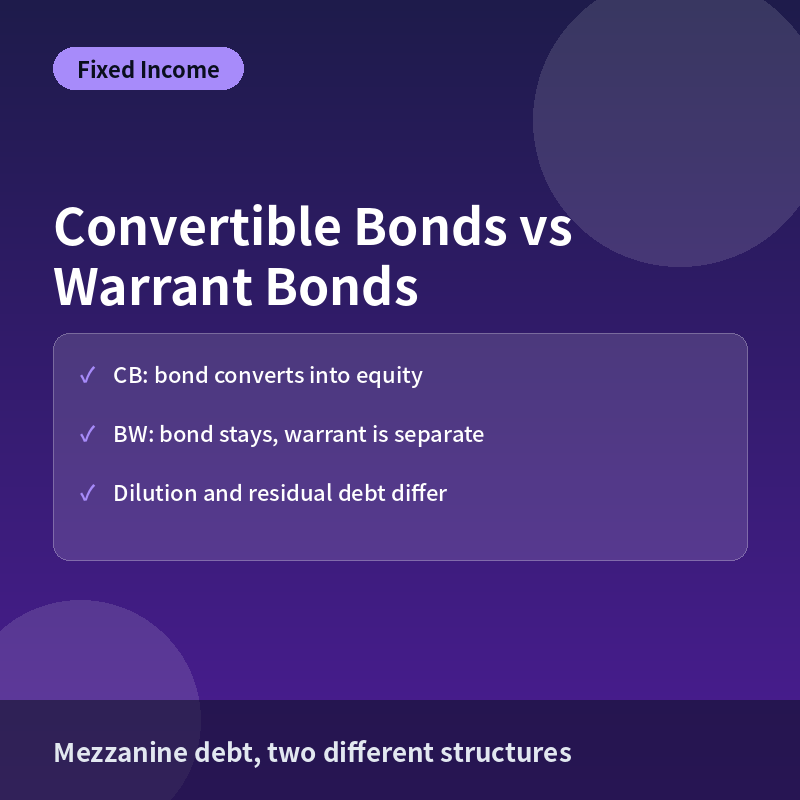
Convertible bonds (CBs) and bonds with warrants (BWs) are both ‘mezzanine’ financing instruments that combine a bond with an equity-linked option. They let issuers raise capital at a lower coupon rate, while giving investors both downside protection from the bond and upside participation if the stock rises.
Convertible Bonds: the Bond Becomes the Stock
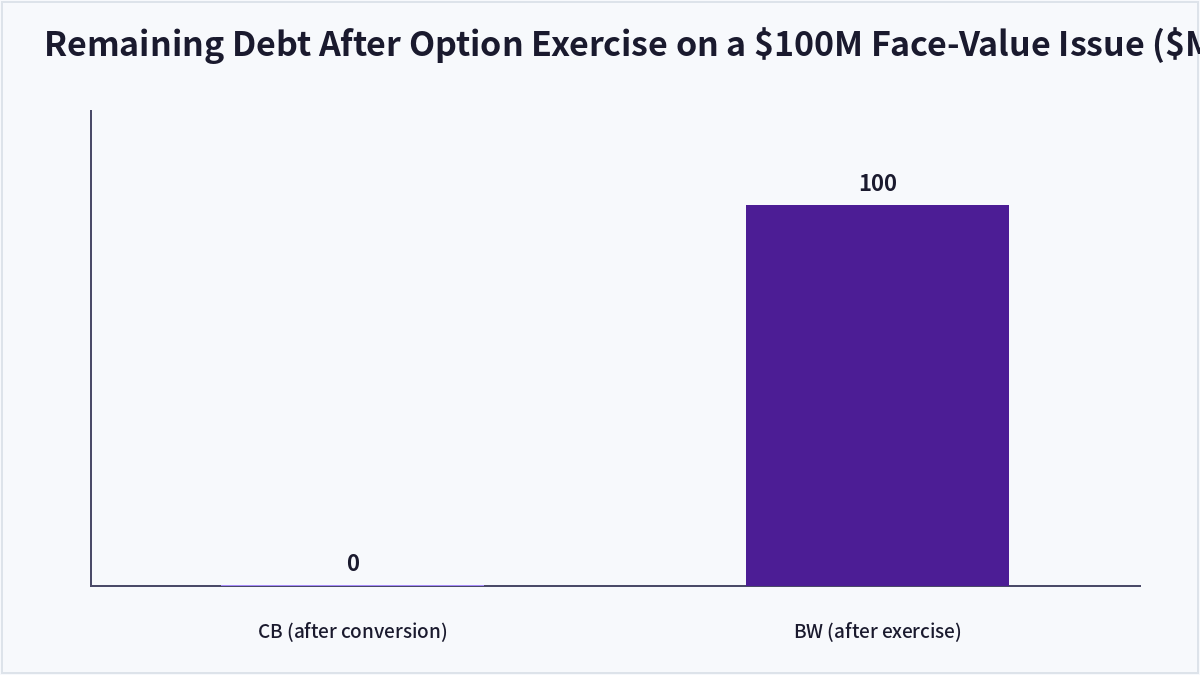
When a CB holder exercises the conversion right, the underlying bond itself is extinguished and exchanged for an equivalent value of new shares. Investors end up holding either the bond or the stock — never both — and once converted, the claim to principal repayment disappears.
Warrant Bonds: the Bond Survives, the Option Is Separate
With a BW, the warrant exists independently of the bond. Exercising the warrant to receive new shares does not extinguish the original bond, which continues to accrue interest and repay principal at maturity as usual. In many structures, the investor must also pay a separate exercise price to receive the new shares — a practical difference from CBs.
Detachable vs Non-Detachable Warrants
A ‘detachable’ BW allows the warrant to be traded separately from the bond, while a ‘non-detachable’ BW requires the bond and warrant to trade together as a single unit. Detachable warrants tend to offer greater liquidity since different investors can hold the bond and the warrant independently.
The Dilution Difference for Investors
A CB’s conversion increases share count by roughly the converted bond amount, while a BW leaves the bond outstanding even after the warrant is exercised — meaning new shares are issued on top of a debt obligation that still has to be repaid. All else equal, this can make the total dilution and share-count burden from a BW larger than from a CB.
| Structure | Bond at Exercise | Extra Cash Payment | Total Dilution Burden |
|---|---|---|---|
| Convertible Bond (CB) | Extinguished (becomes equity) | None | Relatively lower |
| Bond with Warrants (BW) | Remains outstanding to maturity | Separate exercise price paid | Relatively higher |
Frequently Asked Questions
Which is better for the issuing company, a CB or a BW?
It depends on the funding goal — converting a CB improves the balance sheet by turning debt into equity, while a BW brings in cash from the warrant exercise but leaves the debt obligation in place, so the choice reflects different capital structure priorities.
Can the warrant portion of a detachable BW be traded on its own?
Yes — a detachable BW can list or trade the bond and the warrant as separate securities, so investors can buy or sell just the warrant.
How is a CB’s conversion price set?
It’s typically set at a premium to the stock price at issuance, and many CBs include a ‘refixing’ clause that allows the conversion price to be adjusted downward, within limits, if the stock price falls.
Can a BW’s exercise price also be adjusted?
Yes, similar to a CB’s refixing clause, many BWs include downward-adjustment provisions for the warrant exercise price tied to stock price declines — worth checking in the issuance terms.
Key Takeaways
A convertible bond disappears into equity when converted, while a bond with warrants keeps the underlying debt alive alongside a separately exercised equity right. Both dilution mechanics and refixing clauses deserve close scrutiny before investing. This article is for informational purposes only and does not constitute investment advice.

QuantPro: AI Finds the Trade Before You Do
From AI-powered chart analysis to real-time market intelligence — everything a serious investor needs, in one platform.
- Automated AI chart analysis with precision trend timing
- Bull Radar: real-time visualization of geopolitical & economic shifts
- Live market-moving news and insights, curated for you
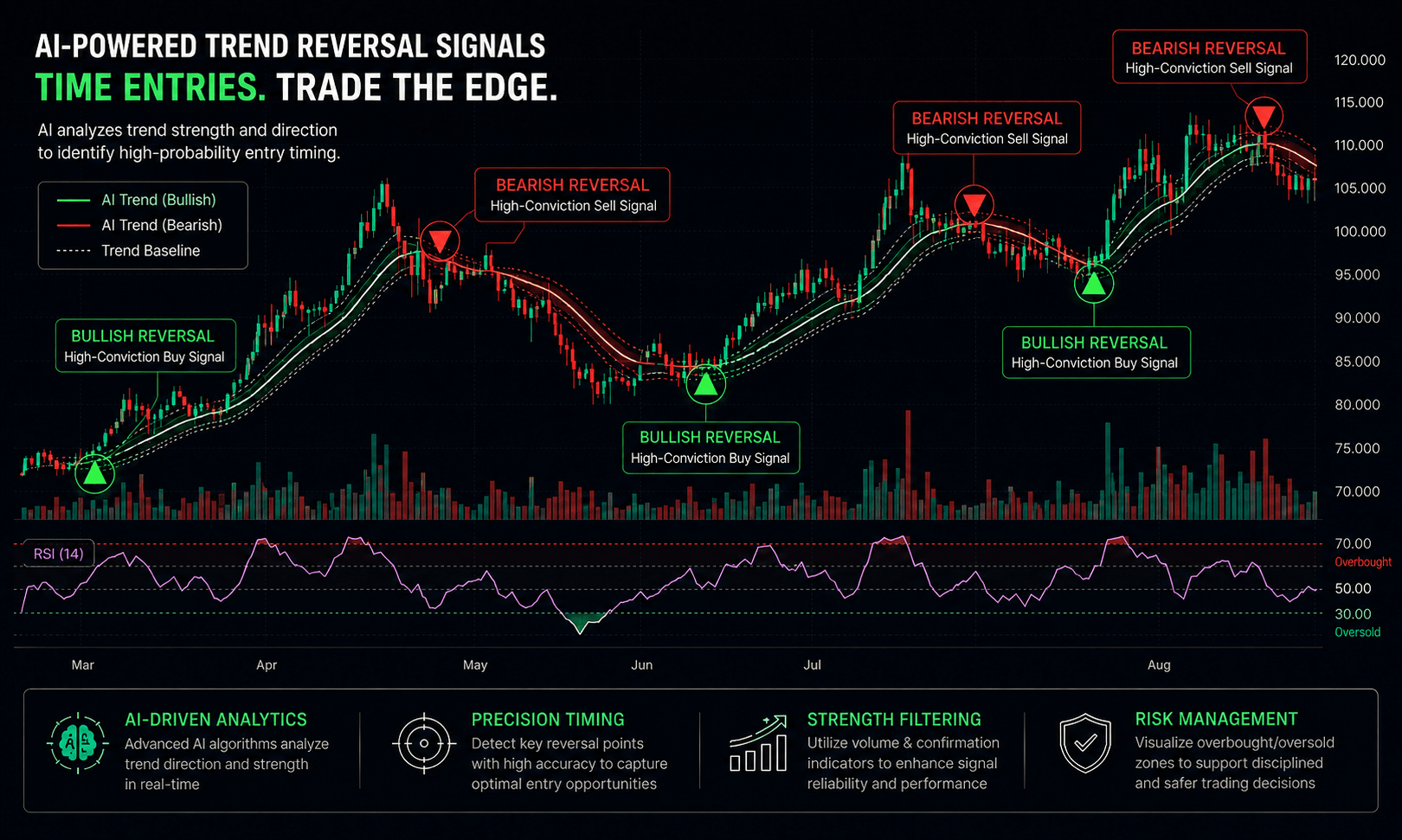
Bull Wave / Bear Wave Forecast Model
Engineered to help you read market direction and momentum faster than the crowd.
- Instantly separate bullish momentum from bearish pressure
- Pinpoint high-probability entry zones with confidence
- Chart signals clear enough for beginners, sharp enough for pros
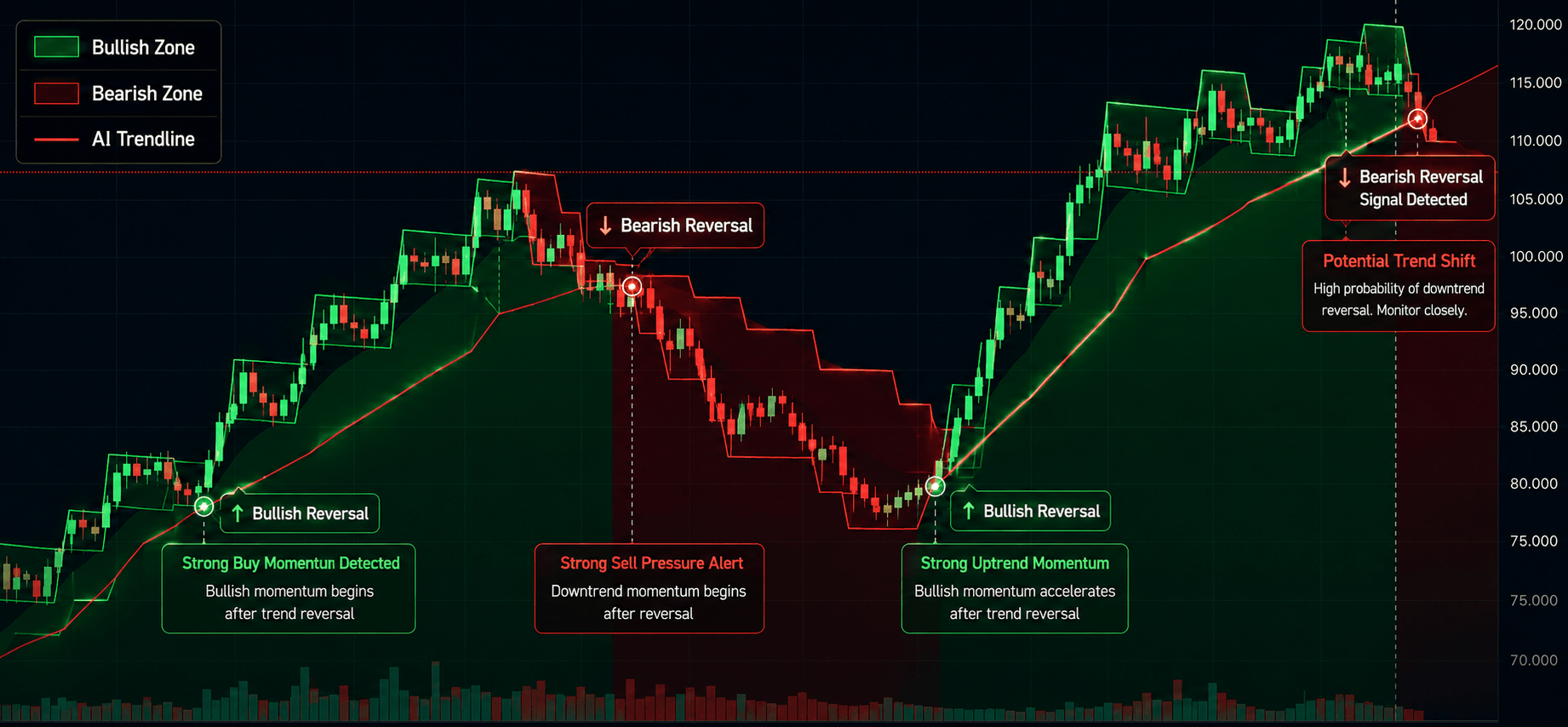
Winning Pattern Detection
Instantly surfaces the high-probability setups that repeat across the charts — a trusted edge for timing your entries and exits.
- Spot momentum building in real time
- Catch trend-reversal points before they break
- Built for active traders who need results, not theory

AI Live Economic Dashboard
AI analyzes real-time market data — turning complex, global investment flows into clear insight in seconds.
- Track global stock markets in real time
- See exactly which assets are strong — and which are fading
- Watch how geopolitical events move the markets
About the Author