
What Is Net Present Value (NPV)?
Net Present Value (NPV) is the sum of all expected future cash flows from an investment, each discounted back to today’s dollars, minus the initial cost of the investment. It answers a single, practical question: after adjusting for the fact that a dollar received five years from now is worth less than a dollar in hand today, does this project actually create value? NPV is the foundation of capital budgeting because it converts cash flows spread across many years into one comparable number, expressed in today’s money.
The logic rests on the time value of money: money available now can be invested and grow, while money received later carries opportunity cost and risk. NPV captures that cost explicitly through a discount rate, usually a company’s cost of capital or a required rate of return, rather than treating a dollar today and a dollar in year five as interchangeable.
The NPV Formula
The standard formula is NPV = sum of [CFt / (1 + r)^t] for t = 1 to n, minus the initial investment CF0. Here CFt is the cash flow expected in period t, r is the discount rate per period, and n is the number of periods. Each term divides a future cash flow by (1 + r) raised to the power of how many periods away it occurs, which shrinks more distant cash flows more heavily. The initial investment is entered as a negative cash flow at time zero, since it happens before any discounting is needed.
Worked Example
Suppose a company is considering a project that requires an initial investment of $100,000 today and is expected to generate $30,000 in cash flow at the end of each of the next 5 years. Using a 10% discount rate, each year’s $30,000 is discounted separately: $27,273 in present value for Year 1, $24,793 for Year 2, $22,539 for Year 3, $20,490 for Year 4, and $18,628 for Year 5. Adding these five present values gives $113,724. Subtracting the $100,000 initial investment leaves an NPV of approximately $13,724.

Because this NPV is positive, the project is expected to add roughly $13,724 of value in today’s terms beyond simply returning the 10% required rate of return. A negative NPV would mean the project fails to clear that hurdle and destroys value relative to the alternative use of the capital.
Why NPV Matters in Investment Decisions
NPV is widely regarded as the most theoretically sound capital budgeting tool because it directly measures the dollar impact on firm value, accounts for the time value of money, and can compare projects of different sizes and cash flow timing on a common basis. The decision rule is simple: accept a project if NPV is greater than zero, reject it if NPV is negative, and when choosing among mutually exclusive projects, prefer the one with the higher NPV.
Sensitivity to the Discount Rate
NPV is highly sensitive to the discount rate chosen. A higher discount rate penalizes distant cash flows more heavily and lowers NPV; a lower discount rate does the opposite. In the example above, raising the discount rate from 10% to 15% would reduce the present value of each future cash flow and could turn a marginal project’s NPV negative, which is why selecting a realistic, defensible discount rate is one of the most consequential steps in the analysis.
NPV vs. Other Investment Appraisal Methods
NPV is often used alongside, or compared against, other capital budgeting metrics such as the Internal Rate of Return (IRR), the Payback Period, and the Profitability Index. Each answers a slightly different question and has different strengths and blind spots.
| Method | What It Measures | Decision Rule | Key Limitation |
|---|---|---|---|
| Net Present Value (NPV) | Dollar value added in today’s terms | Accept if NPV > 0 | Requires an accurate discount rate estimate |
| Internal Rate of Return (IRR) | Break-even discount rate | Accept if IRR > cost of capital | Can mislead with non-conventional cash flow patterns |
| Payback Period | Time to recover the initial investment | Accept if payback is within target period | Ignores cash flows after payback and the time value of money |
| Profitability Index | Value created per dollar invested | Accept if index > 1.0 | Less intuitive than a direct dollar figure |
Frequently Asked Questions
What does a positive NPV actually mean?
A positive NPV means the project is expected to generate more value, in today’s dollars, than the cost of the capital invested in it. It indicates the investment is expected to earn a return above the discount rate used, adding to the firm’s overall value.
How is the discount rate for NPV usually chosen?
Companies typically use their weighted average cost of capital (WACC) as the discount rate for projects of similar risk to their existing operations. A project with unusually high or low risk compared to the firm’s typical business may warrant a risk-adjusted discount rate instead.
Can NPV be negative even with positive total cash flows?
Yes. If the sum of the undiscounted future cash flows only slightly exceeds the initial investment, discounting can push the present value of those cash flows below the initial cost, resulting in a negative NPV even though the raw, undiscounted total appears positive.
Why is NPV generally preferred over the payback period?
NPV accounts for the time value of money and considers all cash flows over the life of the project, while the payback period ignores both the timing of cash flows and anything that happens after the initial cost is recovered. NPV is considered a more complete measure of value creation, though payback period remains useful as a quick liquidity or risk check.
Key Takeaways
Net Present Value converts a stream of future cash flows into a single, comparable figure expressed in today’s dollars, making it one of the most reliable tools for deciding whether an investment is worth pursuing. A positive NPV signals value creation above the required rate of return, while a negative NPV signals value destruction, and the result is highly sensitive to the discount rate and cash flow estimates used. This article is for informational purposes only and does not constitute investment advice.

QuantPro: AI Finds the Trade Before You Do
From AI-powered chart analysis to real-time market intelligence — everything a serious investor needs, in one platform.
- Automated AI chart analysis with precision trend timing
- Bull Radar: real-time visualization of geopolitical & economic shifts
- Live market-moving news and insights, curated for you
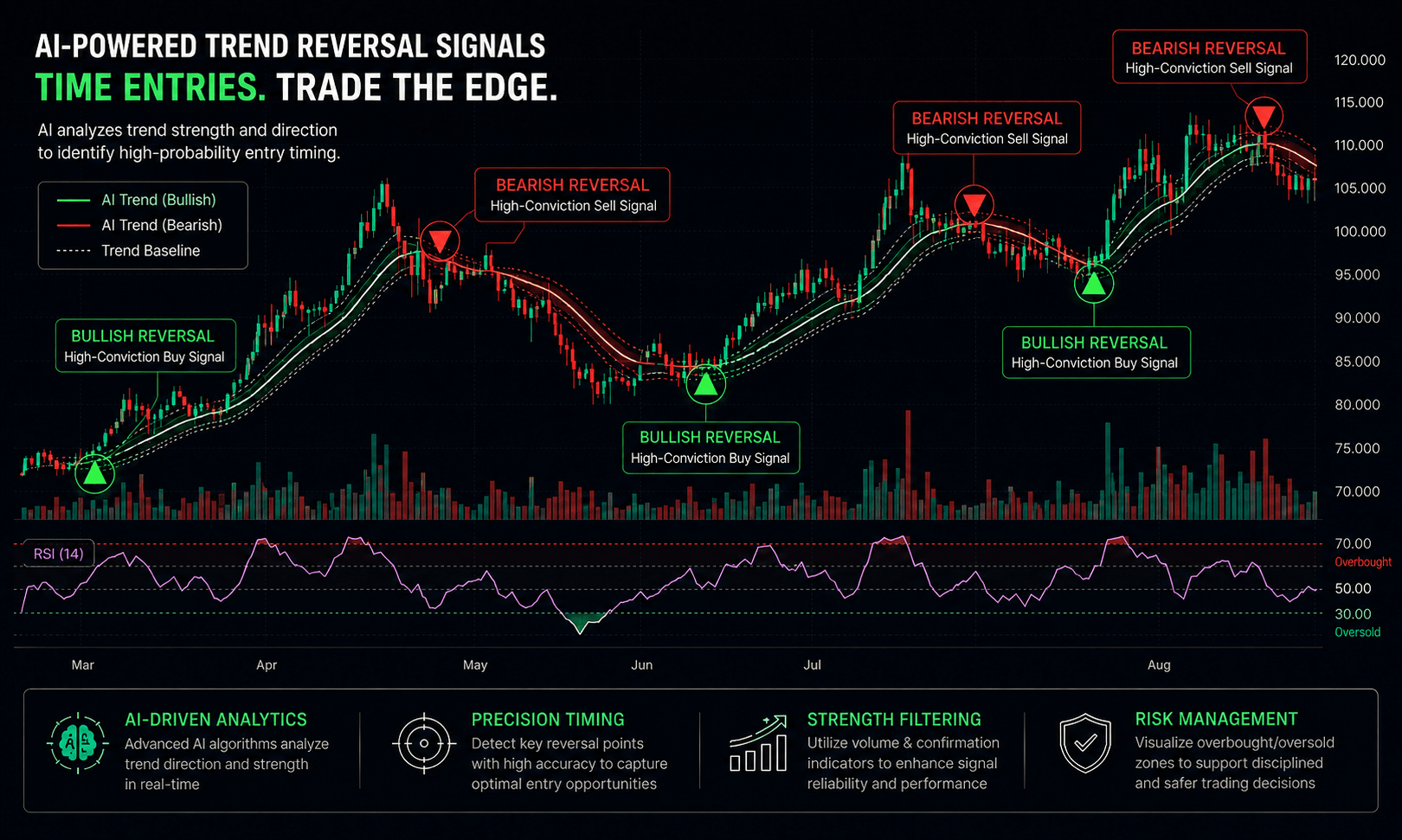
Bull Wave / Bear Wave Forecast Model
Engineered to help you read market direction and momentum faster than the crowd.
- Instantly separate bullish momentum from bearish pressure
- Pinpoint high-probability entry zones with confidence
- Chart signals clear enough for beginners, sharp enough for pros
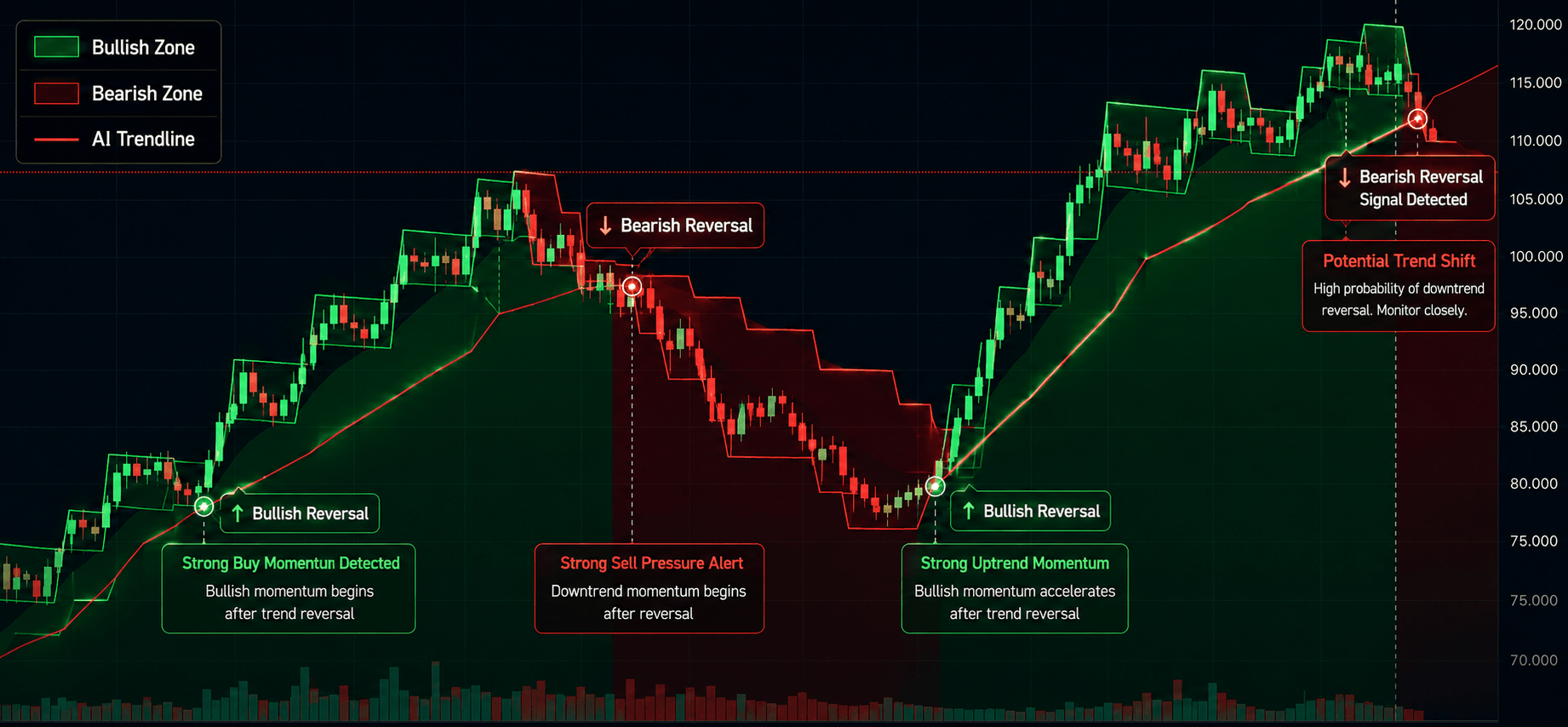
Winning Pattern Detection
Instantly surfaces the high-probability setups that repeat across the charts — a trusted edge for timing your entries and exits.
- Spot momentum building in real time
- Catch trend-reversal points before they break
- Built for active traders who need results, not theory

AI Live Economic Dashboard
AI analyzes real-time market data — turning complex, global investment flows into clear insight in seconds.
- Track global stock markets in real time
- See exactly which assets are strong — and which are fading
- Watch how geopolitical events move the markets
About the Author