What Put-Call Parity Is
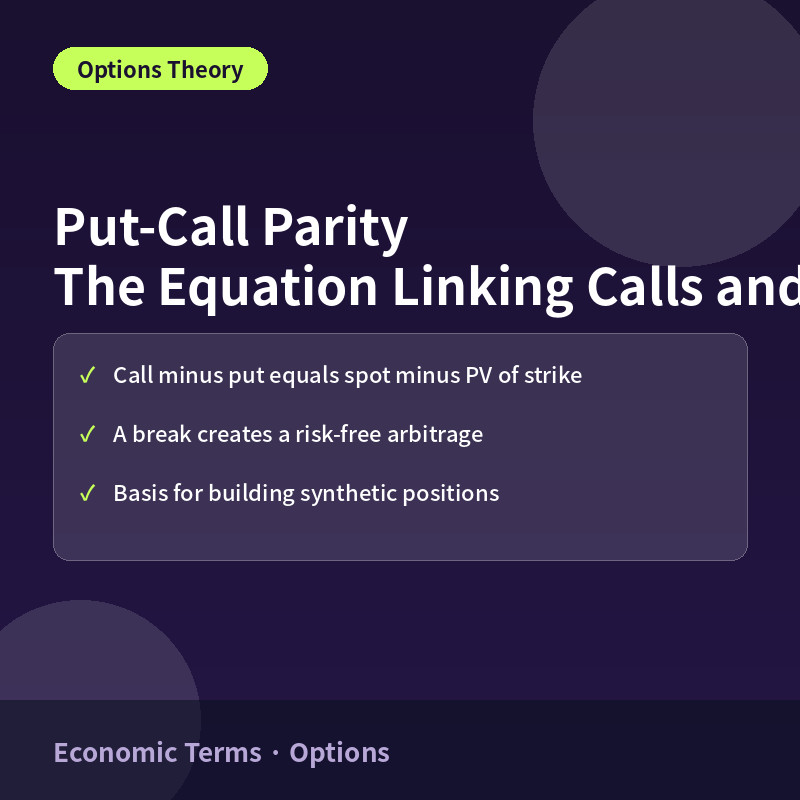
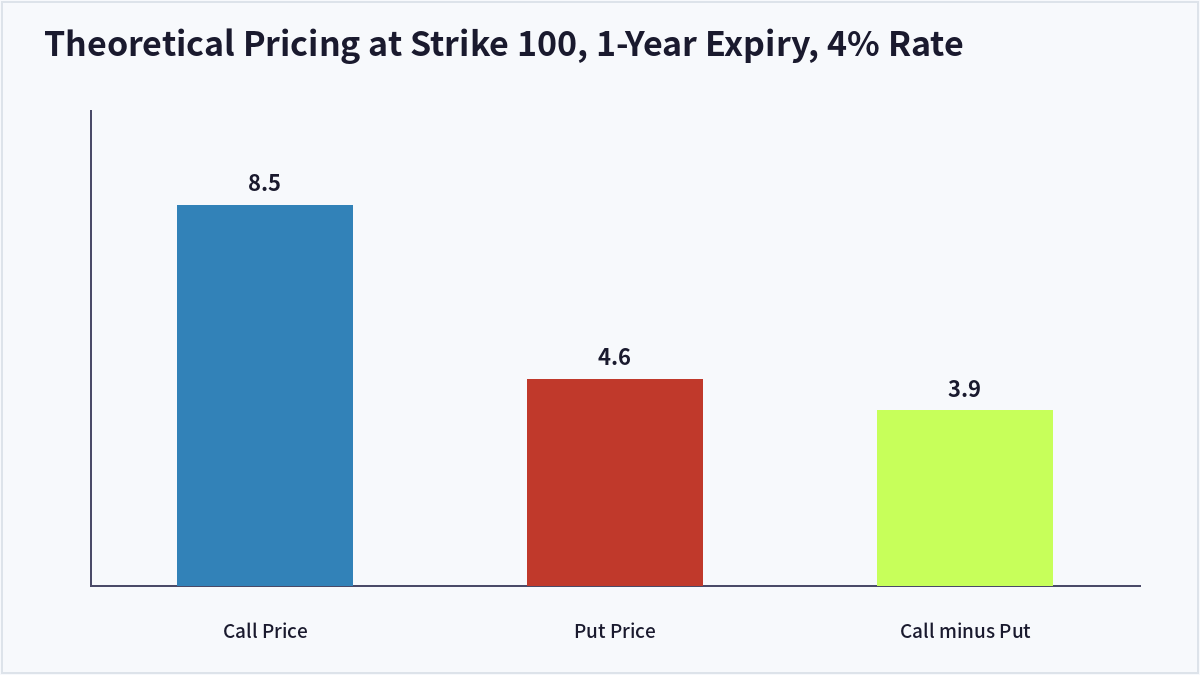
Put-call parity is a fixed mathematical relationship that must hold between a European call and a European put on the same underlying, with the same strike and expiration. The formula states that call price minus put price equals the underlying’s spot price minus the present value of the strike. When this relationship breaks, a risk-free arbitrage opportunity exists.
Why the Relationship Has to Hold
A position that buys a call and sells a put has exactly the same payoff at expiration as simply buying the underlying stock and borrowing an amount equal to the strike price. If two positions produce identical payoffs at maturity, they must trade at the same price today — otherwise an arbitrageur can buy the cheaper combination, sell the more expensive one, and lock in a risk-free profit, which pushes prices back into line.
Practical Use: Building Synthetic Positions
Put-call parity is the foundation for constructing synthetic positions from combinations of options. Buying a call while selling a put replicates a long stock position, while selling a call and buying a put replicates a short position. Traders use these synthetic equivalents when the option they actually want is illiquid or has an unfavorable spread.
When the Relationship Breaks Down
| Cause | Explanation | Practical Impact |
|---|---|---|
| Dividends | The formula must be adjusted for the present value of expected dividends | Dividend-paying stocks need a modified equation |
| American-style options | Early exercise turns the equality into an inequality | Exact parity only holds for European-style options |
| Transaction costs | Theoretical arbitrage profit gets absorbed by costs | Small deviations may not be worth exploiting |
Frequently Asked Questions
Does a parity violation always mean a free arbitrage exists?
In theory yes, but transaction costs, taxes, and borrowing costs mean very small deviations often aren’t worth acting on in practice. Real arbitrage only becomes profitable once the gap exceeds those costs.
Does parity apply exactly to American-style options?
No. Because American options can be exercised early, the relationship becomes an inequality rather than an exact equation. Precise put-call parity only holds for European-style options with no early exercise.
How does the formula change for dividend-paying stocks?
The present value of expected dividends must be subtracted from the underlying’s spot price before applying the formula. Ignoring dividends can make a normal, expected price difference look like a mispricing.
Why should everyday investors care about this concept?
Even without executing arbitrage trades, understanding that call and put prices are mathematically linked — not independent — helps explain how option prices are actually set and how synthetic positions can substitute for the option you want.
Key Takeaways
Put-call parity is the principle that a call and put with identical terms must maintain a fixed price relationship with the underlying asset and its strike price; a break in that relationship theoretically opens a risk-free arbitrage. Dividends, early exercise, and transaction costs mean the relationship often holds only approximately in real markets. This article is for informational purposes only and does not constitute investment advice.

QuantPro: AI Finds the Trade Before You Do
From AI-powered chart analysis to real-time market intelligence — everything a serious investor needs, in one platform.
- Automated AI chart analysis with precision trend timing
- Bull Radar: real-time visualization of geopolitical & economic shifts
- Live market-moving news and insights, curated for you
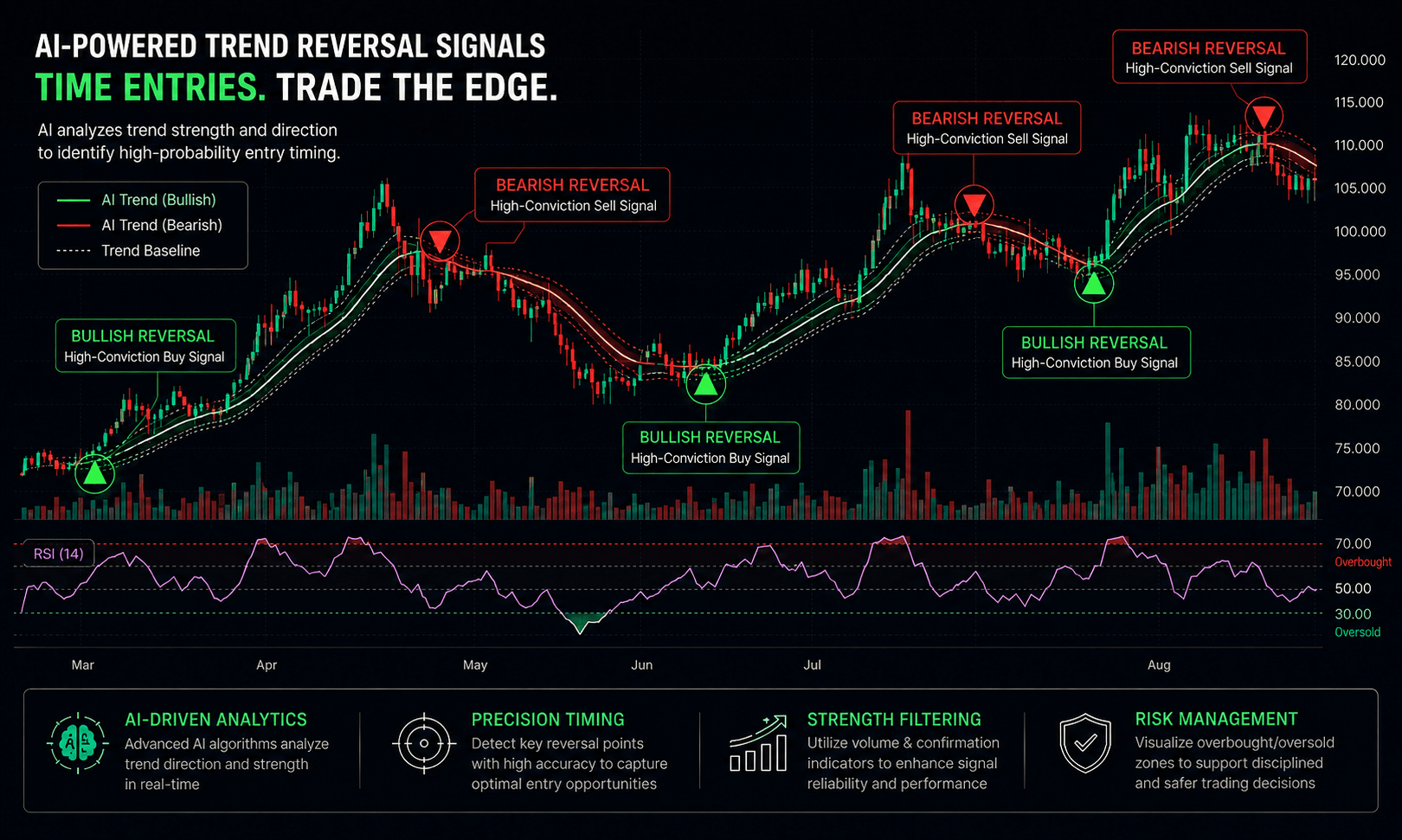
Bull Wave / Bear Wave Forecast Model
Engineered to help you read market direction and momentum faster than the crowd.
- Instantly separate bullish momentum from bearish pressure
- Pinpoint high-probability entry zones with confidence
- Chart signals clear enough for beginners, sharp enough for pros
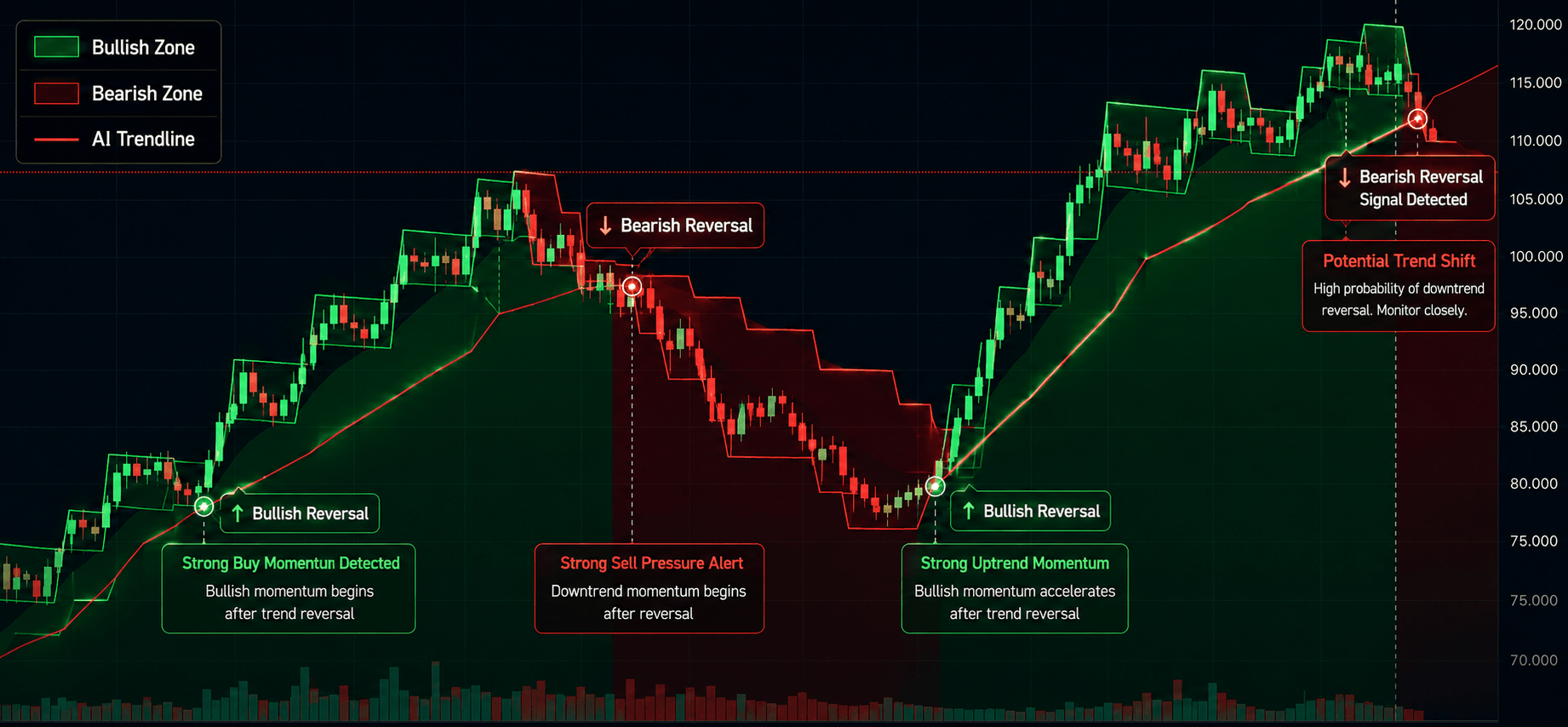
Winning Pattern Detection
Instantly surfaces the high-probability setups that repeat across the charts — a trusted edge for timing your entries and exits.
- Spot momentum building in real time
- Catch trend-reversal points before they break
- Built for active traders who need results, not theory
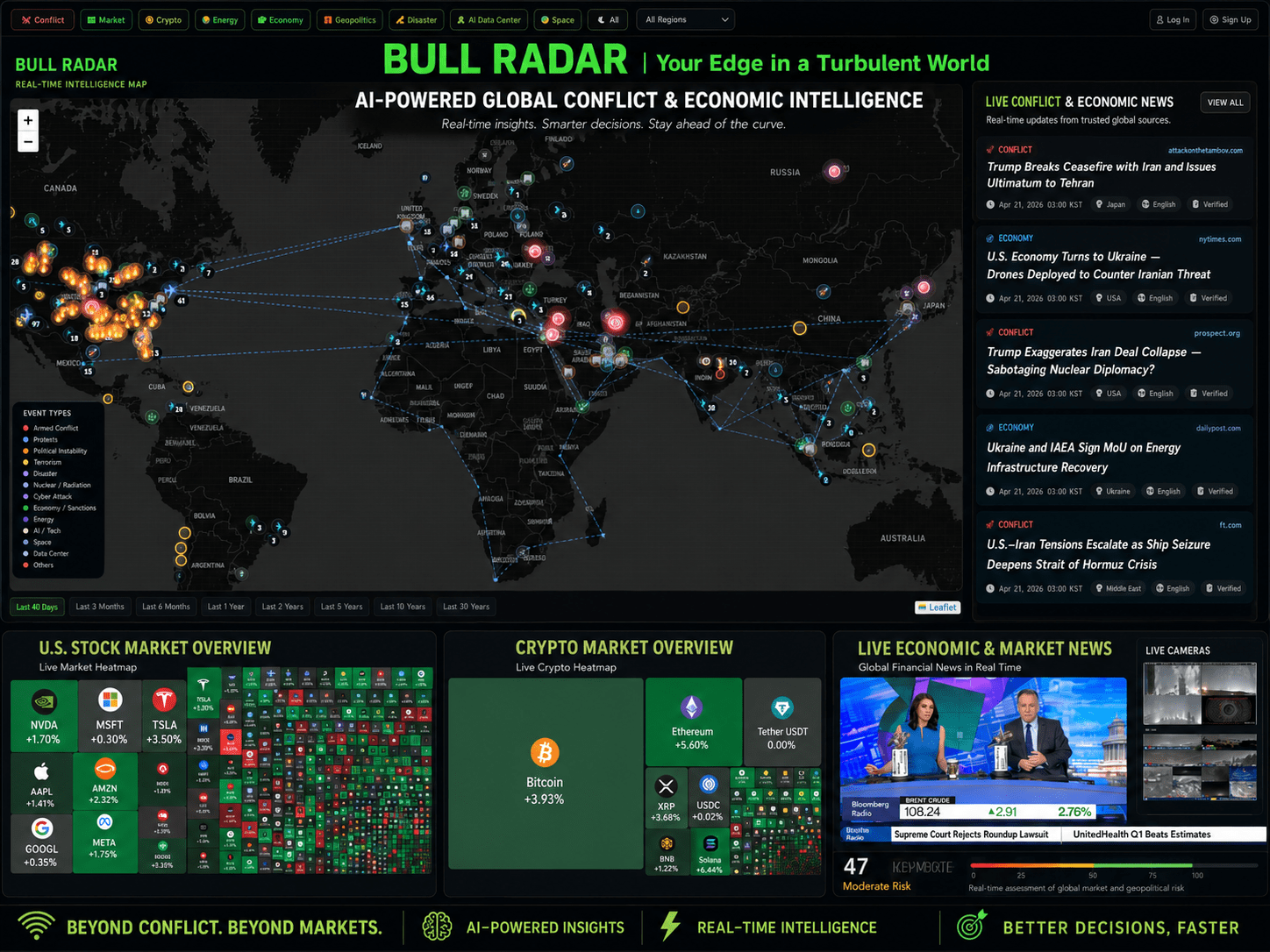
AI Live Economic Dashboard
AI analyzes real-time market data — turning complex, global investment flows into clear insight in seconds.
- Track global stock markets in real time
- See exactly which assets are strong — and which are fading
- Watch how geopolitical events move the markets
About the Author