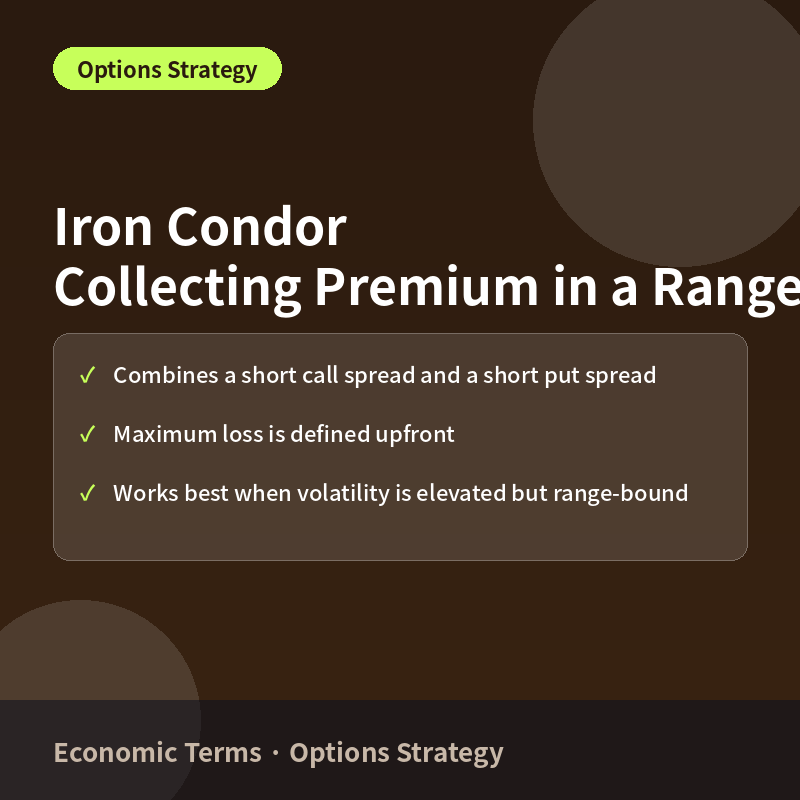
What an Iron Condor Is
An iron condor combines an out-of-the-money call spread (selling a call and buying a further out-of-the-money call) with an out-of-the-money put spread (selling a put and buying a further out-of-the-money put), forming a four-leg position. The goal is to collect the net premium if the underlying stays between the two short strikes through expiration.
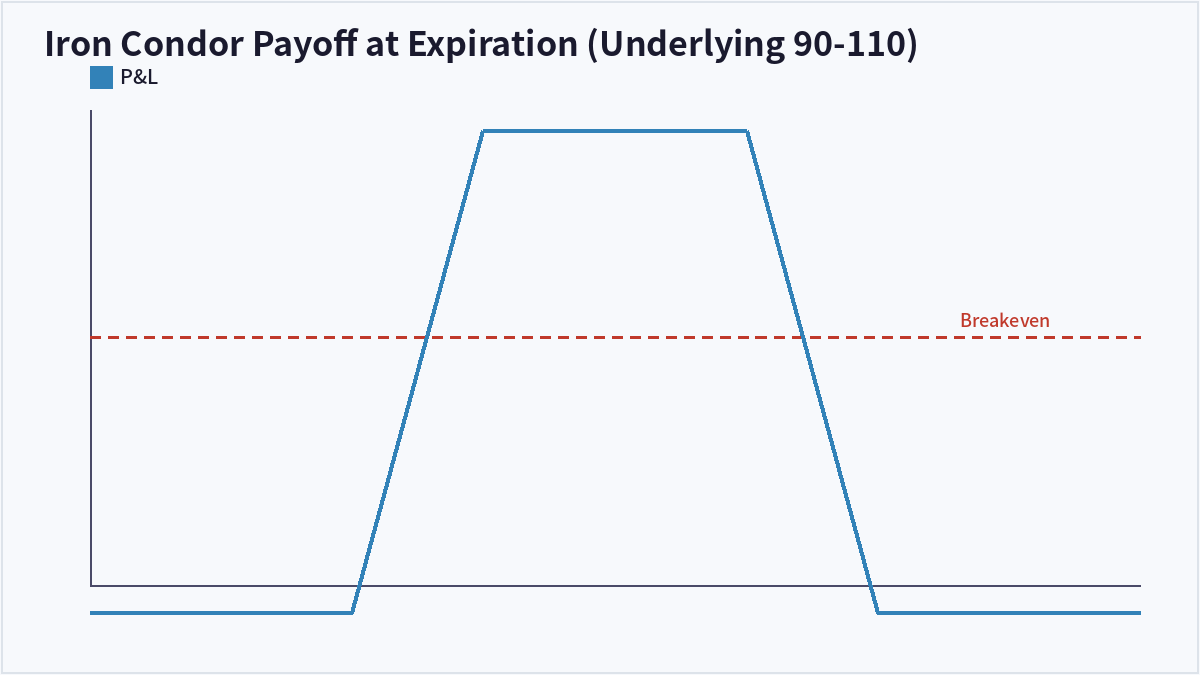
Profit and Loss Structure
Maximum profit is capped at the net premium collected upfront, while maximum loss is capped at the width of either spread minus that premium. For example, if each spread is 5 points wide and the net premium received is 1.5, the maximum loss on either side is fixed at 3.5 points.
Entry Conditions and Management
| Factor | Common Guideline | Reason |
|---|---|---|
| Implied volatility | Enter when IV is elevated relative to its historical range | Higher premium makes selling more attractive |
| Days to expiration | 30-45 days | Theta decay tends to be most efficient in this window |
| Delta of short strikes | Around 0.15-0.20 | Targets roughly an 80% probability the price stays inside |
The Most Common Mistake
Many new traders set the spread widths too narrow, collecting little premium relative to the risk they’re taking on. Another frequent error is holding the position without a predefined exit rule once losses start expanding, which can turn a manageable trade into the full maximum loss.
Frequently Asked Questions
What market conditions favor an iron condor?
It fits best when the underlying is expected to stay within a range rather than move strongly in either direction, and when implied volatility is elevated enough to make the premium collected worthwhile.
Is it still worth it if the max loss is bigger than the max profit?
The strategy is designed so the underlying has a much higher probability of staying inside the range than breaking out, so it should be evaluated on expected value and win rate together, not the raw risk-reward ratio alone.
Should the position be held until expiration?
Many traders close the position early once 50-70% of the maximum profit has been captured, reducing exposure to gamma risk (a sudden directional move) in the remaining days.
Can the four legs be entered separately?
They can, but that introduces leg risk from price movement between fills. Most brokers support entering an iron condor as a single combined order, which is generally the safer approach.
Key Takeaways
An iron condor sells both a call spread and a put spread simultaneously to collect premium when the underlying stays within a range, with both maximum profit and maximum loss defined in advance. Setting entry rules around implied volatility, days to expiration, and strike delta — along with a clear early-exit rule — is central to managing the trade well. This article is for informational purposes only and does not constitute investment advice.

QuantPro: AI Finds the Trade Before You Do
From AI-powered chart analysis to real-time market intelligence — everything a serious investor needs, in one platform.
- Automated AI chart analysis with precision trend timing
- Bull Radar: real-time visualization of geopolitical & economic shifts
- Live market-moving news and insights, curated for you
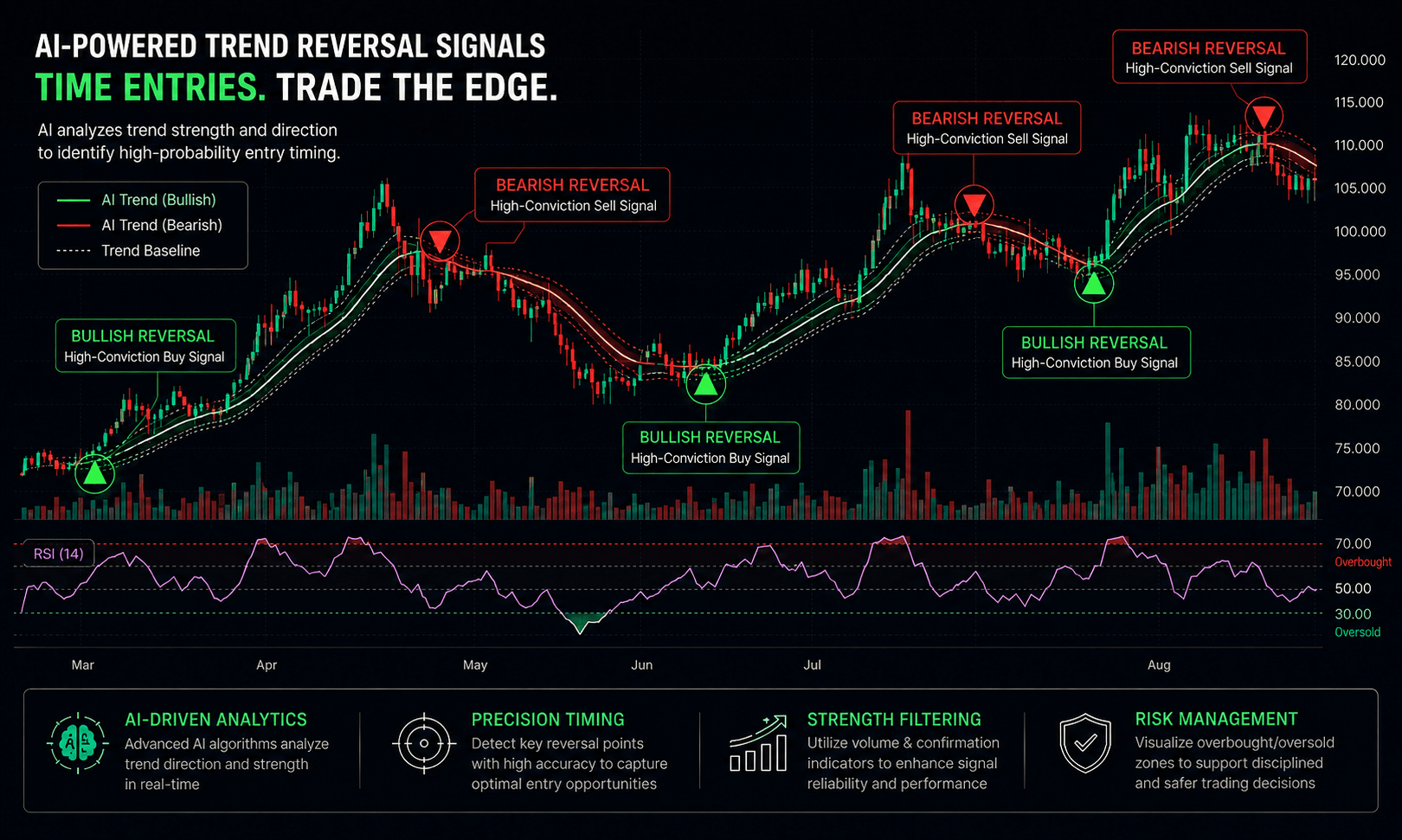
Bull Wave / Bear Wave Forecast Model
Engineered to help you read market direction and momentum faster than the crowd.
- Instantly separate bullish momentum from bearish pressure
- Pinpoint high-probability entry zones with confidence
- Chart signals clear enough for beginners, sharp enough for pros
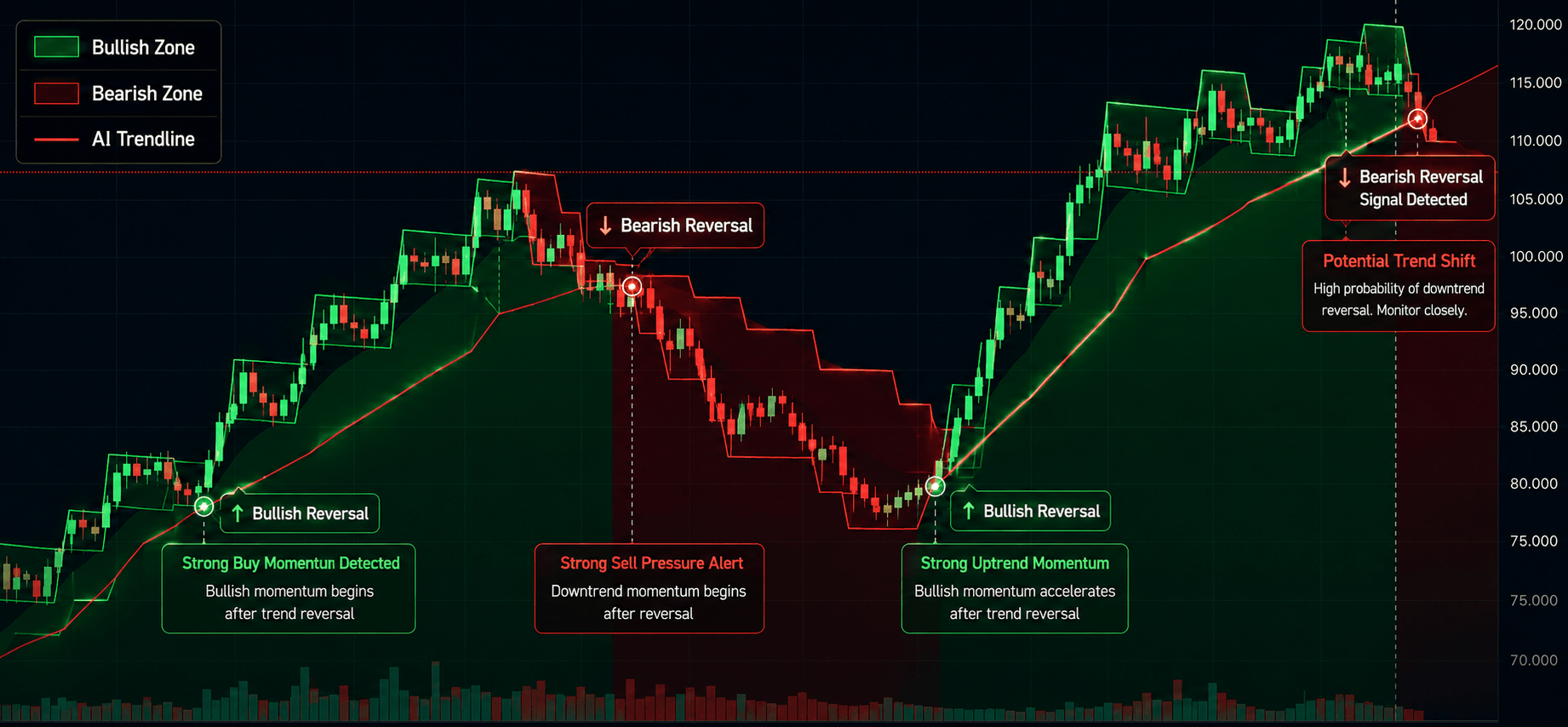
Winning Pattern Detection
Instantly surfaces the high-probability setups that repeat across the charts — a trusted edge for timing your entries and exits.
- Spot momentum building in real time
- Catch trend-reversal points before they break
- Built for active traders who need results, not theory
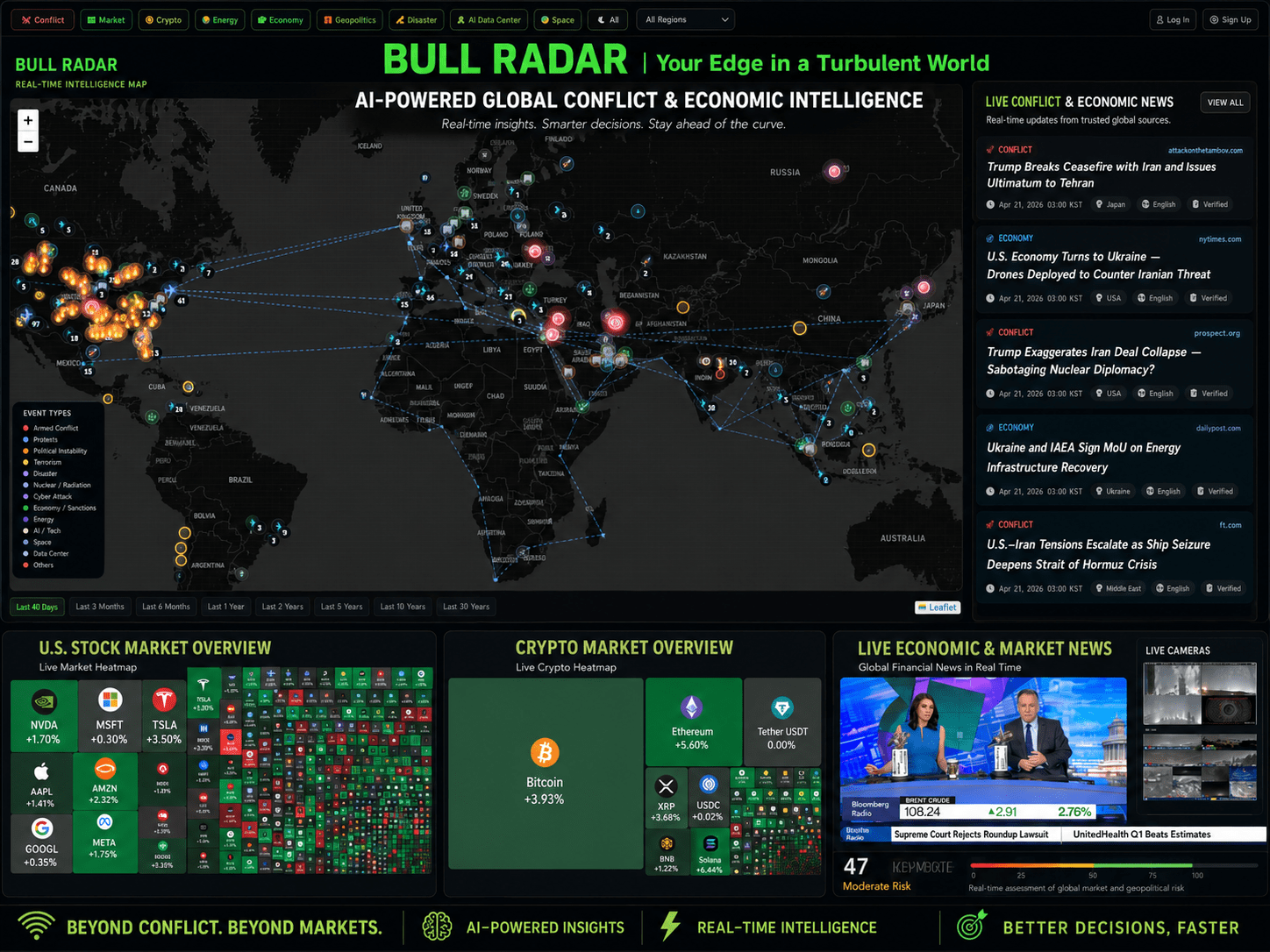
AI Live Economic Dashboard
AI analyzes real-time market data — turning complex, global investment flows into clear insight in seconds.
- Track global stock markets in real time
- See exactly which assets are strong — and which are fading
- Watch how geopolitical events move the markets
About the Author