What Quantitative Tightening (QT) Is
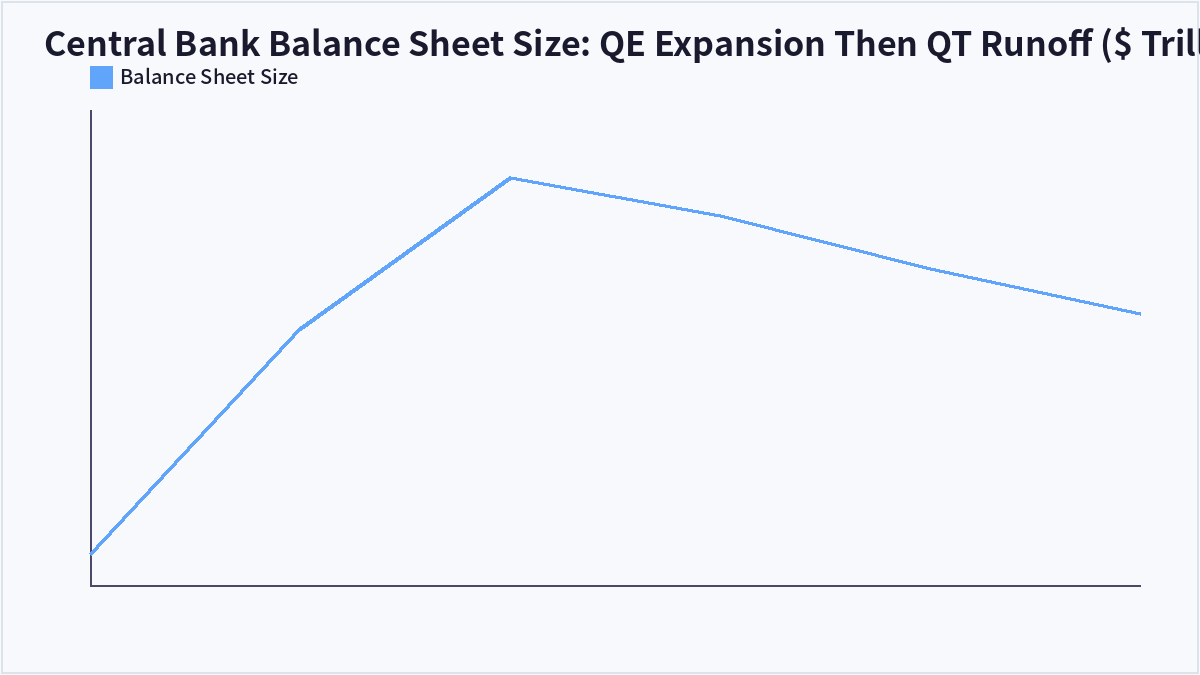
Quantitative tightening is when a central bank reduces the size of its balance sheet — the stock of Treasuries, mortgage-backed securities, and other assets it accumulated during a quantitative easing (QE) program. It works to pull back liquidity that QE had previously injected into the financial system.
How the Balance Sheet Actually Shrinks
The most common method is ‘passive runoff’: when a held bond matures, the central bank simply does not reinvest the principal, letting it roll off the balance sheet. This drains liquidity from the banking system as the principal is repaid to the central bank rather than recycled into new purchases. A more aggressive ‘active’ approach — directly selling bonds before maturity — can also be used.
The Mirror Image of QE
QE injects cash into the financial system by having the central bank buy bonds, pushing long-term rates down. QT works in reverse: reducing or halting bond purchases withdraws liquidity from the system and puts upward pressure on long-term interest rates.
The Effect on Markets
As QT proceeds, reduced system liquidity combined with a larger supply of Treasuries needing to find buyers can pressure long-term yields higher, which in turn often weighs on valuations for risk assets like stocks and real estate. The actual market impact depends heavily on the pace of QT and how well it’s anticipated by markets.
| Policy | Balance Sheet | Liquidity Effect | Long-Rate Effect |
|---|---|---|---|
| Quantitative Easing (QE) | Expands | Adds liquidity | Downward pressure |
| Quantitative Tightening (QT) | Contracts | Drains liquidity | Upward pressure |
Frequently Asked Questions
Is QT the same as raising interest rates?
Both are tightening tools, but they work through different channels — rate hikes primarily affect short-term rates, while QT mainly affects long-term rates and overall system liquidity, as a separate policy lever.
Does QT always cause stock prices to fall?
Reduced liquidity can pressure valuations, but actual stock price direction also depends heavily on economic growth and corporate earnings, so QT alone doesn’t determine the outcome.
How long does a QT cycle typically last?
It varies by central bank objectives and economic conditions, but QT programs are generally spread out over a much longer period than the QE programs that preceded them.
What happens if QT proceeds faster than expected?
A faster-than-anticipated runoff can raise concerns about liquidity strain, potentially triggering sharper rate moves or increased volatility in risk assets in the short term.
Key Takeaways
Quantitative tightening reverses the balance sheet expansion of QE by draining liquidity from the financial system, making it a key macro variable for long-term interest rates and risk-asset valuations. This article is for informational purposes only and does not constitute investment advice.

QuantPro: AI Finds the Trade Before You Do
From AI-powered chart analysis to real-time market intelligence — everything a serious investor needs, in one platform.
- Automated AI chart analysis with precision trend timing
- Bull Radar: real-time visualization of geopolitical & economic shifts
- Live market-moving news and insights, curated for you
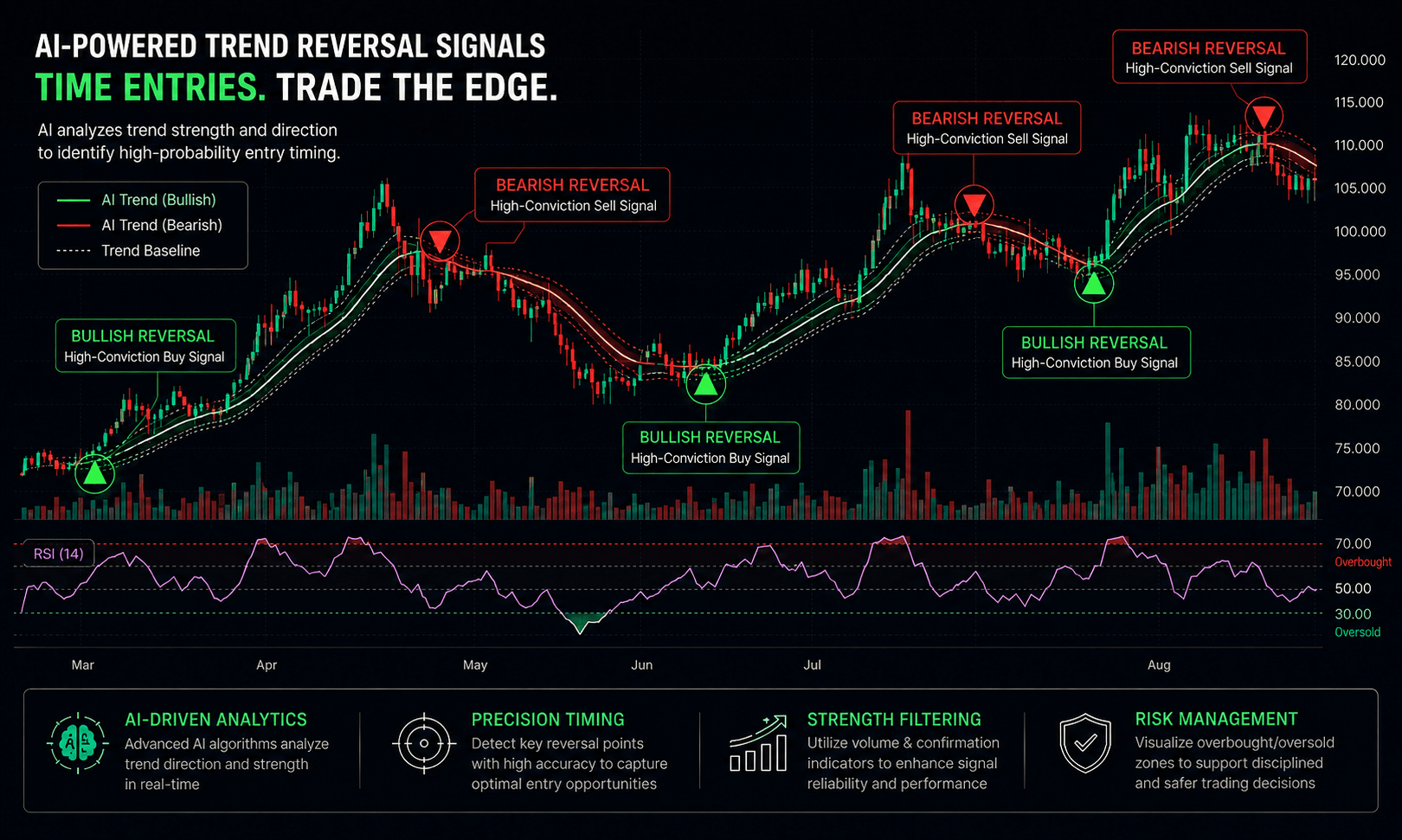
Bull Wave / Bear Wave Forecast Model
Engineered to help you read market direction and momentum faster than the crowd.
- Instantly separate bullish momentum from bearish pressure
- Pinpoint high-probability entry zones with confidence
- Chart signals clear enough for beginners, sharp enough for pros
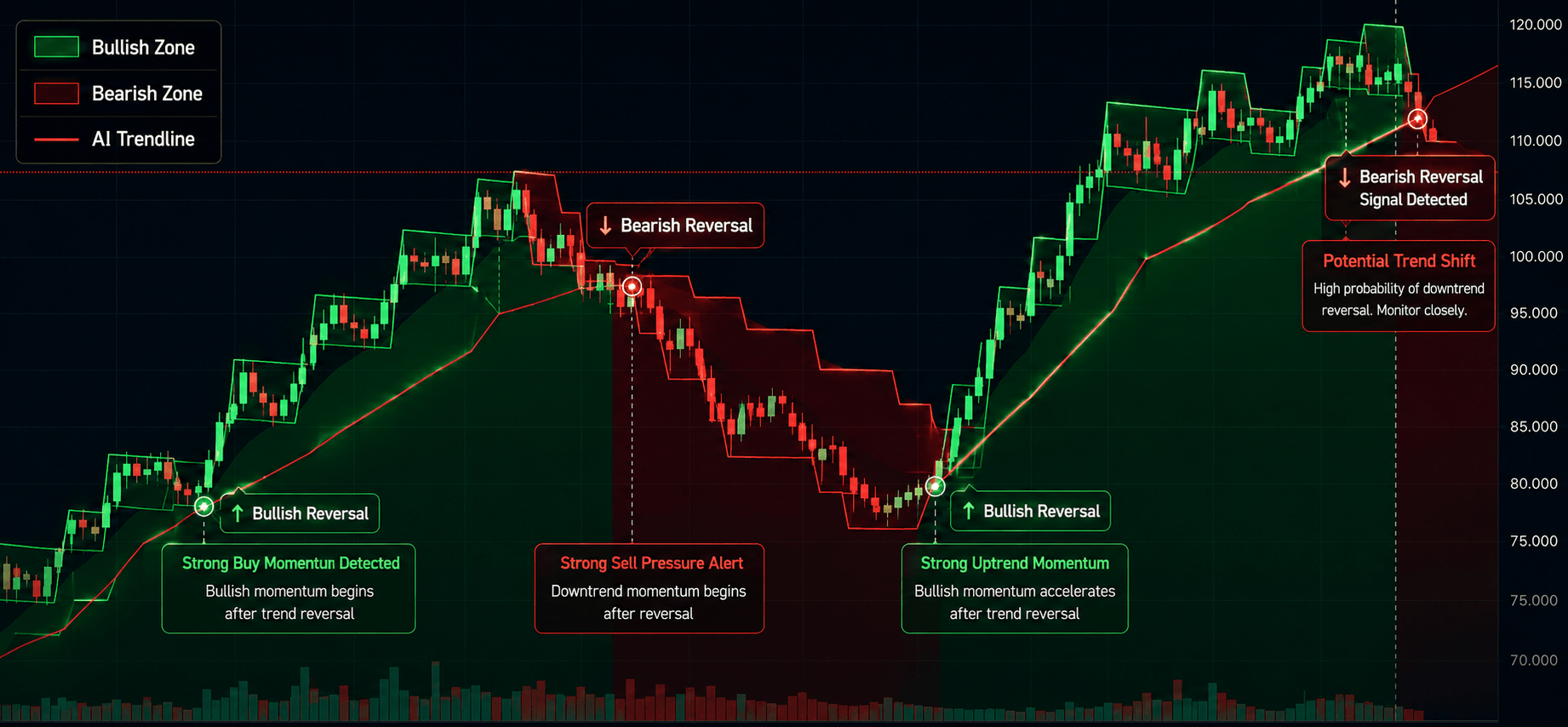
Winning Pattern Detection
Instantly surfaces the high-probability setups that repeat across the charts — a trusted edge for timing your entries and exits.
- Spot momentum building in real time
- Catch trend-reversal points before they break
- Built for active traders who need results, not theory
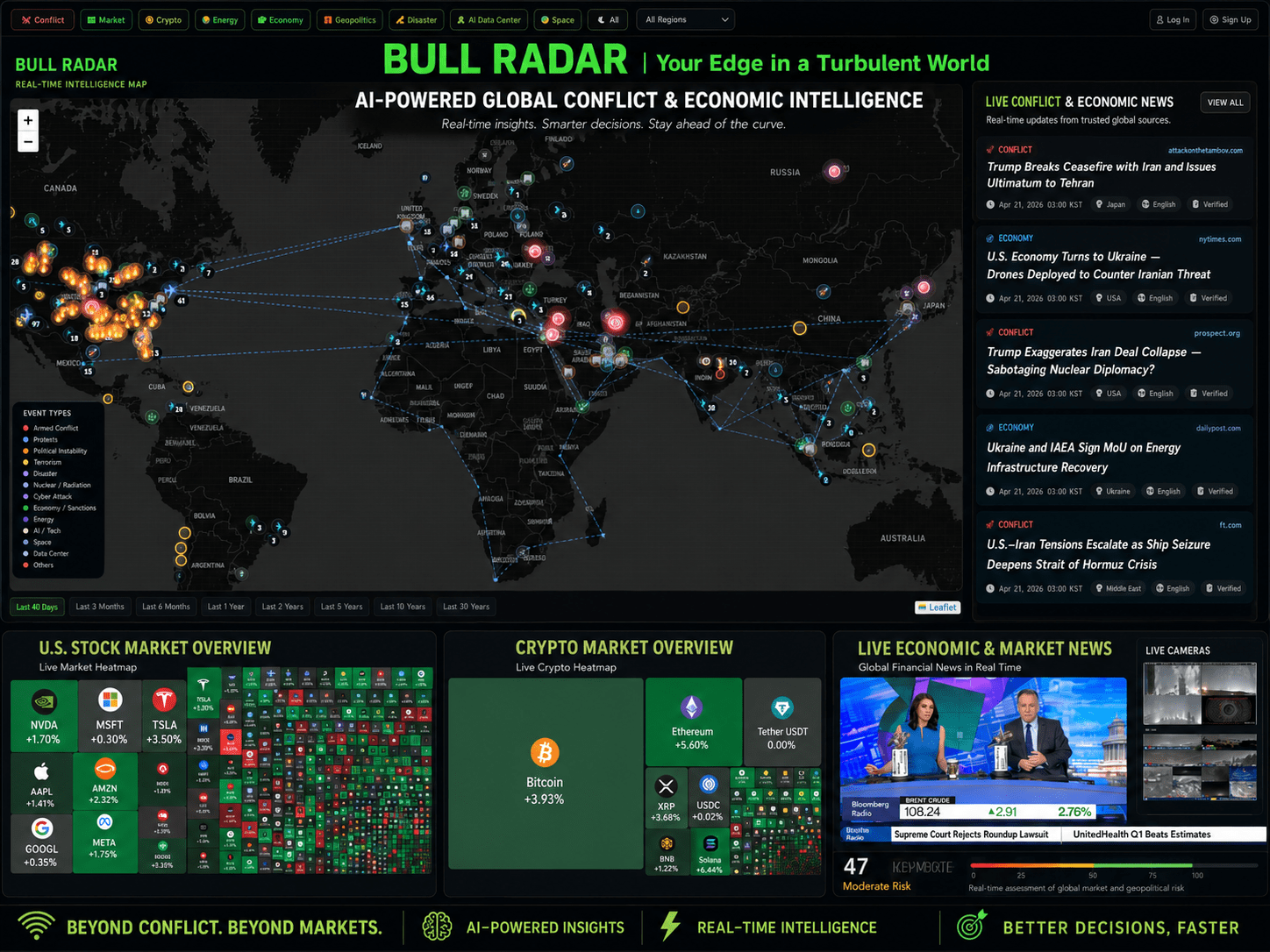
AI Live Economic Dashboard
AI analyzes real-time market data — turning complex, global investment flows into clear insight in seconds.
- Track global stock markets in real time
- See exactly which assets are strong — and which are fading
- Watch how geopolitical events move the markets
About the Author