The Sector Rotation Framework
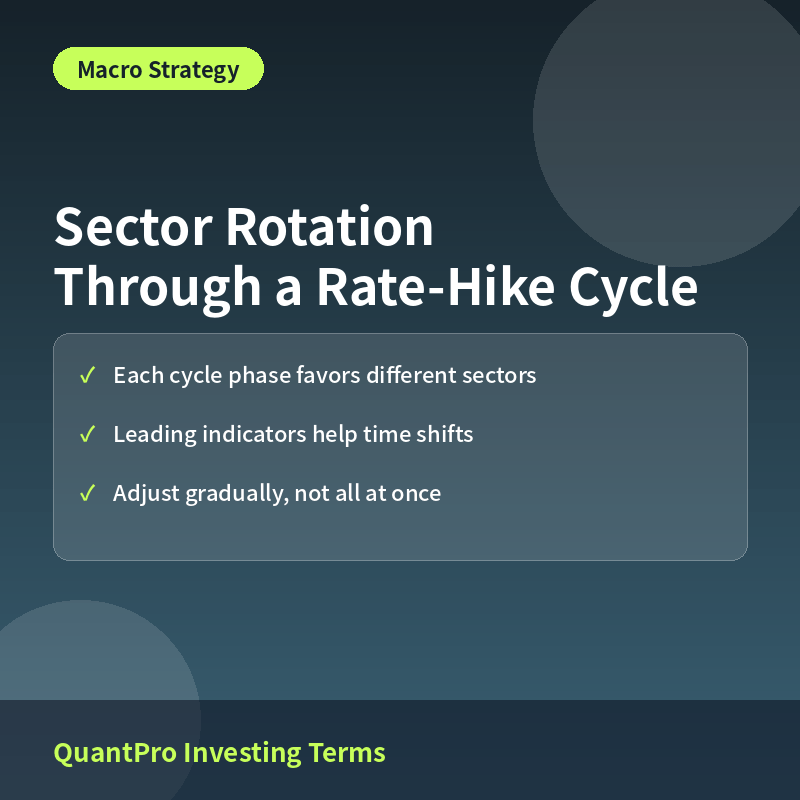
Sector rotation is the observation that as the economy cycles through recovery, expansion, slowdown, and contraction, different sectors tend to lead in each phase based on how their earnings respond to changing growth and interest-rate conditions. The framework doesn’t guarantee outperformance, but it offers a structured way to think about tilting sector weights as the macro backdrop shifts.
How Sector Leadership Shifts Across a Rate Cycle
Early in a hiking cycle, financials often benefit from wider net interest margins even as growth-sensitive sectors face valuation pressure from higher discount rates. As hikes progress and growth slows, defensive sectors like healthcare and utilities have tended to hold up better, while cyclical and highly-levered sectors face both margin and financing cost pressure simultaneously.
Reading the Signals
Leading economic indicators, purchasing managers’ indices (PMI), and the shape of the yield curve are commonly used to gauge where the cycle currently stands. None of these signals are precise timing tools on their own, and they’re best used together rather than in isolation, since any single indicator can give a false signal for extended periods.
A Practical Approach to Rotation
Rather than making abrupt all-or-nothing sector switches, many investors adjust weights gradually as multiple signals align, using sector ETFs to implement modest tilts around a diversified core rather than betting the entire portfolio on correctly timing a single rotation. Treating the framework as a guide for gradual tilts, rather than a precise trading system, tends to be more forgiving of the inevitable timing mistakes.
| Cycle Phase | Historically Favored Sectors | Signal to Watch |
|---|---|---|
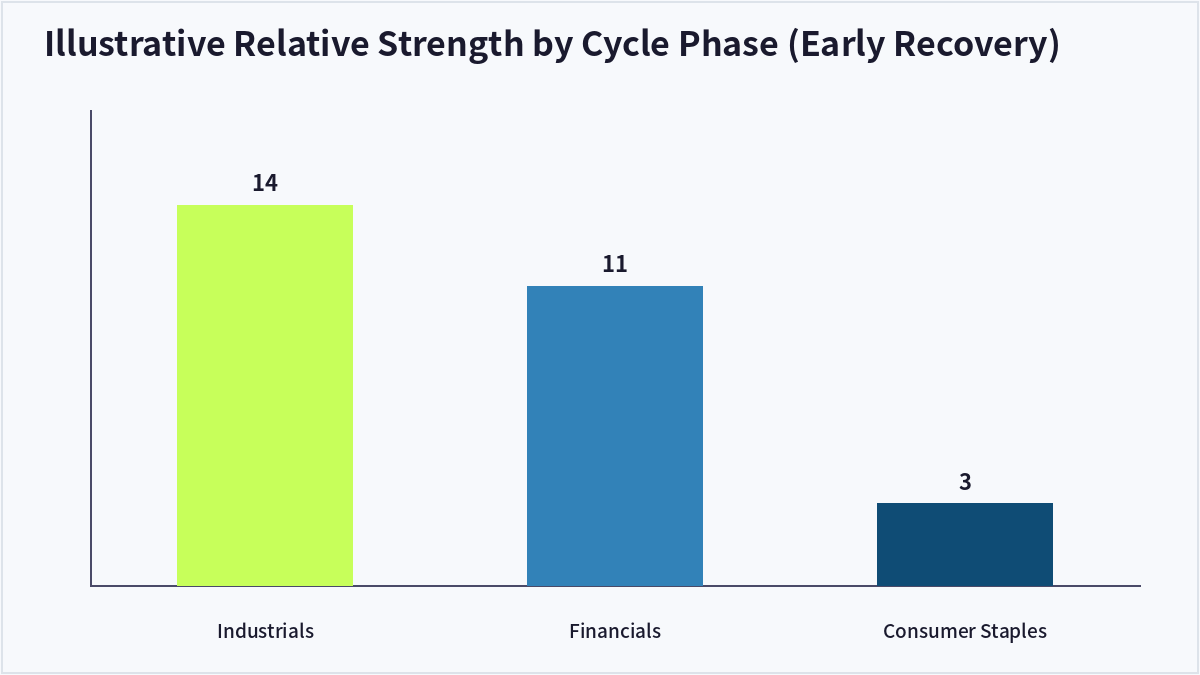
| Early Recovery | Industrials, Financials, Materials | PMI rebounding, rates near trough |
| Late Expansion | Technology, Consumer Discretionary | Strong employment and spending |
| Slowdown | Energy, Healthcare | PMI rolling over from highs |
| Contraction | Consumer Staples, Utilities | Rising unemployment, rate cuts begin |
Frequently Asked Questions
Can individual investors implement sector rotation easily?
Sector-specific ETFs make it relatively accessible, though correctly timing the phase transitions remains genuinely difficult, which is why many investors treat this as a framework for modest tilts rather than a strategy requiring precise timing.
Does this pattern repeat identically every cycle?
Broad tendencies have repeated across many cycles, but the specific causes differ each time — a financial crisis, a pandemic, and a geopolitical shock each produce somewhat different sector dynamics even within a broadly similar rotation pattern.
How is sector rotation different from growth-versus-value rotation?
Sector rotation operates at the industry level, while growth-versus-value rotation operates at the investment-style level; the two frameworks often overlap and are commonly used together when adjusting a portfolio.
What signals suggest a cycle phase is changing?
A sustained shift in PMI direction, changes in the yield curve slope, and shifts in central bank guidance are commonly monitored together, since any single signal in isolation can give misleading readings for extended stretches.
Key Takeaways
Sector leadership has tended to shift across the business cycle in fairly consistent broad patterns, and combining leading indicators like PMI and the yield curve to gradually tilt sector weights tends to be a more robust approach than trying to time a single decisive rotation. This article is for informational purposes only and does not constitute investment advice.

QuantPro: AI Finds the Trade Before You Do
From AI-powered chart analysis to real-time market intelligence — everything a serious investor needs, in one platform.
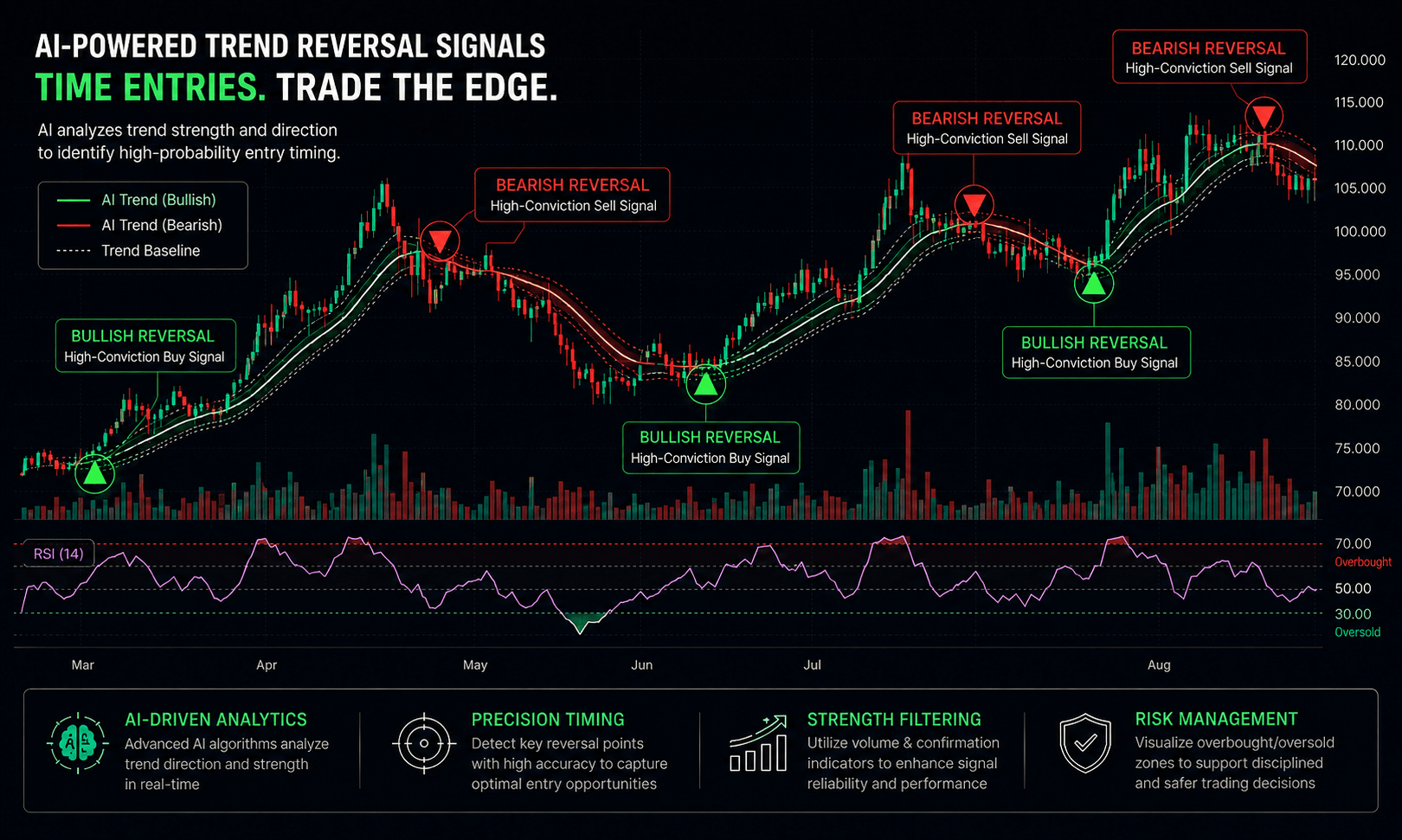
- Automated AI chart analysis with precision trend timing
- Bull Radar: real-time visualization of geopolitical & economic shifts
- Live market-moving news and insights, curated for you
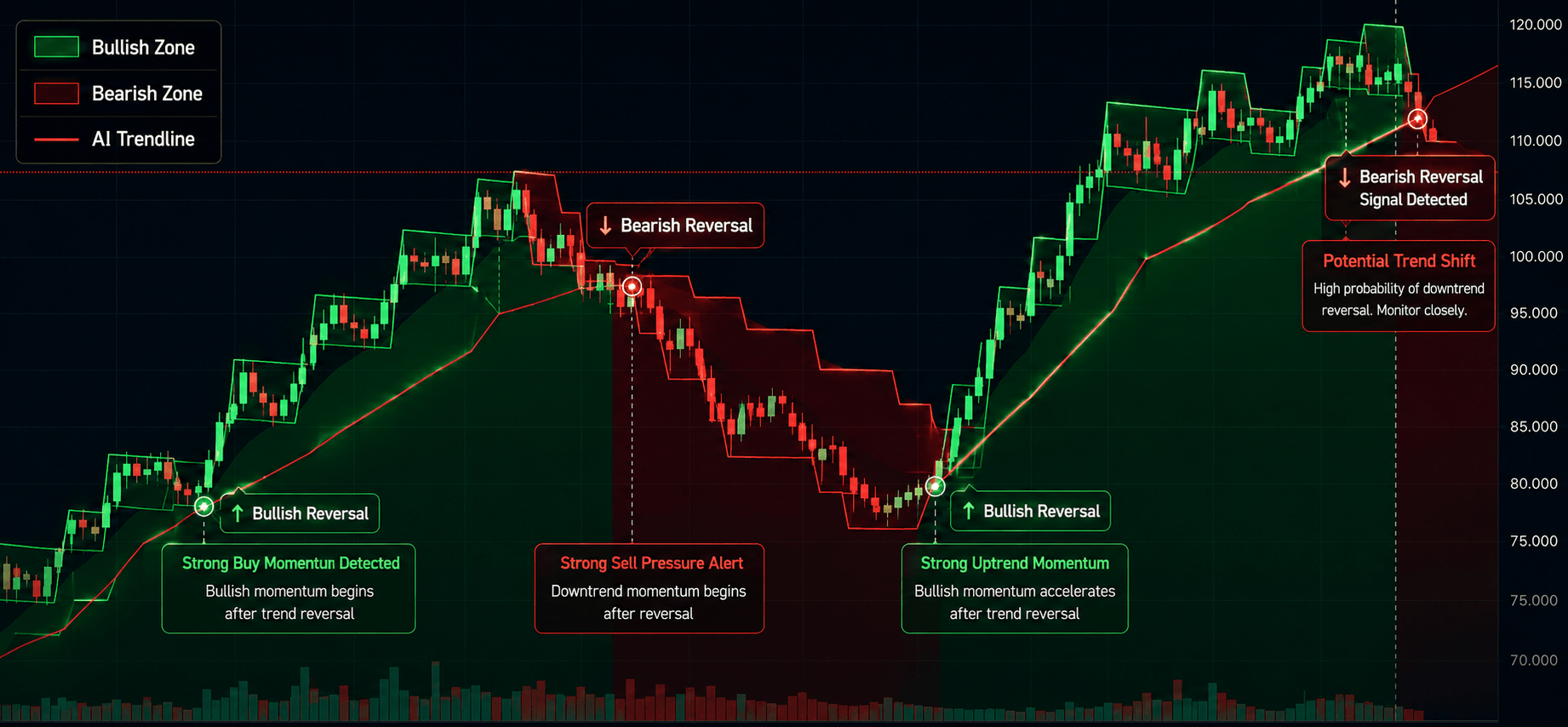
Bull Wave / Bear Wave Forecast Model
Engineered to help you read market direction and momentum faster than the crowd.
- Instantly separate bullish momentum from bearish pressure
- Pinpoint high-probability entry zones with confidence
- Chart signals clear enough for beginners, sharp enough for pros
Winning Pattern Detection
Instantly surfaces the high-probability setups that repeat across the charts — a trusted edge for timing your entries and exits.
- Spot momentum building in real time
- Catch trend-reversal points before they break
- Built for active traders who need results, not theory

AI Live Economic Dashboard
AI analyzes real-time market data — turning complex, global investment flows into clear insight in seconds.
- Track global stock markets in real time
- See exactly which assets are strong — and which are fading
- Watch how geopolitical events move the markets
About the Author