What a Value Trap Is
A value trap is a stock that appears cheap by traditional metrics like P/E or P/B relative to its own history or its industry, but is actually undergoing a structural business decline that justifies the low multiple. Buying purely on the basis of a low ratio, without checking why it’s low, is one of the most common mistakes in value-oriented investing.
Why a Low P/E Can Be Deceiving
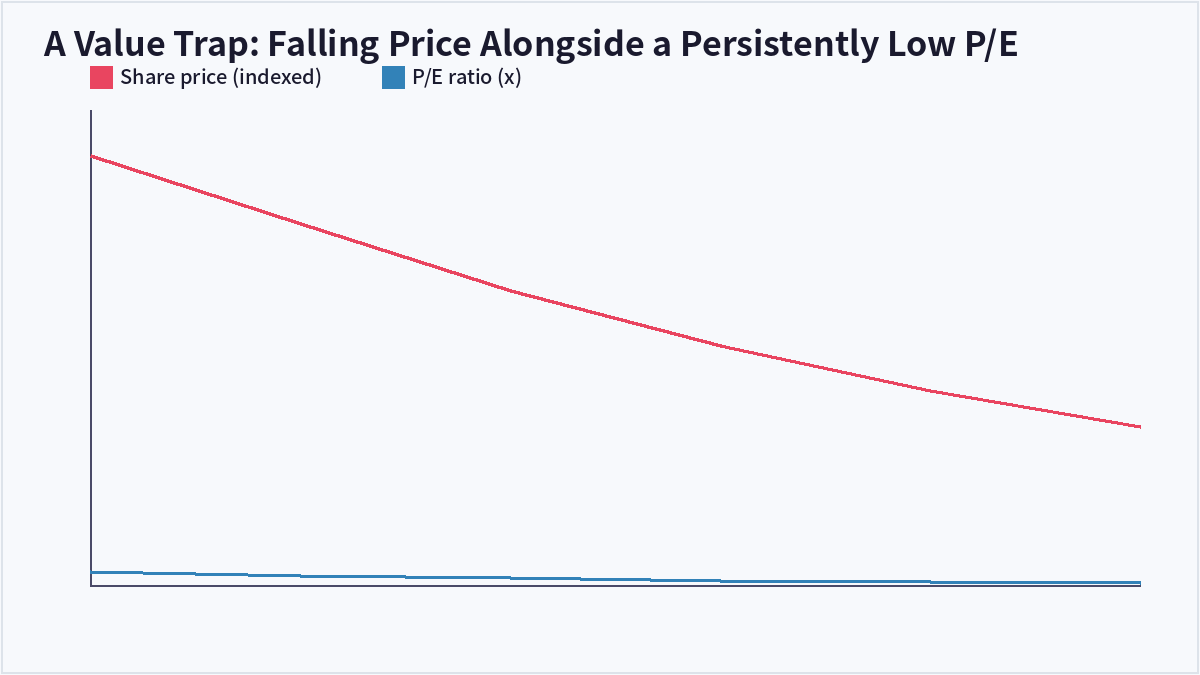
P/E is calculated on current earnings, but markets tend to price in expectations of future earnings decline well before that decline is fully reflected in reported numbers. That means today’s P/E can look low precisely because the market anticipates earnings will keep shrinking — making the effective forward multiple less attractive than the trailing number suggests. This pattern is especially common in declining industries, companies facing structural technological disruption, or businesses losing market share to more efficient competitors.
How to Distinguish a Trap From a Genuine Opportunity
Checking whether revenue and operating income have been declining structurally over the past three to five years is a useful first filter. Next, consider whether the underlying industry itself is growing, stable, or contracting — a cheap stock in a shrinking industry carries a very different risk profile than a cheap stock in a growing one. Rising debt levels and eroding market share alongside a low multiple are additional red flags worth checking together rather than in isolation.
Confirming a Genuine Value Opportunity
A genuine value opportunity typically involves a temporary setback — a cyclical downturn, a one-off legal or operational issue, or broad market pessimism — while the company’s underlying competitive position and earnings power remain intact. Reading recent earnings call transcripts and management’s forward guidance can help clarify whether a depressed multiple reflects a temporary versus structural issue.
| Signal | Genuine Value | Value Trap |
|---|---|---|
| Earnings trend | Temporary dip, expected recovery | Persistent structural decline |
| Industry cycle | Growing or stable industry | Structurally shrinking industry |
| Market share | Maintained or expanding | Steadily eroding |
Frequently Asked Questions
What other metrics help confirm a value trap beyond P/E?
Checking the trend in gross margin, free cash flow, and debt levels alongside the P/E gives a much more complete picture than the ratio alone — if these are deteriorating together, it strengthens the case for a genuine structural problem rather than temporary weakness.
Is a P/E below the industry average always attractive?
Not necessarily — if the entire industry is in structural decline, the whole sector’s average P/E may already be depressed, so comparing purely to the sector average without also assessing the sector’s own long-term outlook can be misleading.
What should I do if I’m already holding a value trap?
Whether to cut losses or wait for a fundamental improvement depends on the specific situation, but ‘averaging down because it’s even cheaper now’ is a particularly risky response for a stock with structurally deteriorating fundamentals rather than temporary weakness.
Can growth stocks be value traps too?
The term is usually applied to low-P/E value stocks, but a high-P/E growth stock whose growth story has broken down can suffer a similar dynamic — the key issue in both cases is whether the story justifying the multiple is still intact, not the multiple level itself.
Key Takeaways
A low P/E can reflect genuine undervaluation or a legitimate value trap where earnings are structurally deteriorating, so checking the earnings trend, industry cycle position, and market share trajectory together is essential before assuming a cheap-looking multiple is actually a bargain. This article is for informational purposes only and does not constitute investment advice.

QuantPro: AI Finds the Trade Before You Do
From AI-powered chart analysis to real-time market intelligence — everything a serious investor needs, in one platform.
- Automated AI chart analysis with precision trend timing
- Bull Radar: real-time visualization of geopolitical & economic shifts
- Live market-moving news and insights, curated for you
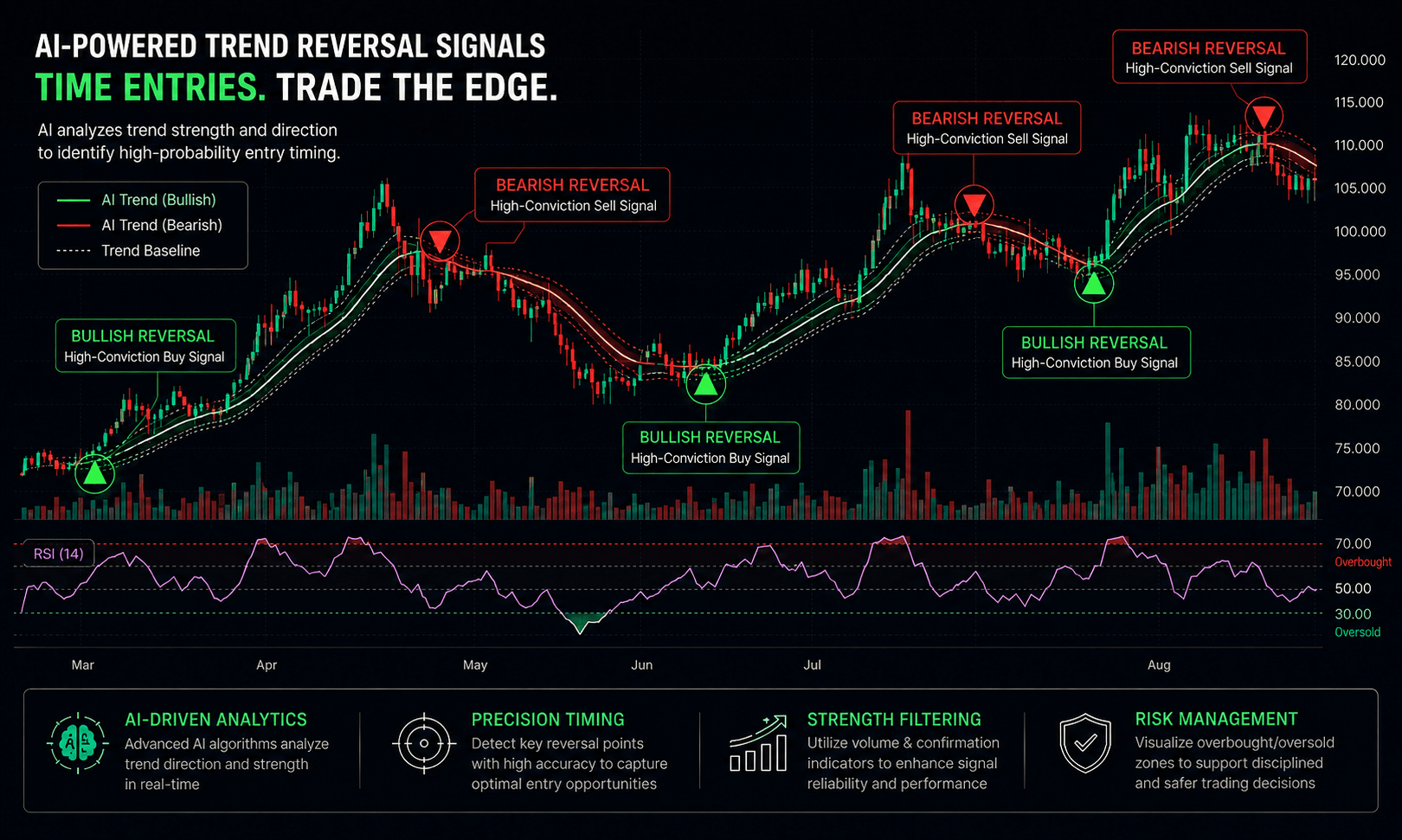
Bull Wave / Bear Wave Forecast Model
Engineered to help you read market direction and momentum faster than the crowd.
- Instantly separate bullish momentum from bearish pressure
- Pinpoint high-probability entry zones with confidence
- Chart signals clear enough for beginners, sharp enough for pros
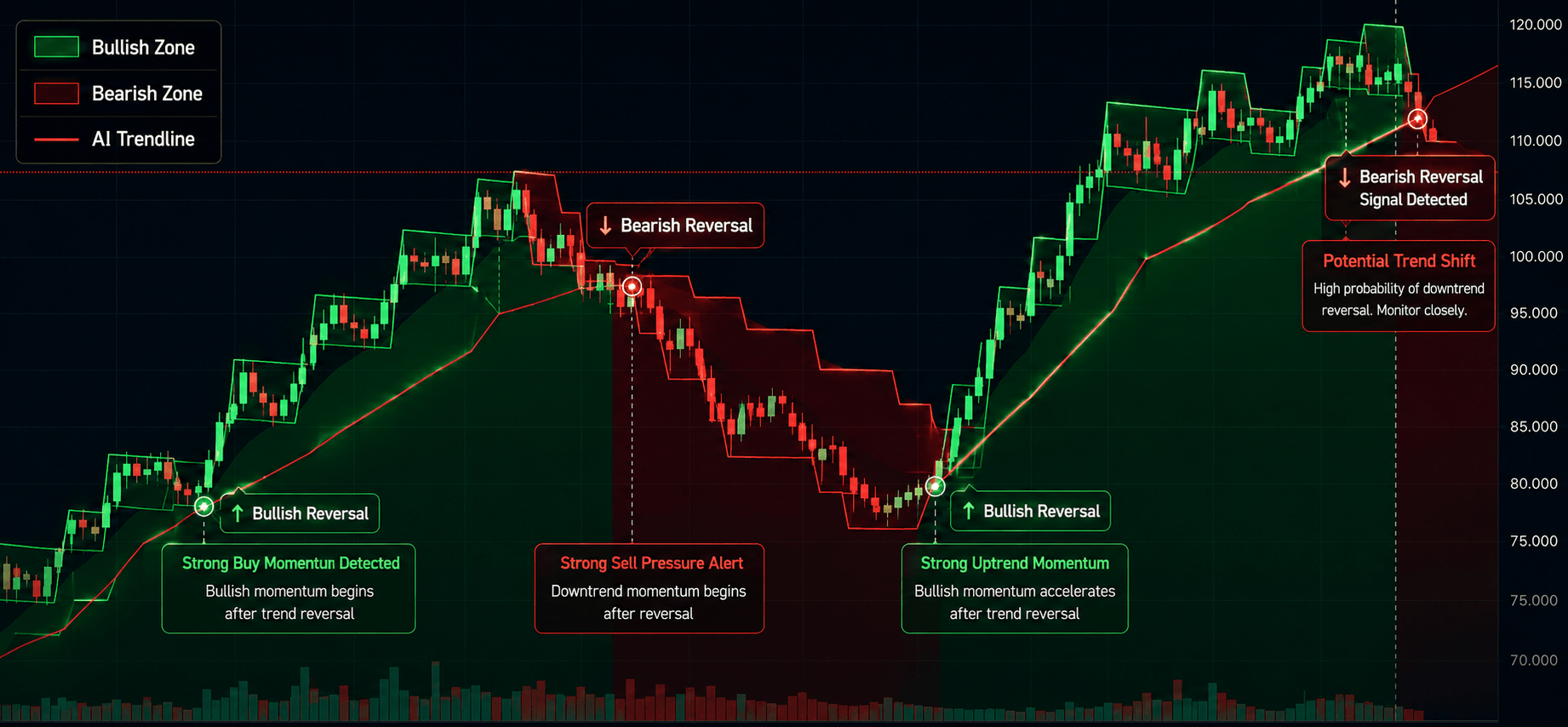
Winning Pattern Detection
Instantly surfaces the high-probability setups that repeat across the charts — a trusted edge for timing your entries and exits.
- Spot momentum building in real time
- Catch trend-reversal points before they break
- Built for active traders who need results, not theory

AI Live Economic Dashboard
AI analyzes real-time market data — turning complex, global investment flows into clear insight in seconds.
- Track global stock markets in real time
- See exactly which assets are strong — and which are fading
- Watch how geopolitical events move the markets
About the Author