What Is a Stock Split?
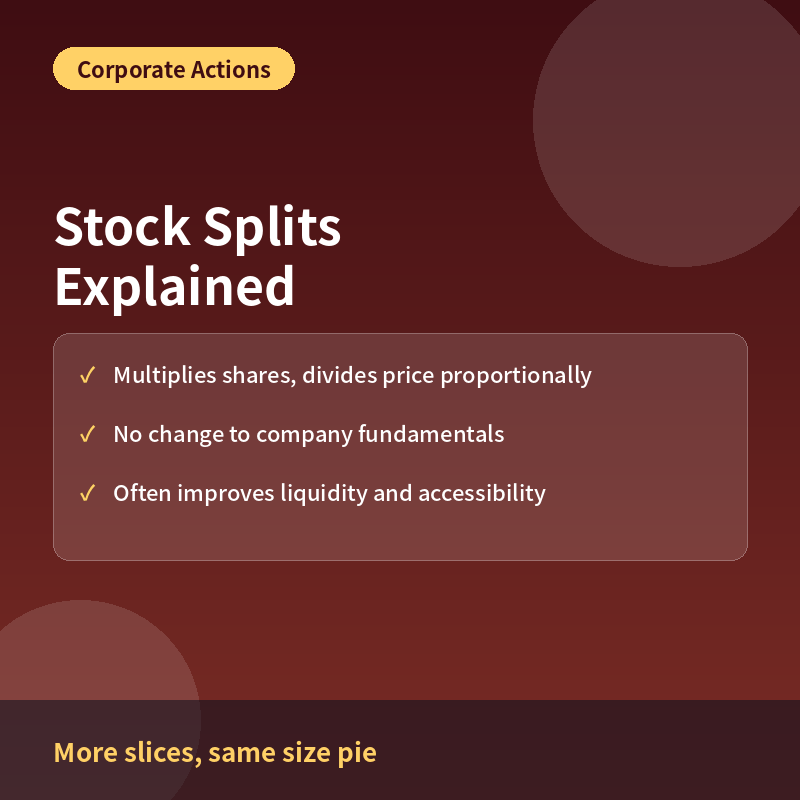
A stock split divides each existing share into multiple new shares according to a set ratio, such as a 5-for-1 split, where one share becomes five.
Total shares outstanding increase, but the company’s market capitalization, earnings, and assets remain completely unchanged by the split itself.
How It Works
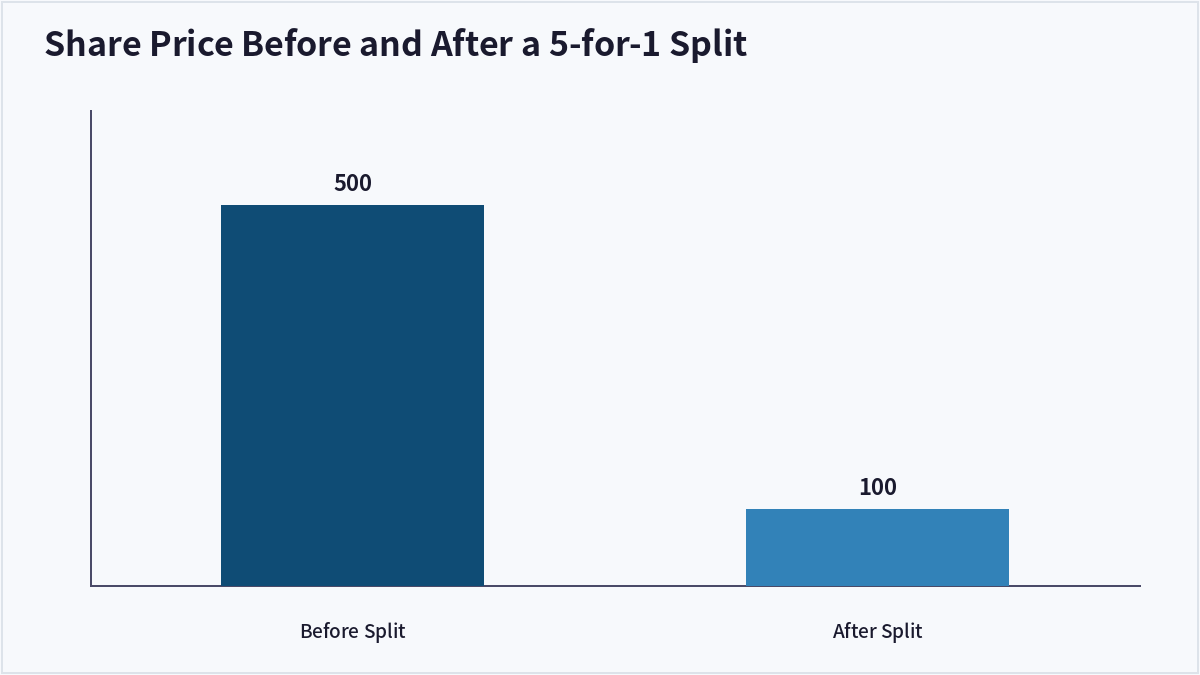
In a 5-for-1 split, a stock trading at $500 theoretically becomes five shares trading at $100 each, and the total value of a shareholder’s position stays the same immediately before and after.
This is similar to cutting a cake into more slices — the cake itself doesn’t get any bigger, only the number and size of the pieces changes.
Why It Matters to Investors
A lower per-share price after a split can make a stock more accessible to smaller investors and often improves trading liquidity, since more shares are available to trade at more approachable price points.
Before and After a Split
Share price and share count change, but market capitalization and company fundamentals remain constant.
| Aspect | Before Split | After 5-for-1 Split |
|---|---|---|
| Share price | $500 | $100 |
| Shares held (1-share example) | 1 | 5 |
| Total position value | $500 | $500 (unchanged) |
| Market capitalization | Unchanged | Unchanged |
Frequently Asked Questions
Does a stock split improve a company’s business performance?
No, a split is purely an accounting and share-structure adjustment; it has no direct effect on revenue, profit, or any other fundamental business metric.
Why do stock prices sometimes rise after a split announcement?
Increased affordability and liquidity can attract additional buying interest, but this reflects market sentiment rather than any change in the company’s actual value.
What is a reverse stock split?
A reverse split combines multiple shares into one, reducing the share count and raising the per-share price, the opposite effect of a standard stock split.
Do dividends change after a split?
The per-share dividend typically decreases in proportion to the split ratio, but the total dividend received by a shareholder remains the same given the increased share count.
Key Takeaways
A stock split changes how a company’s value is divided among shares without altering that underlying value at all, though it can meaningfully improve accessibility and trading liquidity for investors. This article is for informational purposes only and does not constitute investment advice.

QuantPro: AI Finds the Trade Before You Do
From AI-powered chart analysis to real-time market intelligence — everything a serious investor needs, in one platform.
- Automated AI chart analysis with precision trend timing
- Bull Radar: real-time visualization of geopolitical & economic shifts
- Live market-moving news and insights, curated for you
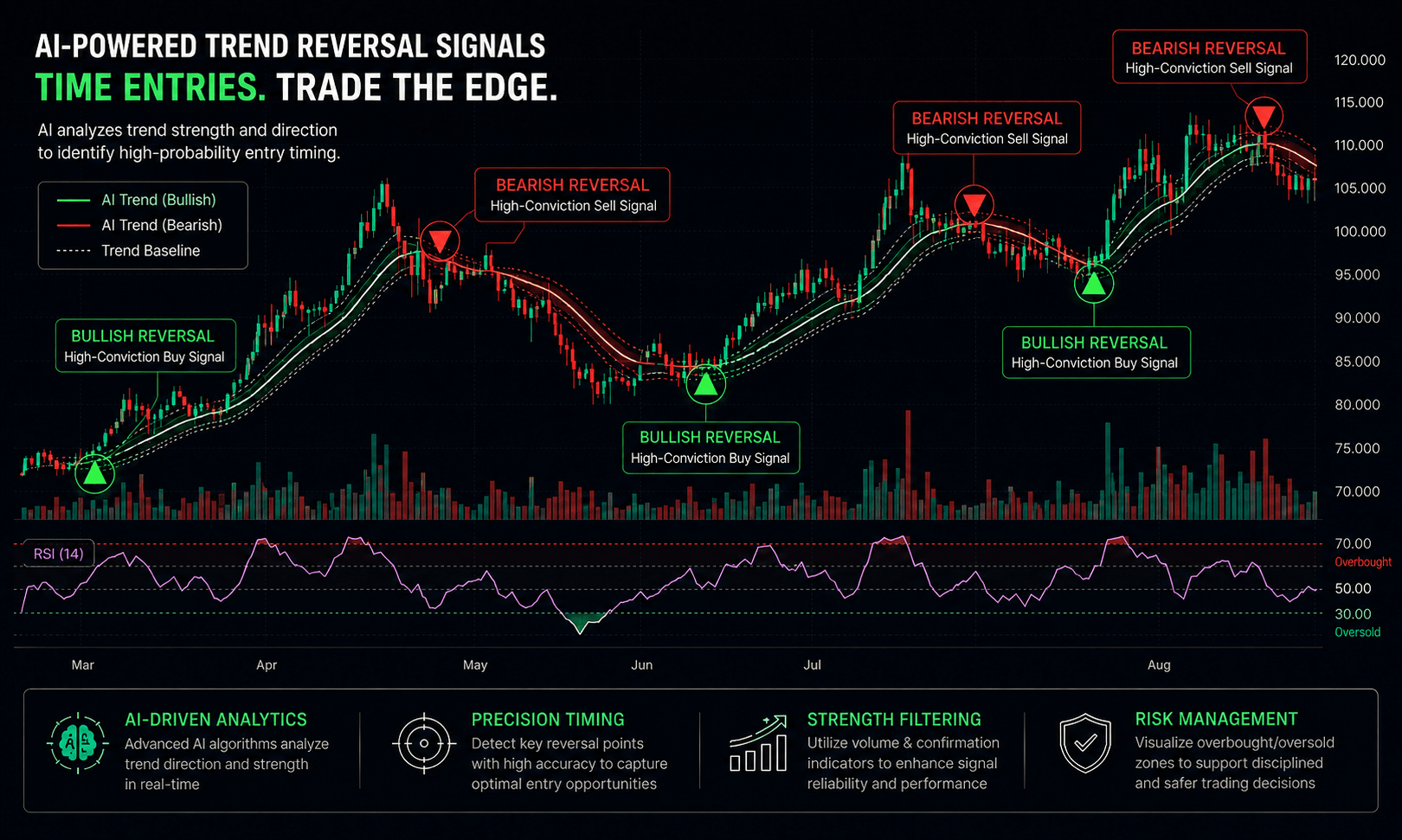
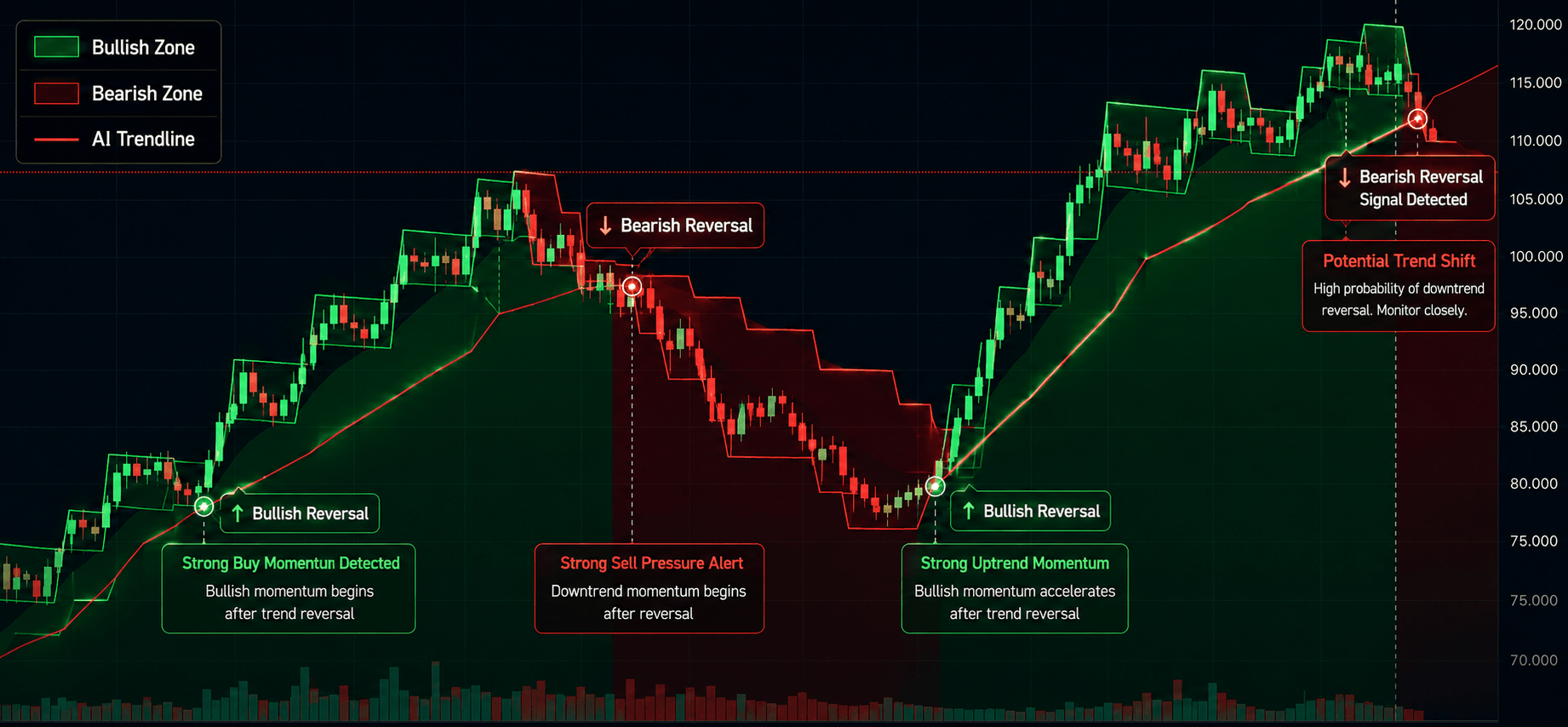
Bull Wave / Bear Wave Forecast Model
Engineered to help you read market direction and momentum faster than the crowd.
- Instantly separate bullish momentum from bearish pressure
- Pinpoint high-probability entry zones with confidence
- Chart signals clear enough for beginners, sharp enough for pros
Winning Pattern Detection
Instantly surfaces the high-probability setups that repeat across the charts — a trusted edge for timing your entries and exits.
- Spot momentum building in real time
- Catch trend-reversal points before they break
- Built for active traders who need results, not theory

AI Live Economic Dashboard
AI analyzes real-time market data — turning complex, global investment flows into clear insight in seconds.
- Track global stock markets in real time
- See exactly which assets are strong — and which are fading
- Watch how geopolitical events move the markets
About the Author