What Are U.S. Treasury Securities?
Treasury bills, notes, and bonds are debt securities issued by the U.S. Department of the Treasury to fund government spending. All three are backed by the full faith and credit of the U.S. government, making them among the safest fixed-income investments available, but they differ primarily in maturity length and how interest is paid.
Treasury Bills (T-Bills)
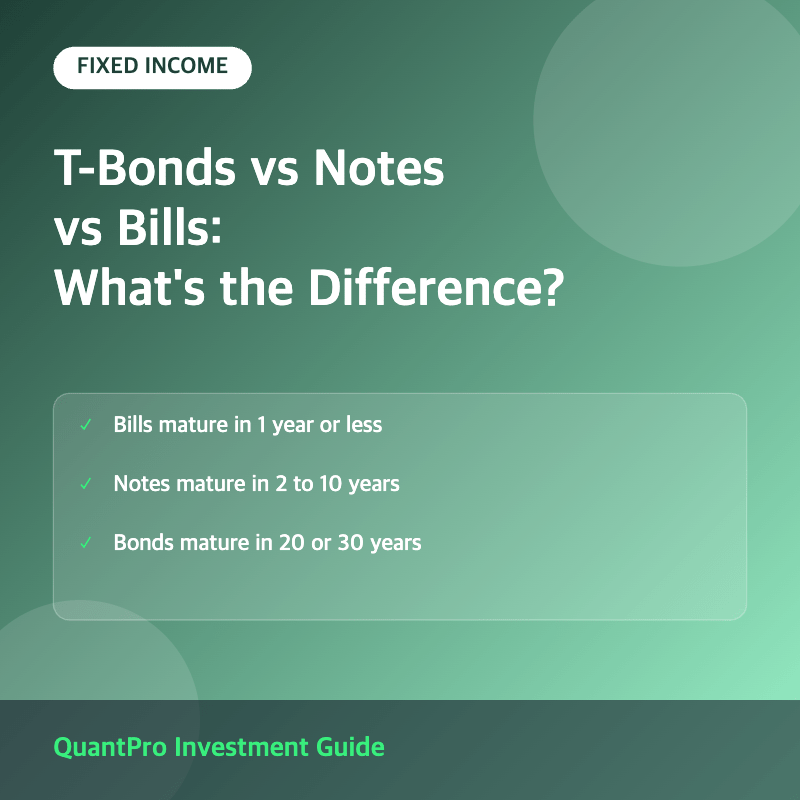
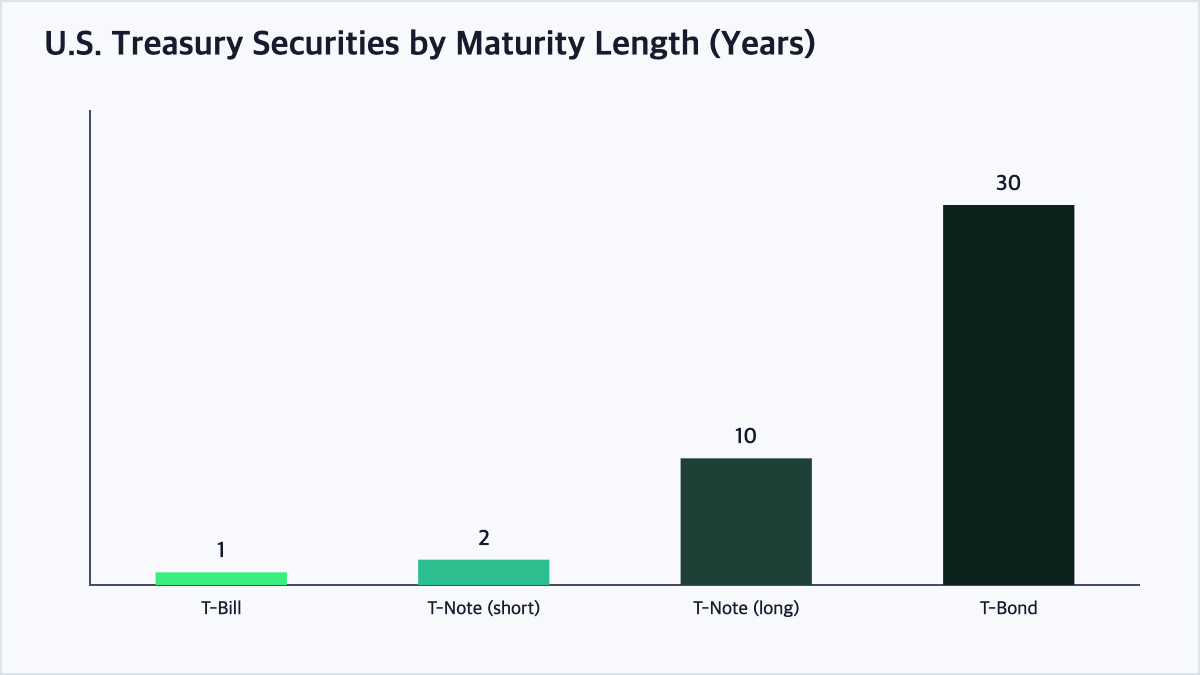
Treasury bills are short-term securities with maturities ranging from a few weeks up to 52 weeks. T-bills are sold at a discount to face value and do not pay periodic interest; instead, the investor’s return comes from the difference between the discounted purchase price and the full face value paid at maturity.
Treasury Notes (T-Notes)
Treasury notes have intermediate maturities of 2, 3, 5, 7, or 10 years and pay fixed interest every six months until maturity, at which point the investor receives the face value back. T-notes are widely used as a benchmark for other interest rates, including mortgage rates.
Treasury Bonds (T-Bonds)
Treasury bonds are long-term securities with maturities of 20 or 30 years, also paying fixed semiannual interest. Because of their longer duration, T-bonds are more sensitive to interest rate changes and typically offer higher yields to compensate for that added interest rate risk.
Treasury Securities Comparison Table
| Feature | T-Bill | T-Note | T-Bond |
|---|---|---|---|
| Maturity | 4 weeks – 52 weeks | 2 – 10 years | 20 or 30 years |
| Interest Payment | None (sold at discount) | Semiannual fixed | Semiannual fixed |
| Interest Rate Risk | Very low | Moderate | High |
| Typical Yield | Lowest | Moderate | Highest |
| Common Use | Cash management | Rate benchmark | Long-term income |
Frequently Asked Questions
Are Treasury securities exempt from state and local taxes?
Yes. Interest earned on Treasury bills, notes, and bonds is exempt from state and local income taxes, though it remains subject to federal income tax, which can make them attractive to investors in high state-tax jurisdictions.
Can I sell a Treasury security before it matures?
Yes. Treasury securities can be sold on the secondary market before maturity, but the price received will fluctuate with prevailing interest rates and may be above or below the original purchase price.
What is the minimum investment for Treasury securities?
Treasury securities can be purchased directly from TreasuryDirect.gov in increments as low as $100, making them accessible to individual investors with relatively small amounts of capital.
Why do longer-maturity Treasuries usually pay higher yields?
Longer-maturity securities generally carry higher yields to compensate investors for taking on greater interest rate risk and inflation risk over the extended holding period, although this relationship can invert during certain economic conditions.
Key Takeaways
Treasury bills, notes, and bonds differ mainly by maturity length and interest payment structure, offering investors a range of options for managing cash, generating income, or achieving long-term fixed returns backed by the U.S. government. This article is for informational purposes only and does not constitute investment advice.

QuantPro: AI Finds the Trade Before You Do
From AI-powered chart analysis to real-time market intelligence — everything a serious investor needs, in one platform.
- Automated AI chart analysis with precision trend timing
- Bull Radar: real-time visualization of geopolitical & economic shifts
- Live market-moving news and insights, curated for you
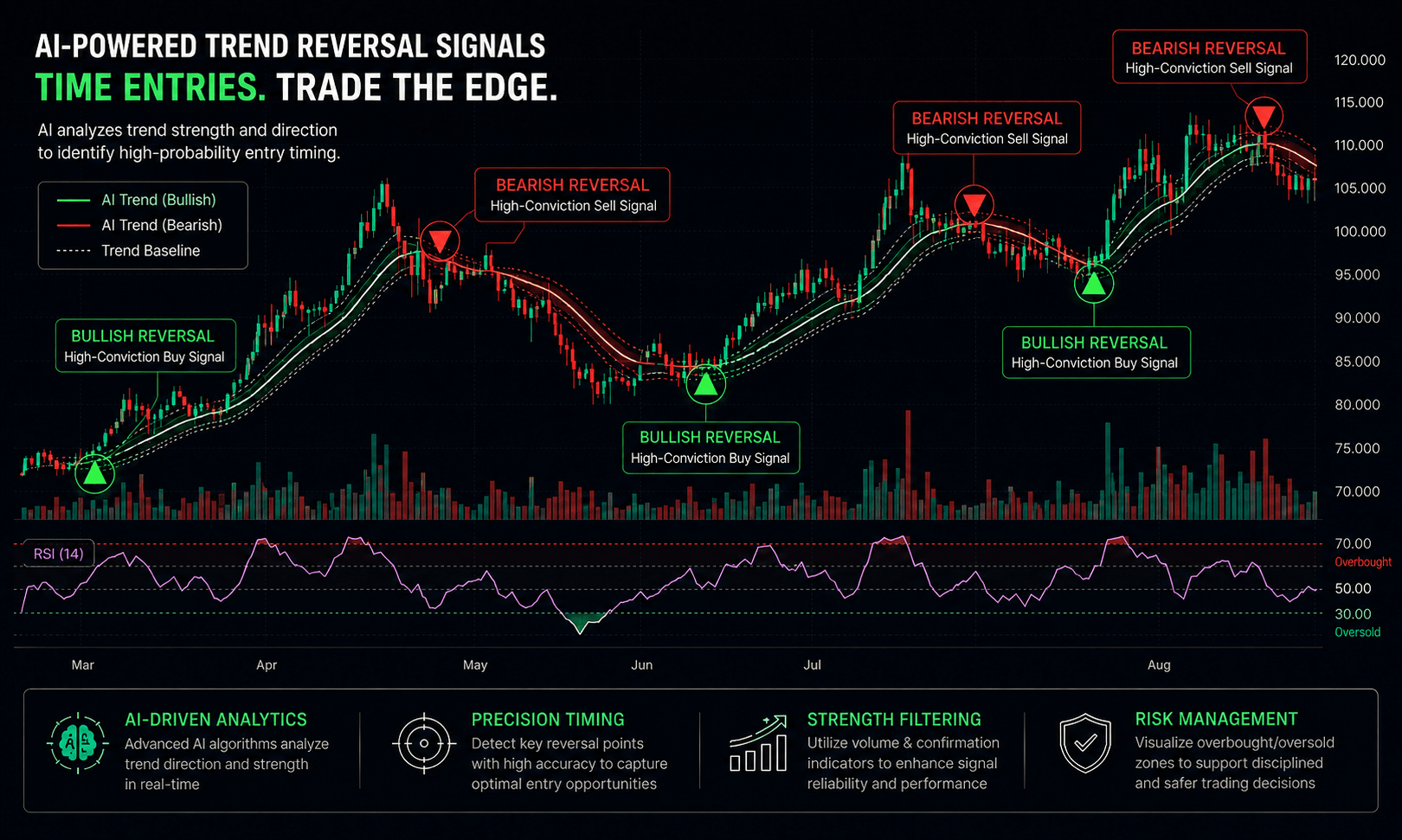
Bull Wave / Bear Wave Forecast Model
Engineered to help you read market direction and momentum faster than the crowd.
- Instantly separate bullish momentum from bearish pressure
- Pinpoint high-probability entry zones with confidence
- Chart signals clear enough for beginners, sharp enough for pros
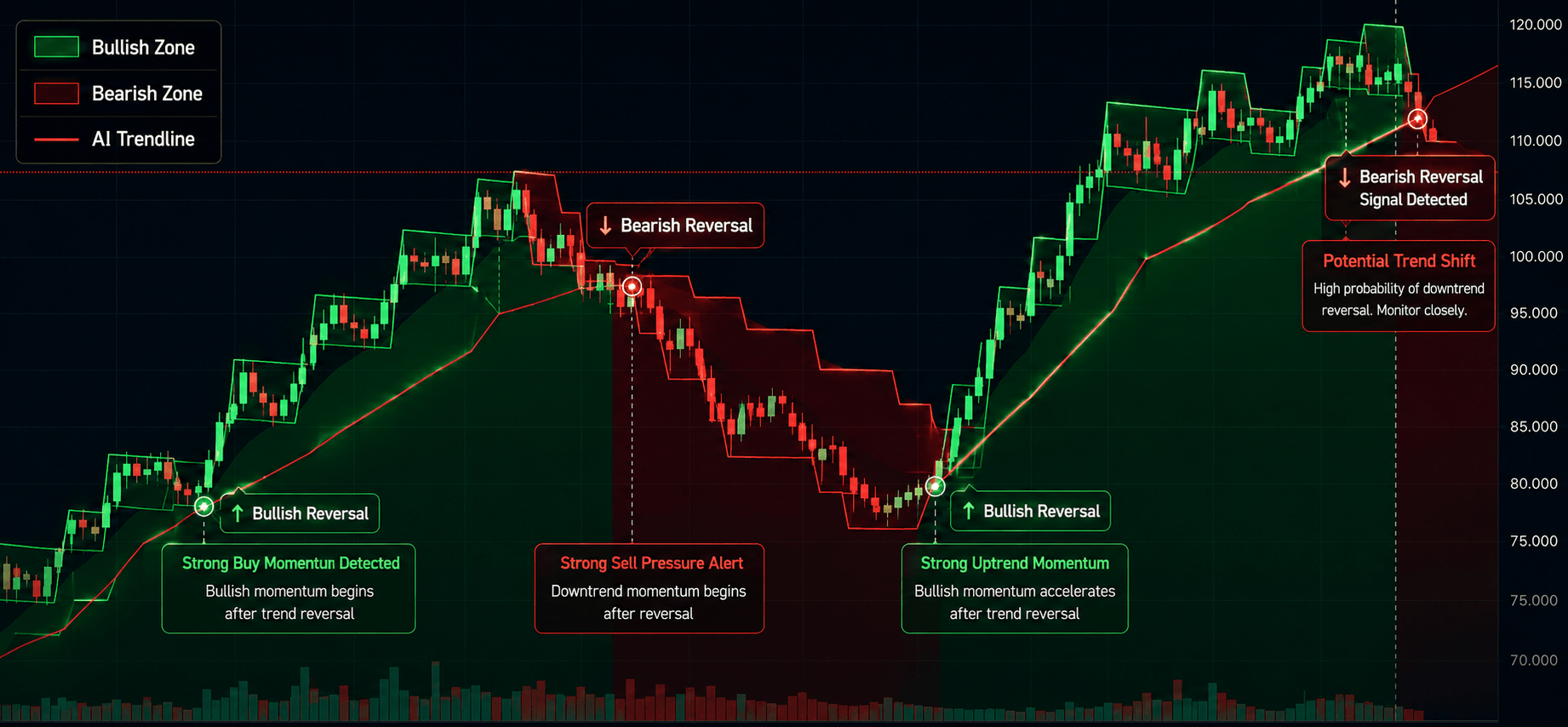
Winning Pattern Detection
Instantly surfaces the high-probability setups that repeat across the charts — a trusted edge for timing your entries and exits.
- Spot momentum building in real time
- Catch trend-reversal points before they break
- Built for active traders who need results, not theory
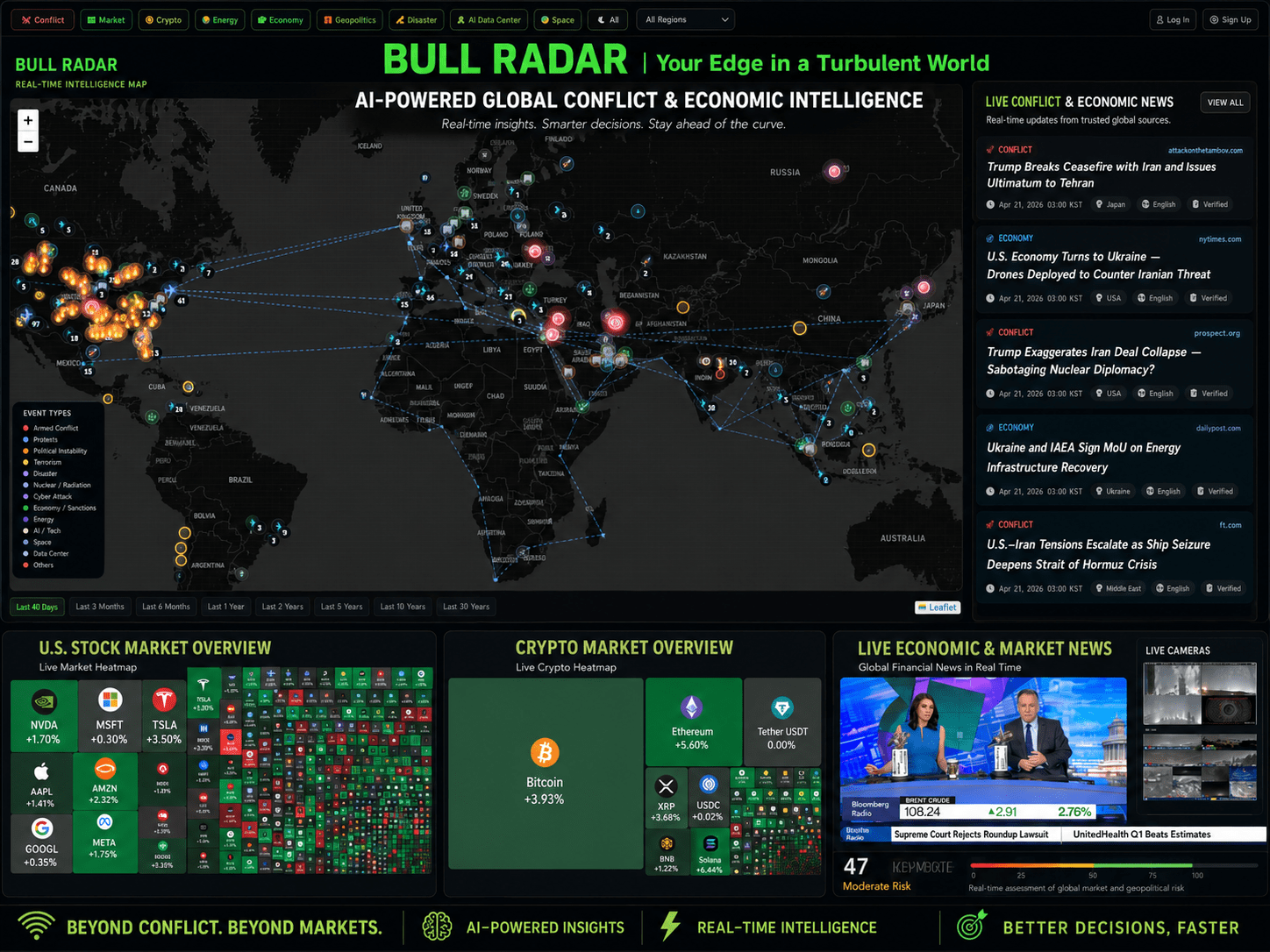
AI Live Economic Dashboard
AI analyzes real-time market data — turning complex, global investment flows into clear insight in seconds.
- Track global stock markets in real time
- See exactly which assets are strong — and which are fading
- Watch how geopolitical events move the markets
About the Author