What Is a Money Market Fund?
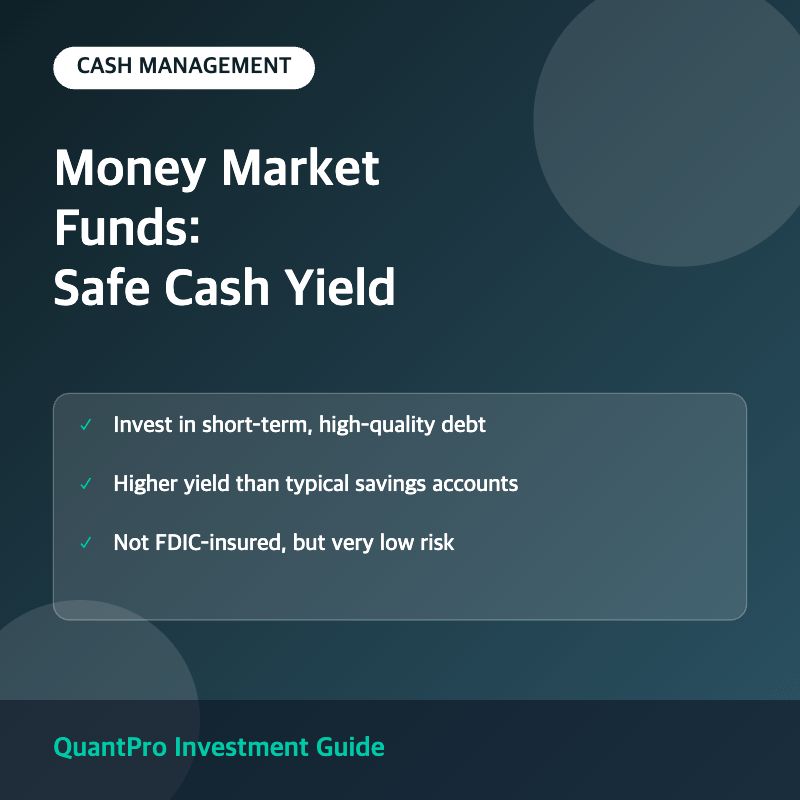
A money market fund is a type of mutual fund that invests in short-term, high-quality debt instruments such as Treasury bills, commercial paper, and certificates of deposit. The goal is to preserve capital while providing liquidity and a modest yield, making it a popular parking spot for cash that is not immediately needed.
Money market funds aim to maintain a stable net asset value, typically $1.00 per share, though this is not guaranteed. Returns come primarily from interest income on the underlying short-term securities rather than price appreciation.
Types of Money Market Funds
Government money market funds invest primarily in Treasury securities and repurchase agreements backed by government debt. Prime money market funds invest in a broader range of short-term corporate and financial debt, typically offering slightly higher yields with marginally more credit risk. Municipal money market funds invest in short-term municipal debt, often providing tax-exempt income.
Money Market Fund vs Savings Account
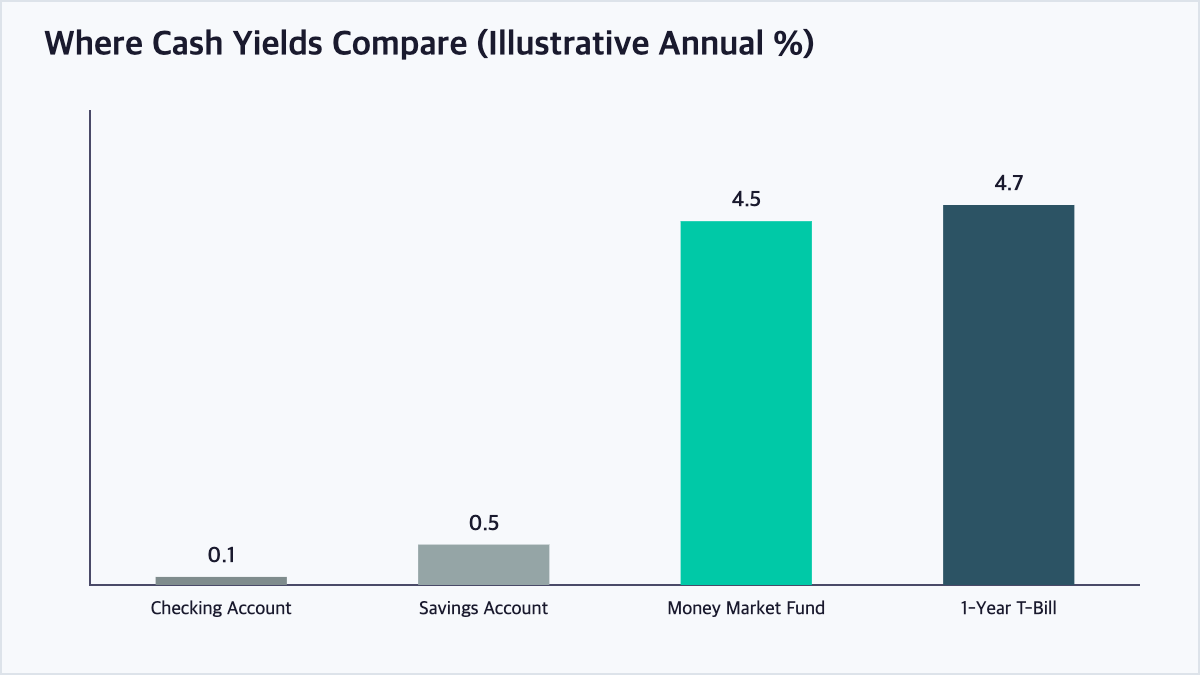
Unlike a bank savings account, a money market fund is an investment product, not a deposit account, and is therefore not covered by FDIC insurance. However, money market funds investing in high-quality short-term instruments have historically been very low-risk, and they often offer higher yields than traditional bank savings accounts, especially during periods of elevated short-term interest rates.
Liquidity and Access
Money market funds generally offer same-day or next-day liquidity, making them well-suited for emergency funds or cash awaiting reinvestment, though they are not designed for daily transactional use the way a checking account is.
Money Market Fund vs Money Market Account
| Feature | Money Market Fund | Money Market Account (Bank) |
|---|---|---|
| Issuer | Investment company | Bank or credit union |
| FDIC/NCUA Insured | No | Yes, up to limits |
| Typical Yield | Market-based, often higher | Set by bank, often lower |
| Risk | Very low but not zero | Essentially zero (insured) |
| Access | Brokerage account | Checks/debit card often included |
Frequently Asked Questions
Can a money market fund lose value?
It is rare but possible. If a fund’s net asset value drops below $1.00 per share, known as “breaking the buck,” investors can lose a small amount of principal, though this has occurred only a handful of times in the fund industry’s history, typically during severe financial crises.
Are money market funds a good place for an emergency fund?
Yes, many investors use money market funds for emergency savings because they combine relatively high liquidity, low risk, and yields that are often competitive with or higher than traditional savings accounts.
How are money market fund earnings taxed?
Interest income from taxable money market funds is generally taxed as ordinary income at the federal level, while income from municipal money market funds may be exempt from federal and sometimes state taxes, depending on the fund.
Is a money market fund the same as a money market account?
No. A money market fund is an investment product offered through a brokerage, while a money market account is a bank deposit product that is FDIC-insured; the two share a similar name but differ significantly in structure and insurance protection.
Key Takeaways
Money market funds offer a low-risk way to earn yield on cash reserves through short-term, high-quality debt instruments, typically outperforming traditional savings accounts while remaining highly liquid. Understanding the distinction from FDIC-insured bank products is essential before allocating significant cash. This article is for informational purposes only and does not constitute investment advice.

QuantPro: AI Finds the Trade Before You Do
From AI-powered chart analysis to real-time market intelligence — everything a serious investor needs, in one platform.
- Automated AI chart analysis with precision trend timing
- Bull Radar: real-time visualization of geopolitical & economic shifts
- Live market-moving news and insights, curated for you
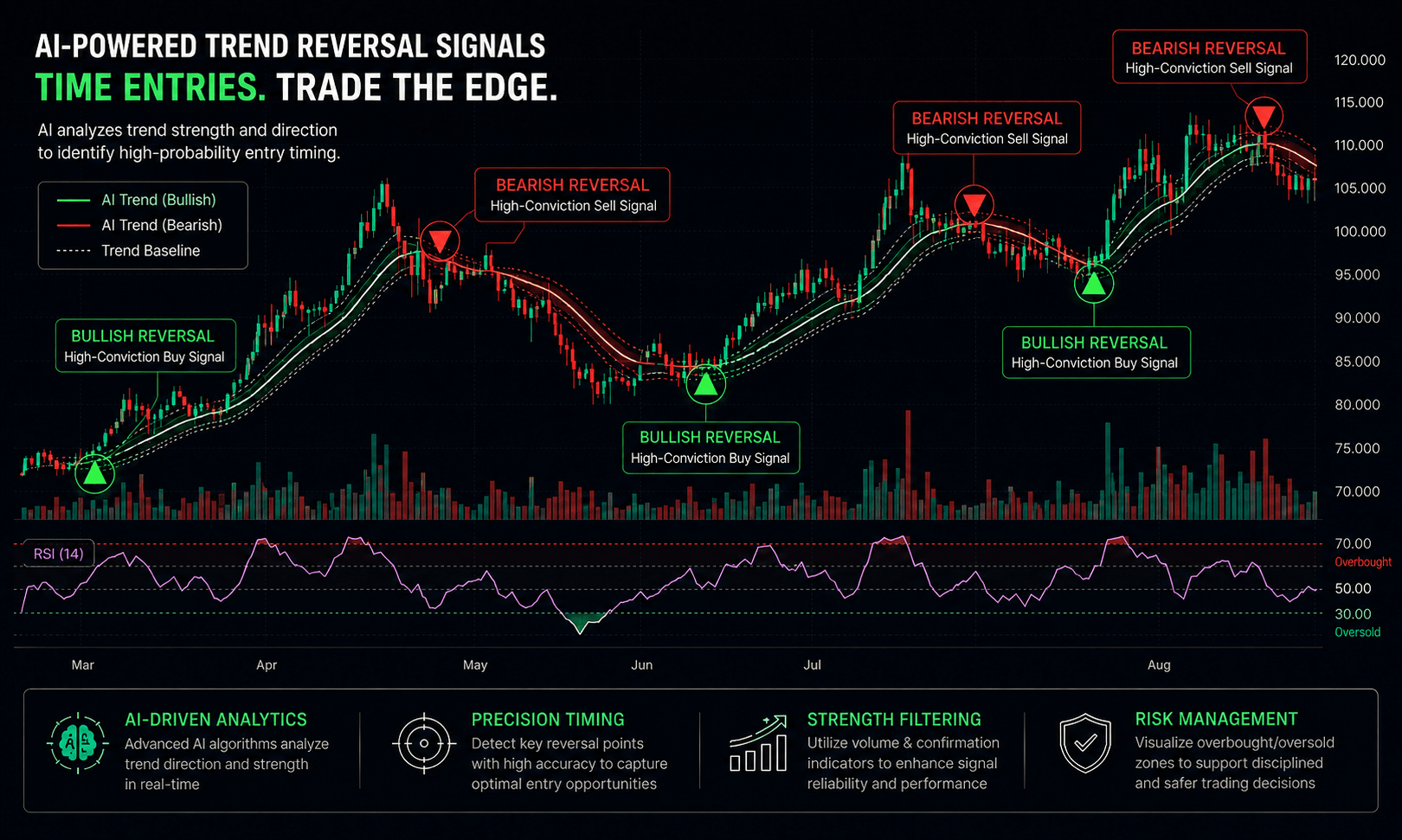
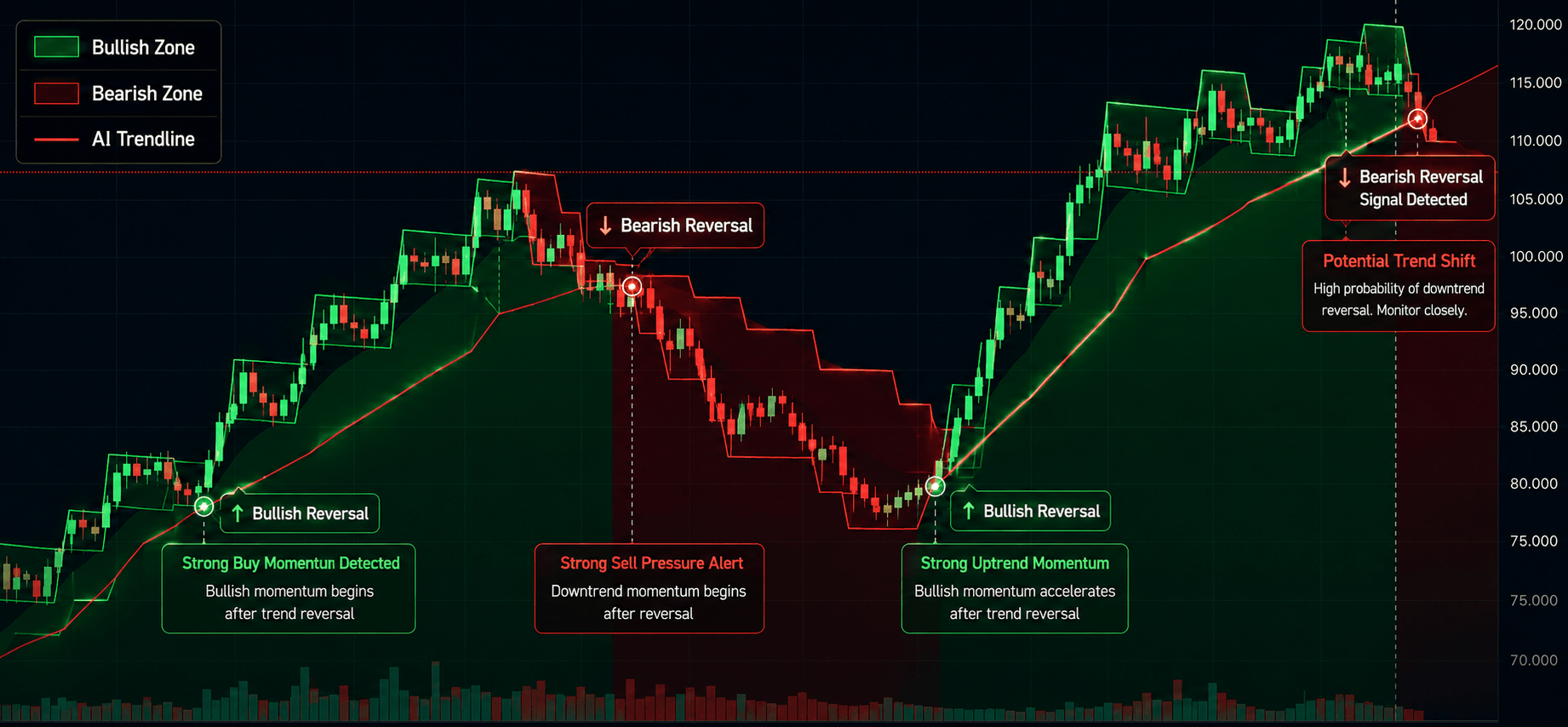
Bull Wave / Bear Wave Forecast Model
Engineered to help you read market direction and momentum faster than the crowd.
- Instantly separate bullish momentum from bearish pressure
- Pinpoint high-probability entry zones with confidence
- Chart signals clear enough for beginners, sharp enough for pros
Winning Pattern Detection
Instantly surfaces the high-probability setups that repeat across the charts — a trusted edge for timing your entries and exits.
- Spot momentum building in real time
- Catch trend-reversal points before they break
- Built for active traders who need results, not theory

AI Live Economic Dashboard
AI analyzes real-time market data — turning complex, global investment flows into clear insight in seconds.
- Track global stock markets in real time
- See exactly which assets are strong — and which are fading
- Watch how geopolitical events move the markets
About the Author