What Value Averaging Does Differently
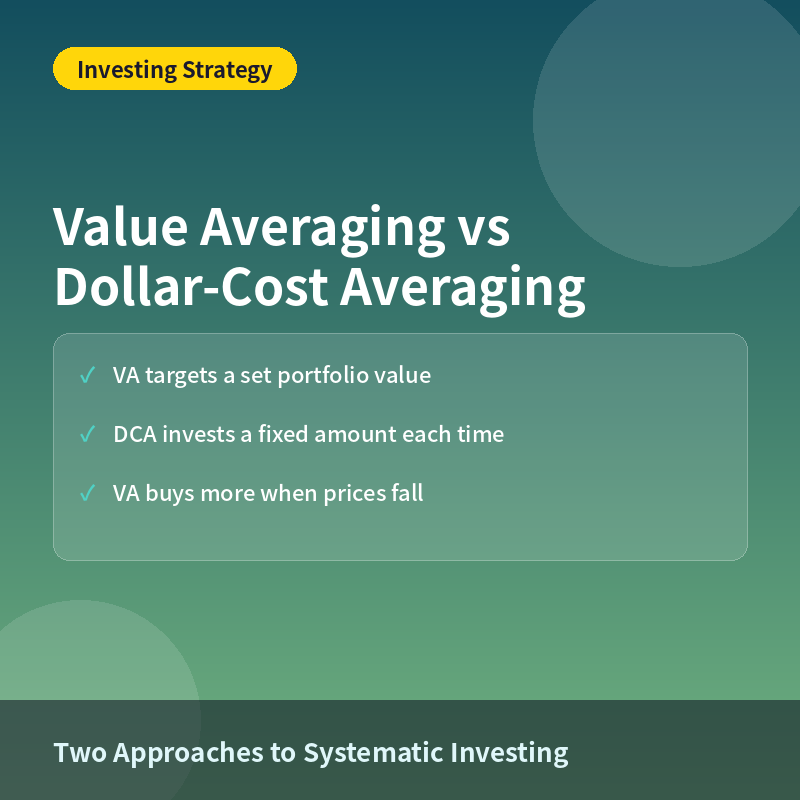
Dollar-cost averaging (DCA) involves investing a fixed dollar amount on a regular schedule regardless of price. Value averaging (VA) instead sets a target portfolio value for each period, then adjusts the purchase amount so the portfolio actually reaches that target — investing more than the baseline amount when the portfolio has underperformed the target, and less (or even selling) when it has outperformed.
A Worked Example
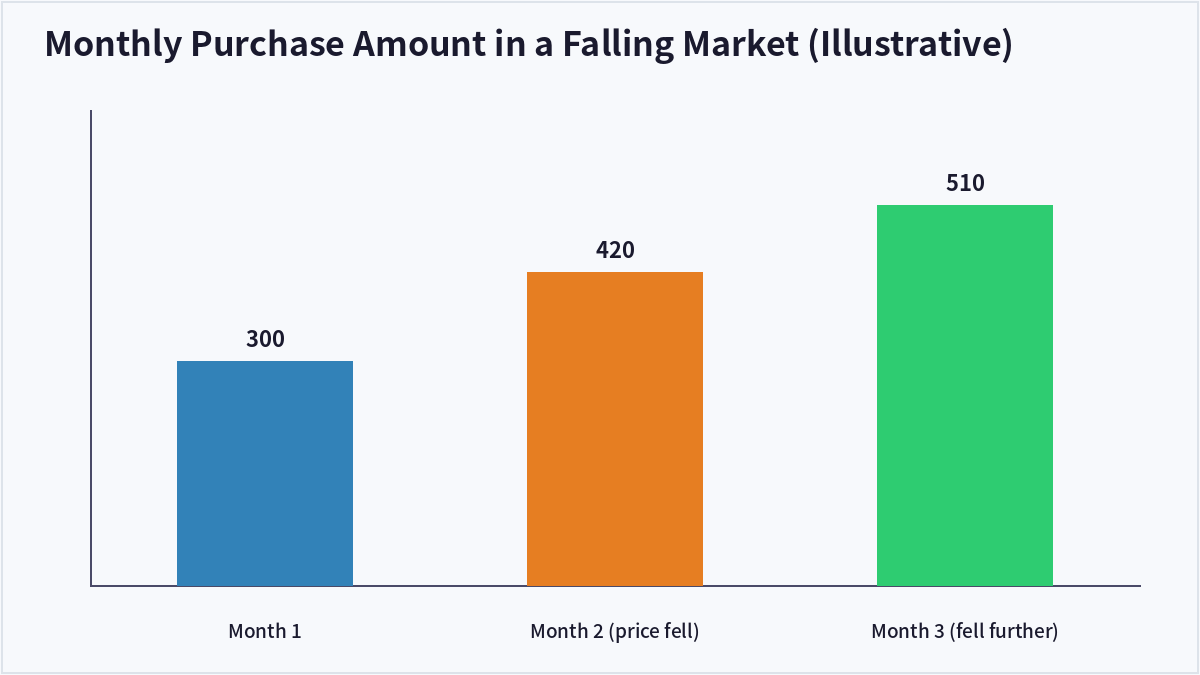
Suppose the target portfolio value is set to grow by $300 each month. In month one, a $300 investment hits the target exactly. If the market falls and month one’s holdings are now worth only $180, reaching month two’s $600 target requires investing $600 – $180 = $420. If the market falls again in month three, the required investment grows larger still — value averaging is mechanically forcing more capital into the market exactly when prices are lower.
How This Compares to Dollar-Cost Averaging
Under DCA, the investment amount stays fixed no matter what the market does. Under value averaging, a market decline automatically triggers a larger purchase, and a rally automatically triggers a smaller one (or a sale) — several academic studies have found this can lower the average cost basis more effectively than DCA over the same period, at least in backtested scenarios.
The Practical Catch With Value Averaging
The mechanism that makes value averaging theoretically effective is also its biggest practical drawback: a sharp market decline can require a much larger cash outlay in exactly the month that money may be tightest, and a strong rally can require selling holdings that an investor may have preferred to keep. Committing to the strategy consistently requires more funding flexibility and discipline than simply setting up a fixed automatic DCA contribution.
| Feature | Dollar-Cost Averaging | Value Averaging |
|---|---|---|
| Basis for monthly investment | Fixed dollar amount | Gap versus a target portfolio value |
| When market falls | Same amount invested | Larger amount invested |
| When market rises sharply | Same amount invested | Smaller amount invested, or a sale |
| Funding predictability | High, simple to plan | Lower, requires flexible cash reserves |
Frequently Asked Questions
Does value averaging always outperform dollar-cost averaging?
Many backtests suggest it can lower average cost basis over a given period, but real-world results depend heavily on funding availability during downturns and on transaction costs, so consistent outperformance isn’t guaranteed in every environment.
What happens if the target is exceeded by a large margin?
Strictly following the rules would mean selling the excess back down to the target value, though some investors adapt the strategy by simply skipping that month’s contribution instead of actually selling, to reduce transaction costs and tax events.
How is the target growth rate chosen for value averaging?
It’s typically based on a long-term expected annual return (such as 6–8%) converted into a monthly target increment, though setting the target too aggressively can require unrealistically large purchases during market declines.
Which approach is better suited to beginner investors?
Dollar-cost averaging is generally considered easier to execute and budget for, since the contribution amount never changes. Value averaging tends to suit investors who can comfortably plan for larger, variable contributions during market downturns.
Key Takeaways
Value averaging targets a specific portfolio value each period rather than a fixed contribution amount, which automatically increases the purchase size when prices fall and decreases it (or triggers a sale) when prices rise — potentially lowering average cost basis versus dollar-cost averaging. The tradeoff is real: value averaging demands larger, less predictable cash outlays exactly during market downturns, so it requires more funding flexibility than a simple fixed DCA schedule. This article is for informational purposes only and does not constitute investment advice.

QuantPro: AI Finds the Trade Before You Do
From AI-powered chart analysis to real-time market intelligence — everything a serious investor needs, in one platform.
- Automated AI chart analysis with precision trend timing
- Bull Radar: real-time visualization of geopolitical & economic shifts
- Live market-moving news and insights, curated for you
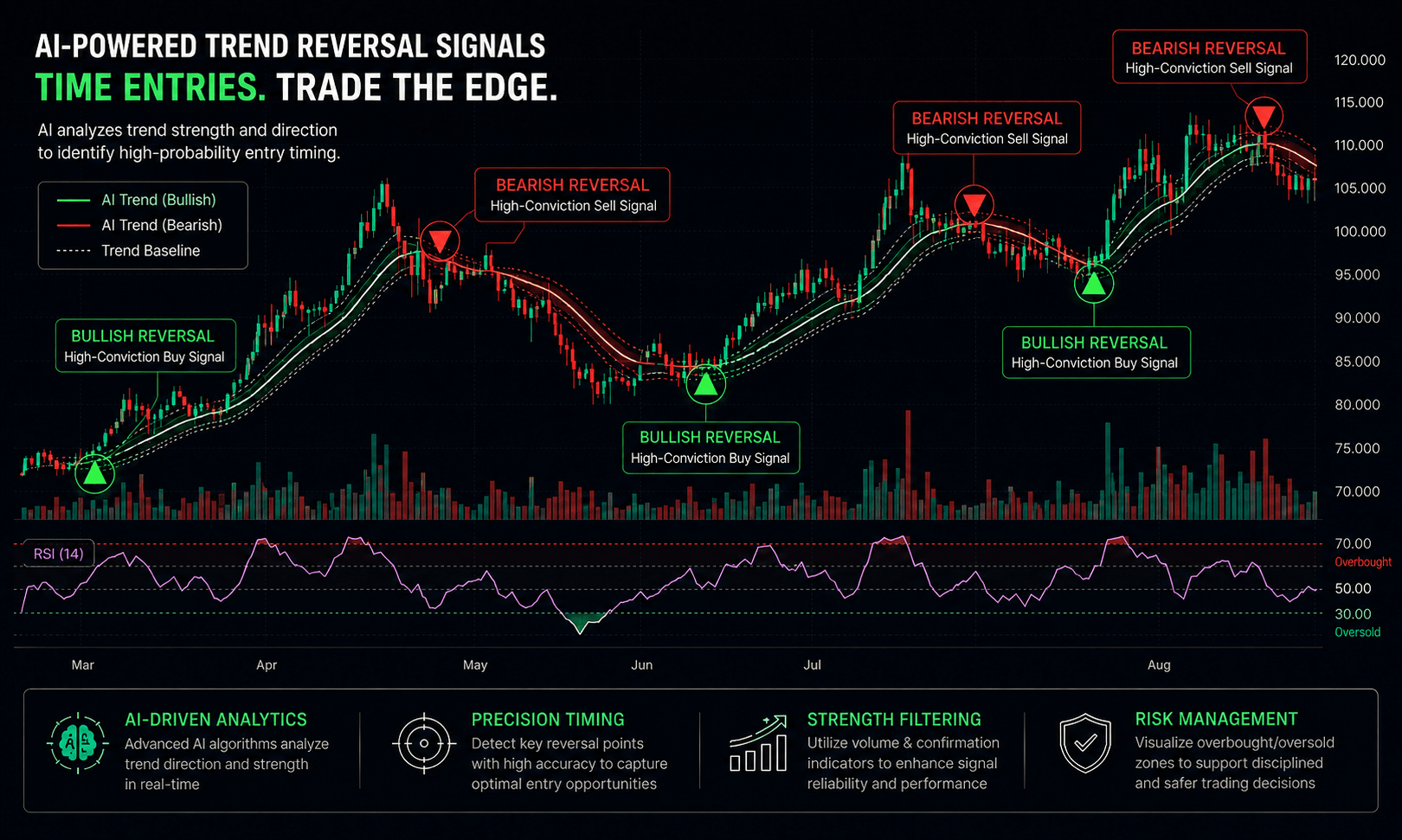
Bull Wave / Bear Wave Forecast Model
Engineered to help you read market direction and momentum faster than the crowd.
- Instantly separate bullish momentum from bearish pressure
- Pinpoint high-probability entry zones with confidence
- Chart signals clear enough for beginners, sharp enough for pros
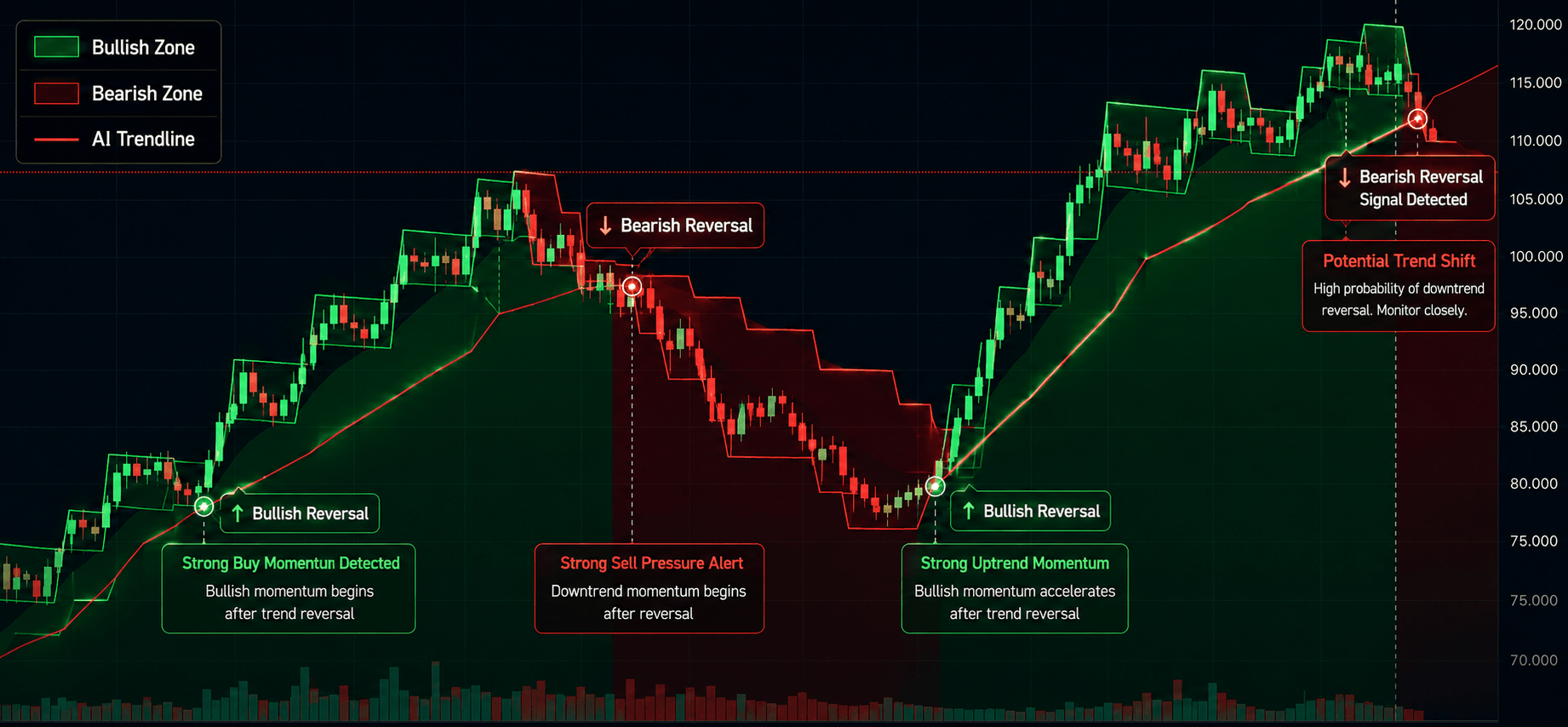
Winning Pattern Detection
Instantly surfaces the high-probability setups that repeat across the charts — a trusted edge for timing your entries and exits.
- Spot momentum building in real time
- Catch trend-reversal points before they break
- Built for active traders who need results, not theory
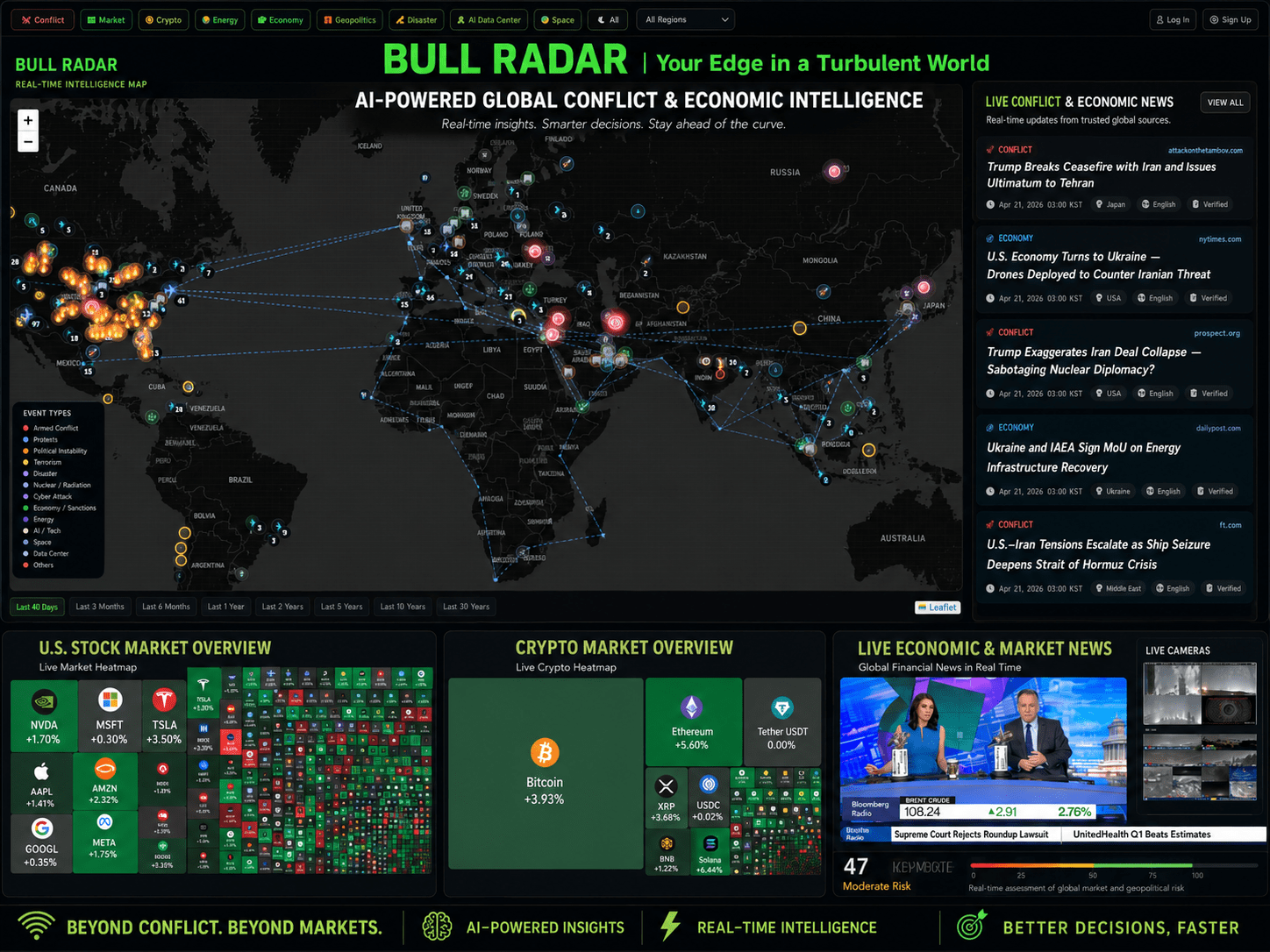
AI Live Economic Dashboard
AI analyzes real-time market data — turning complex, global investment flows into clear insight in seconds.
- Track global stock markets in real time
- See exactly which assets are strong — and which are fading
- Watch how geopolitical events move the markets
About the Author