Definition: Weighting Assets by Risk
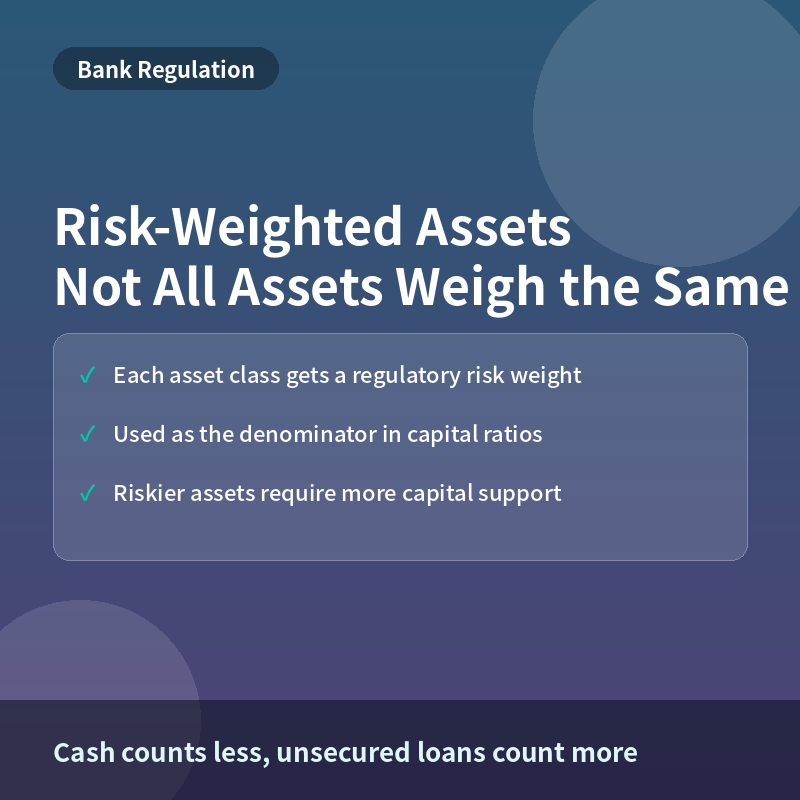
Risk-weighted assets (RWA) are a bank’s total assets adjusted by a risk weight assigned to each asset category under banking regulations, reflecting the idea that a dollar of government bonds and a dollar of unsecured corporate loans do not carry the same risk of loss and therefore should not require the same amount of capital support.
How It Works: Applying Risk Weights
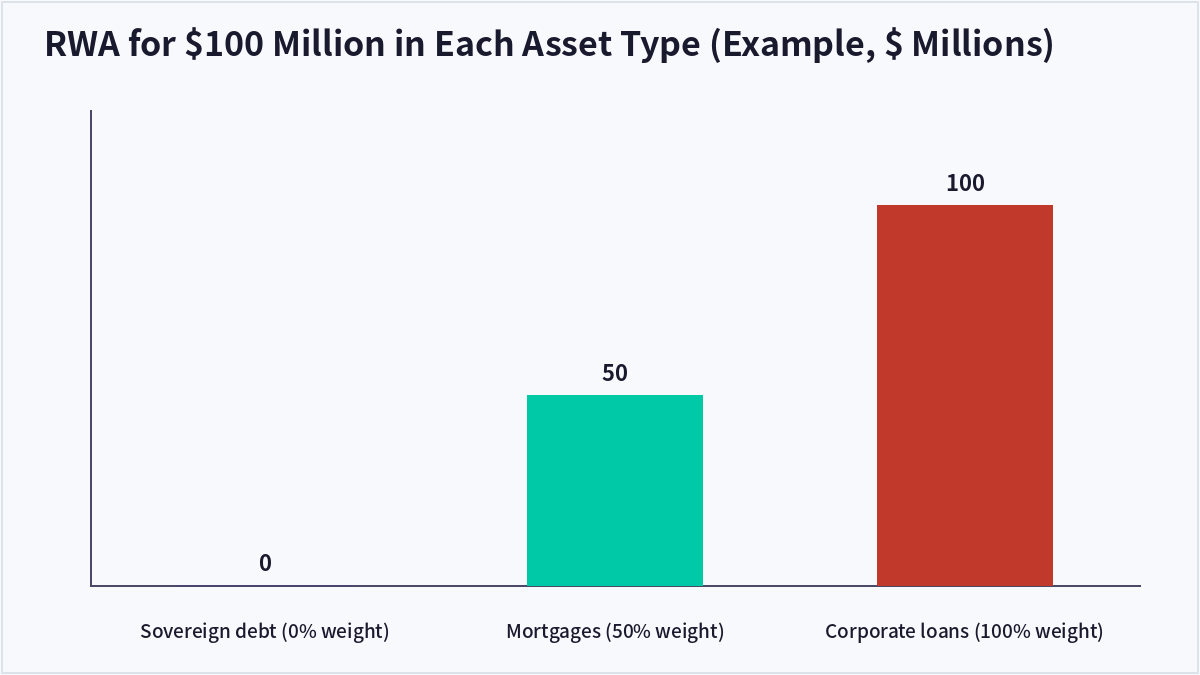
Under frameworks like Basel III, cash and highly rated sovereign debt might carry a risk weight of 0%, meaning they require no additional capital, while residential mortgages might carry a weight around 35-50%, and unsecured corporate loans or exposures to lower-rated borrowers can carry weights of 100% or more. A bank’s RWA is the sum of each asset’s book value multiplied by its assigned risk weight.
Why It Matters: Capital Ratios
RWA serves as the denominator in key regulatory capital ratios, such as the Common Equity Tier 1 (CET1) ratio, which divides a bank’s high-quality capital by its RWA. A bank holding riskier assets must maintain more capital relative to its total balance sheet to meet the same minimum ratio, directly linking asset risk to capital requirements.
| Asset Type | Typical Risk Weight | Capital Impact |
|---|---|---|
| Cash, highly rated sovereign debt | 0% | No additional capital required |
| Residential mortgage loans | 35%–50% | Moderate capital required |
| Unsecured corporate loans | 100%+ | Full or higher capital required |
Frequently Asked Questions
Why don’t regulators just use total assets instead of RWA?
Total assets would treat a loan to a highly-rated government the same as an unsecured loan to a risky borrower, which regulators consider a poor measure of a bank’s actual risk exposure; RWA is designed to align capital requirements more closely with real economic risk.
Who sets risk weights?
Risk weights are generally set by international standards such as the Basel Accords, then implemented and sometimes adjusted by national banking regulators, with some large banks allowed to use internal models (subject to regulatory approval) to calculate certain risk weights.
What is the CET1 ratio and how does RWA affect it?
The Common Equity Tier 1 (CET1) ratio divides a bank’s core capital by its RWA; because RWA is the denominator, a bank can improve its ratio either by raising more capital or by shifting toward lower-risk-weighted assets, without changing its total balance sheet size.
Can two banks with the same total assets have very different RWA?
Yes. A bank concentrated in low-risk-weighted assets like government bonds will have much lower RWA than a bank of the same total size concentrated in higher-risk-weighted assets like unsecured lending, even though their balance sheets are the same nominal size.
Key Takeaways
Risk-weighted assets adjust a bank’s balance sheet by the regulatory risk weight of each asset category, so that riskier exposures require proportionally more capital support. RWA serves as the foundation for key capital adequacy ratios like CET1 that regulators use to assess bank safety. This article is for informational purposes only and does not constitute investment advice.

QuantPro: AI Finds the Trade Before You Do
From AI-powered chart analysis to real-time market intelligence — everything a serious investor needs, in one platform.
- Automated AI chart analysis with precision trend timing
- Bull Radar: real-time visualization of geopolitical & economic shifts
- Live market-moving news and insights, curated for you
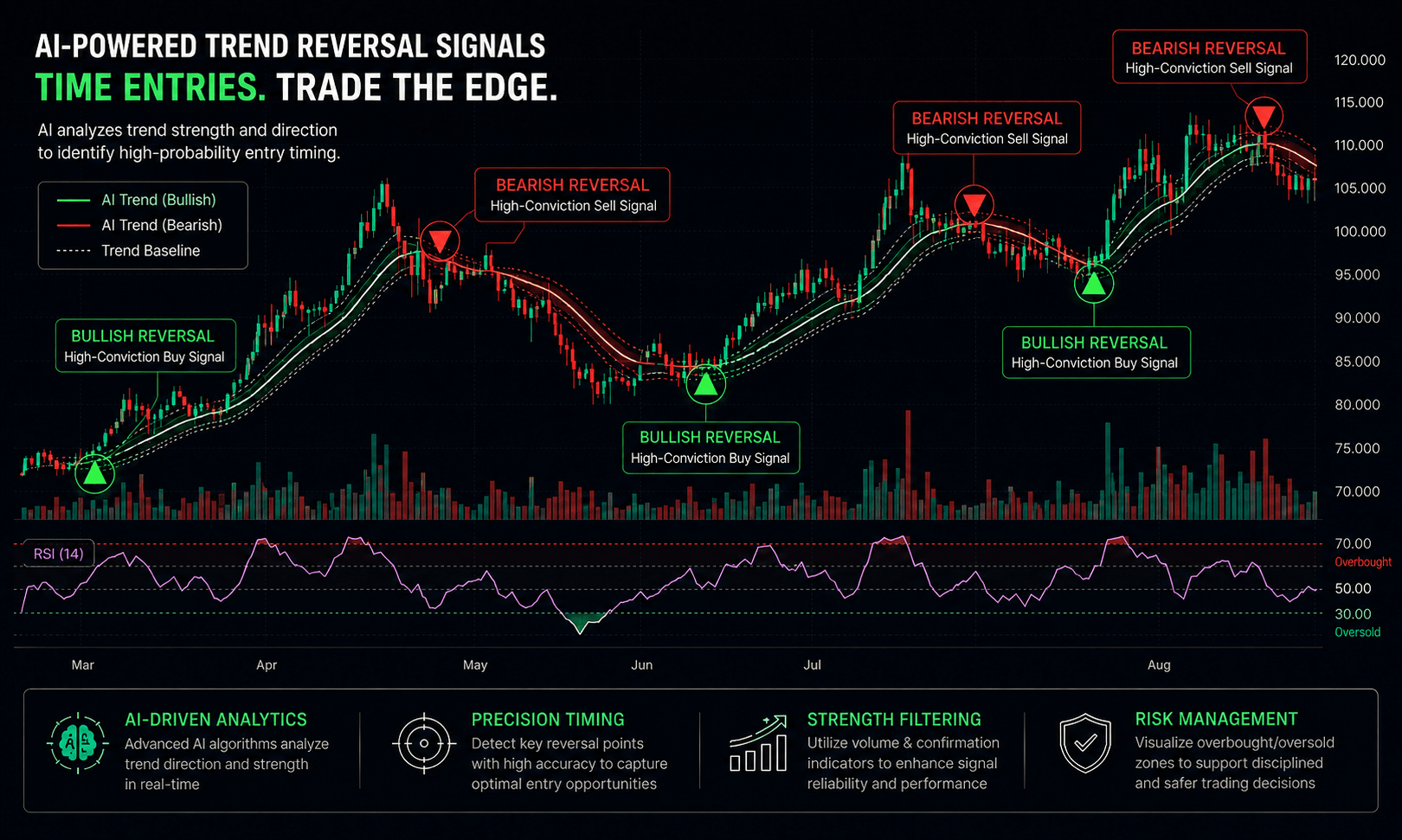
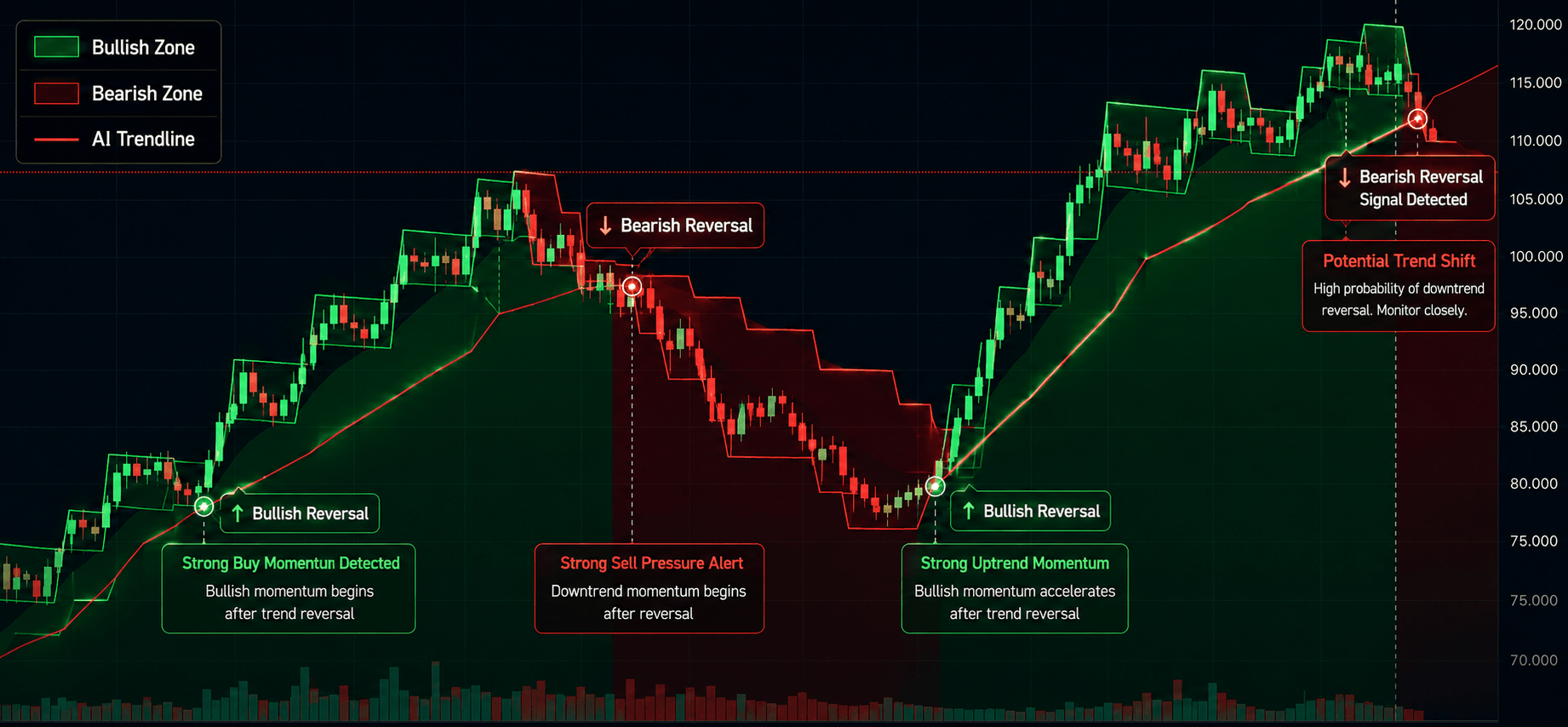
Bull Wave / Bear Wave Forecast Model
Engineered to help you read market direction and momentum faster than the crowd.
- Instantly separate bullish momentum from bearish pressure
- Pinpoint high-probability entry zones with confidence
- Chart signals clear enough for beginners, sharp enough for pros
Winning Pattern Detection
Instantly surfaces the high-probability setups that repeat across the charts — a trusted edge for timing your entries and exits.
- Spot momentum building in real time
- Catch trend-reversal points before they break
- Built for active traders who need results, not theory

AI Live Economic Dashboard
AI analyzes real-time market data — turning complex, global investment flows into clear insight in seconds.
- Track global stock markets in real time
- See exactly which assets are strong — and which are fading
- Watch how geopolitical events move the markets
About the Author