What Is a Spin-Off?
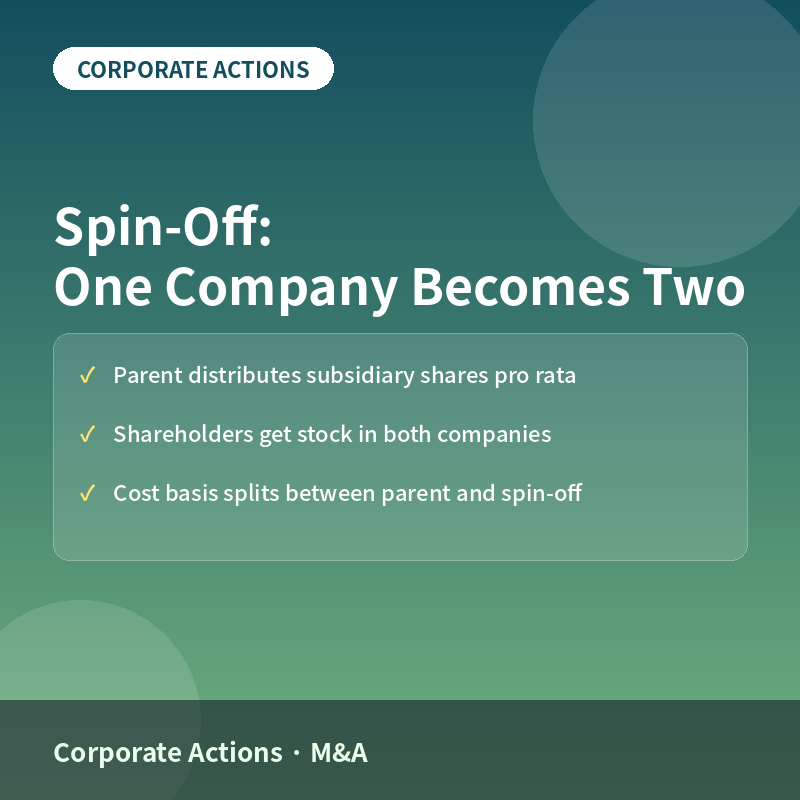
A spin-off is a corporate action in which a parent company separates part of its business — usually a division or subsidiary — into an independent, publicly traded company, and distributes shares of that new company to existing shareholders on a pro-rata basis. Unlike a sale, no cash changes hands between the parent and its shareholders: investors simply end up holding stock in two companies instead of one.
Spin-offs are typically used to unlock value from a business unit that the market undervalues when bundled with the parent, to let each company pursue a different strategy or capital structure, or to satisfy regulatory or antitrust requirements.
How the Mechanics Work
The Distribution Ratio
Shareholders receive new shares of the spin-off company based on a fixed distribution ratio, for example one share of NewCo for every five shares of ParentCo held on the record date. No purchase is required and no tax event is triggered at the moment of distribution, provided the spin-off qualifies under relevant tax rules as a tax-free reorganization.
Cost Basis Allocation
After the spin-off, an investor’s original cost basis in the parent stock must be split between the parent and the new company, typically based on the relative market value of each immediately after the separation. If an investor’s $10,000 position was 80% attributable to the parent and 20% to the spin-off right after separation, their cost basis splits in that same proportion for future tax purposes.
Why Spin-Offs Often Outperform
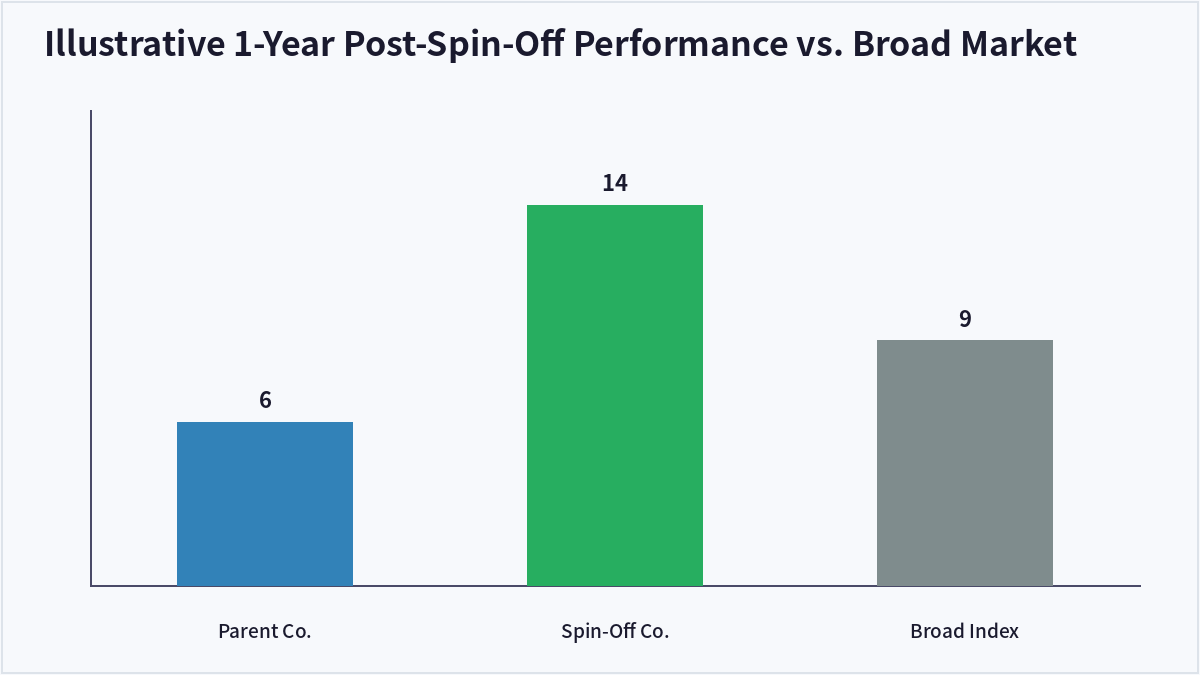
A recurring finding in academic research on U.S. spin-offs is that the newly independent company tends to outperform broad market benchmarks in the period following separation, often most noticeably in the first one to three years. Several mechanisms are commonly cited: forced selling by index funds and institutions that cannot hold the smaller, newly listed spin-off creates temporary undervaluation; management incentives become more directly tied to the specific business; and capital allocation decisions no longer have to compete with an unrelated parent division.
It Is Not Guaranteed
This is a statistical tendency across many historical spin-offs, not a rule that applies to any individual case. Some spin-offs underperform, particularly when the separated unit was spun off specifically because it was the weaker, capital-intensive, or heavily indebted part of the business.
Spin-Off vs. Related Structures
| Structure | Cash to Parent? | Shareholders Get | Common Use Case |
|---|---|---|---|
| Spin-Off | No | Pro-rata shares of NewCo | Unlock value, strategic separation |
| Carve-Out (IPO) | Yes (via share sale) | Nothing automatically | Raise capital, partial monetization |
| Split-Off | No (shares exchanged) | NewCo shares in exchange for ParentCo shares | Reduce share count, targeted separation |
Frequently Asked Questions
Do I have to pay for the new shares I receive?
No. In a standard spin-off, shares of the new company are distributed to existing shareholders automatically based on the distribution ratio — no purchase or additional investment is required.
Is receiving spin-off shares a taxable event?
In the United States, a spin-off structured to meet IRS requirements under Section 355 is generally tax-free at the moment of distribution. Taxes apply later, when the shares of either company are eventually sold, based on the allocated cost basis.
Why do some investors sell spin-off shares immediately?
Index funds and institutional mandates often require holdings above a certain market capitalization or within a specific index; a newly spun-off small-cap company frequently does not qualify, forcing automatic, price-insensitive selling shortly after the separation.
How is a spin-off different from a stock split?
A stock split divides existing shares of the same company into more shares without changing the underlying business. A spin-off creates an entirely new, separately traded company with its own management, financials, and stock price.
Key Takeaways
A spin-off separates a business unit into an independently traded company and distributes its shares to existing shareholders at no cost, and while historical data shows spin-offs have often outperformed after separation, outcomes vary by company and are never guaranteed. This article is for informational purposes only and does not constitute investment advice.

QuantPro: AI Finds the Trade Before You Do
From AI-powered chart analysis to real-time market intelligence — everything a serious investor needs, in one platform.
- Automated AI chart analysis with precision trend timing
- Bull Radar: real-time visualization of geopolitical & economic shifts
- Live market-moving news and insights, curated for you
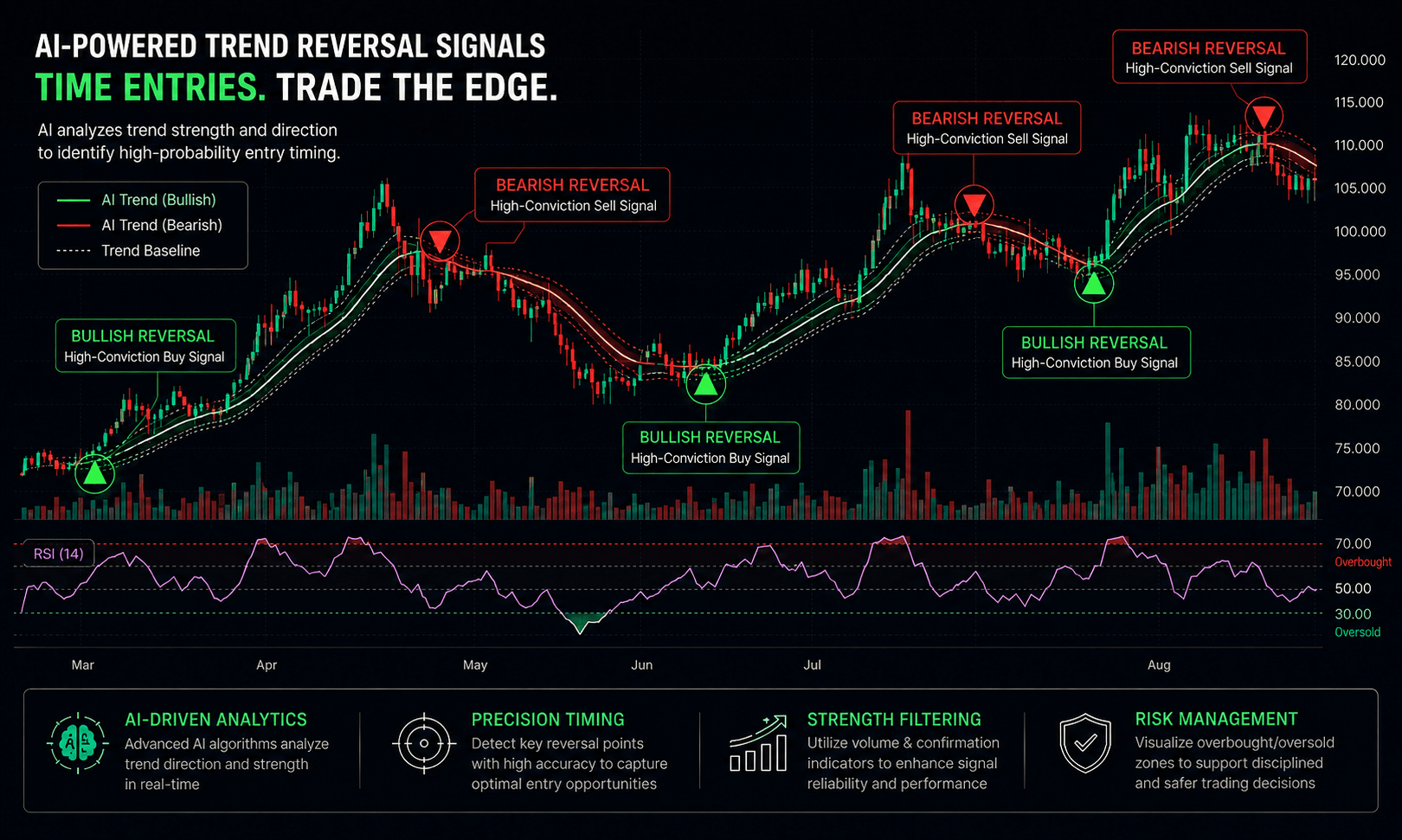
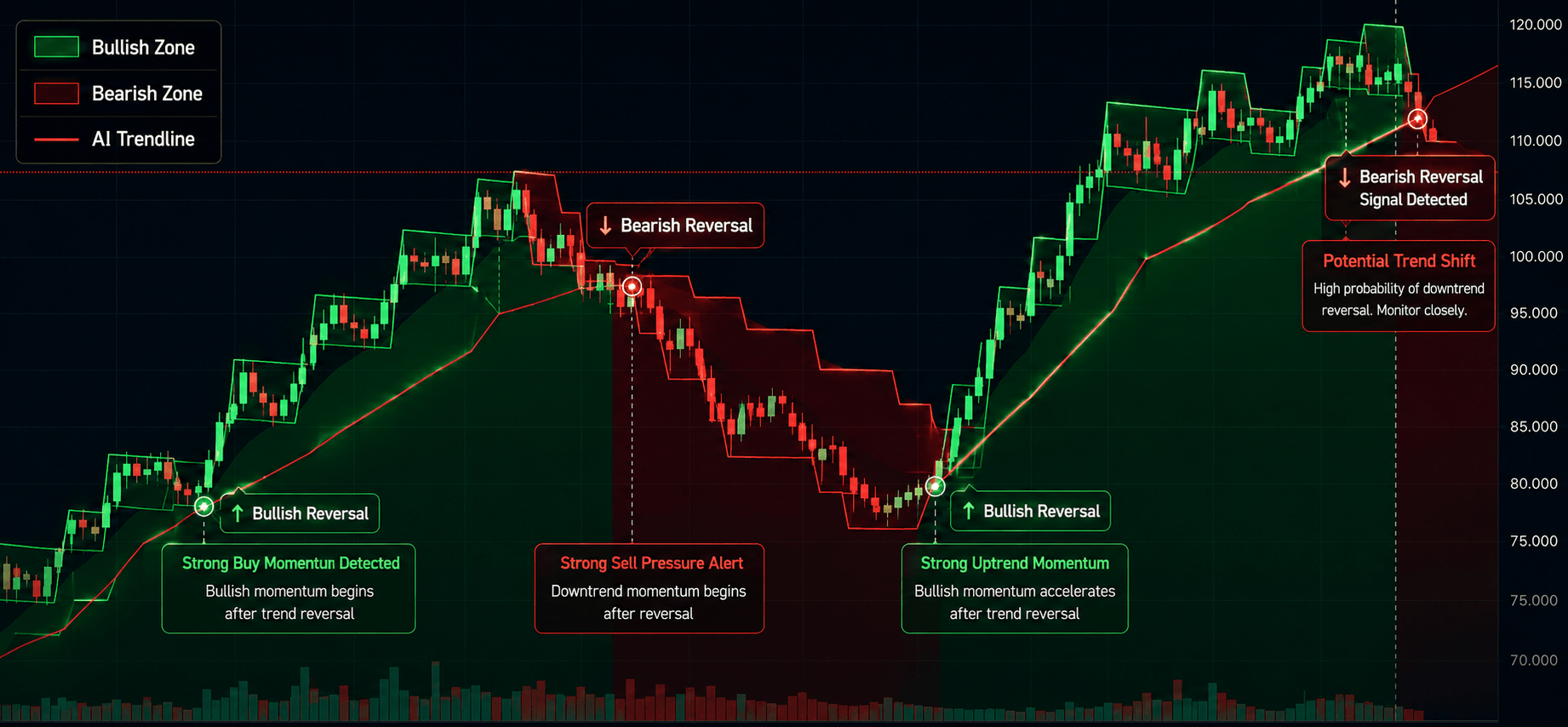
Bull Wave / Bear Wave Forecast Model
Engineered to help you read market direction and momentum faster than the crowd.
- Instantly separate bullish momentum from bearish pressure
- Pinpoint high-probability entry zones with confidence
- Chart signals clear enough for beginners, sharp enough for pros
Winning Pattern Detection
Instantly surfaces the high-probability setups that repeat across the charts — a trusted edge for timing your entries and exits.
- Spot momentum building in real time
- Catch trend-reversal points before they break
- Built for active traders who need results, not theory

AI Live Economic Dashboard
AI analyzes real-time market data — turning complex, global investment flows into clear insight in seconds.
- Track global stock markets in real time
- See exactly which assets are strong — and which are fading
- Watch how geopolitical events move the markets
About the Author