What Is Compound Interest
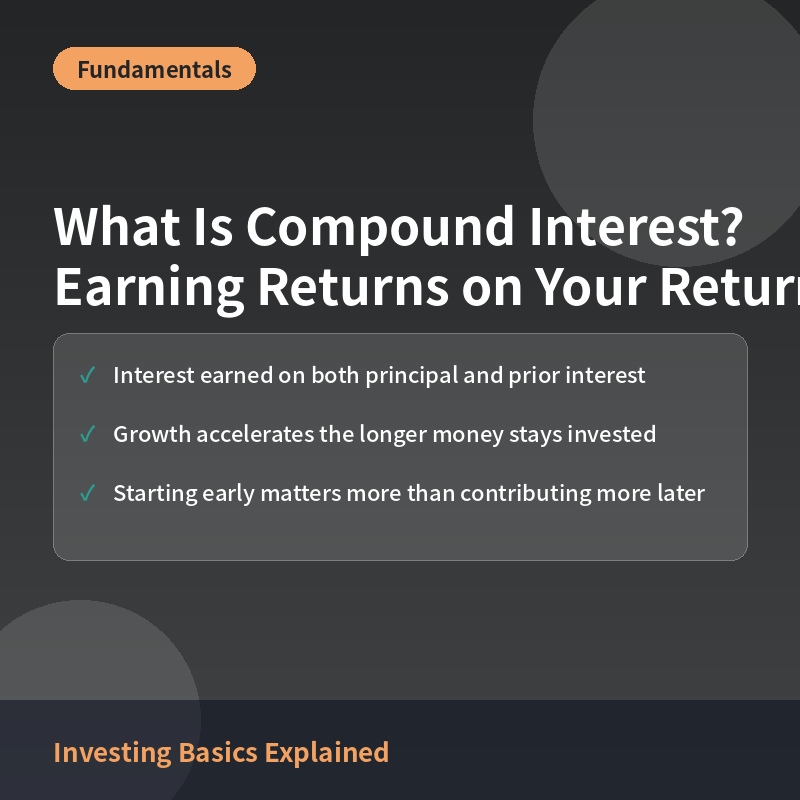
Compound interest is interest calculated not only on the original principal but also on the accumulated interest from previous periods. This means money grows faster over time compared to simple interest, which is calculated only on the original principal.
The Compound Interest Formula
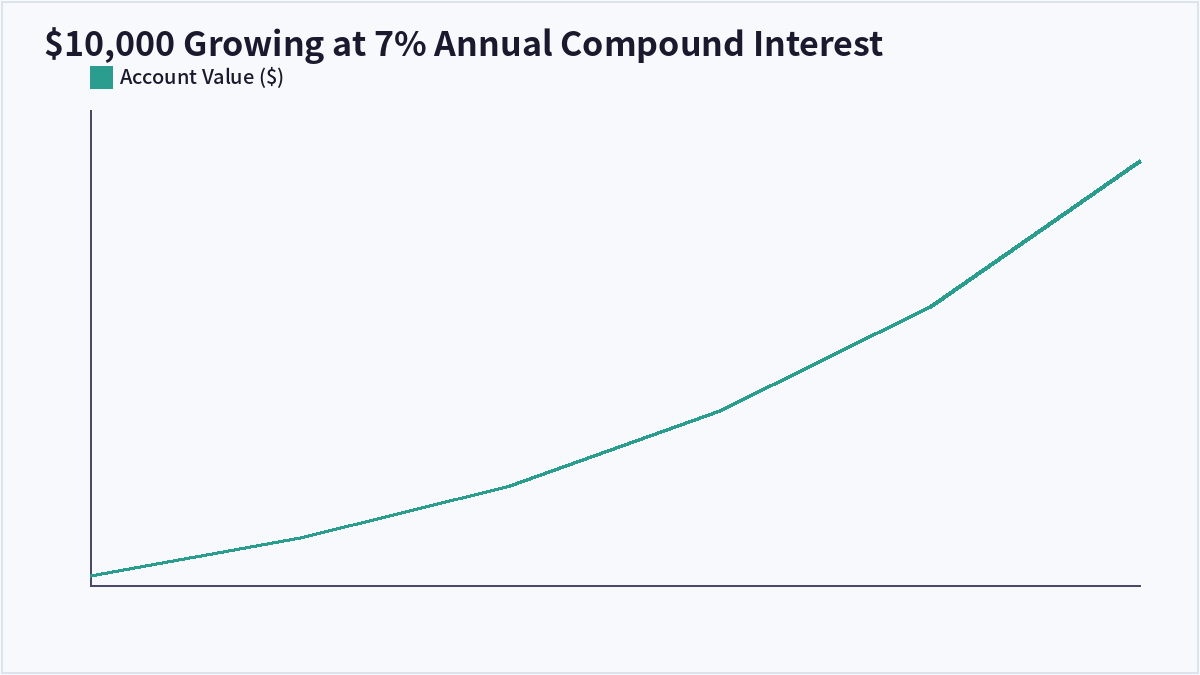
The basic formula is A = P × (1 + r)^n, where A is the final amount, P is the principal, r is the annual interest rate, and n is the number of years the money compounds. A $10,000 investment growing at 7% annually reaches roughly $19,672 after 10 years and about $54,274 after 30 years.
Why Growth Accelerates Over Time
In the early years, most of the growth comes from the interest on the original principal. But as interest accumulates and itself starts earning interest, the growth curve becomes noticeably steeper in later years — which is why the last decade of a long-term investment often contributes more dollar growth than the first decade, even at the same rate of return.
Why Starting Early Matters So Much
Because compounding needs time to accelerate, an investor who starts contributing 10 years earlier — even with smaller amounts — can end up with significantly more than someone who starts later with larger contributions, simply because their money has more compounding periods to work with.
Compound Interest and Investment Fees
The same compounding effect that grows your returns also compounds the drag from fees over time, so even a seemingly small annual fee difference (such as 1% versus 0.1%) can meaningfully reduce total returns over several decades.
| Years Invested | Value at 7% Annual Return ($10,000 start) | Approximate Growth |
|---|---|---|
| 10 years | $19,672 | Nearly doubled |
| 20 years | $38,697 | About 3.9x original |
| 30 years | $54,274 | About 5.4x original |
| Simple interest (30yr, 7%) | $31,000 | For comparison — no compounding |
Frequently Asked Questions
What’s the difference between compound interest and simple interest?
Simple interest is calculated only on the original principal, so it grows at a constant linear rate, while compound interest is calculated on principal plus accumulated interest, causing growth to accelerate over time.
How often does compounding occur?
Compounding frequency varies by account or investment — it can be daily, monthly, quarterly, or annually — and generally, more frequent compounding results in slightly higher total returns for the same stated annual rate.
Does compound interest apply to debt as well as savings?
Yes, compound interest works the same way for debt like credit card balances, which is why unpaid balances can grow quickly over time if interest keeps accumulating on both principal and previously unpaid interest.
How much difference does starting 10 years earlier really make?
Because of how compounding accelerates over time, starting a decade earlier can result in a substantially larger final balance even with smaller total contributions, illustrating why time in the market is often emphasized over trying to time the market.
Key Takeaways
Compound interest allows money to grow on both the original principal and previously earned interest, and because growth accelerates the longer money stays invested, starting early is one of the most powerful factors in long-term wealth building. This article is for informational purposes only and does not constitute investment advice.

QuantPro: AI Finds the Trade Before You Do
From AI-powered chart analysis to real-time market intelligence — everything a serious investor needs, in one platform.
- Automated AI chart analysis with precision trend timing
- Bull Radar: real-time visualization of geopolitical & economic shifts
- Live market-moving news and insights, curated for you
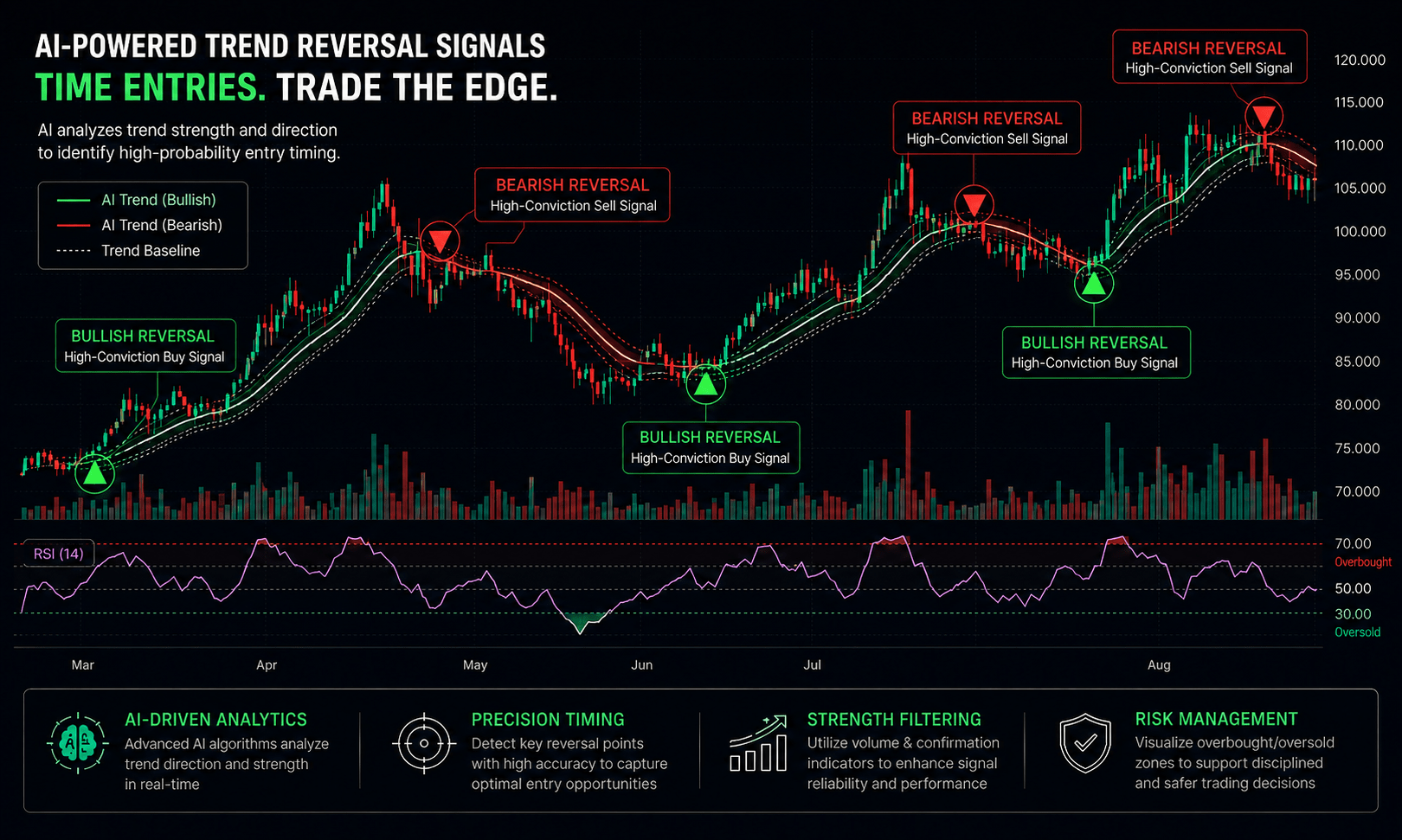
Bull Wave / Bear Wave Forecast Model
Engineered to help you read market direction and momentum faster than the crowd.
- Instantly separate bullish momentum from bearish pressure
- Pinpoint high-probability entry zones with confidence
- Chart signals clear enough for beginners, sharp enough for pros
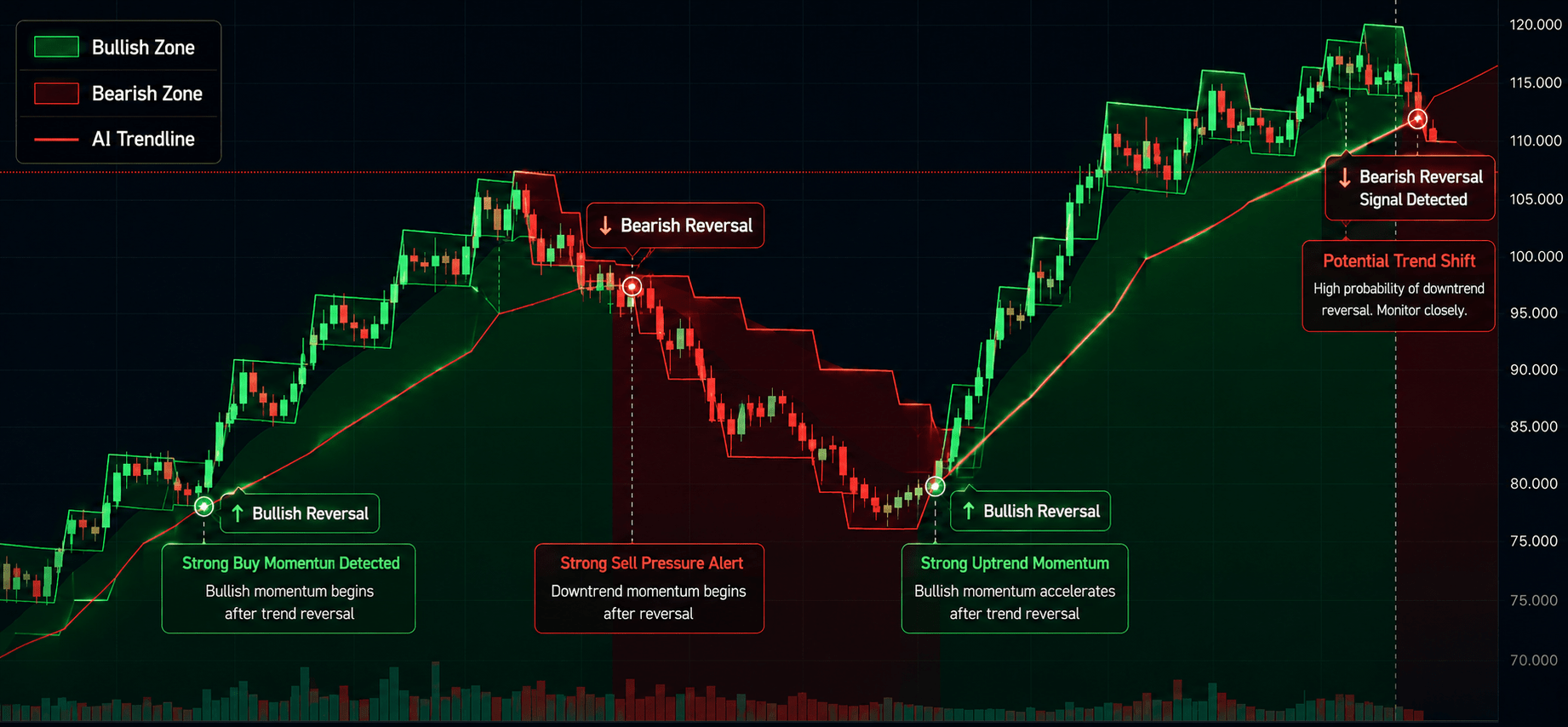
Winning Pattern Detection
Instantly surfaces the high-probability setups that repeat across the charts — a trusted edge for timing your entries and exits.
- Spot momentum building in real time
- Catch trend-reversal points before they break
- Built for active traders who need results, not theory

AI Live Economic Dashboard
AI analyzes real-time market data — turning complex, global investment flows into clear insight in seconds.
- Track global stock markets in real time
- See exactly which assets are strong — and which are fading
- Watch how geopolitical events move the markets
About the Author