What Is Dividend Yield
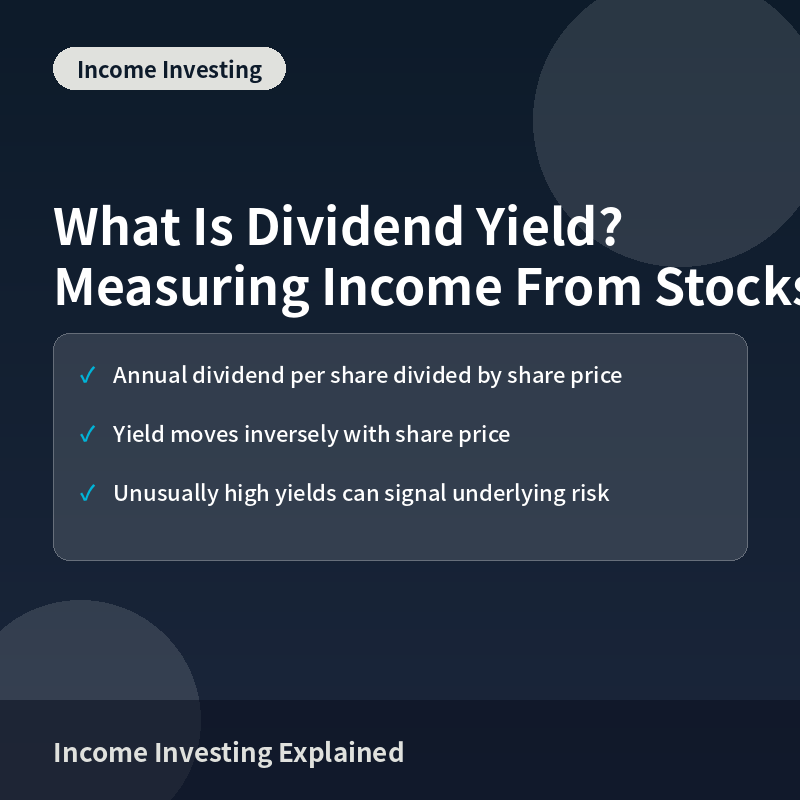
Dividend yield measures how much annual dividend income an investor receives relative to a stock’s current price, expressed as a percentage. It’s a key metric for investors seeking regular income from their stock holdings.
How to Calculate Dividend Yield
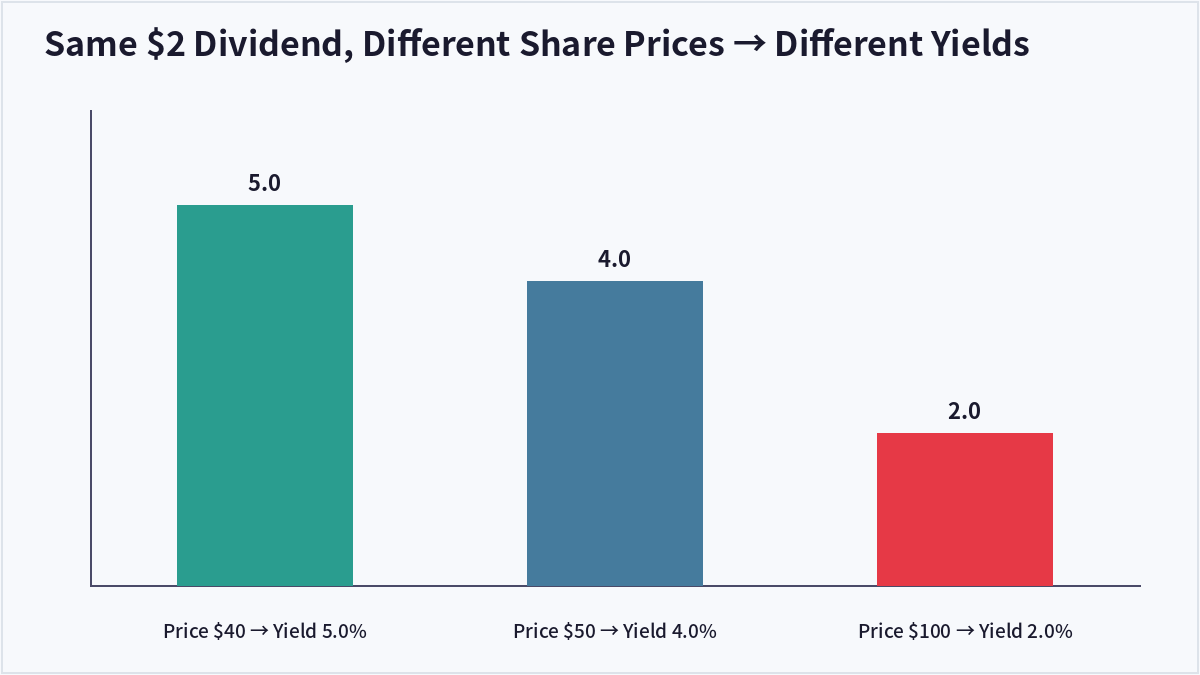
The formula is Dividend Yield (%) = (Annual Dividend Per Share ÷ Share Price) × 100. A stock paying a $2 annual dividend at a $50 share price has a 4.0% yield; if the same $2 dividend is paid on a $100 stock, the yield falls to 2.0%.
Why Dividend Yield Moves Inversely With Price
Because share price sits in the denominator, dividend yield rises when the stock price falls (assuming the dividend stays the same) and falls when the stock price rises — which means a rising yield isn’t always good news if it’s being driven by a falling share price rather than a dividend increase.
Why Unusually High Yields Can Be a Warning Sign
A dividend yield that looks abnormally high compared to peers often reflects a sharply falling stock price due to business troubles, rather than a genuinely generous payout — and such companies sometimes cut or eliminate the dividend afterward, which is why checking the payout ratio and underlying business health matters.
Payout Ratio and Sustainability
The payout ratio (dividends paid divided by net income) helps assess whether a dividend is sustainable — a payout ratio consistently above 100% means a company is paying out more than it earns, which is generally not sustainable over the long term without cutting the dividend or drawing down cash reserves.
| Yield Level | Common Interpretation | What to Check |
|---|---|---|
| Low (below 1-2%) | Growth-focused company, minimal income | Capital appreciation potential |
| Moderate (2-4%) | Balanced income and growth profile | Dividend growth history |
| High (above 5-6%) | Strong income, but verify sustainability | Payout ratio, business fundamentals |
| Very high (above 8-10%) | Often a warning sign | Risk of dividend cut, falling share price |
Frequently Asked Questions
Is a higher dividend yield always better?
Not necessarily — an unusually high yield can result from a falling share price tied to business problems rather than a genuinely strong payout, so it’s important to check the company’s fundamentals before assuming a high yield is attractive.
Can dividend yield change without the dividend amount changing?
Yes, since yield is calculated using the current share price, it moves whenever the stock price moves, even if the company’s actual per-share dividend payment stays exactly the same.
What is a dividend cut and why does it matter?
A dividend cut is when a company reduces or eliminates its dividend payment, often due to financial difficulty, and it typically causes the stock price to fall sharply since income investors may sell in response.
Should I only invest in high-yield stocks for income?
Focusing solely on high current yield can lead to overlooking dividend growth potential and business quality, so many income investors also consider a company’s dividend growth track record and payout sustainability, not just the current yield.
Key Takeaways
Dividend yield shows how much income a stock generates relative to its price, but because it moves inversely with share price, investors should check payout ratios and business fundamentals rather than chasing the highest yield alone. This article is for informational purposes only and does not constitute investment advice.

QuantPro: AI Finds the Trade Before You Do
From AI-powered chart analysis to real-time market intelligence — everything a serious investor needs, in one platform.
- Automated AI chart analysis with precision trend timing
- Bull Radar: real-time visualization of geopolitical & economic shifts
- Live market-moving news and insights, curated for you
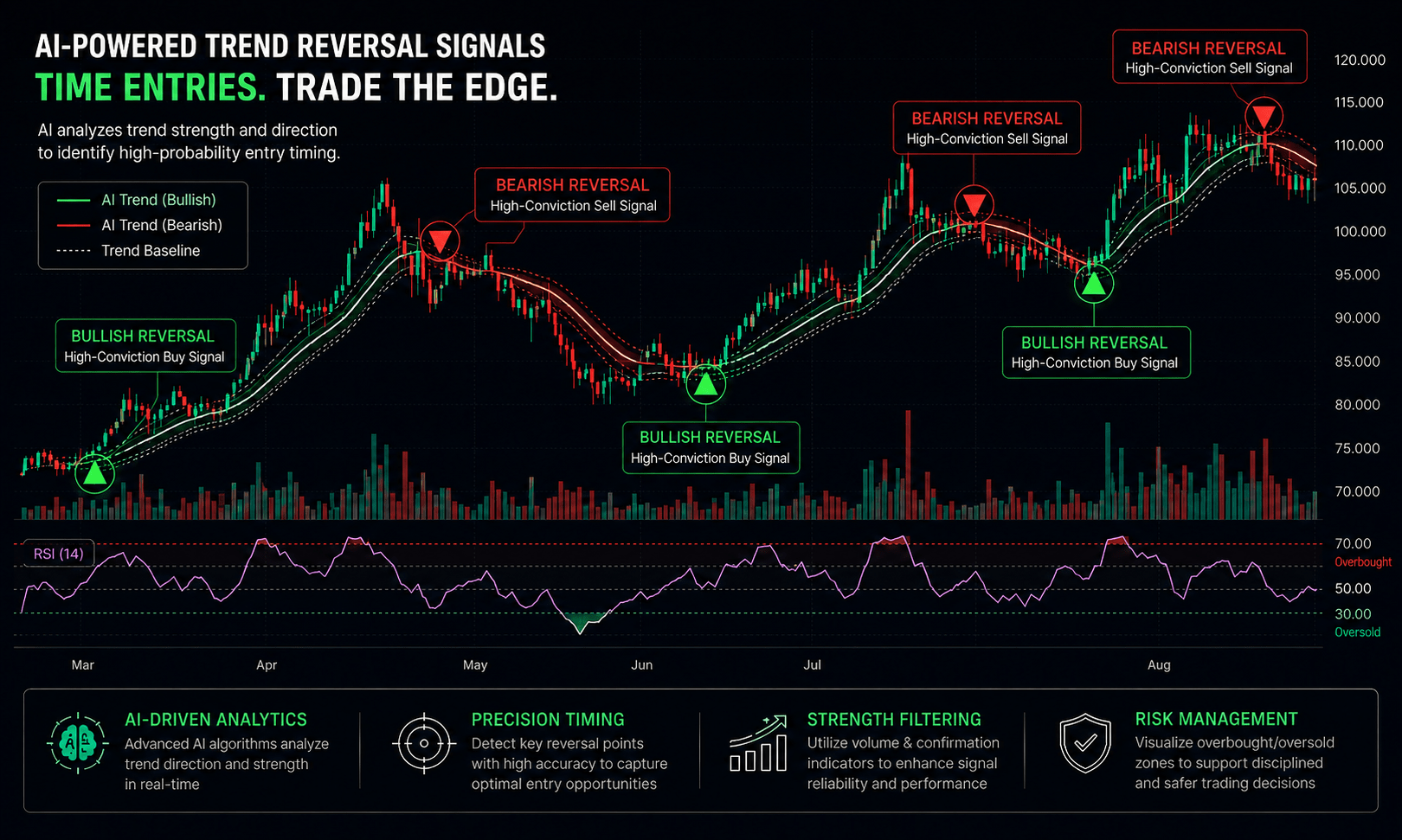
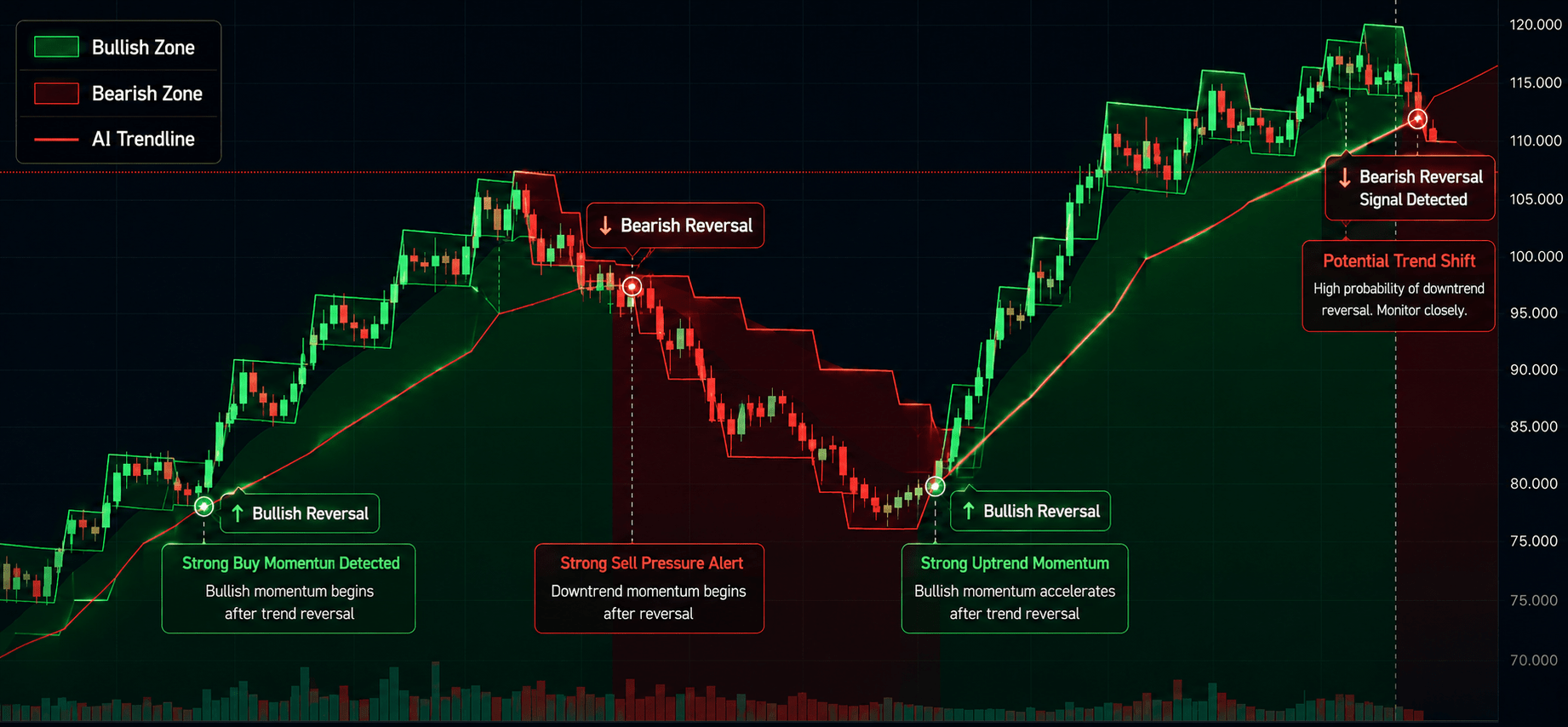
Bull Wave / Bear Wave Forecast Model
Engineered to help you read market direction and momentum faster than the crowd.
- Instantly separate bullish momentum from bearish pressure
- Pinpoint high-probability entry zones with confidence
- Chart signals clear enough for beginners, sharp enough for pros
Winning Pattern Detection
Instantly surfaces the high-probability setups that repeat across the charts — a trusted edge for timing your entries and exits.
- Spot momentum building in real time
- Catch trend-reversal points before they break
- Built for active traders who need results, not theory

AI Live Economic Dashboard
AI analyzes real-time market data — turning complex, global investment flows into clear insight in seconds.
- Track global stock markets in real time
- See exactly which assets are strong — and which are fading
- Watch how geopolitical events move the markets
About the Author