Definition: Offsetting Directional Exposure
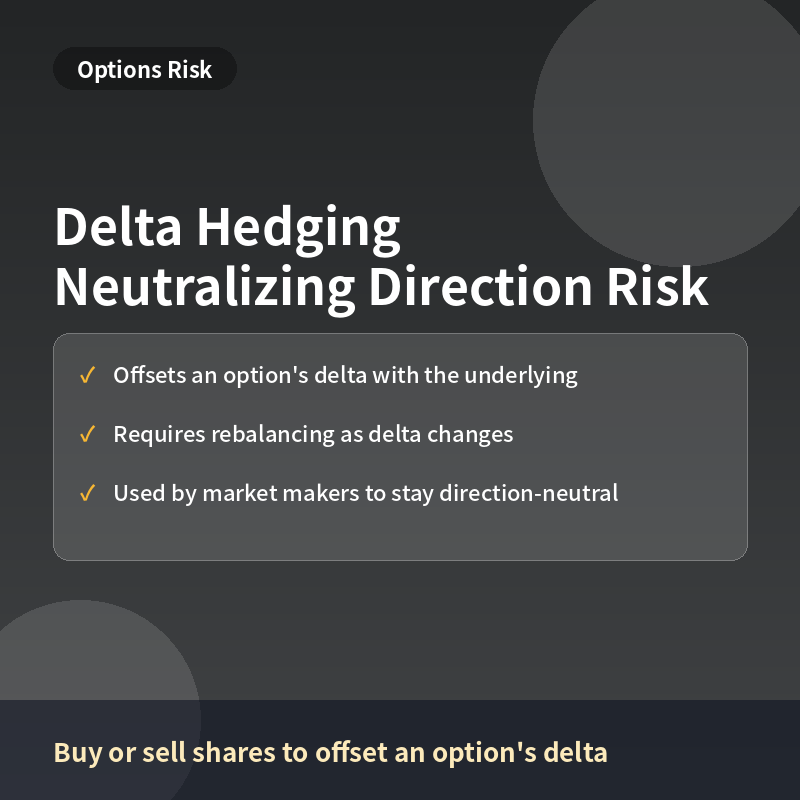
Delta hedging is a risk management technique in which a trader who holds an options position buys or sells the underlying asset in an amount calculated to offset the option’s delta, the sensitivity of the option’s price to a $1 move in the underlying, so that the combined position’s value is largely insensitive to small price moves in the underlying.
How It Works: Calculating the Hedge Ratio
If a trader sells a call option with a delta of 0.60 on 100 shares, that position behaves like being short 60 shares of stock. To delta-hedge it, the trader buys 60 shares of the underlying stock, so that a small move in the stock price produces roughly offsetting gains and losses between the option and the shares.

Why It Requires Rebalancing
Delta is not constant; it changes as the underlying price moves and as time passes, a property known as gamma. This means a delta-neutral position at one moment can become unbalanced shortly after, requiring the trader to buy or sell more shares to maintain the hedge, a continuous process often called dynamic hedging.
| Option Delta | Equivalent Share Exposure (per 100 shares) | Hedge Action |
|---|---|---|
| 0.30 (out-of-the-money call) | Long 30 shares equivalent | Buy 30 shares to hedge if short the call |
| 0.60 (near-the-money call) | Long 60 shares equivalent | Buy 60 shares to hedge if short the call |
| 0.90 (deep in-the-money call) | Long 90 shares equivalent | Buy 90 shares to hedge if short the call |
Frequently Asked Questions
Who typically uses delta hedging?
Options market makers and dealers use delta hedging extensively to stay roughly direction-neutral while collecting the bid-ask spread, since their business model depends on managing risk rather than making directional bets.
Does delta hedging eliminate all risk?
No. Delta hedging only offsets first-order directional risk; the position remains exposed to gamma (how delta itself changes), vega (volatility risk), and theta (time decay), all of which require separate monitoring.
How often does a delta hedge need to be rebalanced?
There’s no fixed rule; it depends on the position size, how fast delta is changing (gamma), and the trader’s risk tolerance, with active market makers sometimes rebalancing many times a day.
Can delta hedging be done with options instead of shares?
Yes, some traders use other options with offsetting deltas instead of the underlying shares, which can also help manage gamma and vega exposure alongside delta, though it adds its own complexity.
Key Takeaways
Delta hedging offsets an option’s directional exposure by trading a calculated amount of the underlying asset, but because delta itself shifts with price and time, the hedge must be rebalanced continuously to remain effective. It manages directional risk specifically, not the full range of risks an option carries. This article is for informational purposes only and does not constitute investment advice.

QuantPro: AI Finds the Trade Before You Do
From AI-powered chart analysis to real-time market intelligence — everything a serious investor needs, in one platform.
- Automated AI chart analysis with precision trend timing
- Bull Radar: real-time visualization of geopolitical & economic shifts
- Live market-moving news and insights, curated for you
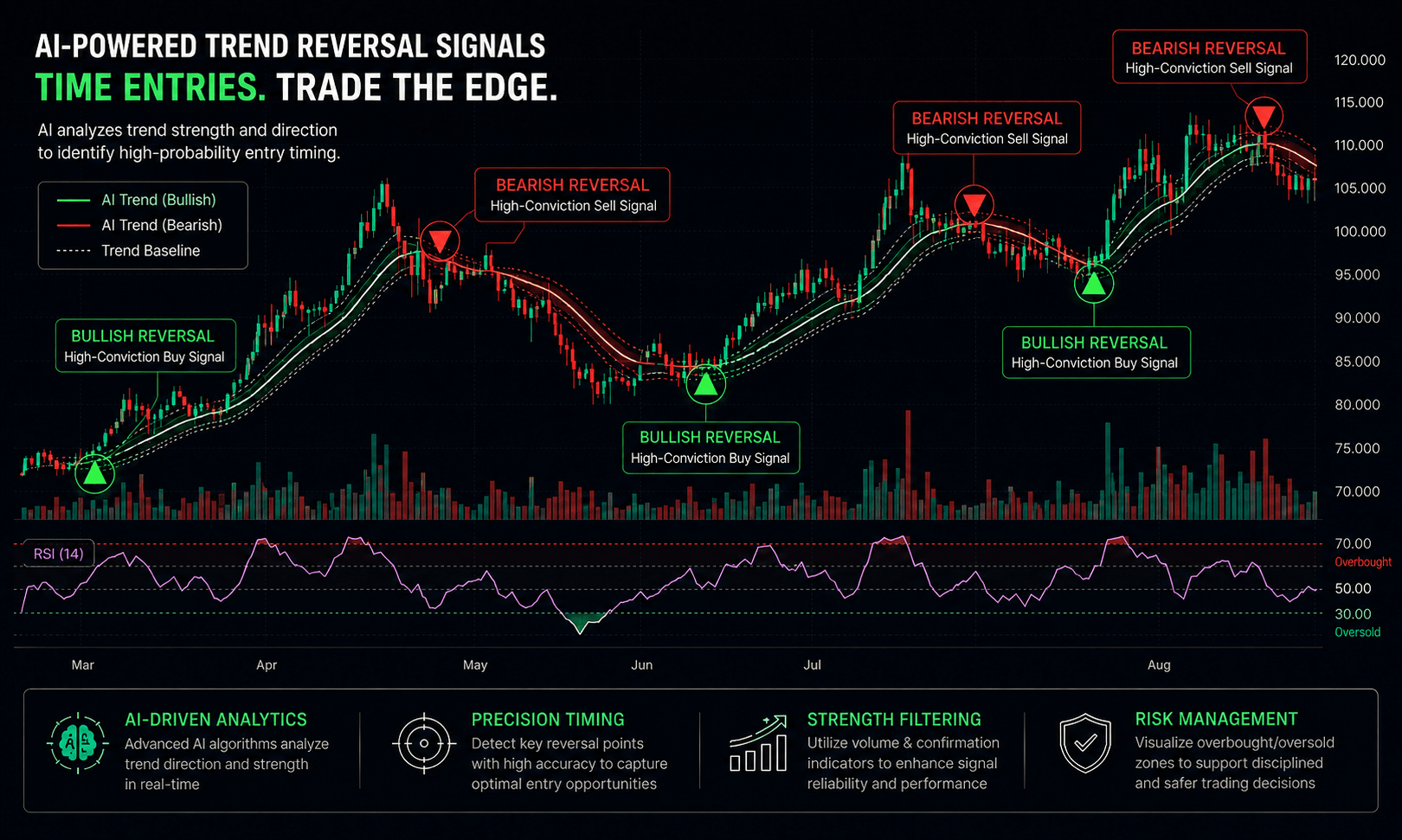
Bull Wave / Bear Wave Forecast Model
Engineered to help you read market direction and momentum faster than the crowd.
- Instantly separate bullish momentum from bearish pressure
- Pinpoint high-probability entry zones with confidence
- Chart signals clear enough for beginners, sharp enough for pros
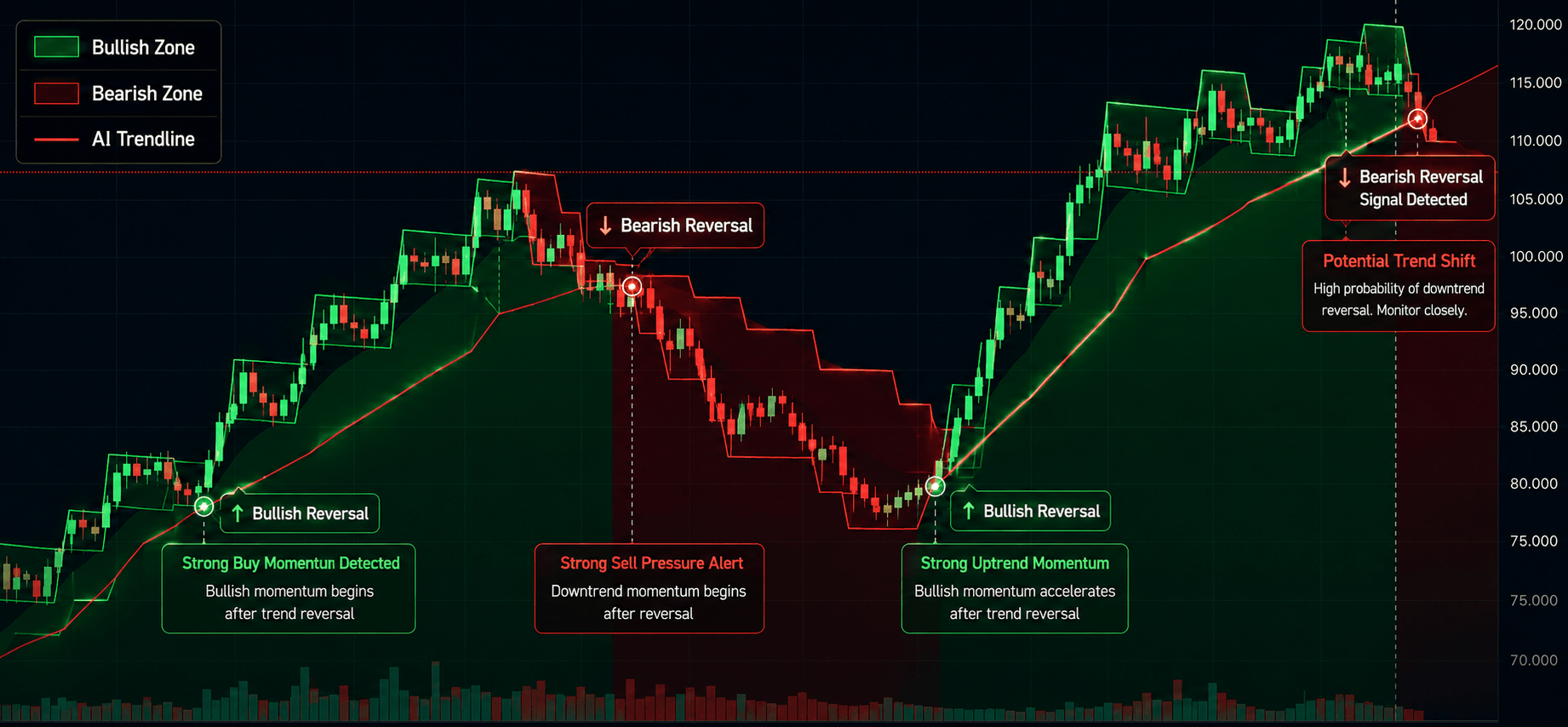
Winning Pattern Detection
Instantly surfaces the high-probability setups that repeat across the charts — a trusted edge for timing your entries and exits.
- Spot momentum building in real time
- Catch trend-reversal points before they break
- Built for active traders who need results, not theory
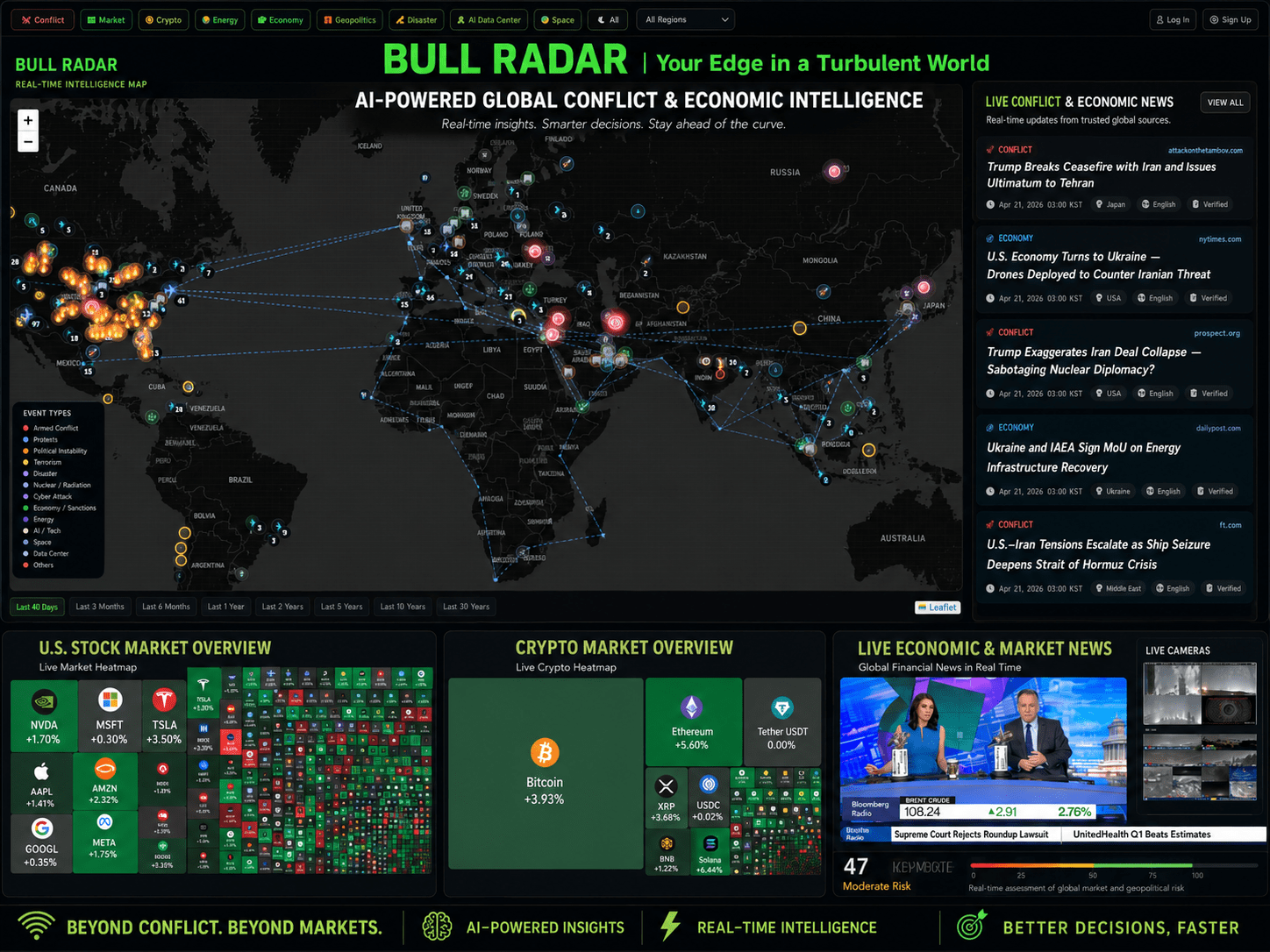
AI Live Economic Dashboard
AI analyzes real-time market data — turning complex, global investment flows into clear insight in seconds.
- Track global stock markets in real time
- See exactly which assets are strong — and which are fading
- Watch how geopolitical events move the markets
About the Author