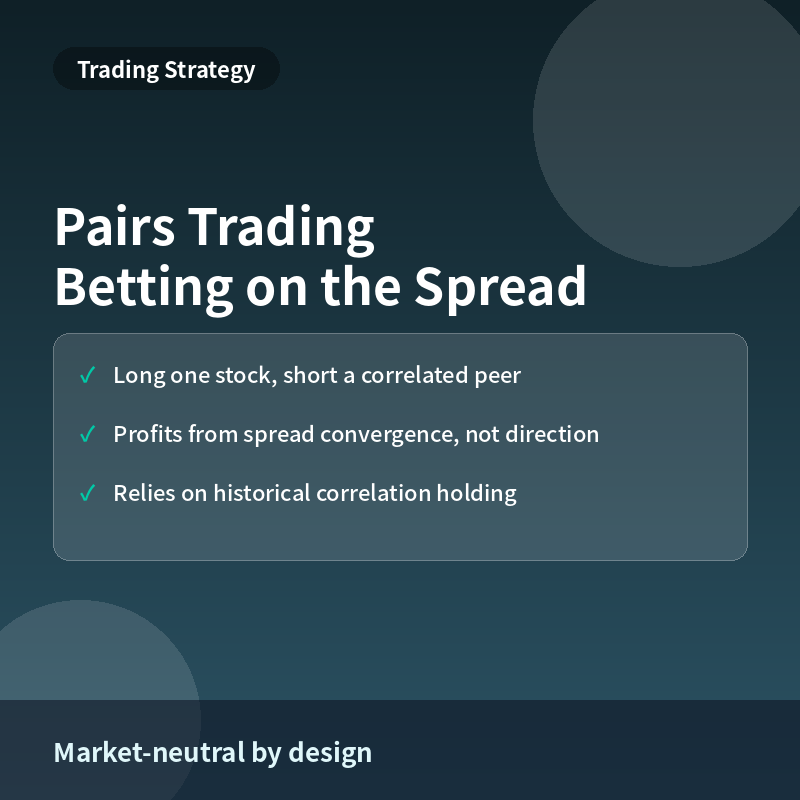
Definition: Trading the Relationship, Not the Direction
Pairs trading is a market-neutral strategy that involves simultaneously going long one stock and short a second, historically correlated stock, aiming to profit from the convergence of their price relationship rather than from the overall direction of the market.
How It Works: Spotting Divergence
Traders first identify two stocks that typically move together, such as two companies in the same industry, and track the historical spread or ratio between their prices. When that spread widens unusually far from its historical average, the trader shorts the outperforming stock and buys the underperforming one, betting the spread will narrow back toward its historical norm.
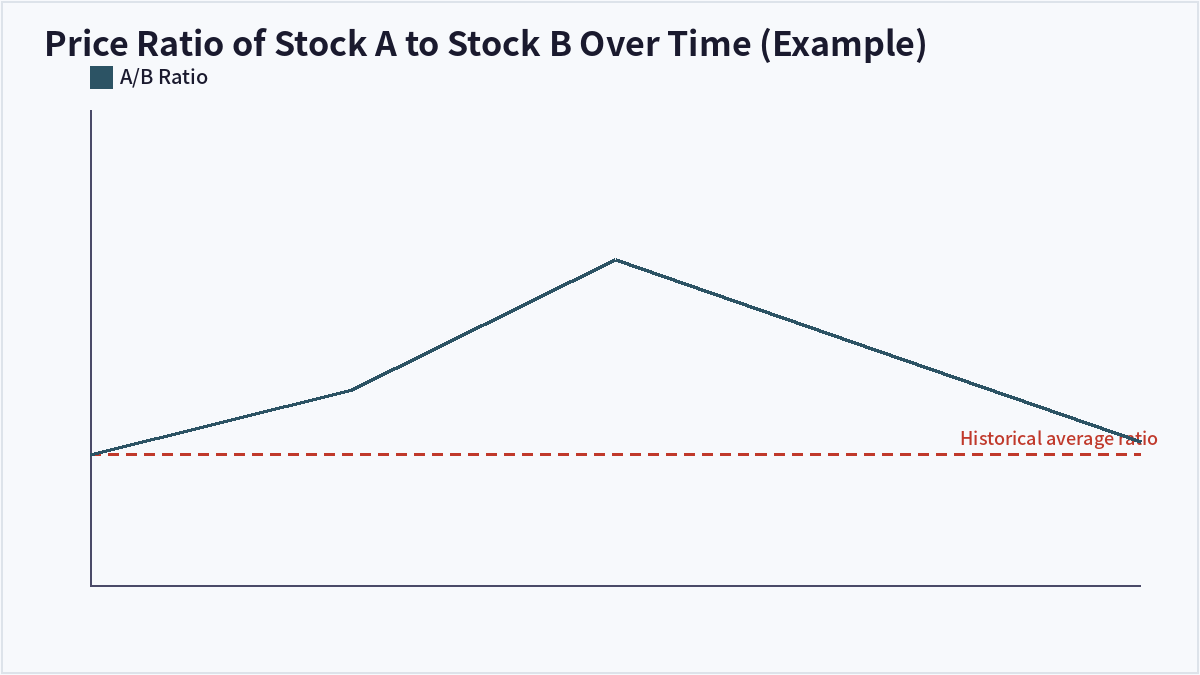
Example: A Widening Spread
If Stock A and Stock B have historically traded within a tight ratio but Stock A rallies 12% while Stock B stays flat over a few weeks, a pairs trader might short Stock A and buy Stock B, profiting if the ratio reverts even if the broader market moves up or down in the meantime.
| Market Scenario | Directional Trade Outcome | Pairs Trade Outcome |
|---|---|---|
| Broad market rallies 10% | Long position gains, short position may lag | Profit depends on spread convergence, not market direction |
| Broad market falls 10% | Long position loses value | Loss/gain still depends on relative spread movement |
Frequently Asked Questions
Is pairs trading risk-free because it’s market-neutral?
No. Market-neutral only means the strategy is designed to be less exposed to overall market direction; it still carries risk if the historical correlation breaks down permanently, such as after a merger, regulatory change, or fundamental shift in one company’s business.
How do traders choose which pairs to trade?
Common approaches include selecting companies in the same industry with similar business models, or using statistical tests like cointegration to confirm that two price series have historically moved together in a stable, mean-reverting way.
What is the biggest risk in pairs trading?
The biggest risk is that the spread continues to widen instead of reverting, sometimes called ‘divergence risk,’ which can happen if the fundamental reason two stocks used to move together no longer applies.
Do pairs trades use leverage?
Because the long and short legs are meant to offset each other’s market exposure, many pairs traders use leverage to increase the position size, which also increases the potential loss if the spread does not converge as expected.
Key Takeaways
Pairs trading profits from the convergence of a spread between two historically correlated stocks rather than from overall market direction, making it a market-neutral strategy. It still carries the risk that a historical relationship breaks down permanently instead of reverting. This article is for informational purposes only and does not constitute investment advice.

QuantPro: AI Finds the Trade Before You Do
From AI-powered chart analysis to real-time market intelligence — everything a serious investor needs, in one platform.
- Automated AI chart analysis with precision trend timing
- Bull Radar: real-time visualization of geopolitical & economic shifts
- Live market-moving news and insights, curated for you
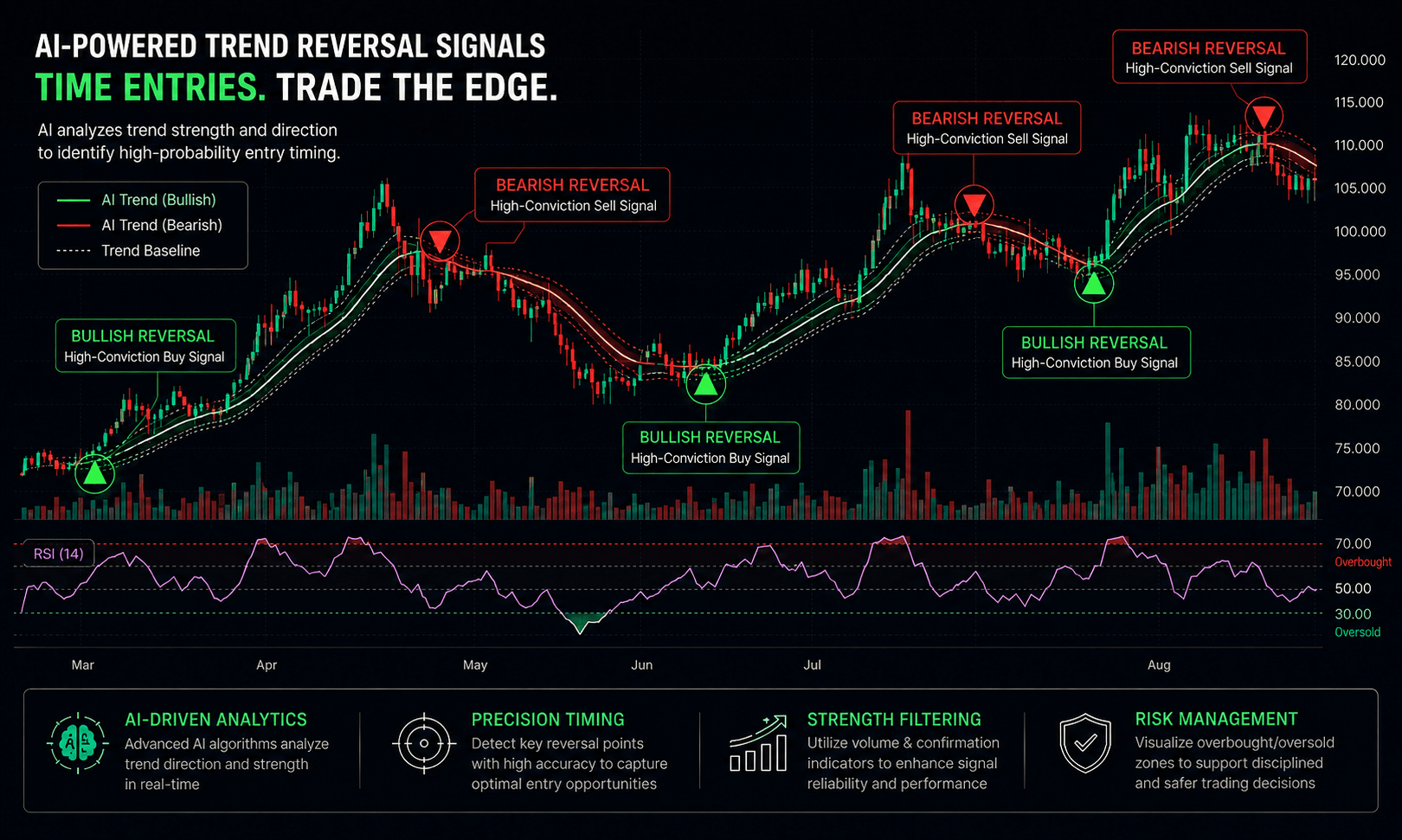
Bull Wave / Bear Wave Forecast Model
Engineered to help you read market direction and momentum faster than the crowd.
- Instantly separate bullish momentum from bearish pressure
- Pinpoint high-probability entry zones with confidence
- Chart signals clear enough for beginners, sharp enough for pros
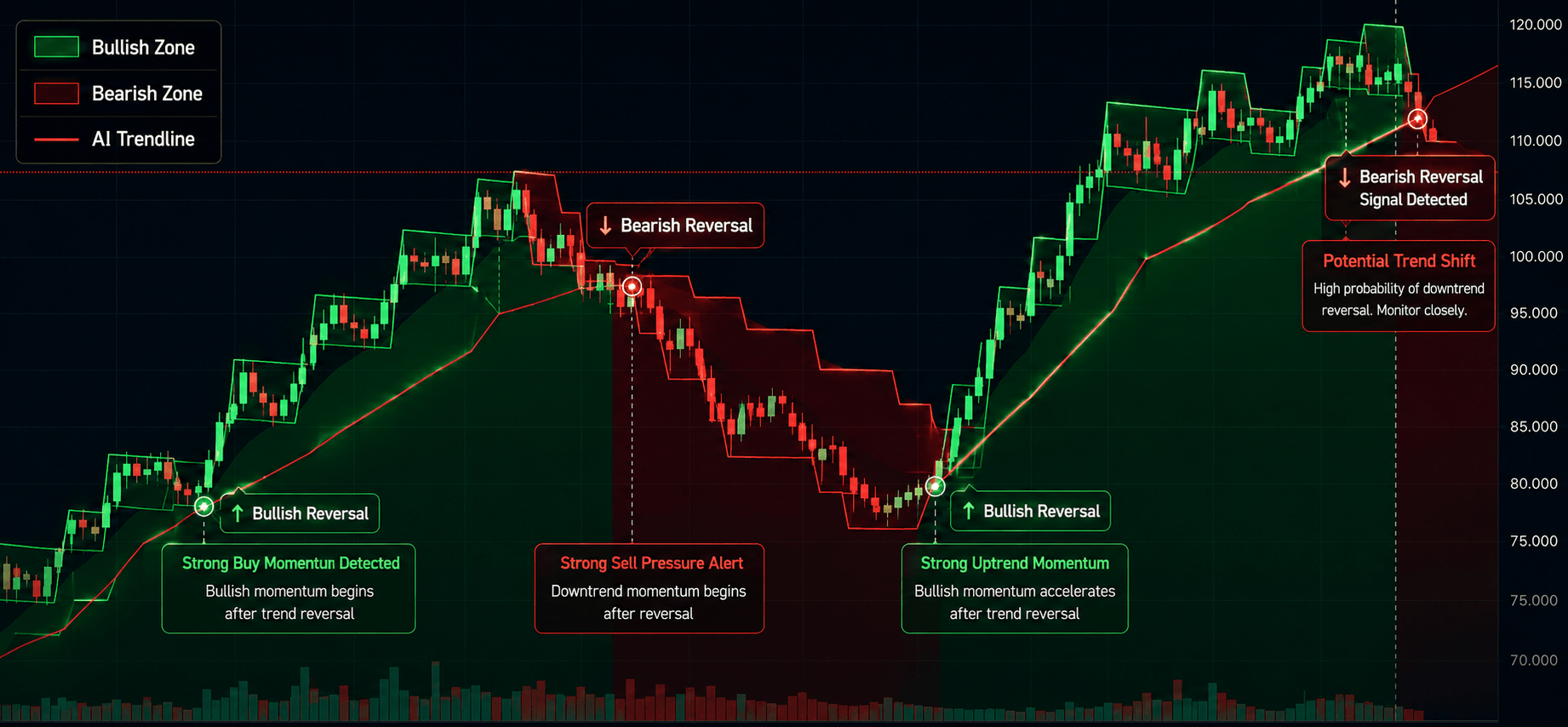
Winning Pattern Detection
Instantly surfaces the high-probability setups that repeat across the charts — a trusted edge for timing your entries and exits.
- Spot momentum building in real time
- Catch trend-reversal points before they break
- Built for active traders who need results, not theory
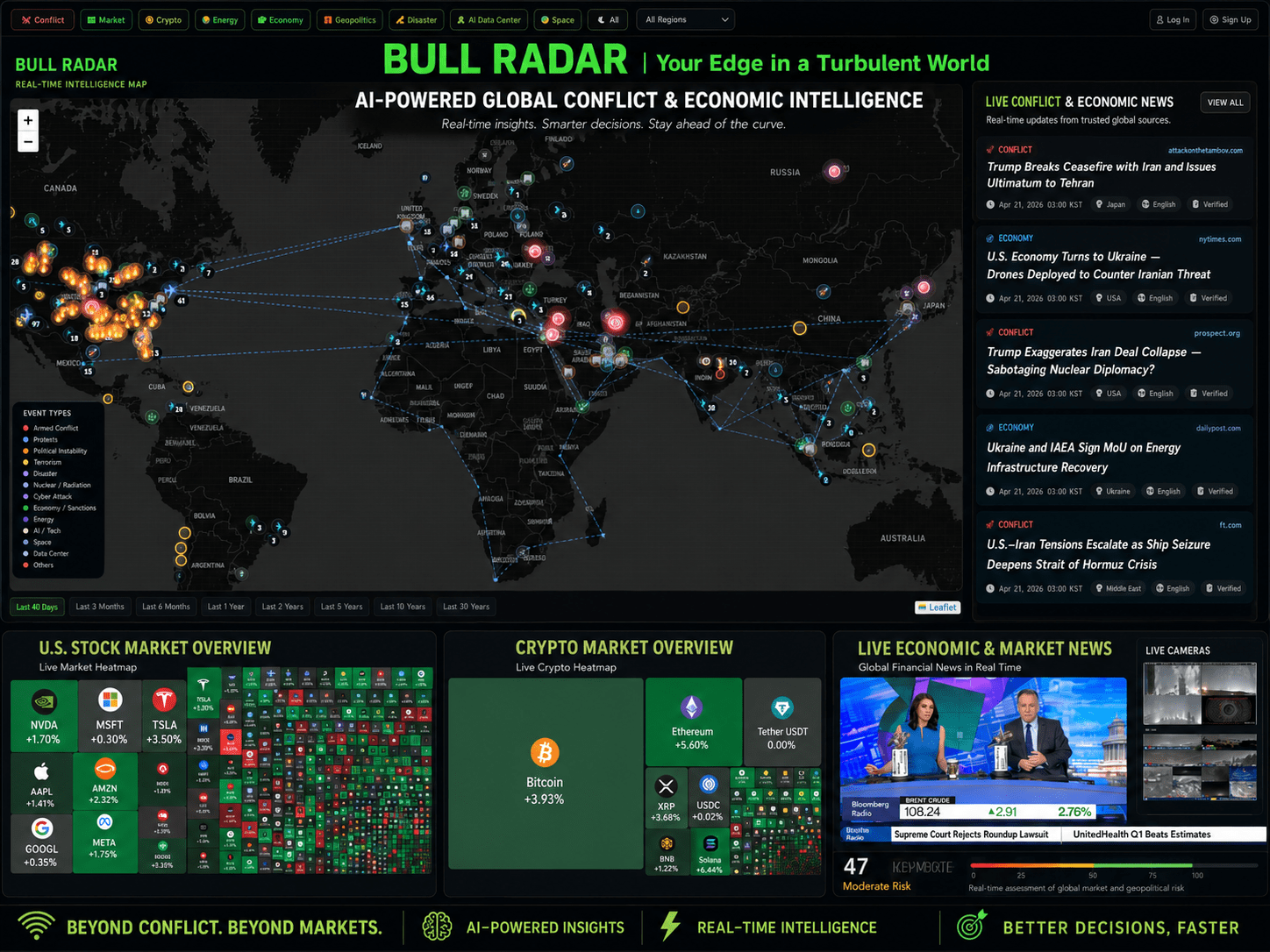
AI Live Economic Dashboard
AI analyzes real-time market data — turning complex, global investment flows into clear insight in seconds.
- Track global stock markets in real time
- See exactly which assets are strong — and which are fading
- Watch how geopolitical events move the markets
About the Author