What Is Inflation
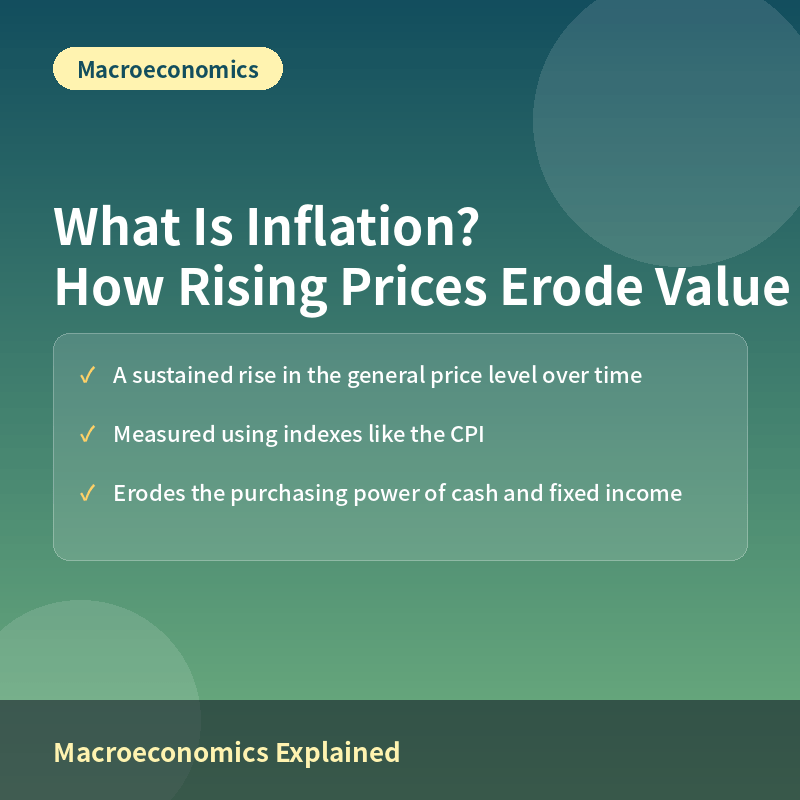
Inflation is a sustained increase in the general price level of goods and services in an economy over time. As inflation rises, each unit of currency buys fewer goods and services than it did before — in other words, the purchasing power of money declines.
How Inflation Is Measured
The most commonly cited measure is the Consumer Price Index (CPI), which tracks the price change of a representative basket of goods and services that households typically purchase, usually reported as a year-over-year or month-over-month percentage change.
How Inflation Erodes Purchasing Power
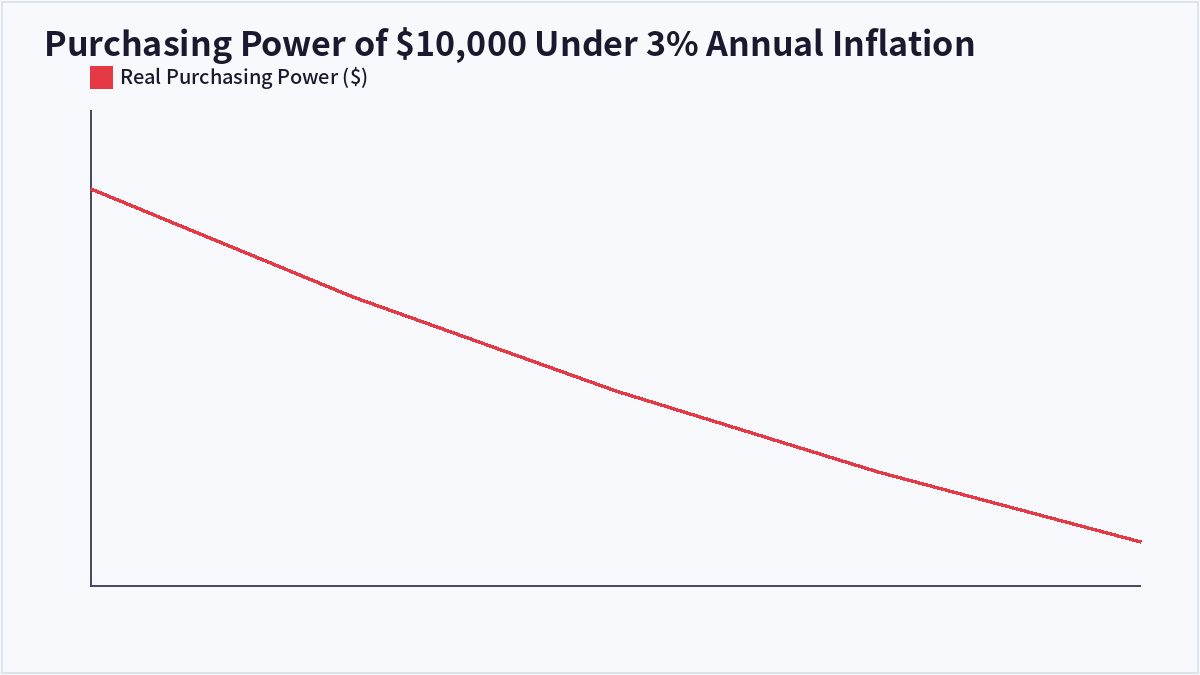
Even a modest 3% annual inflation rate compounds significantly over time — $10,000 sitting in cash with no return loses nearly half of its real purchasing power after 20 years, which illustrates why holding large amounts of cash for long periods can be costly in real terms.
How Inflation Affects Different Investments
Inflation tends to erode the real value of cash and fixed-rate bonds, since their nominal payments don’t adjust for rising prices. Stocks can sometimes offer partial protection since companies may raise prices along with inflation, while assets like real estate, commodities, and inflation-protected securities (such as TIPS) are commonly discussed as potential inflation hedges.
Inflation and Central Bank Policy
Central banks generally aim for a moderate, stable inflation rate (often around 2%) and typically raise interest rates when inflation runs persistently above target, since higher borrowing costs tend to cool spending and investment, which can in turn slow the pace of price increases.
| Asset Type | Typical Inflation Sensitivity | Notes |
|---|---|---|
| Cash | High — value erodes directly | No offsetting return against rising prices |
| Fixed-rate bonds | High — fixed payments lose real value | Longer maturities are typically more sensitive |
| Stocks | Moderate — mixed, varies by sector | Pricing power can offer partial protection |
| Real assets (real estate, commodities) | Often used as a hedge | Performance varies by asset and cycle |
Frequently Asked Questions
Is some inflation normal and healthy for an economy?
Yes, most central banks target a low, stable positive inflation rate (commonly around 2%) rather than zero inflation, as this is generally considered supportive of healthy economic growth and employment.
What is the difference between inflation and deflation?
Inflation is a general rise in prices over time, while deflation is a general decline in prices — deflation can sound appealing but is often associated with weak economic demand and can create its own set of economic problems.
Does inflation affect everyone equally?
No, inflation’s impact varies — those on fixed incomes or holding large cash balances tend to be hurt more, while those with assets that appreciate alongside inflation, or with variable incomes that adjust upward, may be less affected.
Can inflation ever be too low?
Yes, inflation that is too low or negative (deflation) can discourage spending, since consumers may delay purchases expecting even lower future prices, which is why most central banks avoid targeting zero or negative inflation.
Key Takeaways
Inflation is the gradual erosion of money’s purchasing power due to rising prices, and understanding how it affects cash, bonds, and other assets differently can help investors think about protecting their long-term purchasing power. This article is for informational purposes only and does not constitute investment advice.

QuantPro: AI Finds the Trade Before You Do
From AI-powered chart analysis to real-time market intelligence — everything a serious investor needs, in one platform.
- Automated AI chart analysis with precision trend timing
- Bull Radar: real-time visualization of geopolitical & economic shifts
- Live market-moving news and insights, curated for you
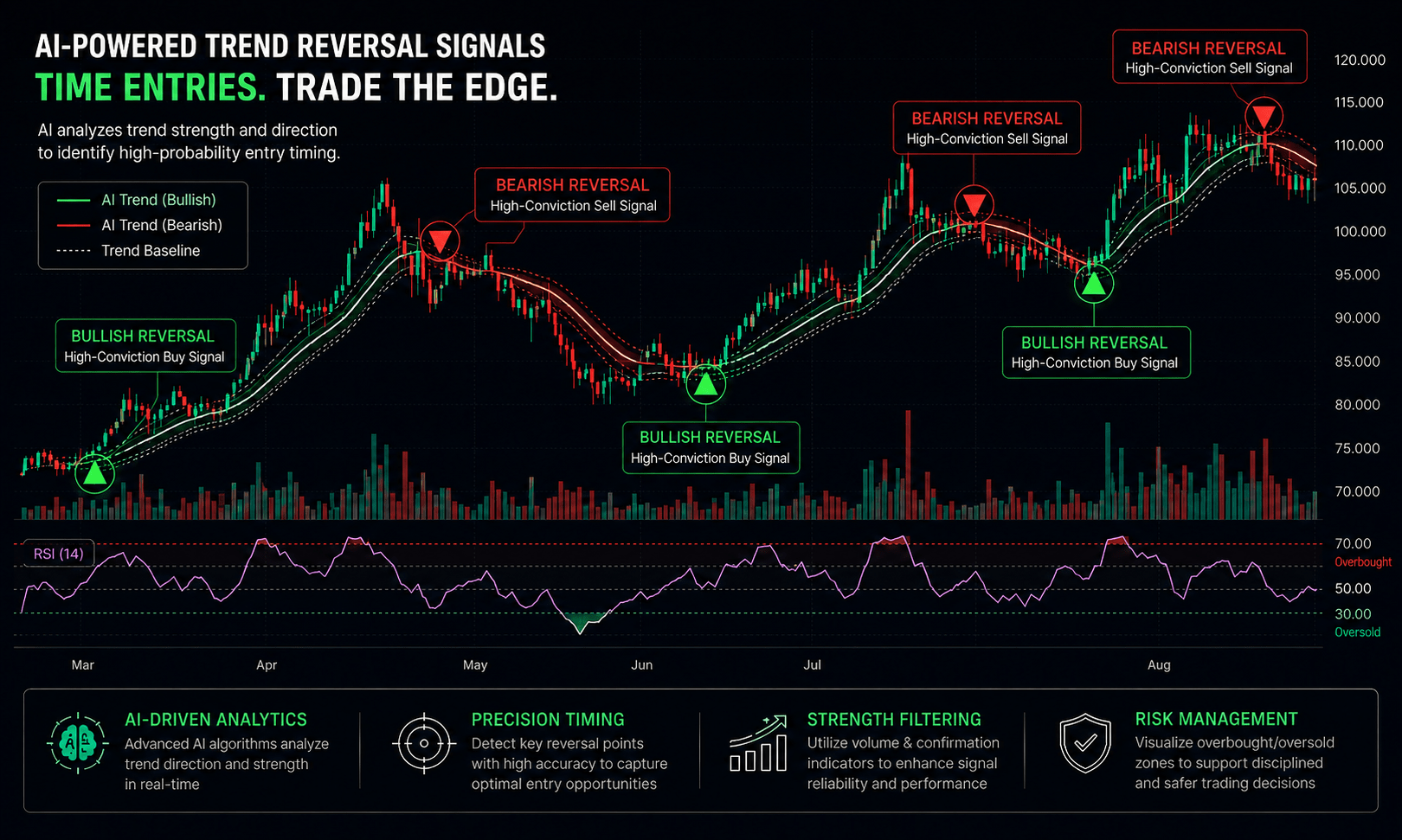
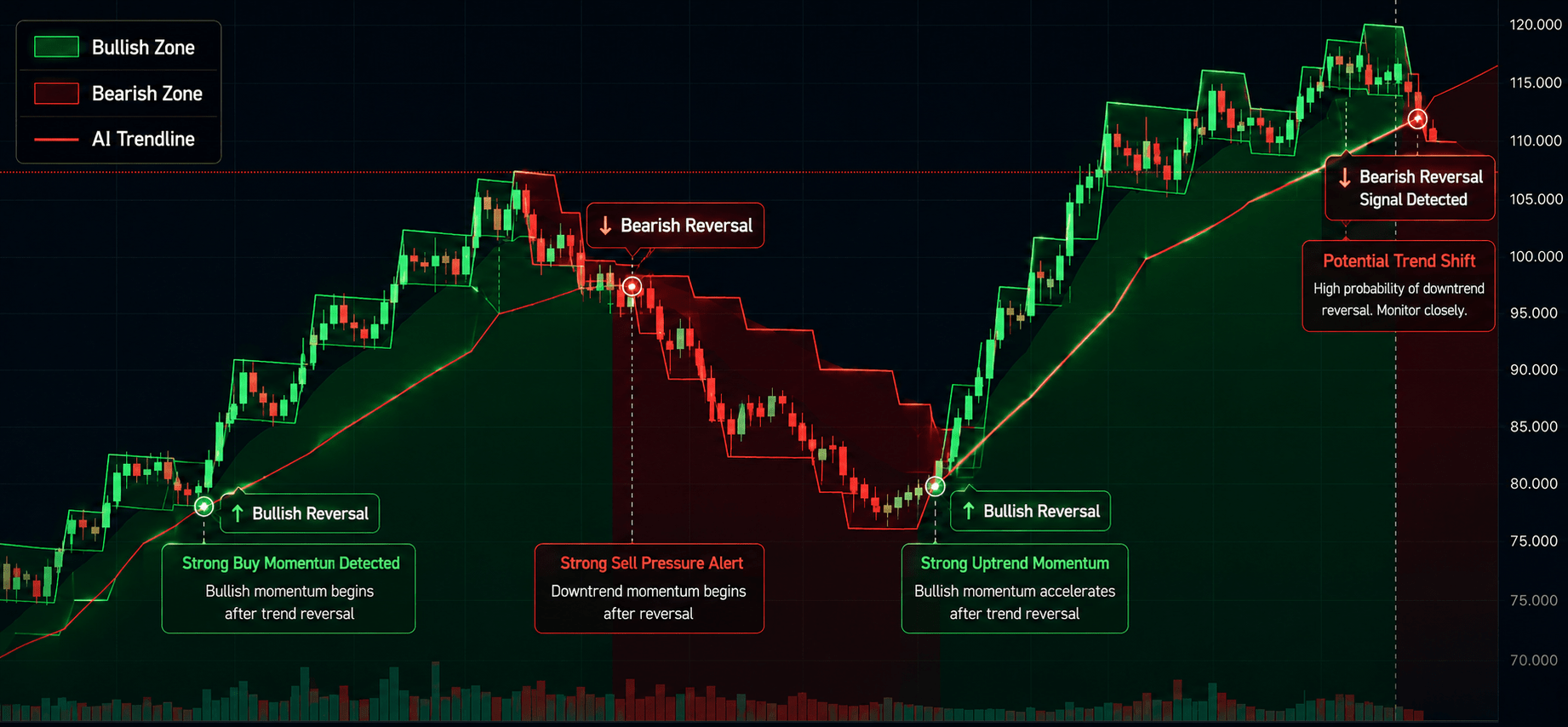
Bull Wave / Bear Wave Forecast Model
Engineered to help you read market direction and momentum faster than the crowd.
- Instantly separate bullish momentum from bearish pressure
- Pinpoint high-probability entry zones with confidence
- Chart signals clear enough for beginners, sharp enough for pros
Winning Pattern Detection
Instantly surfaces the high-probability setups that repeat across the charts — a trusted edge for timing your entries and exits.
- Spot momentum building in real time
- Catch trend-reversal points before they break
- Built for active traders who need results, not theory

AI Live Economic Dashboard
AI analyzes real-time market data — turning complex, global investment flows into clear insight in seconds.
- Track global stock markets in real time
- See exactly which assets are strong — and which are fading
- Watch how geopolitical events move the markets
About the Author