What Is Market Capitalization
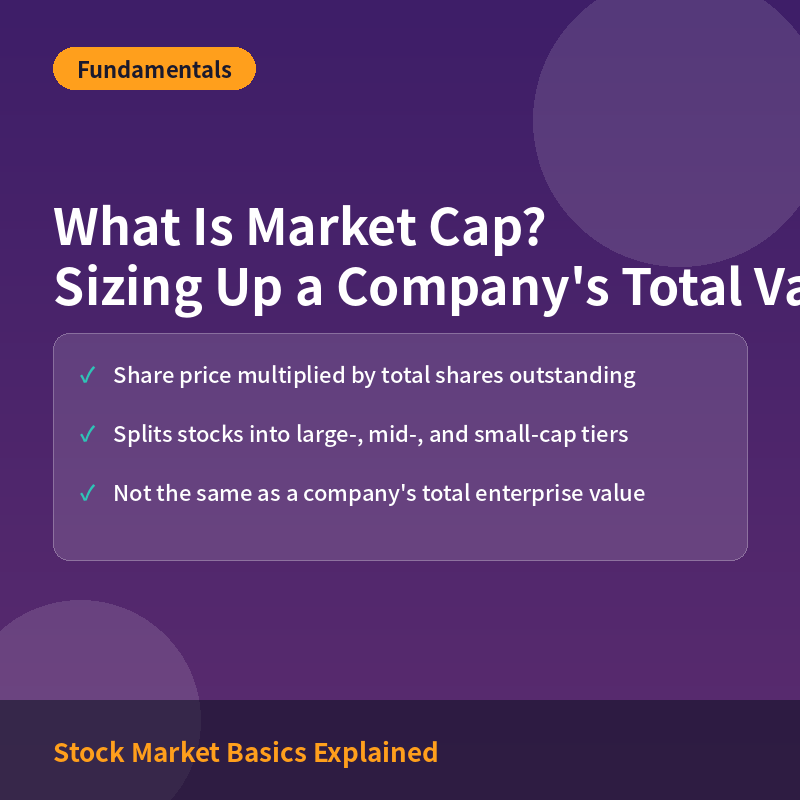
Market capitalization (market cap) is the total market value of a company’s outstanding shares. It represents what the stock market currently thinks the entire company is worth, based on its current share price.
How to Calculate Market Cap
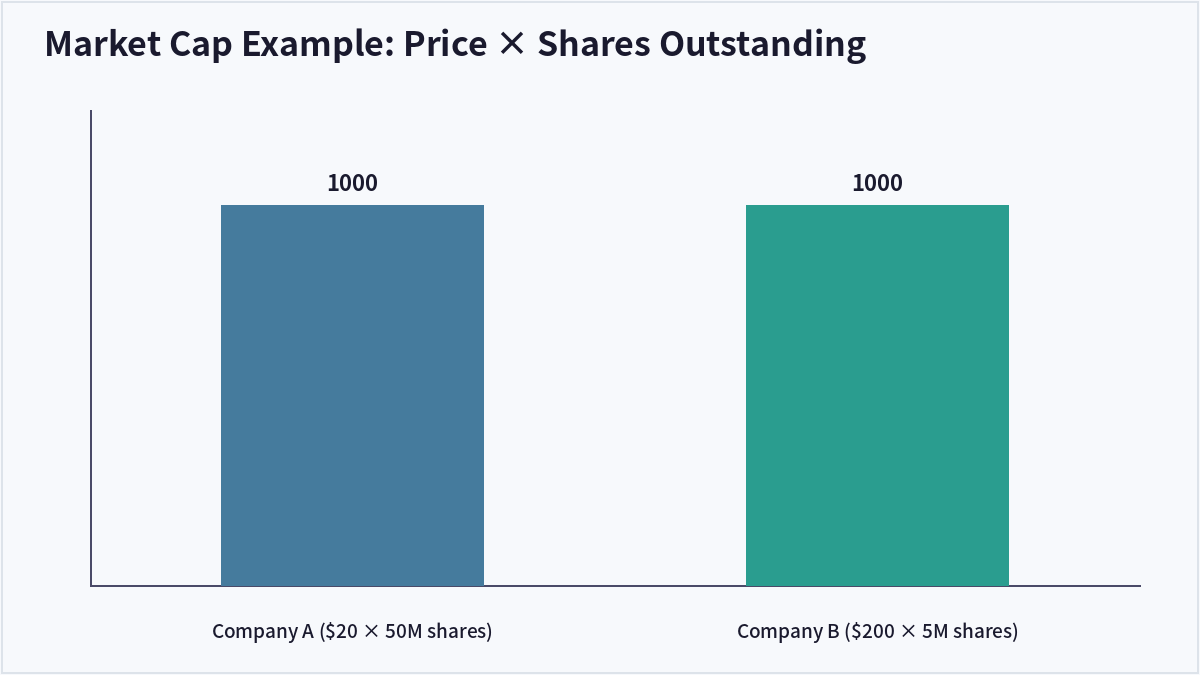
The formula is Market Cap = Share Price × Total Shares Outstanding. A company with a $20 share price and 50 million shares outstanding has a market cap of $1 billion, the same as a company with a $200 share price and 5 million shares outstanding — share price alone says little about company size.
Large-Cap, Mid-Cap, and Small-Cap Explained
Companies are commonly grouped into large-cap (generally above $10 billion), mid-cap (roughly $2 billion to $10 billion), and small-cap (roughly $300 million to $2 billion) categories, though exact thresholds vary by index provider and can shift over time.
Why Market Cap Matters for Investors
Market cap tiers are often associated with different risk and growth profiles: large-caps tend to be more established and stable with slower growth, while small-caps often carry higher growth potential alongside greater volatility and risk.
Market Cap vs Enterprise Value
Market cap only reflects the value of equity (shares), while enterprise value adds a company’s debt and subtracts its cash, giving a more complete picture of what it would actually cost to acquire the entire business — a distinction that matters most when comparing companies with very different debt levels.
| Category | Typical Market Cap Range | General Characteristics |
|---|---|---|
| Large-Cap | Above $10 billion | Established, relatively stable, often pays dividends |
| Mid-Cap | $2 billion to $10 billion | Balance of growth potential and stability |
| Small-Cap | $300 million to $2 billion | Higher growth potential, higher volatility |
| Micro-Cap | Below $300 million | Highest risk and volatility, limited liquidity |
Frequently Asked Questions
Does a higher share price mean a bigger company?
No. Share price alone doesn’t indicate company size — a company’s total market cap depends on both share price and the number of shares outstanding, so a $20 stock can represent a larger company than a $200 stock.
Do market cap thresholds change over time?
Yes, the exact dollar ranges for large-, mid-, and small-cap categories are not fixed by law and are periodically adjusted by index providers to reflect overall market growth.
Is a large-cap stock always safer than a small-cap stock?
Large-caps are generally more stable due to their scale and established business models, but they are not risk-free, and small-caps aren’t automatically riskier in every case — sector, financial health, and market conditions all matter.
How is market cap different from a company’s revenue or profit?
Market cap reflects what investors are currently willing to pay for the company’s shares, which can rise or fall based on growth expectations and sentiment, while revenue and profit are actual reported financial results from operations.
Key Takeaways
Market capitalization measures a company’s total equity value by multiplying share price by shares outstanding, and understanding which size tier a stock falls into can help investors gauge its general risk and growth characteristics. This article is for informational purposes only and does not constitute investment advice.

QuantPro: AI Finds the Trade Before You Do
From AI-powered chart analysis to real-time market intelligence — everything a serious investor needs, in one platform.
- Automated AI chart analysis with precision trend timing
- Bull Radar: real-time visualization of geopolitical & economic shifts
- Live market-moving news and insights, curated for you
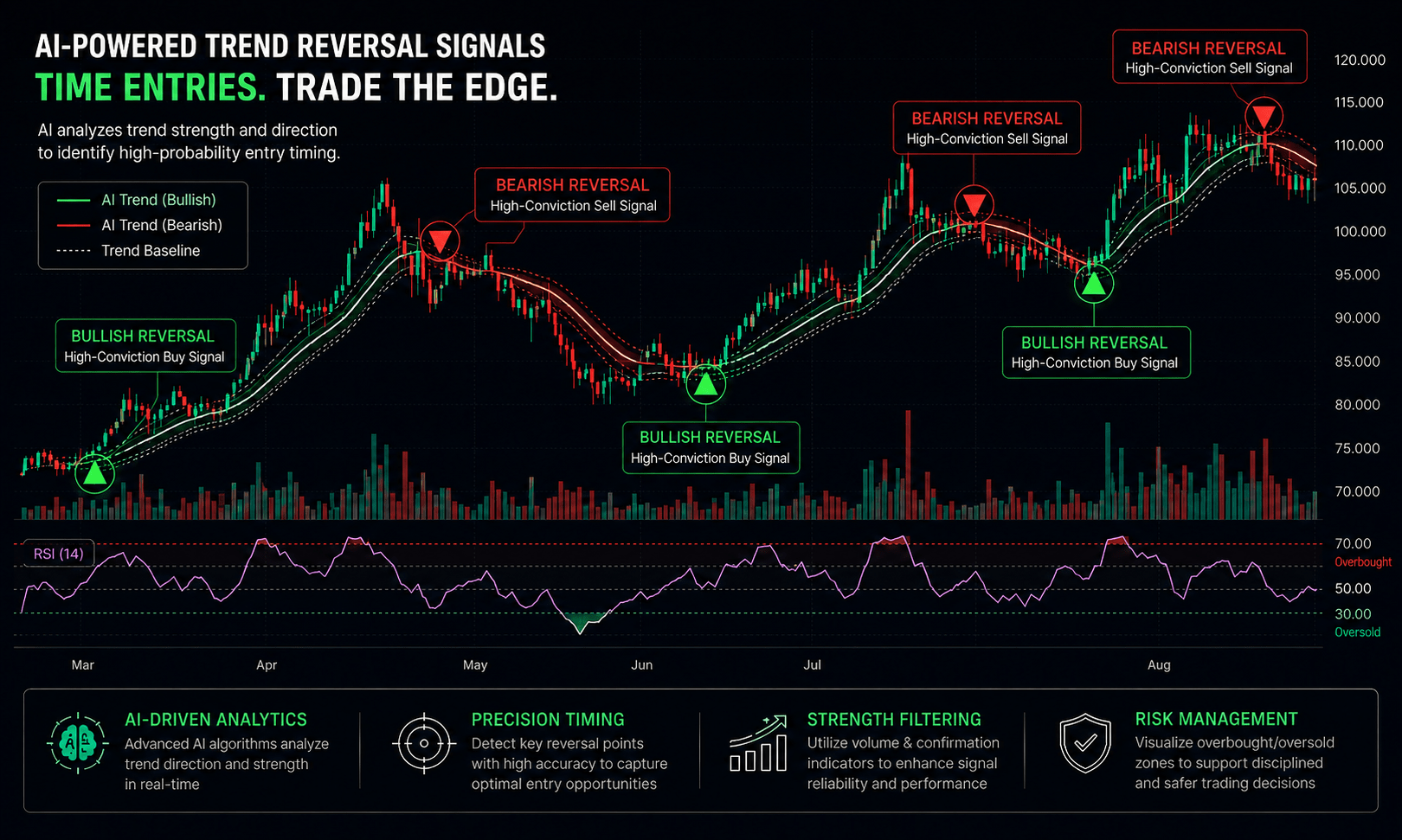
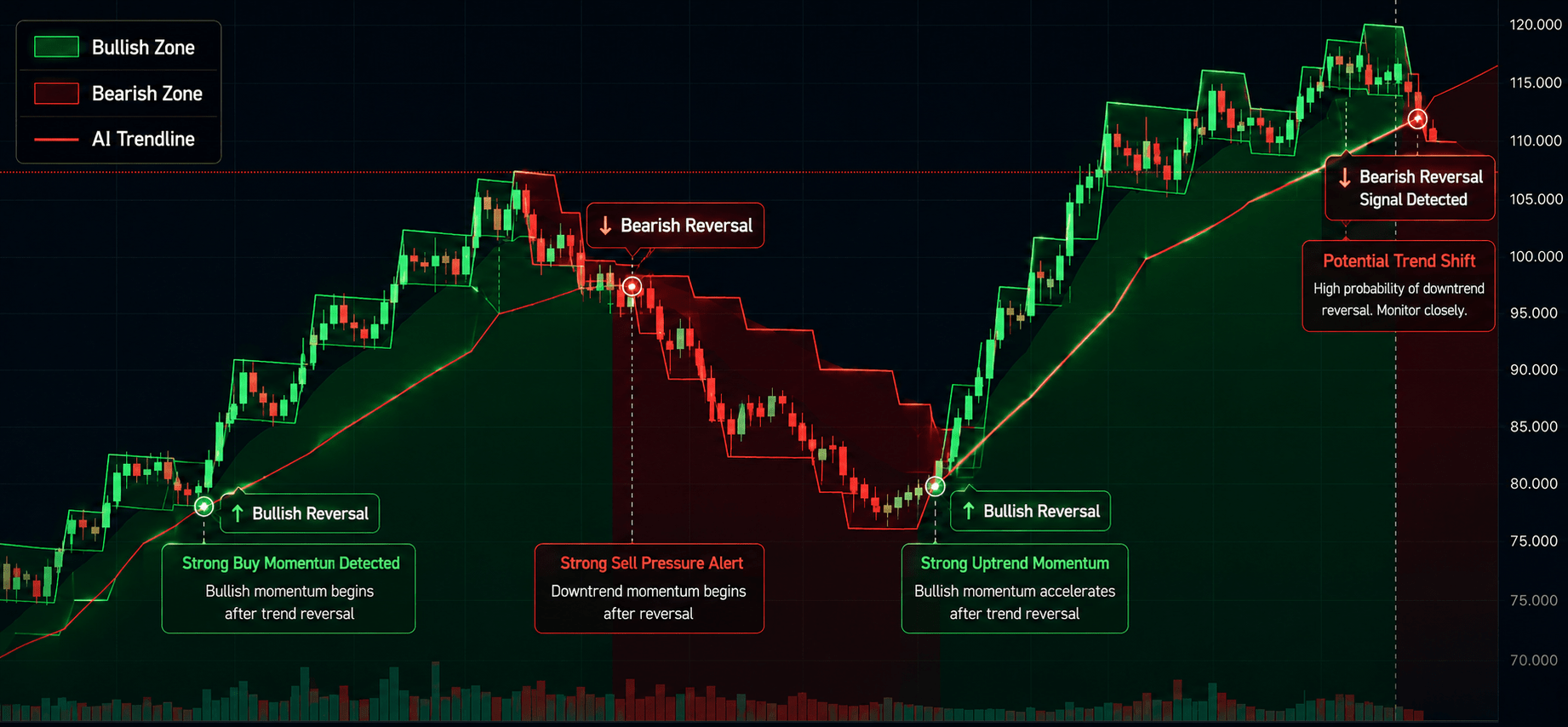
Bull Wave / Bear Wave Forecast Model
Engineered to help you read market direction and momentum faster than the crowd.
- Instantly separate bullish momentum from bearish pressure
- Pinpoint high-probability entry zones with confidence
- Chart signals clear enough for beginners, sharp enough for pros
Winning Pattern Detection
Instantly surfaces the high-probability setups that repeat across the charts — a trusted edge for timing your entries and exits.
- Spot momentum building in real time
- Catch trend-reversal points before they break
- Built for active traders who need results, not theory

AI Live Economic Dashboard
AI analyzes real-time market data — turning complex, global investment flows into clear insight in seconds.
- Track global stock markets in real time
- See exactly which assets are strong — and which are fading
- Watch how geopolitical events move the markets
About the Author