What Is Quantitative Tightening?
Quantitative tightening (QT) is the reverse of quantitative easing (QE): a central bank reduces the size of its balance sheet by letting the bonds it holds mature without reinvesting the proceeds — known as passive runoff — and, in some cases, by actively selling securities outright. Either way, the effect is to withdraw liquidity from the financial system rather than inject it.
How QT Differs From Raising Interest Rates
Interest rate hikes target the short-term federal funds rate directly. QT instead works by reducing the supply of longer-term securities the Fed is willing to hold, which generally puts upward pressure on longer-term yields and tightens broader financial conditions somewhat independently of the policy rate itself. In practice, the Fed has typically deployed both tools together during tightening cycles.
The Mechanics — Balance Sheet Runoff
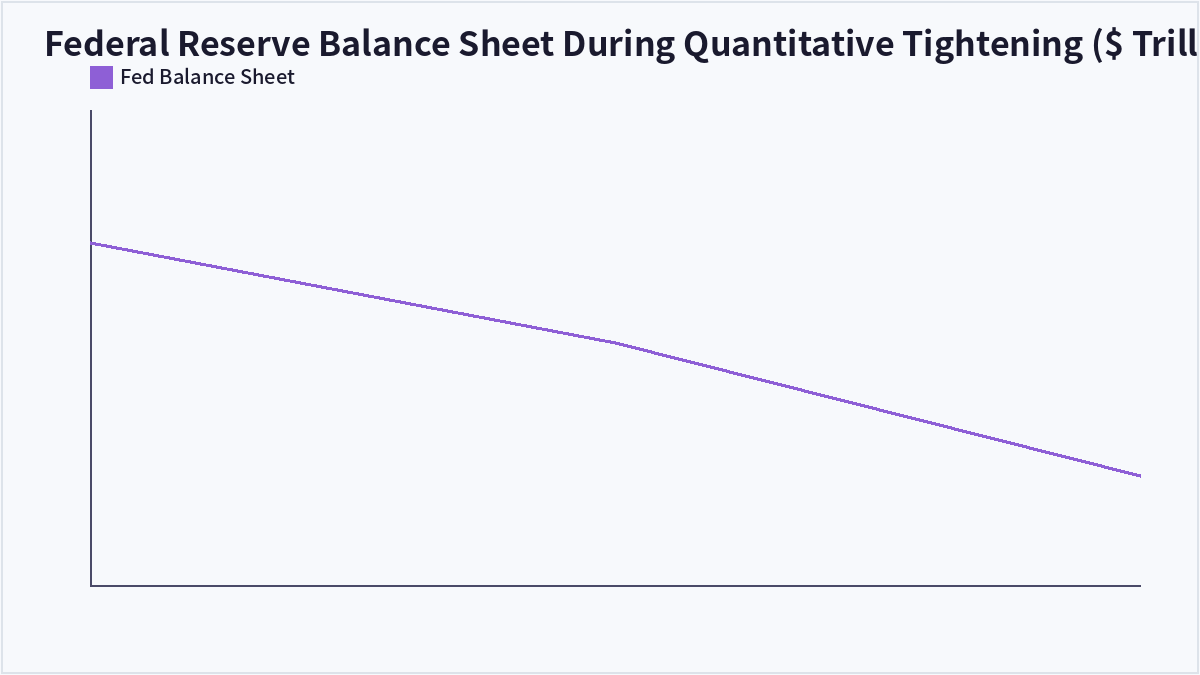
During its 2022–2024 QT program, the Fed capped monthly balance sheet runoff at up to $60 billion in Treasuries plus $35 billion in agency MBS — a combined cap of about $95 billion per month. As a result, the balance sheet fell from a peak of roughly $8.97 trillion in April 2022 to about $8.3 trillion after one year, and down to roughly $7.4 trillion after two years, a cumulative reduction of about $1.6 trillion.
| Period | Fed Balance Sheet (approx.) | Change from Peak |
|---|---|---|
| Peak (April 2022) | $8.97 trillion | — |
| 1 year into QT (mid-2023) | $8.3 trillion | -$670 billion |
| 2 years into QT (mid-2024) | $7.4 trillion | -$1.57 trillion |
Effects of QT on Markets
As the Fed steps back as a buyer of Treasuries and MBS, reduced demand for those securities can push up long-term yields and tighten credit conditions across the economy. QT also drains bank reserves from the financial system, and if reserves become too scarce relative to demand, it can contribute to short-term funding stress — a dynamic seen in the September 2019 repo market spike, which followed an earlier period of Fed balance sheet reduction.
Frequently Asked Questions
Is QT the opposite of QE?
Yes. Where QE expands the central bank’s balance sheet by purchasing securities to add liquidity and push yields down, QT shrinks the balance sheet by letting holdings run off or selling them, withdrawing liquidity and generally putting upward pressure on yields.
Does QT directly raise the federal funds rate?
No. QT is a separate tool from federal funds rate decisions. It works through the supply of securities in the market rather than by directly setting a short-term interest rate, though both tools are typically used together to tighten financial conditions.
How does QT affect the stock market?
By draining liquidity and pushing longer-term yields higher, QT tends to tighten broader financial conditions, which can pressure equity valuations, particularly for longer-duration growth stocks that are more sensitive to discount rate changes.
What signals when the Fed will end QT?
The Fed generally watches bank reserve levels and short-term funding market conditions, such as repo rates, for signs that reserves are becoming scarce; when funding markets show signs of stress, that has historically been a signal to slow or halt the runoff.
Key Takeaways
Quantitative tightening shrinks a central bank’s balance sheet through bond runoff or sales, withdrawing liquidity and pressuring longer-term yields higher as a complement to interest rate hikes. The Fed’s 2022–2024 program reduced its balance sheet by about $1.6 trillion from an $8.97 trillion peak over two years. This article is for informational purposes only and does not constitute investment advice.

QuantPro: AI Finds the Trade Before You Do
From AI-powered chart analysis to real-time market intelligence — everything a serious investor needs, in one platform.
- Automated AI chart analysis with precision trend timing
- Bull Radar: real-time visualization of geopolitical & economic shifts
- Live market-moving news and insights, curated for you
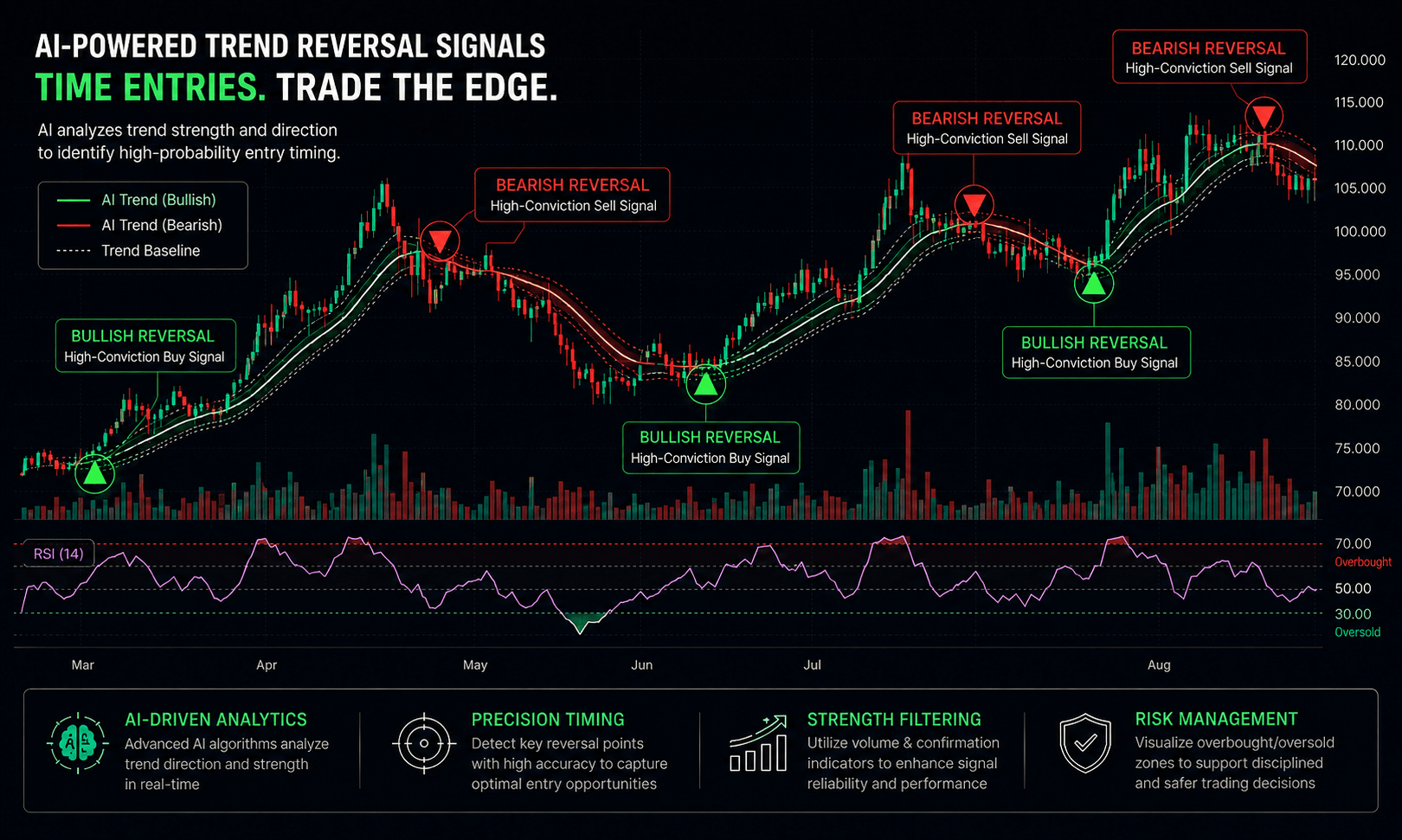
Bull Wave / Bear Wave Forecast Model
Engineered to help you read market direction and momentum faster than the crowd.
- Instantly separate bullish momentum from bearish pressure
- Pinpoint high-probability entry zones with confidence
- Chart signals clear enough for beginners, sharp enough for pros
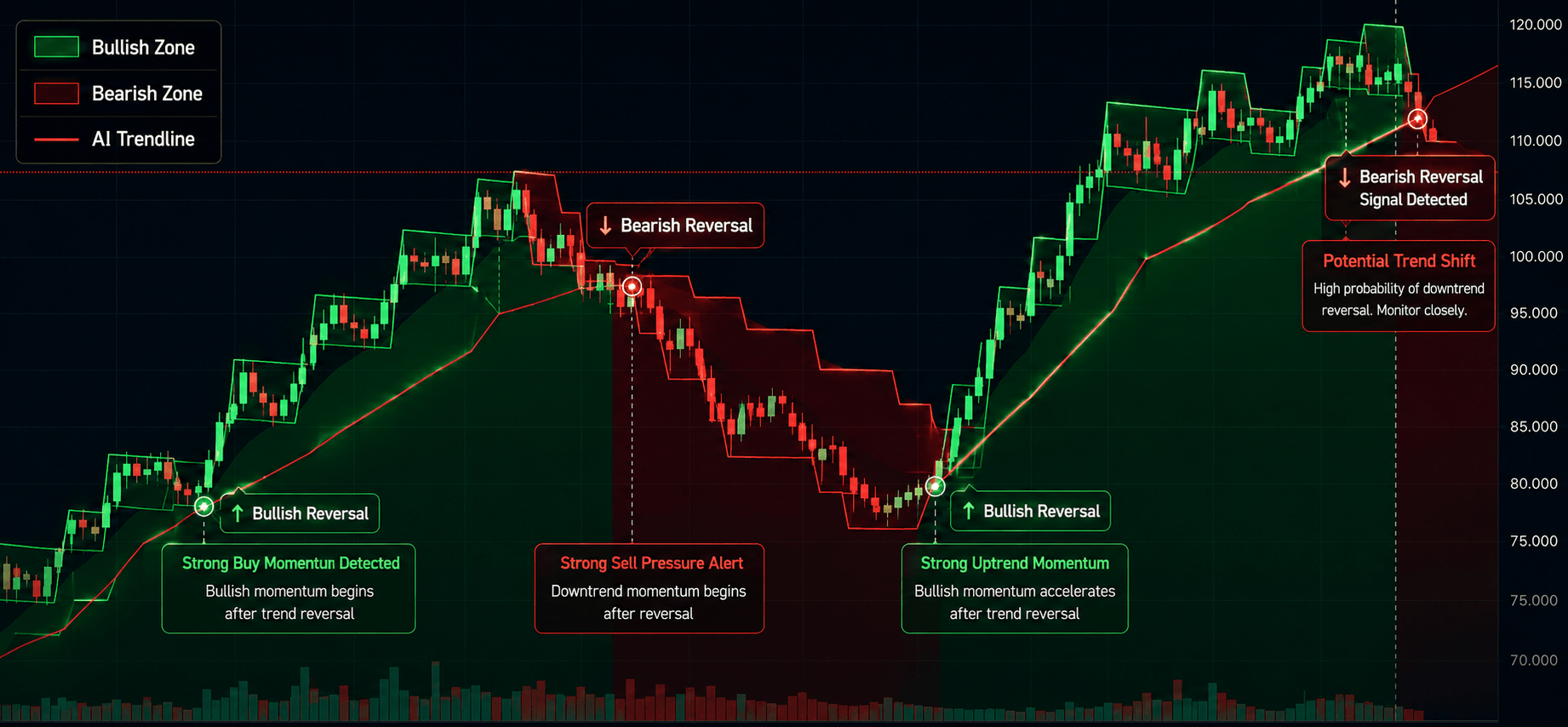
Winning Pattern Detection
Instantly surfaces the high-probability setups that repeat across the charts — a trusted edge for timing your entries and exits.
- Spot momentum building in real time
- Catch trend-reversal points before they break
- Built for active traders who need results, not theory

AI Live Economic Dashboard
AI analyzes real-time market data — turning complex, global investment flows into clear insight in seconds.
- Track global stock markets in real time
- See exactly which assets are strong — and which are fading
- Watch how geopolitical events move the markets
About the Author