What Is the Nominal Interest Rate?
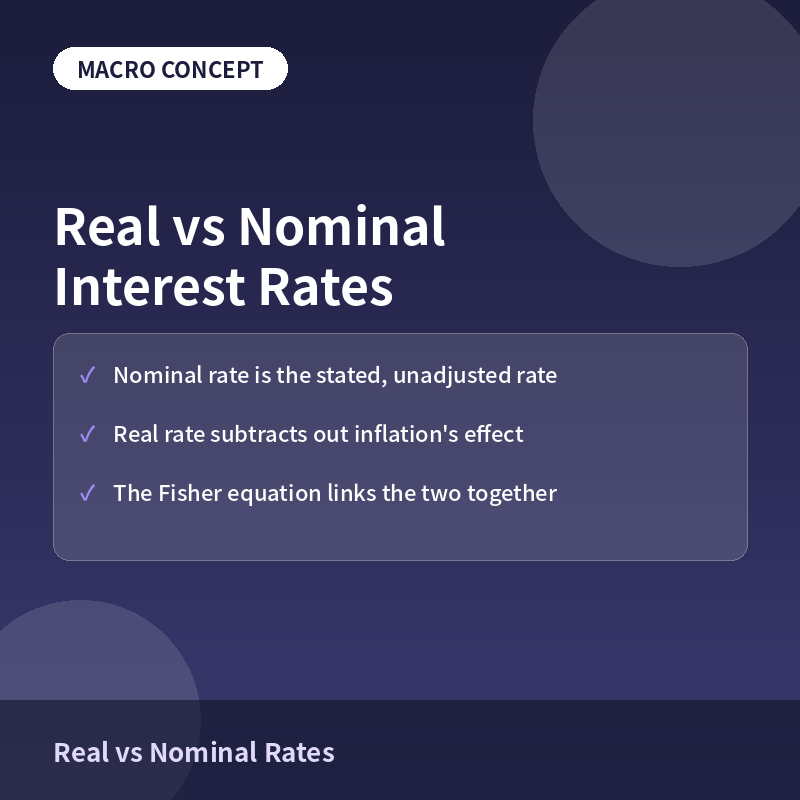
The nominal interest rate is the stated rate on a loan or investment before any adjustment for inflation — it’s the number quoted on a savings account, bond, or loan, such as a bank advertising a “4.5% APY” savings product.
What Is the Real Interest Rate?
The real interest rate is the nominal rate adjusted for inflation, and it reflects the actual growth in purchasing power an investor or saver experiences, rather than just the growth in the account balance’s dollar figure.
The Fisher Equation
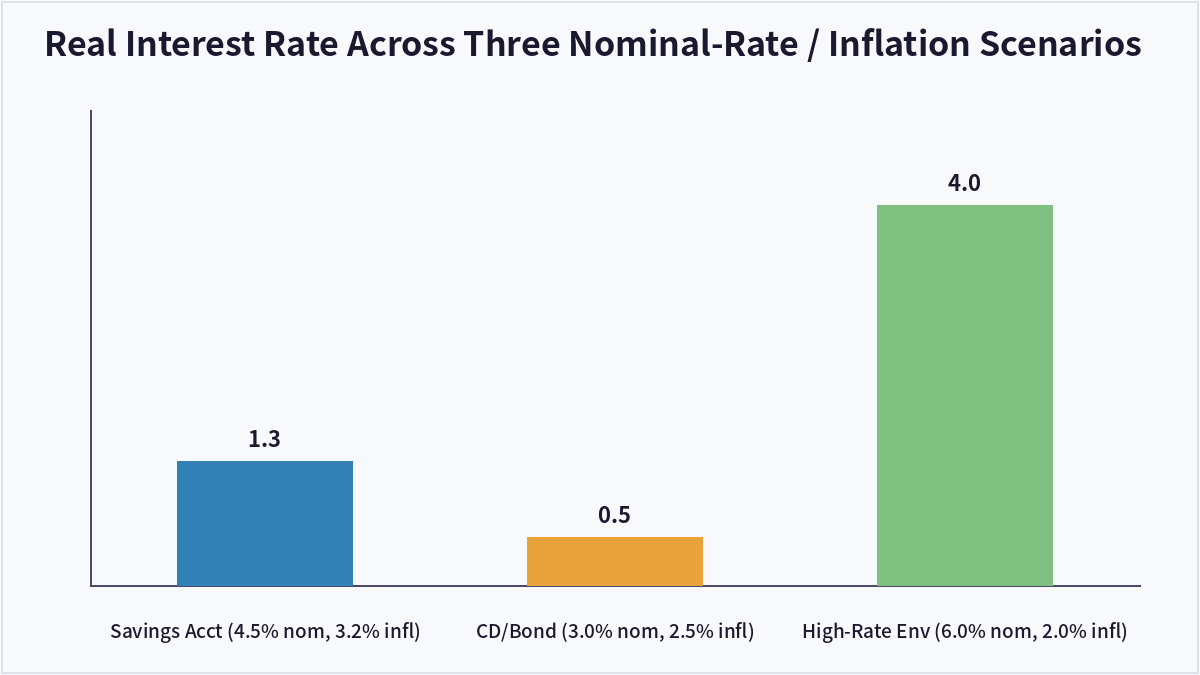
The relationship between the two is described by the Fisher equation. A widely used approximation is: Real Rate ≈ Nominal Rate − Inflation Rate. The exact version is: Real Rate = [(1 + Nominal Rate) ÷ (1 + Inflation Rate)] − 1. For a savings account paying a 4.5% nominal rate while inflation (CPI) runs at 3.2%, the approximation gives 4.5% − 3.2% = 1.3%, while the exact Fisher calculation gives (1.045 ÷ 1.032) − 1 ≈ 1.26% — close enough for most practical purposes at these levels.
| Scenario | Nominal Rate | Inflation Rate | Approx. Real Rate |
|---|---|---|---|
| Savings account | 4.5% | 3.2% | 1.3% |
| CD / short-term bond | 3.0% | 2.5% | 0.5% |
| High-rate environment | 6.0% | 2.0% | 4.0% |
Why the Real Rate Is What Actually Matters
If inflation exceeds the nominal return on a savings account or bond, the saver loses purchasing power even as the account balance keeps growing in dollar terms — a negative real rate. This is also why central banks, including the Federal Reserve, ultimately think in terms of real rates when setting policy: a nominal rate hike that merely keeps pace with rising inflation does little to actually cool an overheating economy, since the real cost of borrowing hasn’t changed.
Frequently Asked Questions
Can the real interest rate be negative?
Yes, and it happens fairly often. Whenever inflation runs higher than the nominal rate on a given account or bond, the real rate turns negative, meaning the investment fails to keep pace with rising prices even as its nominal balance grows.
Why do central banks care about real rates, not just nominal rates?
Real rates better reflect the true cost of borrowing and the true incentive to save, which is what actually influences spending and investment decisions throughout the economy — the tool central banks are trying to use to control growth and inflation.
Is the Fisher equation exact or an approximation?
The simple subtraction (nominal minus inflation) is a widely used approximation that works well at low rates, while the full multiplicative formula — (1 + nominal) ÷ (1 + inflation) − 1 — is the exact version, and the gap between the two grows larger as rates and inflation rise.
How does this affect bond investors specifically?
A bond’s stated coupon is a nominal rate. If inflation rises unexpectedly during the bond’s life, the real value of both the coupon payments and the eventual principal repayment erodes, which is why inflation-protected securities like TIPS exist — to directly compensate investors for that inflation risk.
Key Takeaways
The nominal interest rate is the number advertised on any loan or savings product, but the real interest rate — nominal minus inflation, via the Fisher equation — is what determines whether an investor’s purchasing power is actually growing. This article is for informational purposes only and does not constitute investment advice.

QuantPro: AI Finds the Trade Before You Do
From AI-powered chart analysis to real-time market intelligence — everything a serious investor needs, in one platform.
- Automated AI chart analysis with precision trend timing
- Bull Radar: real-time visualization of geopolitical & economic shifts
- Live market-moving news and insights, curated for you
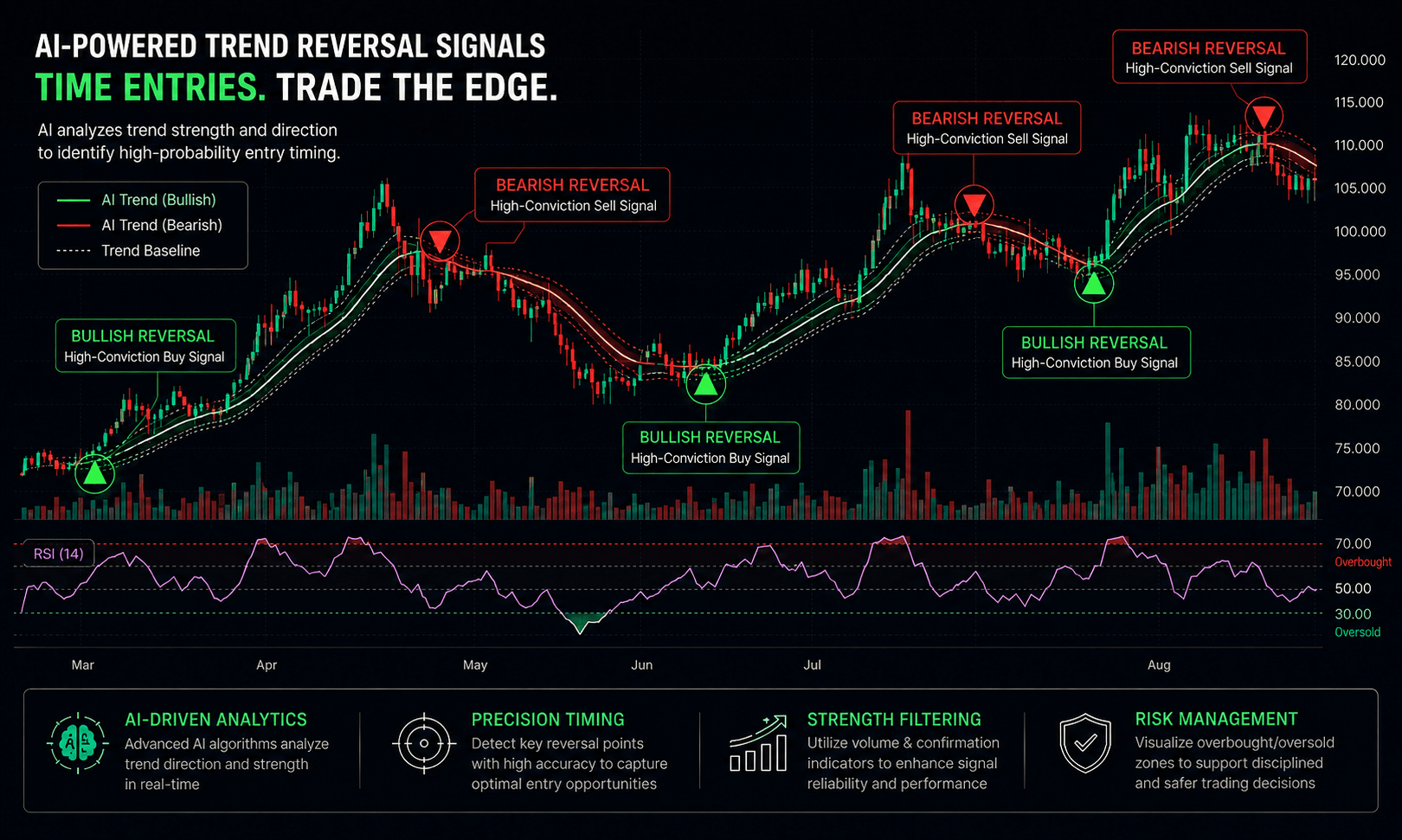
Bull Wave / Bear Wave Forecast Model
Engineered to help you read market direction and momentum faster than the crowd.
- Instantly separate bullish momentum from bearish pressure
- Pinpoint high-probability entry zones with confidence
- Chart signals clear enough for beginners, sharp enough for pros
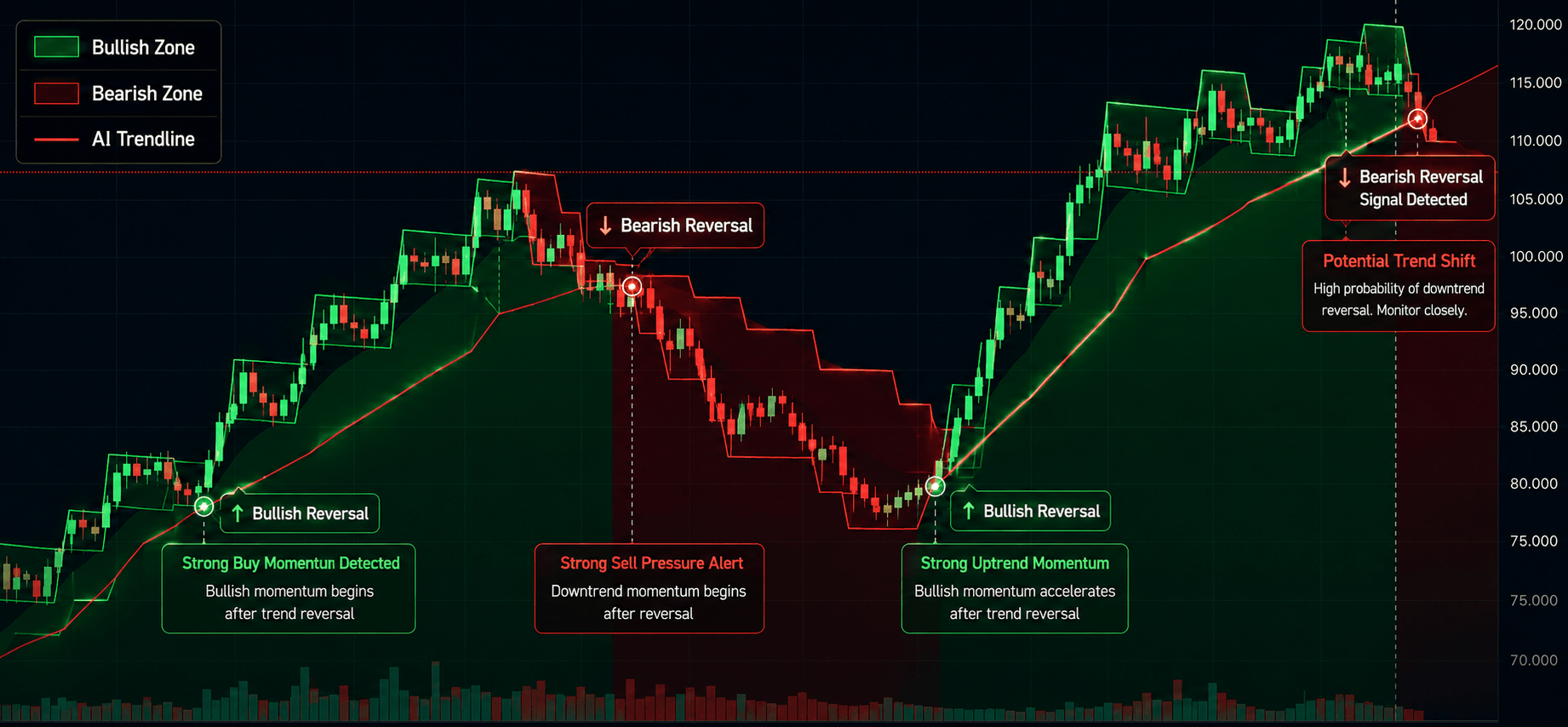
Winning Pattern Detection
Instantly surfaces the high-probability setups that repeat across the charts — a trusted edge for timing your entries and exits.
- Spot momentum building in real time
- Catch trend-reversal points before they break
- Built for active traders who need results, not theory

AI Live Economic Dashboard
AI analyzes real-time market data — turning complex, global investment flows into clear insight in seconds.
- Track global stock markets in real time
- See exactly which assets are strong — and which are fading
- Watch how geopolitical events move the markets
About the Author