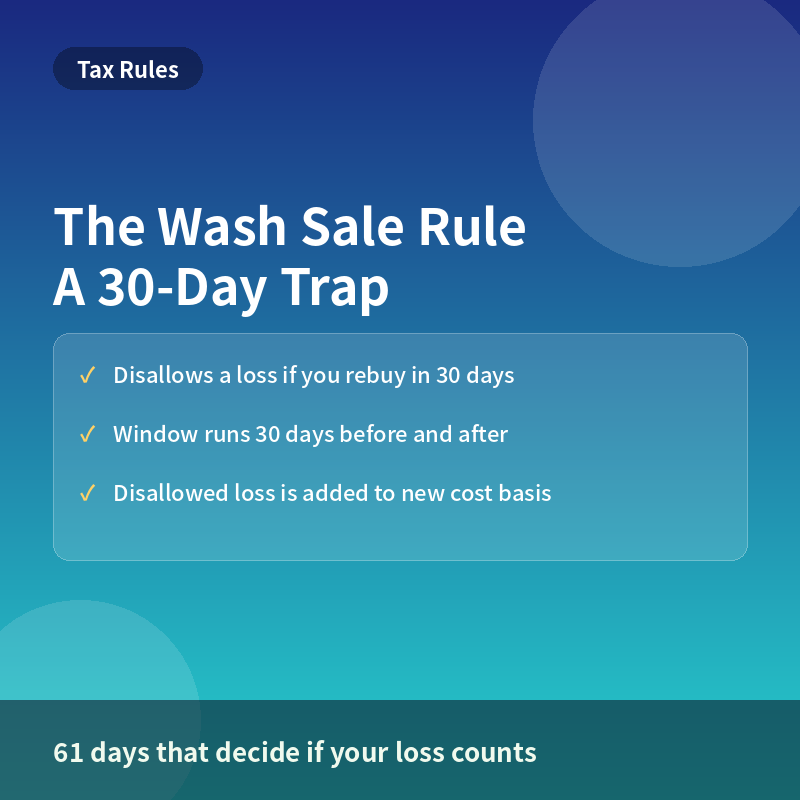
Definition: A Loss the IRS Won’t Recognize
The wash sale rule is a U.S. tax rule that disallows an investor from claiming a capital loss on a security if they buy the same or a substantially identical security within 30 days before or after the sale that created the loss.
How It Works: The 61-Day Window
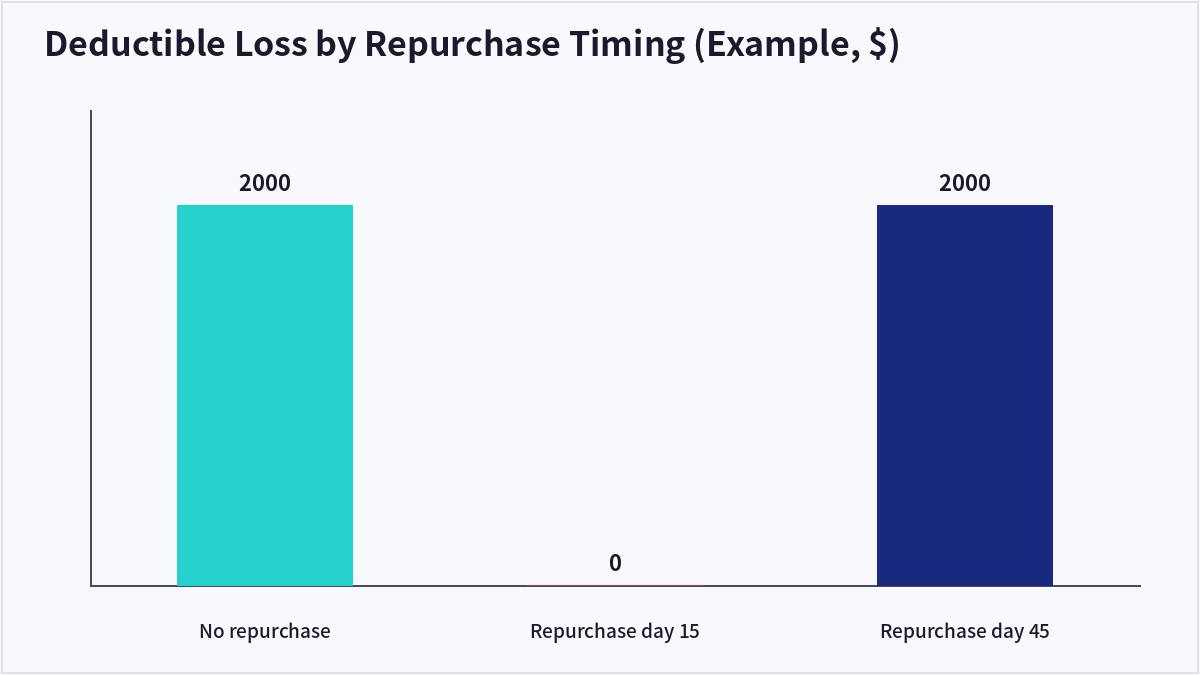
The rule creates a 61-day window in total: 30 days before the sale, the day of the sale itself, and 30 days after. For example, if an investor sells a stock at a $2,000 loss on March 1 and buys the same stock back on March 20, the $2,000 loss is disallowed for that tax year because the repurchase falls inside the 30-day window.
What Happens to the Disallowed Loss
The disallowed loss is not simply lost forever; it is added to the cost basis of the newly purchased shares, deferring the tax benefit until those replacement shares are eventually sold in a way that does not trigger another wash sale.
| Scenario | Repurchase Timing | Loss Treatment |
|---|---|---|
| Sell at a loss, no repurchase | N/A | Loss fully deductible |
| Sell at a loss, rebuy in 15 days | Inside 30-day window | Loss disallowed, added to new basis |
| Sell at a loss, rebuy after 45 days | Outside 30-day window | Loss fully deductible |
Frequently Asked Questions
Does the wash sale rule apply to ETFs?
Yes, the rule can apply to ETFs and mutual funds as well, particularly when an investor sells one fund and buys another that tracks a substantially identical index.
Does buying in a different account avoid the rule?
No. Buying the same or substantially identical security in a different brokerage account, or even in an IRA, can still trigger a wash sale under IRS guidance.
What counts as a substantially identical security?
The IRS does not give an exhaustive list, but generally the same company’s common stock, or options on that stock, are treated as substantially identical, while a different company in the same sector typically is not.
How do brokers report wash sales?
U.S. brokers are required to track wash sales within the same account and same CUSIP on Form 1099-B, but they generally cannot track wash sales that span multiple accounts or brokers, leaving that reconciliation to the taxpayer.
Key Takeaways
The wash sale rule disallows a tax loss when the same or a substantially identical security is repurchased within 30 days before or after the sale, deferring rather than eliminating the tax benefit. Investors who want to harvest losses need to track this 61-day window carefully across all their accounts. This article is for informational purposes only and does not constitute investment advice.

QuantPro: AI Finds the Trade Before You Do
From AI-powered chart analysis to real-time market intelligence — everything a serious investor needs, in one platform.
- Automated AI chart analysis with precision trend timing
- Bull Radar: real-time visualization of geopolitical & economic shifts
- Live market-moving news and insights, curated for you
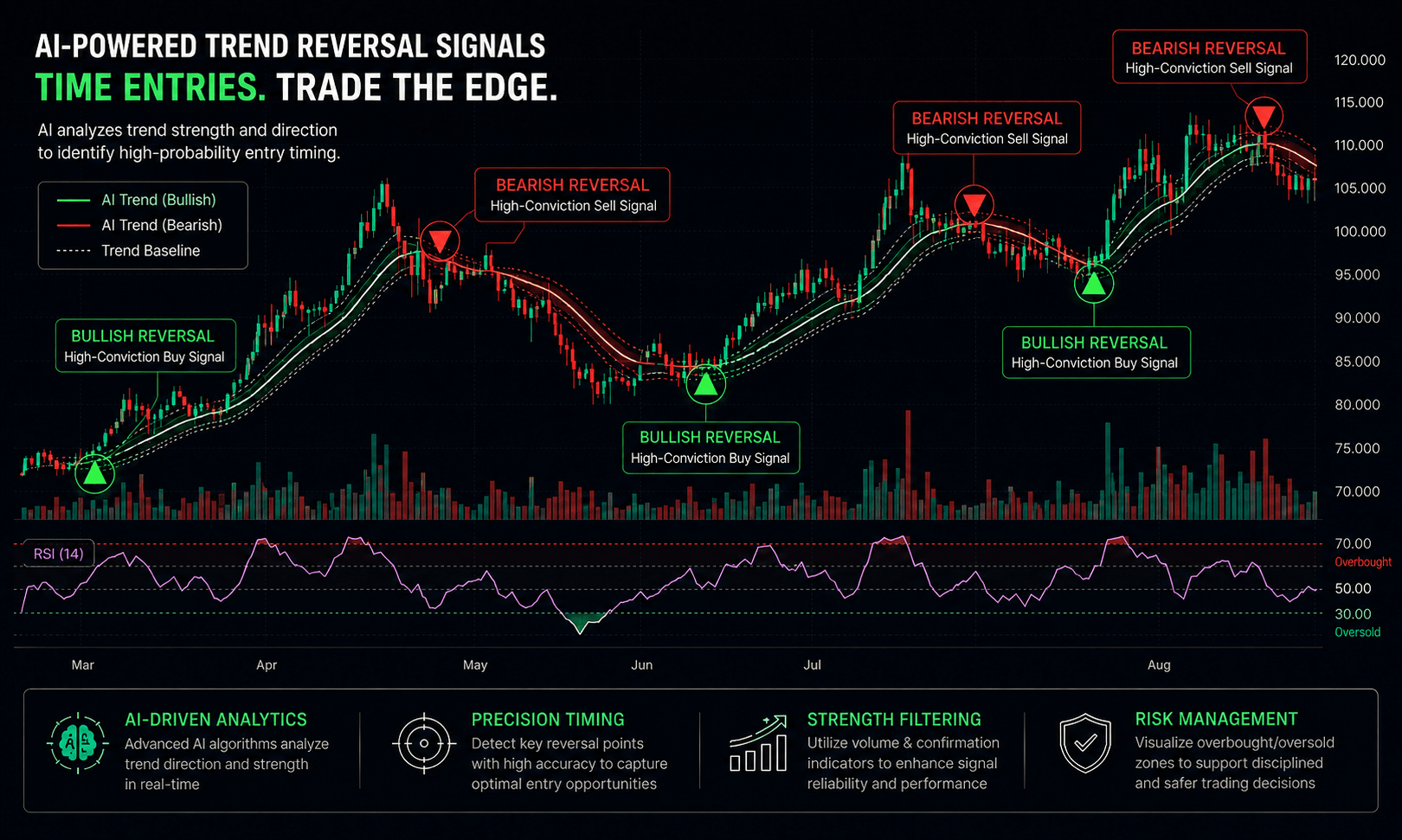
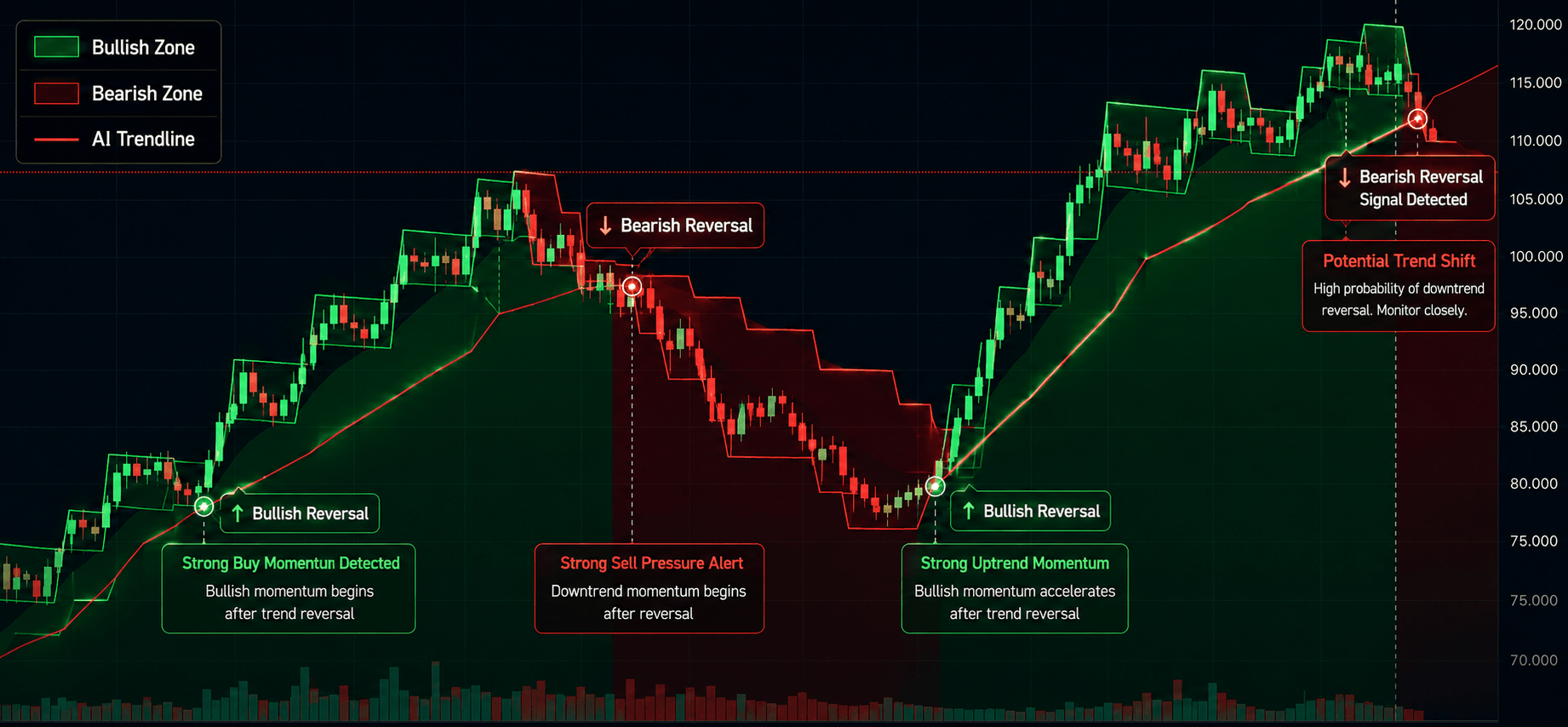
Bull Wave / Bear Wave Forecast Model
Engineered to help you read market direction and momentum faster than the crowd.
- Instantly separate bullish momentum from bearish pressure
- Pinpoint high-probability entry zones with confidence
- Chart signals clear enough for beginners, sharp enough for pros
Winning Pattern Detection
Instantly surfaces the high-probability setups that repeat across the charts — a trusted edge for timing your entries and exits.
- Spot momentum building in real time
- Catch trend-reversal points before they break
- Built for active traders who need results, not theory

AI Live Economic Dashboard
AI analyzes real-time market data — turning complex, global investment flows into clear insight in seconds.
- Track global stock markets in real time
- See exactly which assets are strong — and which are fading
- Watch how geopolitical events move the markets
About the Author