What Active Share Measures
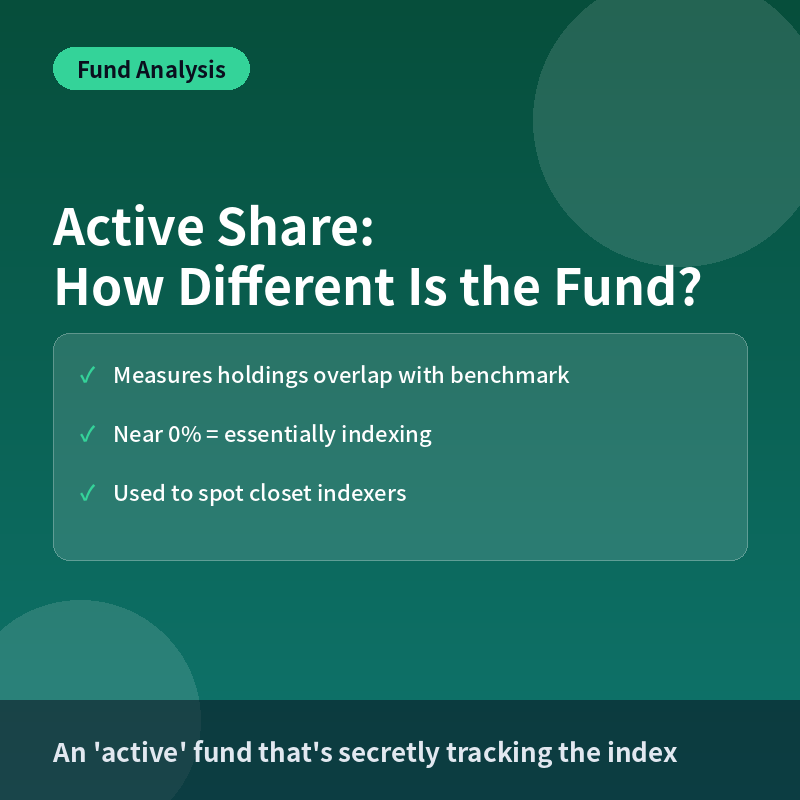
Active Share is a percentage that quantifies how different a fund’s actual holdings and weights are from its benchmark index. It’s calculated by summing the absolute value of the weight differences between the fund and benchmark for every holding, then dividing by two. A reading near 0% means the fund closely mirrors its benchmark; near 100% means the portfolio is fundamentally different.
Why This Metric Exists: the Closet Indexing Problem
Some funds charge active management fees while running portfolios that are, in substance, nearly identical to their benchmark — a practice known as ‘closet indexing.’ Active Share gives investors and researchers a quantitative way to flag these funds.
Active Share vs Tracking Error
Active Share captures how different a portfolio’s holdings are from the benchmark at a given point in time, while tracking error measures the resulting variability in returns over a period — two related but distinct angles on the same underlying question.
How to Interpret Active Share Levels
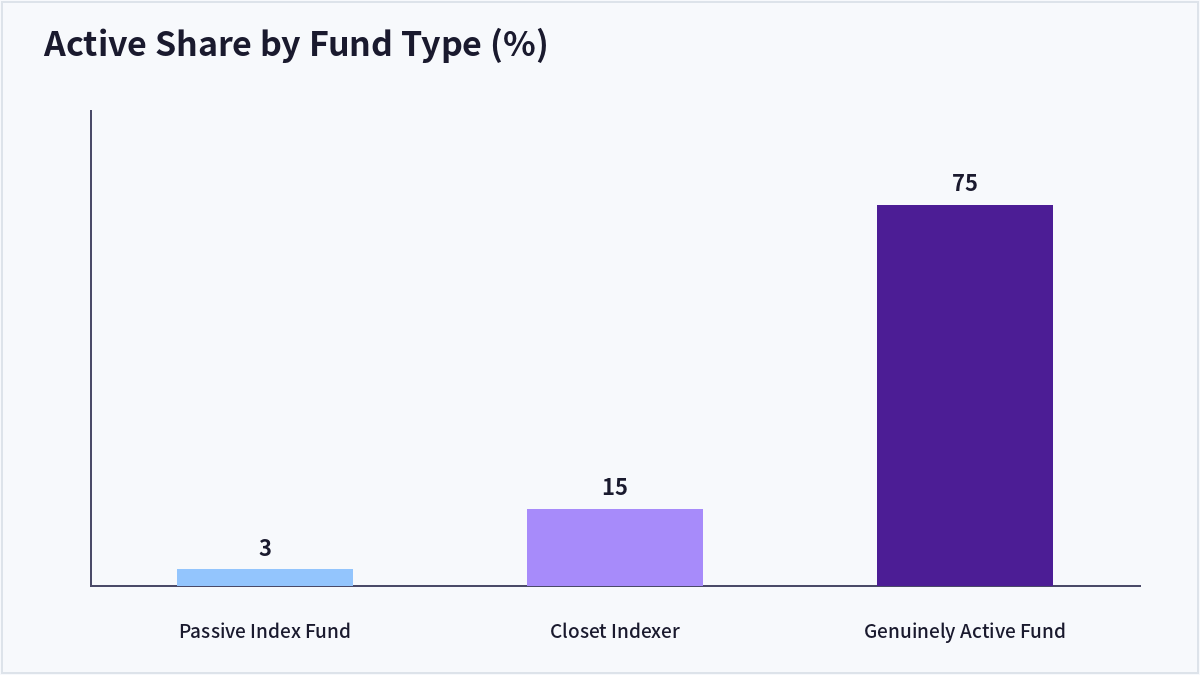
As a general rule of thumb, an Active Share above roughly 60% is considered genuinely active management, 20-60% falls into an ambiguous middle zone, and below 20% suggests closet indexing. These thresholds can shift depending on the asset class and the nature of the benchmark.
| Active Share | General Interpretation |
|---|---|
| 0-20% | Possible closet indexing |
| 20-60% | Moderately active management |
| 60%+ | Genuinely active management |
Frequently Asked Questions
Does higher Active Share always mean better returns?
Academic research has found some association between high Active Share and greater potential for long-term outperformance, but a high reading alone doesn’t guarantee good performance.
Where can I find a fund’s Active Share?
Some fund research platforms and rating agencies calculate and publish it; investors can also compute it themselves from a fund’s holdings and the benchmark’s composition.
What’s the problem with investing in a closet indexer?
You end up paying active-management fees for what amounts to index-like performance, which can meaningfully hurt net returns over the long run.
Do all active funds disclose their Active Share?
Disclosure practices vary by country and fund manager — some don’t publish it at all, in which case an investor may need to estimate it independently from holdings data.
Key Takeaways
Active Share is a quantitative way to check whether a fund’s holdings actually differ from its benchmark, helping investors decide whether an active management fee is buying genuine differentiation. This article is for informational purposes only and does not constitute investment advice.

QuantPro: AI Finds the Trade Before You Do
From AI-powered chart analysis to real-time market intelligence — everything a serious investor needs, in one platform.
- Automated AI chart analysis with precision trend timing
- Bull Radar: real-time visualization of geopolitical & economic shifts
- Live market-moving news and insights, curated for you
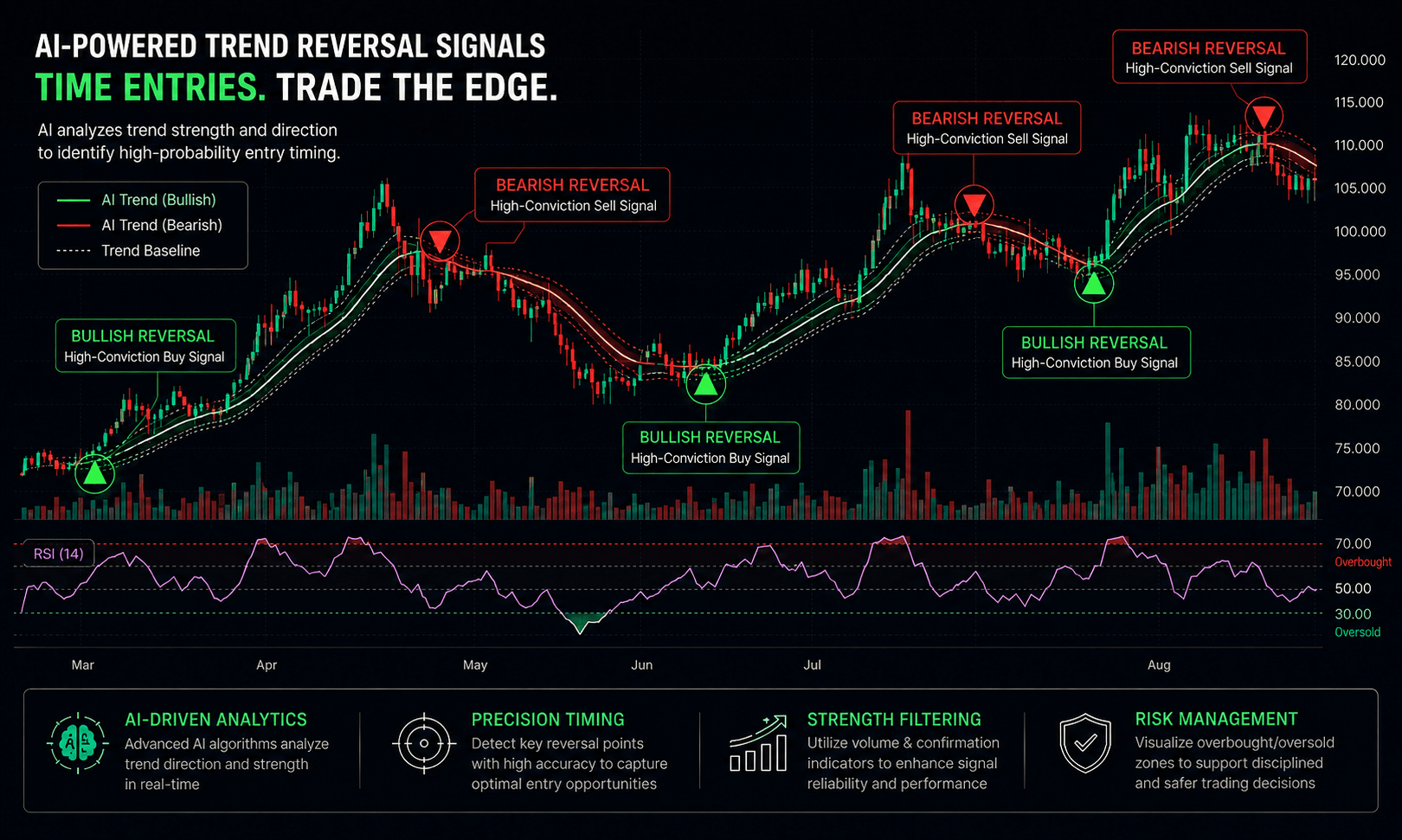
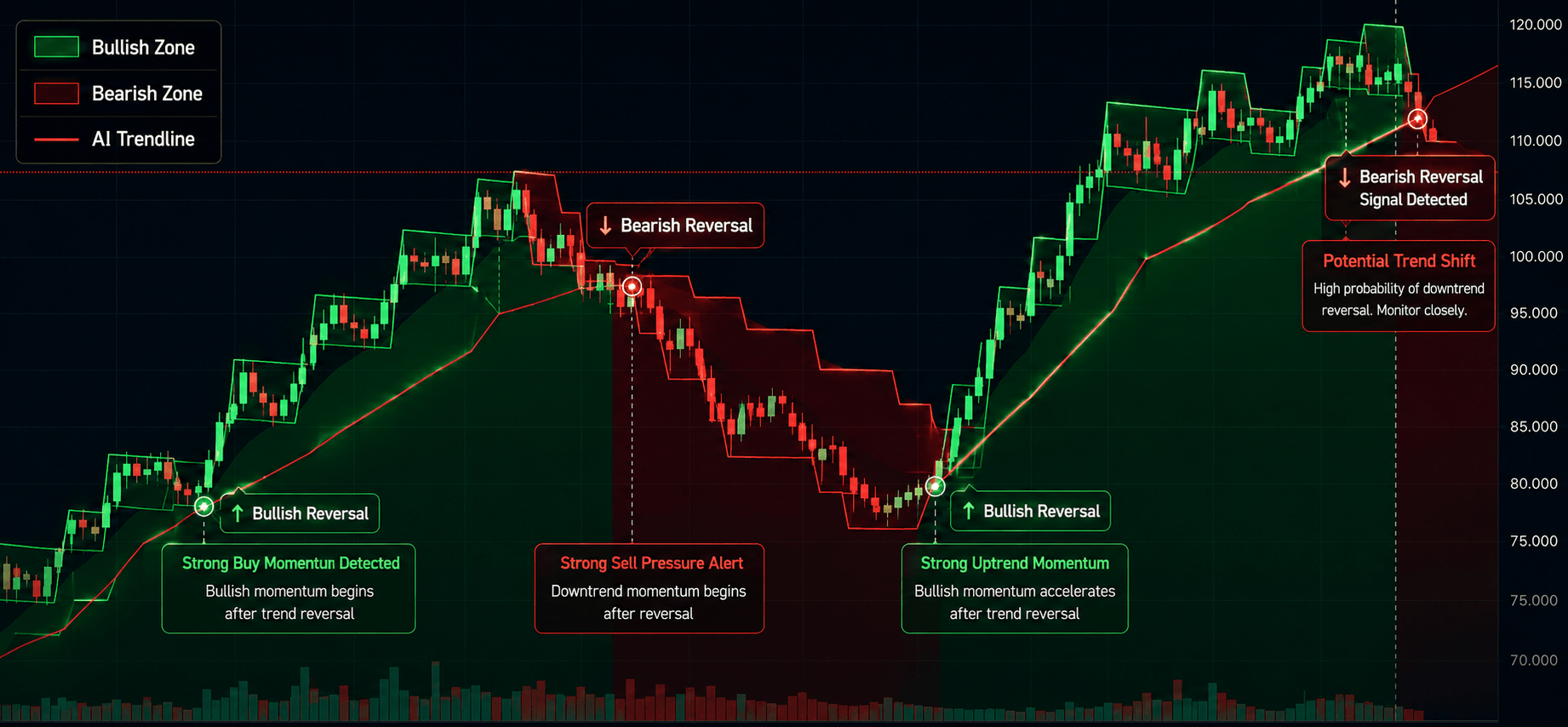
Bull Wave / Bear Wave Forecast Model
Engineered to help you read market direction and momentum faster than the crowd.
- Instantly separate bullish momentum from bearish pressure
- Pinpoint high-probability entry zones with confidence
- Chart signals clear enough for beginners, sharp enough for pros
Winning Pattern Detection
Instantly surfaces the high-probability setups that repeat across the charts — a trusted edge for timing your entries and exits.
- Spot momentum building in real time
- Catch trend-reversal points before they break
- Built for active traders who need results, not theory

AI Live Economic Dashboard
AI analyzes real-time market data — turning complex, global investment flows into clear insight in seconds.
- Track global stock markets in real time
- See exactly which assets are strong — and which are fading
- Watch how geopolitical events move the markets
About the Author