
What Is Asset Allocation Strategy?
Asset allocation is the process of dividing an investment portfolio among different broad asset categories — such as stocks, bonds, real estate, and cash — based on an investor’s goals, time horizon, and risk tolerance. It’s widely considered one of the most consequential decisions in portfolio construction, with influential academic research suggesting that asset allocation decisions explain the majority of variation in long-term portfolio returns, more so than individual security selection or market timing.
Why Allocation Shifts Over Time
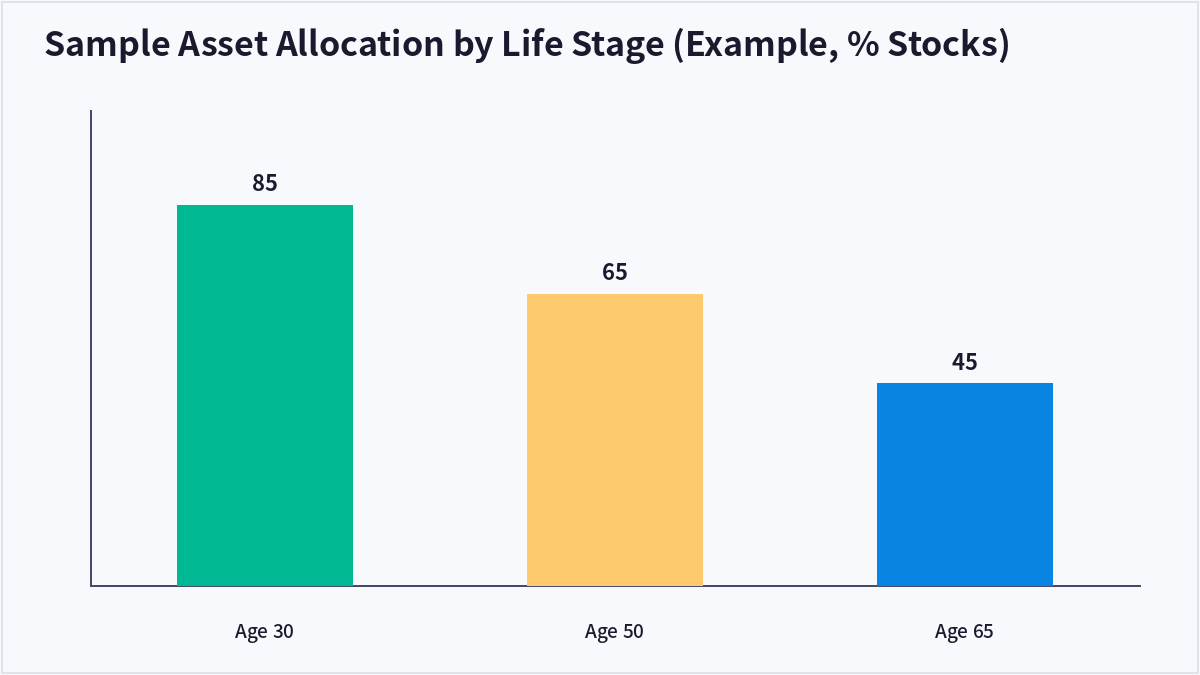
A common approach involves gradually reducing exposure to higher-volatility assets like stocks as an investor ages and their time horizon shortens, shifting toward more stable assets like bonds. Younger investors with decades until retirement typically have greater capacity to withstand short-term stock market volatility in pursuit of higher long-term growth, while those nearing retirement often prioritize capital preservation over maximizing growth.
Approaches to Setting Allocation
Strategic (Long-Term) Allocation
This involves setting a target allocation based on long-term goals and risk tolerance, then periodically rebalancing back to that target as market movements cause the portfolio to drift, without attempting to time short-term market movements.
Target-Date Funds Automate the Process
For investors who prefer a hands-off approach, target-date funds automatically adjust their underlying asset allocation over time according to a predetermined glide path tied to an expected retirement year, gradually becoming more conservative as that date approaches.
| Investor Profile | Typical Stock Allocation | Rationale |
|---|---|---|
| Young, long time horizon | Higher (e.g., 80-90%) | More time to recover from volatility |
| Mid-career | Moderate (e.g., 60-70%) | Balancing growth and stability |
| Near or in retirement | Lower (e.g., 30-50%) | Prioritizing capital preservation |
Frequently Asked Questions
How often should I rebalance my asset allocation?
Common approaches include rebalancing on a fixed schedule (such as annually) or whenever an asset class drifts beyond a certain threshold (such as 5 percentage points) from its target allocation.
Is there a single ‘correct’ asset allocation for everyone?
No — the appropriate allocation is highly individual, depending on factors like age, income stability, specific financial goals, and personal risk tolerance, meaning what’s suitable for one investor may not be suitable for another.
Does asset allocation include only stocks and bonds?
While stocks and bonds are the most common core components, a comprehensive asset allocation strategy can also include real estate, commodities, cash equivalents, and alternative investments, depending on the investor’s overall strategy.
Why is asset allocation considered more important than stock picking?
Academic research has found that the broad decision of how much to allocate to different asset classes tends to explain a larger share of long-term portfolio return variability than the specific securities chosen within each asset class.
Key Takeaways
Asset allocation strategy divides a portfolio among asset classes like stocks, bonds, and cash based on individual goals and risk tolerance, and research suggests this decision drives the majority of long-term return variation. Allocation typically shifts to become more conservative as an investor’s time horizon shortens. This article is for informational purposes only and does not constitute investment advice.

QuantPro: AI Finds the Trade Before You Do
From AI-powered chart analysis to real-time market intelligence — everything a serious investor needs, in one platform.
- Automated AI chart analysis with precision trend timing
- Bull Radar: real-time visualization of geopolitical & economic shifts
- Live market-moving news and insights, curated for you
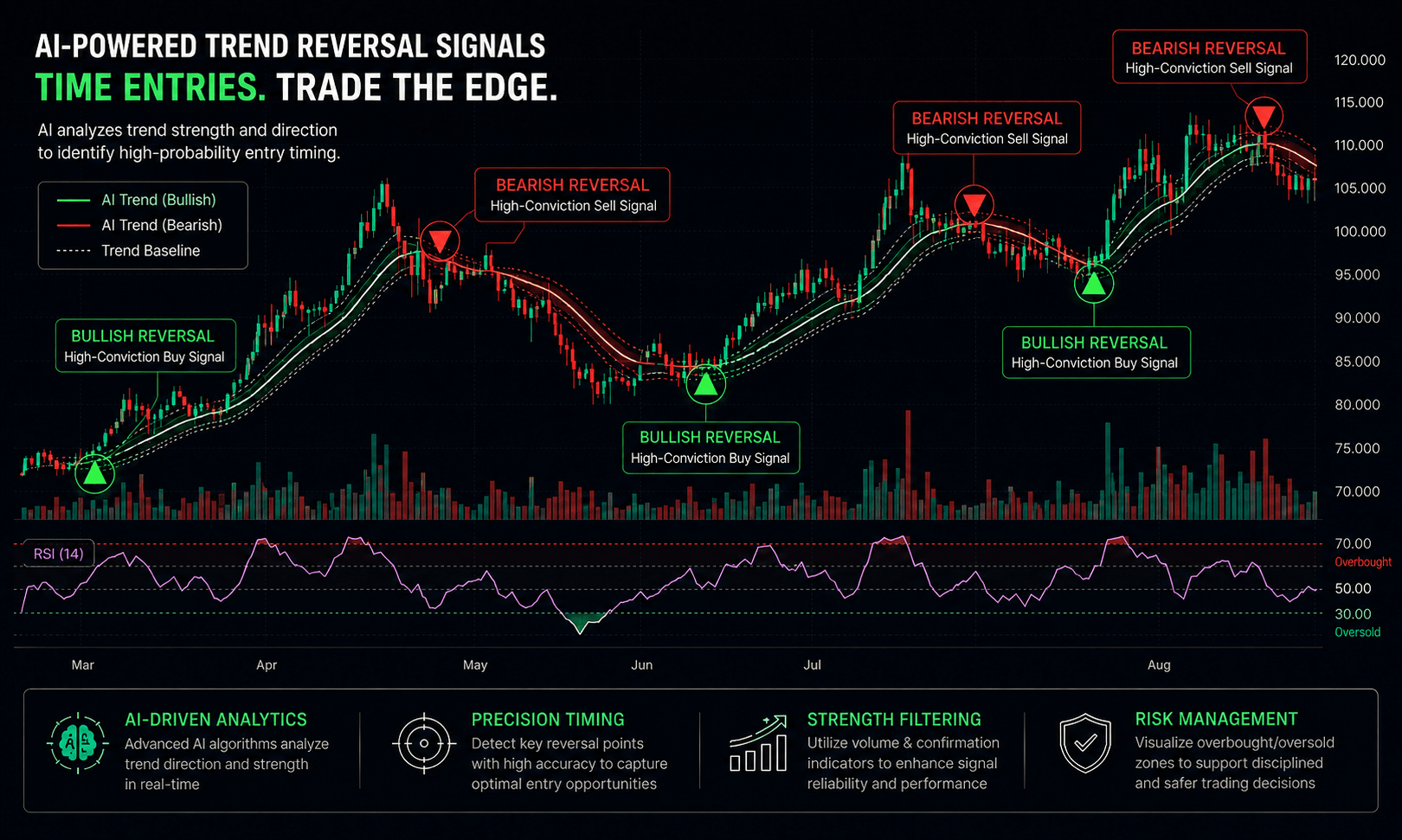
Bull Wave / Bear Wave Forecast Model
Engineered to help you read market direction and momentum faster than the crowd.
- Instantly separate bullish momentum from bearish pressure
- Pinpoint high-probability entry zones with confidence
- Chart signals clear enough for beginners, sharp enough for pros
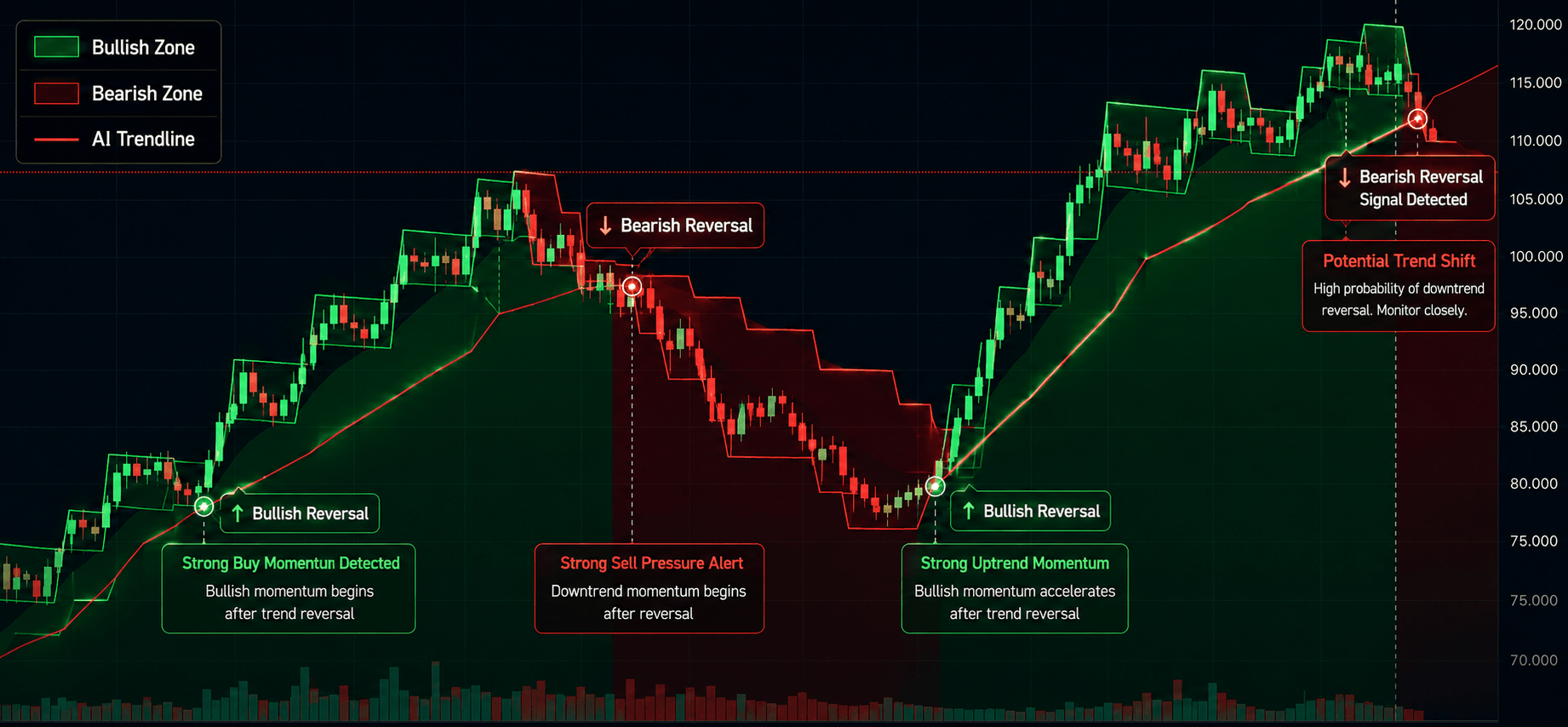
Winning Pattern Detection
Instantly surfaces the high-probability setups that repeat across the charts — a trusted edge for timing your entries and exits.
- Spot momentum building in real time
- Catch trend-reversal points before they break
- Built for active traders who need results, not theory

AI Live Economic Dashboard
AI analyzes real-time market data — turning complex, global investment flows into clear insight in seconds.
- Track global stock markets in real time
- See exactly which assets are strong — and which are fading
- Watch how geopolitical events move the markets
About the Author