What Are Bond Credit Ratings?
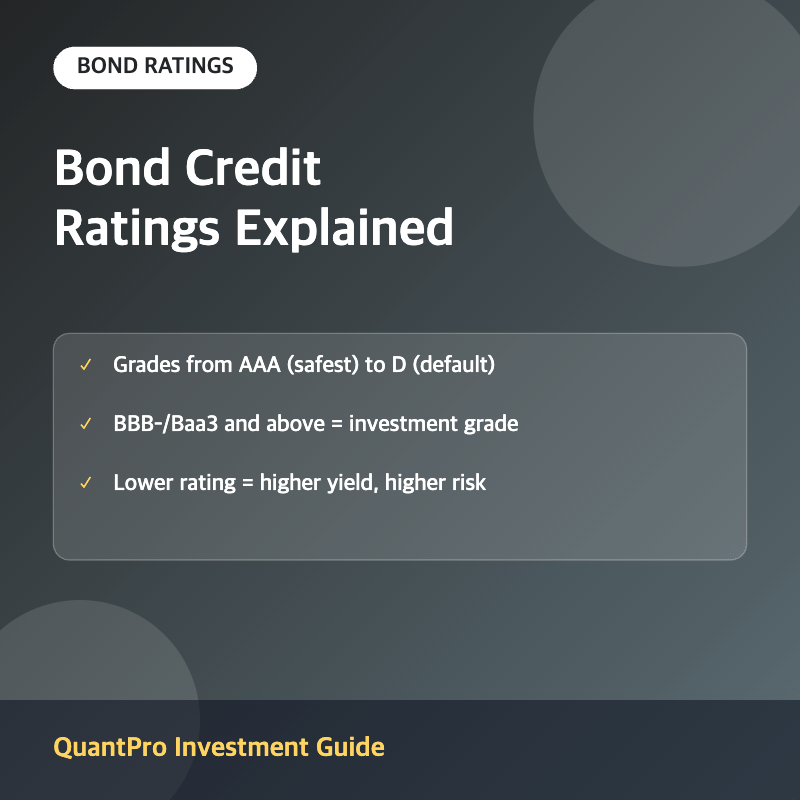
Bond credit ratings are grades assigned by rating agencies, such as Moody’s, S&P Global, and Fitch, that assess the creditworthiness of a bond issuer and the likelihood they will meet their debt obligations, helping investors gauge default risk.
The Credit Rating Scale
Rating scales run from AAA (or Aaa), representing the highest credit quality and lowest default risk, down through progressively lower grades to D, representing a bond already in default. Each agency uses a slightly different notation, but the overall hierarchy is broadly similar.
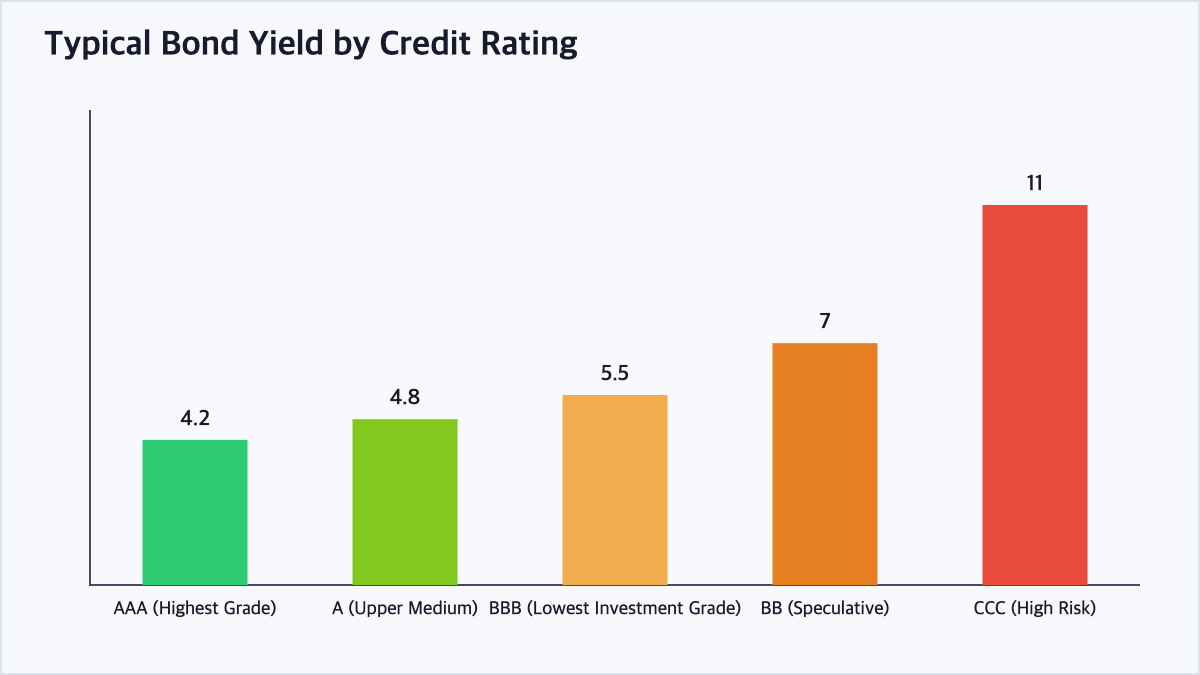
Higher Risk Means Higher Yield
Investment Grade vs. High-Yield (Junk) Bonds
Bonds rated BBB-/Baa3 or higher are considered “investment grade,” reflecting relatively low default risk. Bonds rated below this threshold are considered “high-yield” or “junk” bonds, carrying significantly higher default risk but offering higher yields to compensate investors.
Common Credit Rating Scale (S&P / Moody’s)
| S&P Rating | Moody’s Rating | Category |
|---|---|---|
| AAA | Aaa | Highest quality, minimal risk |
| AA | Aa | High quality, very low risk |
| A | A | Upper medium grade, low risk |
| BBB | Baa | Lowest investment grade |
| BB and below | Ba and below | Speculative / high-yield (junk) |
Why Credit Ratings Can Change
Rating agencies periodically review issuers and can upgrade or downgrade ratings based on changes in financial health, industry conditions, or broader economic factors, and a downgrade can cause a bond’s price to fall as its perceived risk increases.
Frequently Asked Questions
Do higher-rated bonds always perform better?
Not necessarily in terms of total return; higher-rated bonds offer more safety and lower yields, while lower-rated bonds offer higher yields but carry more default risk, so “better” depends on an investor’s risk tolerance and goals.
What happens if a bond issuer defaults?
If an issuer defaults, bondholders may lose some or all of their principal and interest payments, though recovery amounts vary depending on factors like the bond’s seniority and the issuer’s remaining assets in bankruptcy proceedings.
Can government bonds also be downgraded?
Yes, sovereign (government) bonds are also rated by credit agencies and can be downgraded if a country’s fiscal or economic conditions deteriorate, affecting borrowing costs for that government.
Are credit ratings a guarantee against default?
No, credit ratings are opinions based on available information and analysis, not guarantees, and even highly rated bonds can occasionally default due to unforeseen circumstances.
Key Takeaways
Bond credit ratings assess the likelihood that an issuer will meet its debt obligations, ranging from AAA (safest) down to D (default), with investment-grade bonds carrying lower risk and lower yields than high-yield (junk) bonds. Understanding these ratings helps investors balance yield expectations against the level of default risk they are willing to accept. This article is for informational purposes only and does not constitute investment advice.

QuantPro: AI Finds the Trade Before You Do
From AI-powered chart analysis to real-time market intelligence — everything a serious investor needs, in one platform.
- Automated AI chart analysis with precision trend timing
- Bull Radar: real-time visualization of geopolitical & economic shifts
- Live market-moving news and insights, curated for you
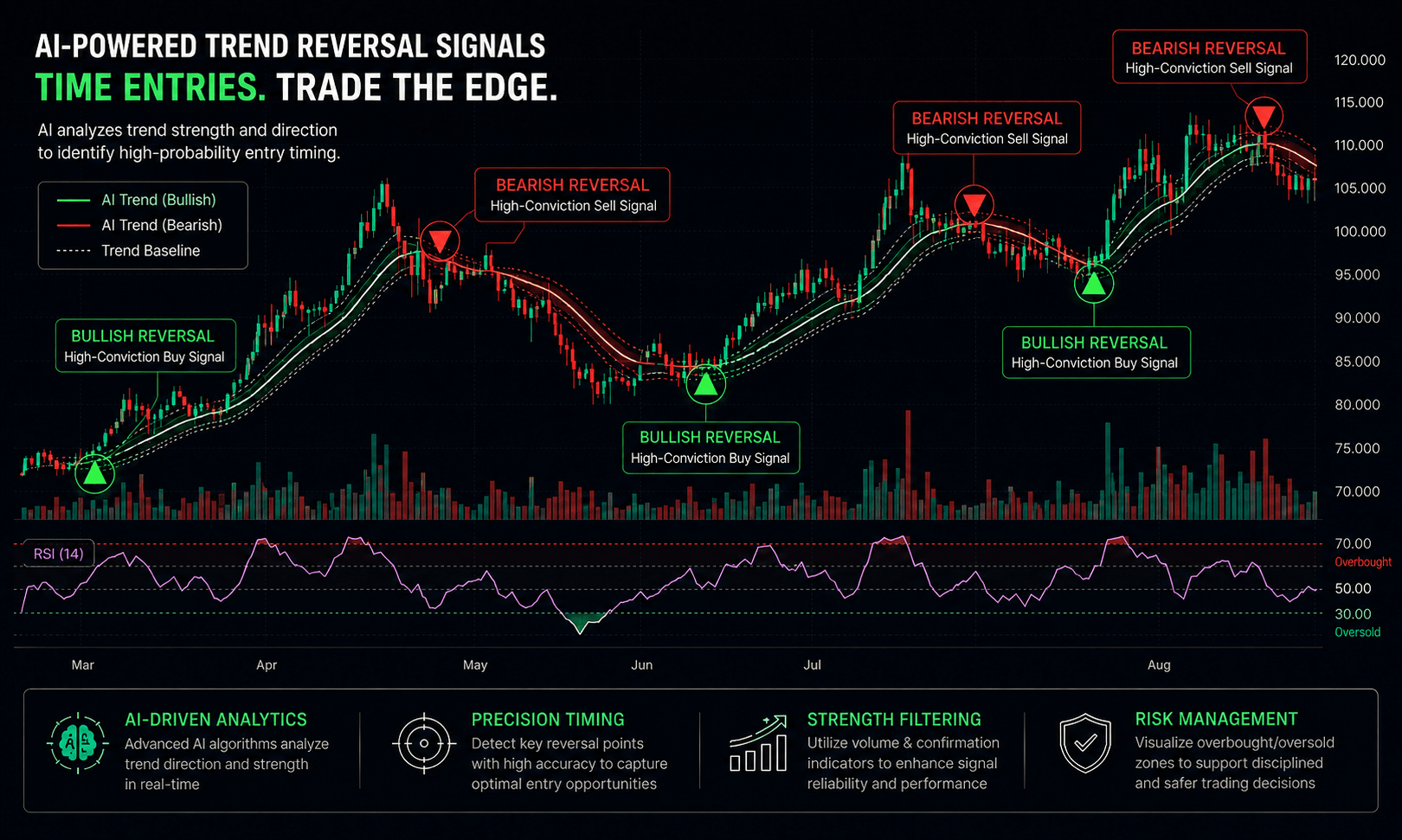
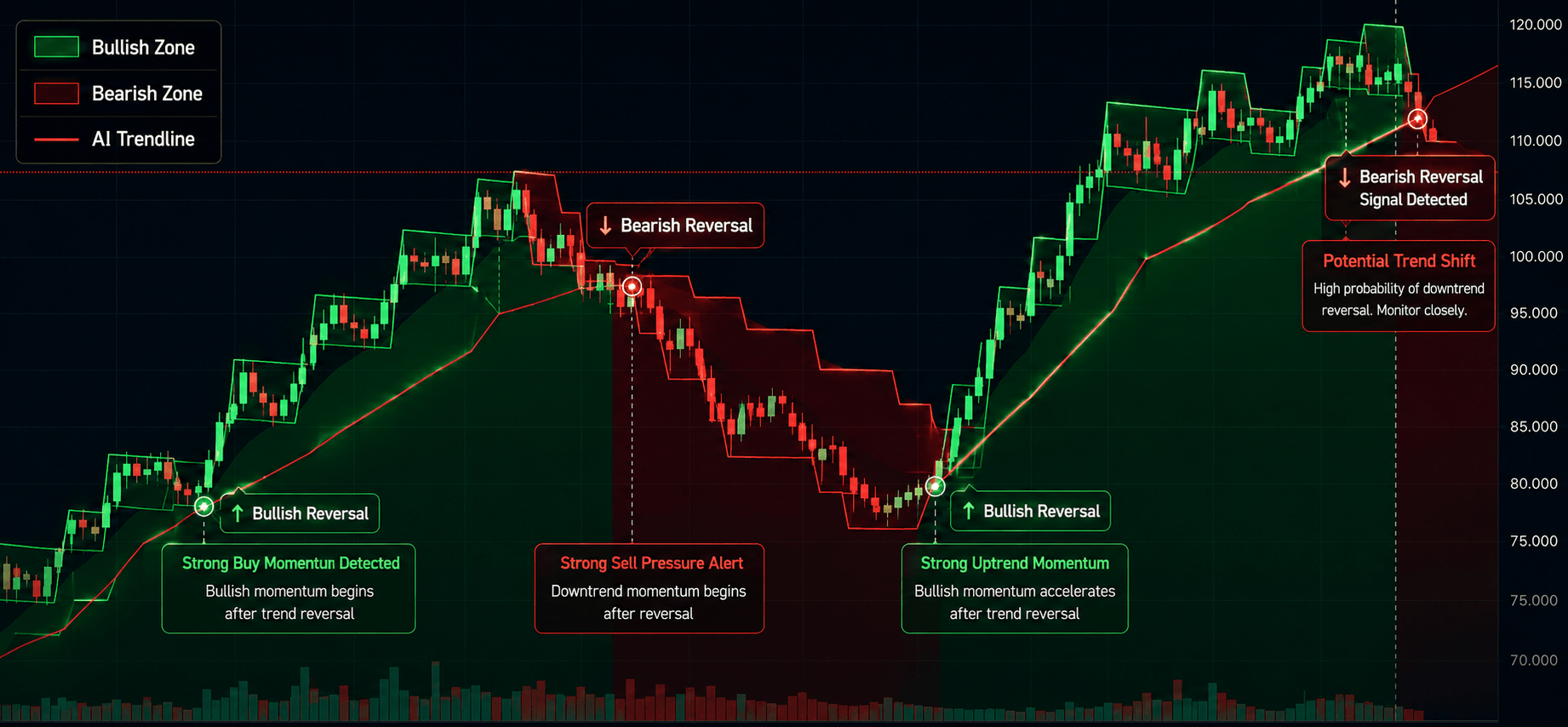
Bull Wave / Bear Wave Forecast Model
Engineered to help you read market direction and momentum faster than the crowd.
- Instantly separate bullish momentum from bearish pressure
- Pinpoint high-probability entry zones with confidence
- Chart signals clear enough for beginners, sharp enough for pros
Winning Pattern Detection
Instantly surfaces the high-probability setups that repeat across the charts — a trusted edge for timing your entries and exits.
- Spot momentum building in real time
- Catch trend-reversal points before they break
- Built for active traders who need results, not theory

AI Live Economic Dashboard
AI analyzes real-time market data — turning complex, global investment flows into clear insight in seconds.
- Track global stock markets in real time
- See exactly which assets are strong — and which are fading
- Watch how geopolitical events move the markets
About the Author