What Is a Dividend Reinvestment Plan (DRIP)?
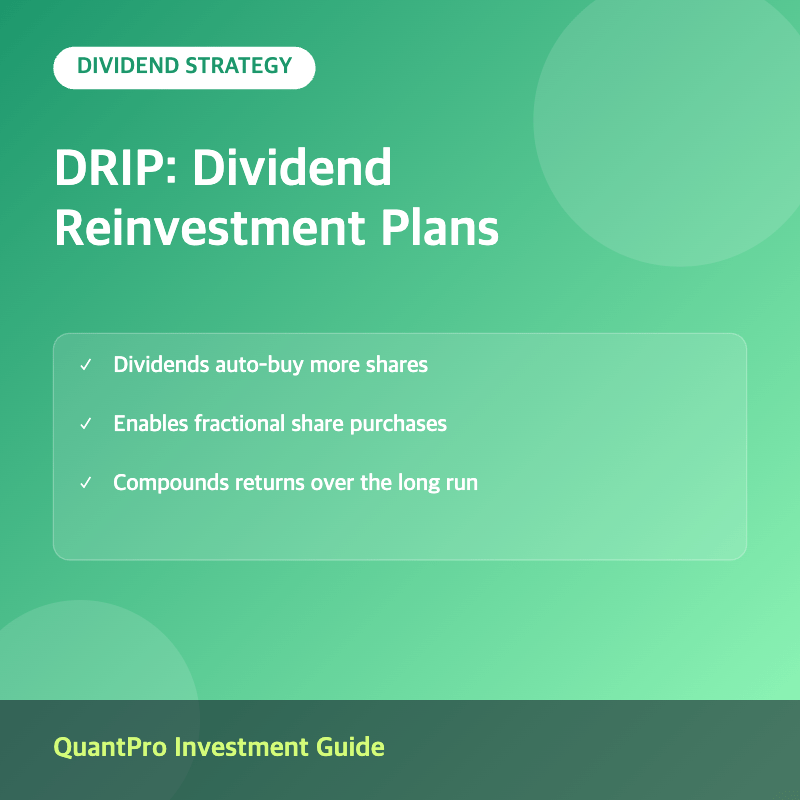
A dividend reinvestment plan (DRIP) is a program that automatically uses cash dividends paid by a stock to purchase additional shares, or fractional shares, of the same company, rather than paying the dividend out to the investor in cash.
How DRIPs Work
When a company pays a dividend, instead of the cash landing in the investor’s brokerage account, a DRIP automatically uses that cash to buy more shares of the stock, often at the current market price and sometimes with a small discount or without brokerage commissions.
The Long-Term Impact of Reinvesting Dividends
Why DRIPs Can Boost Long-Term Returns
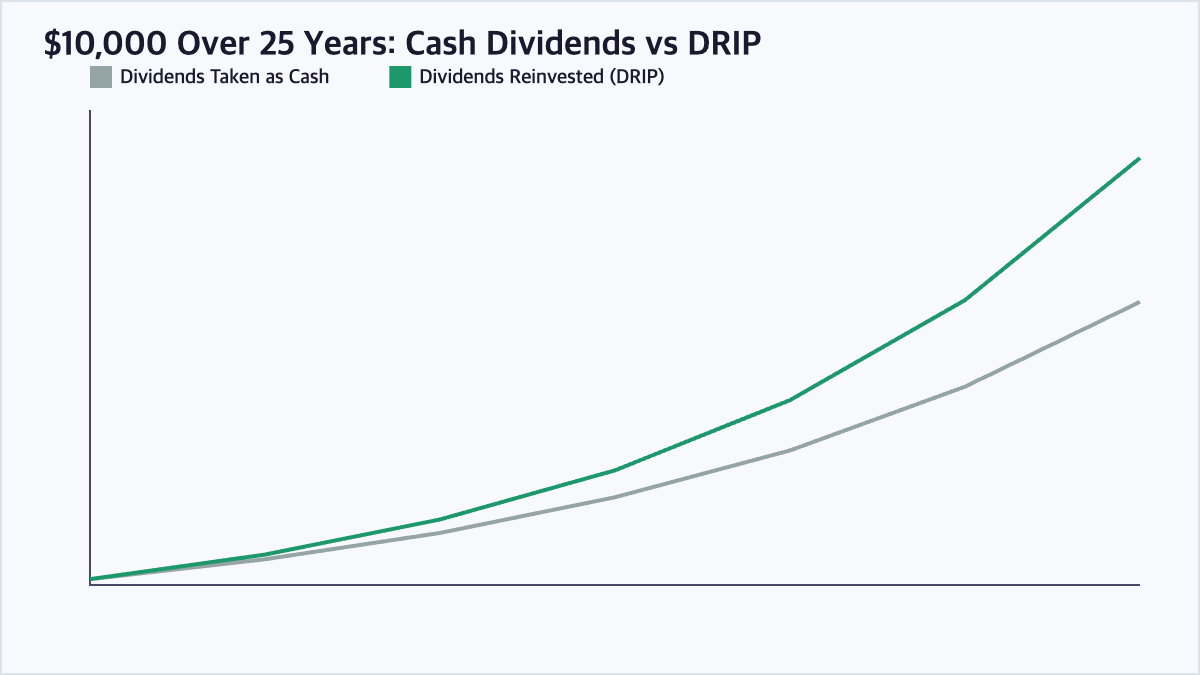
Reinvested dividends buy more shares, which then generate their own future dividends, creating a compounding effect over time. Historical studies have shown that reinvested dividends have contributed a significant portion of total stock market returns over long periods.
DRIP vs. Taking Cash Dividends
| Feature | DRIP | Cash Dividends |
|---|---|---|
| Compounding Effect | Automatic, reinvests into more shares | None, cash sits idle unless manually invested |
| Fractional Shares | Often allowed | Not applicable |
| Liquidity | Lower, funds stay invested | Higher, cash is immediately available |
| Best Suited For | Long-term growth investors | Investors needing regular income |
Tax Considerations for DRIPs
Even though dividends are automatically reinvested rather than received as cash, DRIP dividends are still generally taxable in the year they are paid (outside of tax-advantaged accounts), so investors should account for this when planning for taxes.
Frequently Asked Questions
Do all brokerages offer DRIP options?
Most major brokerages offer a DRIP option that can typically be enabled or disabled for individual holdings or an entire account, though specific features like fractional shares can vary by broker.
Is DRIP investing only for individual stocks?
No, dividend reinvestment plans are also commonly available for mutual funds and exchange-traded funds (ETFs), allowing dividend distributions from these funds to be automatically reinvested as well.
Can I stop reinvesting dividends at any time?
Yes, DRIP participation is typically optional and can usually be turned on or off at any time through the brokerage account, allowing investors to switch to receiving cash dividends whenever needed.
Does a DRIP guarantee better returns than taking cash?
Not necessarily; reinvesting is generally advantageous for long-term compounding, but the outcome still depends on the stock’s future performance, and taking cash may be more appropriate for investors who need current income.
Key Takeaways
A DRIP automatically reinvests dividend payments into additional shares of the same stock, harnessing the power of compounding to potentially boost long-term portfolio growth compared to taking dividends as cash. While DRIPs suit long-term growth-focused investors, they may be less ideal for those who rely on dividends for current income. This article is for informational purposes only and does not constitute investment advice.

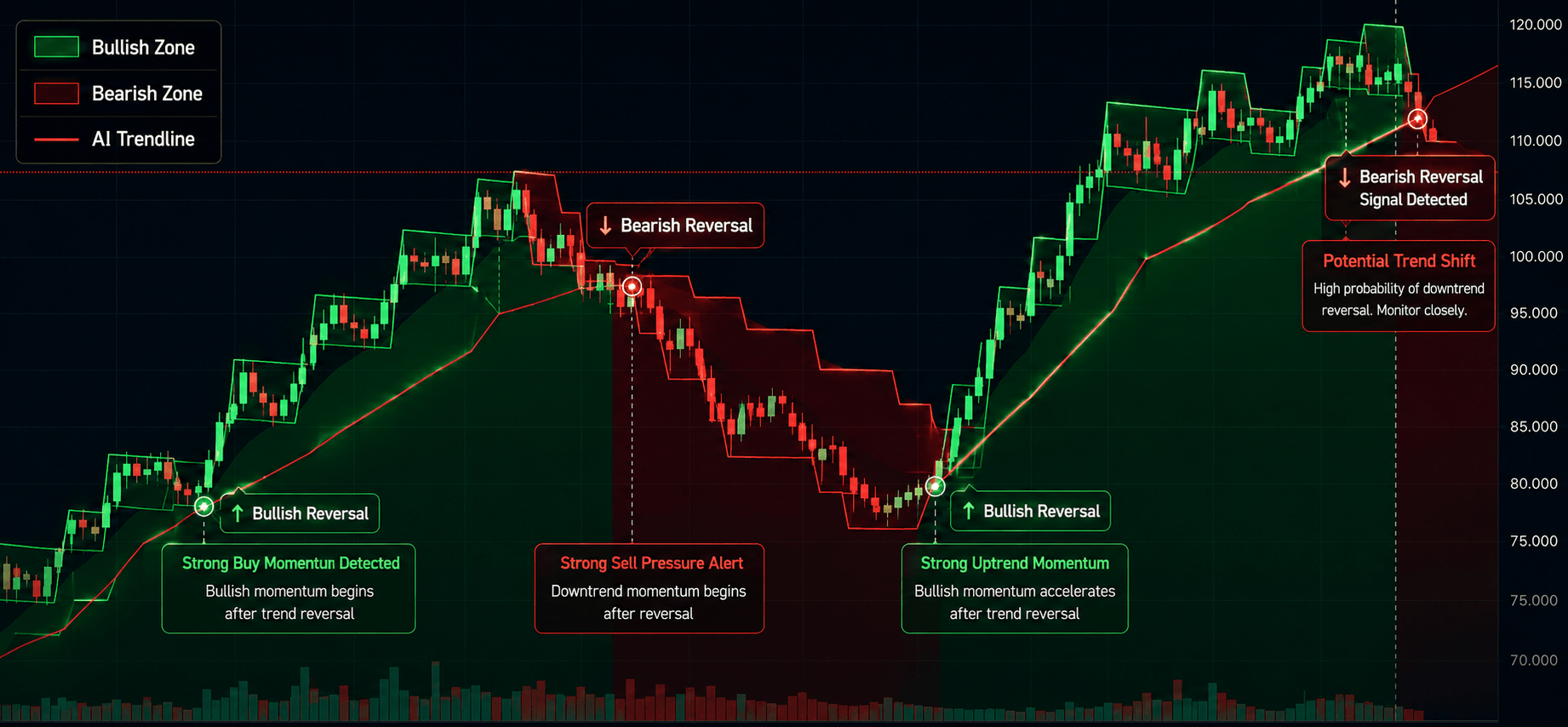
QuantPro: AI Finds the Trade Before You Do
From AI-powered chart analysis to real-time market intelligence — everything a serious investor needs, in one platform.
- Automated AI chart analysis with precision trend timing
- Bull Radar: real-time visualization of geopolitical & economic shifts
- Live market-moving news and insights, curated for you
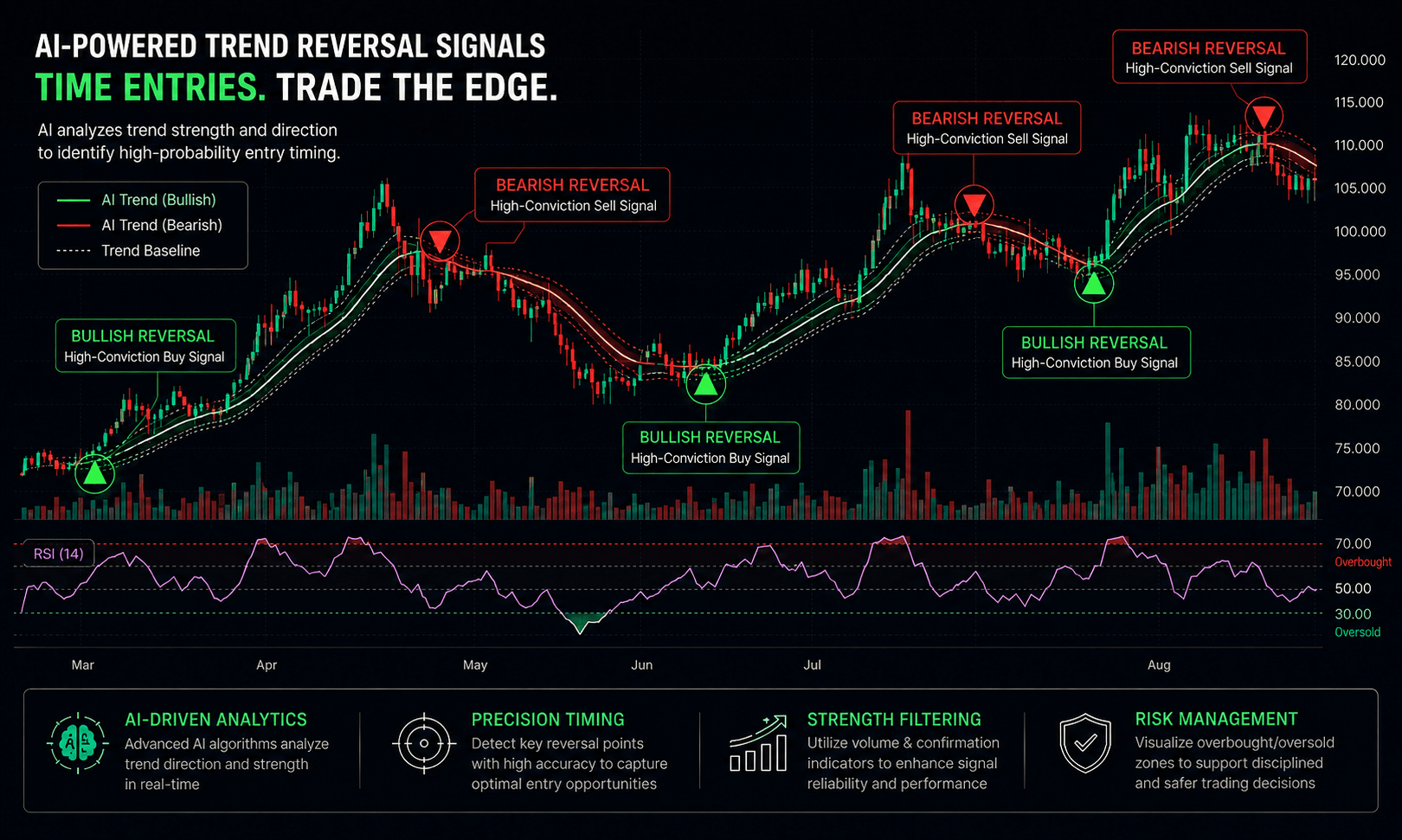
Bull Wave / Bear Wave Forecast Model
Engineered to help you read market direction and momentum faster than the crowd.
- Instantly separate bullish momentum from bearish pressure
- Pinpoint high-probability entry zones with confidence
- Chart signals clear enough for beginners, sharp enough for pros
Winning Pattern Detection
Instantly surfaces the high-probability setups that repeat across the charts — a trusted edge for timing your entries and exits.
- Spot momentum building in real time
- Catch trend-reversal points before they break
- Built for active traders who need results, not theory

AI Live Economic Dashboard
AI analyzes real-time market data — turning complex, global investment flows into clear insight in seconds.
- Track global stock markets in real time
- See exactly which assets are strong — and which are fading
- Watch how geopolitical events move the markets
About the Author