What Is an ETF?
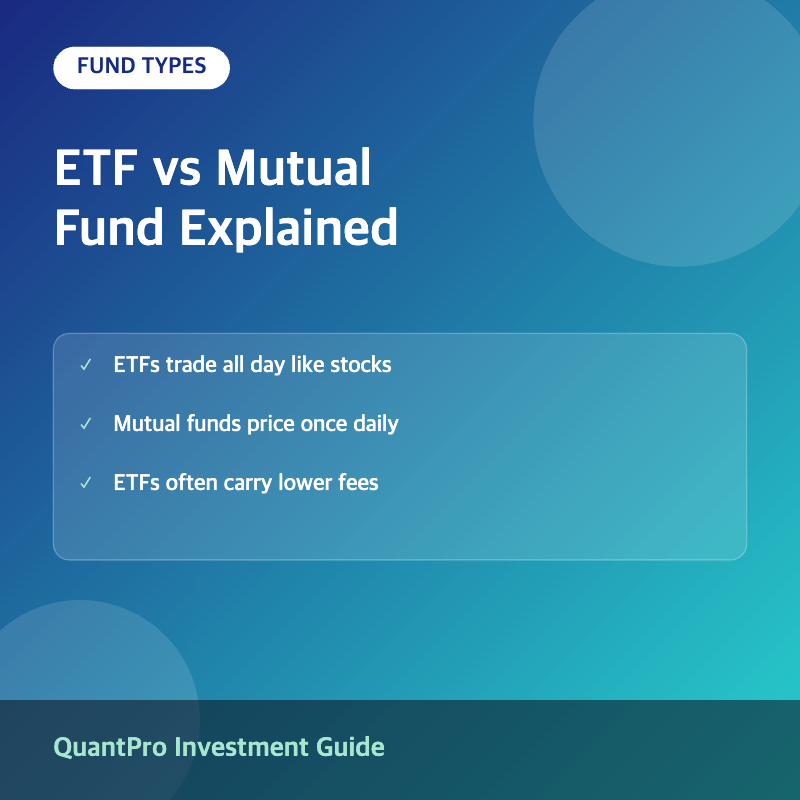
An exchange-traded fund (ETF) is a basket of securities, such as stocks or bonds, that trades on a stock exchange throughout the day at market-determined prices, much like an individual stock, offering investors diversified exposure in a single tradable security.
What Is a Mutual Fund?
A mutual fund is a pooled investment vehicle that also holds a basket of securities, but shares are bought and sold directly through the fund company at a single price calculated once per day, known as the net asset value (NAV), after markets close.
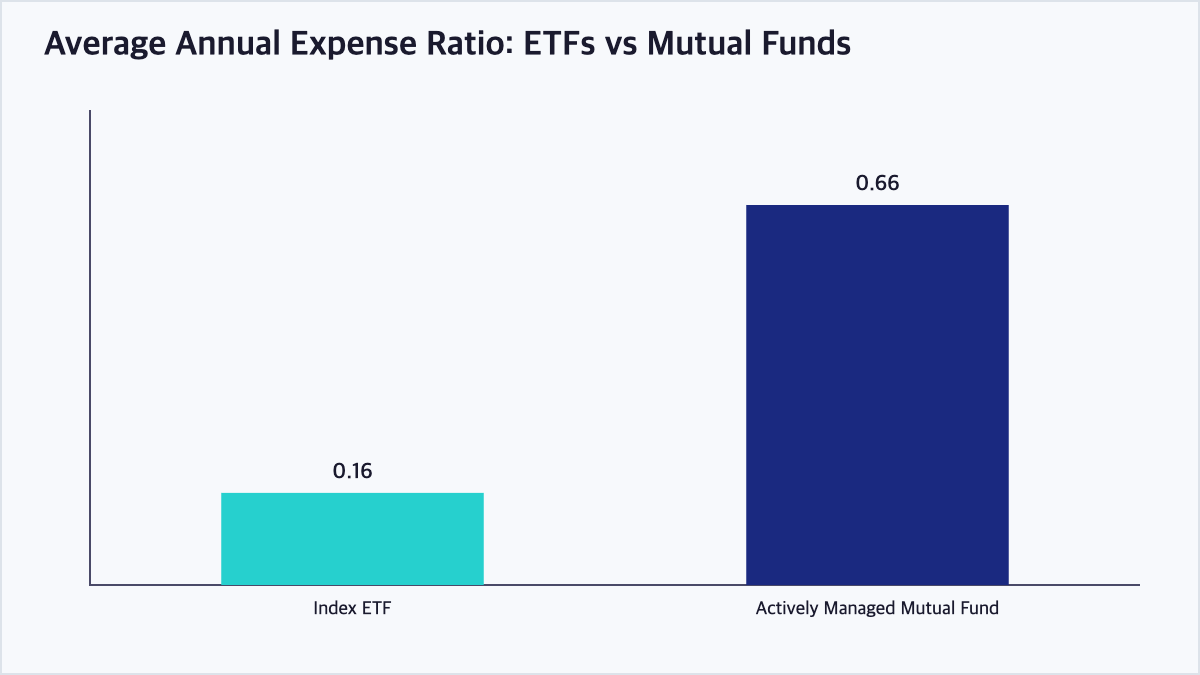
ETFs Often Cost Less Than Mutual Funds
Trading and Pricing Differences
ETFs can be bought and sold at any point during market hours at fluctuating prices, similar to stocks, and can also be shorted or bought on margin. Mutual funds are only transacted once per day at the closing NAV, regardless of what time an order is placed during the trading day.
ETF vs. Mutual Fund: Key Differences
| Feature | ETF | Mutual Fund |
|---|---|---|
| Trading | Throughout the day, market price | Once daily, at closing NAV |
| Minimum Investment | Price of one share | Often has a minimum (e.g. $1,000+) |
| Typical Fees | Generally lower | Generally higher, especially active funds |
| Tax Efficiency | Generally more tax-efficient | Can trigger more capital gains distributions |
| Management Style | Often passive (index-tracking) | Often actively managed |
Tax Efficiency Differences
ETFs are generally considered more tax-efficient than mutual funds due to their unique in-kind creation and redemption process, which tends to minimize capital gains distributions compared to mutual funds, which more frequently distribute taxable capital gains to shareholders.
Frequently Asked Questions
Are ETFs riskier than mutual funds?
Not inherently; risk depends on the underlying holdings rather than the fund structure itself. An ETF and mutual fund tracking the same index carry similar underlying investment risk, though trading behavior can differ.
Do ETFs have minimum investment requirements?
Most ETFs can be purchased for the price of a single share (or even a fraction of a share at some brokers), whereas many mutual funds require a minimum initial investment, often $1,000 or more.
Which is better for long-term investors, ETFs or mutual funds?
Both can work well for long-term investing; the better choice often depends on factors like fees, tax efficiency, minimum investment requirements, and whether an investor prefers active or passive management.
Can I buy ETFs and mutual funds in the same brokerage account?
Yes, most brokerage accounts support both ETFs and mutual funds, allowing investors to hold and combine both types of funds within the same portfolio.
Key Takeaways
ETFs trade throughout the day like stocks and often carry lower fees and greater tax efficiency, while mutual funds price once daily and are more commonly actively managed. Both offer diversified exposure to a basket of securities, and the right choice depends on an investor’s trading preferences, cost sensitivity, and tax situation. This article is for informational purposes only and does not constitute investment advice.

QuantPro: AI Finds the Trade Before You Do
From AI-powered chart analysis to real-time market intelligence — everything a serious investor needs, in one platform.
- Automated AI chart analysis with precision trend timing
- Bull Radar: real-time visualization of geopolitical & economic shifts
- Live market-moving news and insights, curated for you
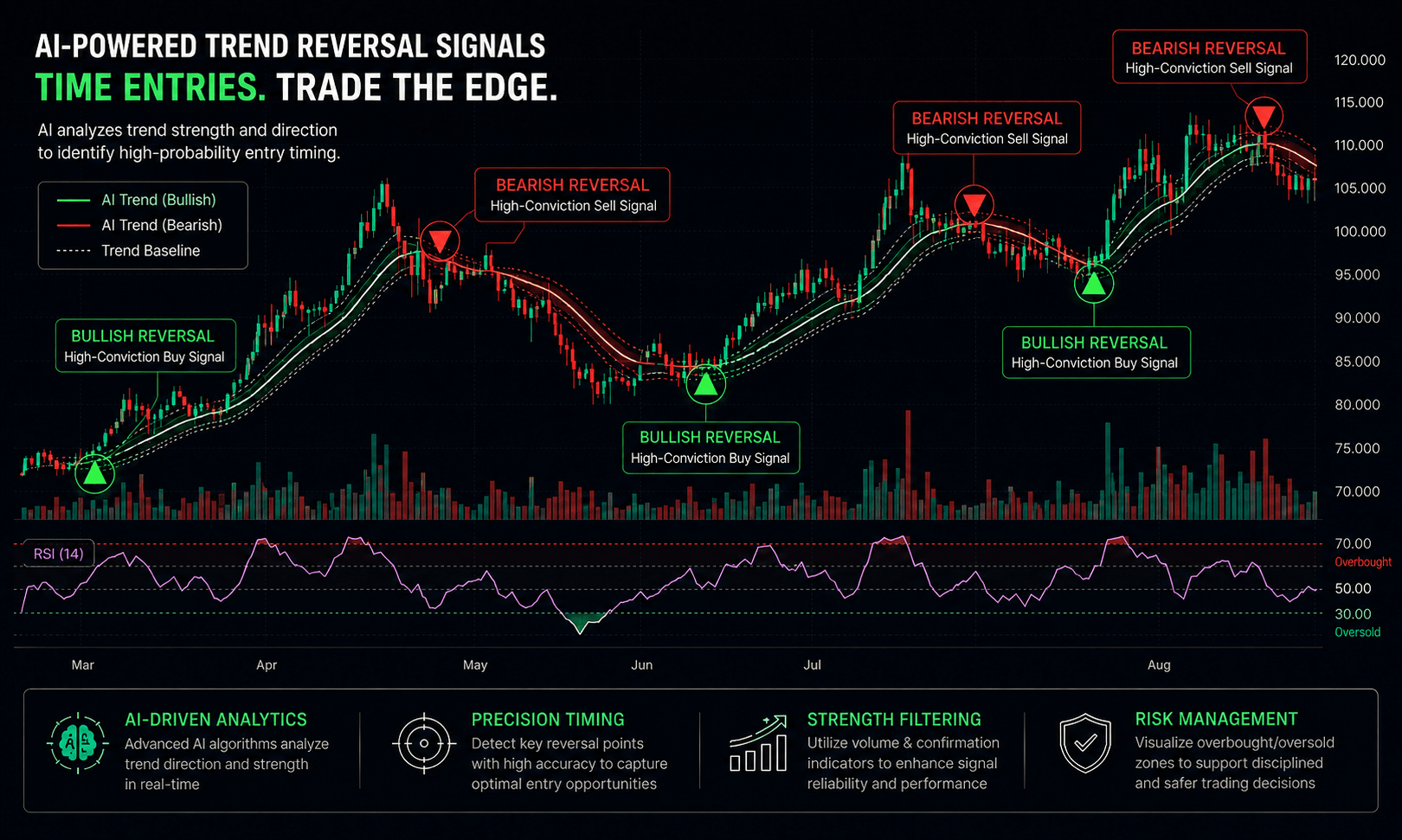
Bull Wave / Bear Wave Forecast Model
Engineered to help you read market direction and momentum faster than the crowd.
- Instantly separate bullish momentum from bearish pressure
- Pinpoint high-probability entry zones with confidence
- Chart signals clear enough for beginners, sharp enough for pros
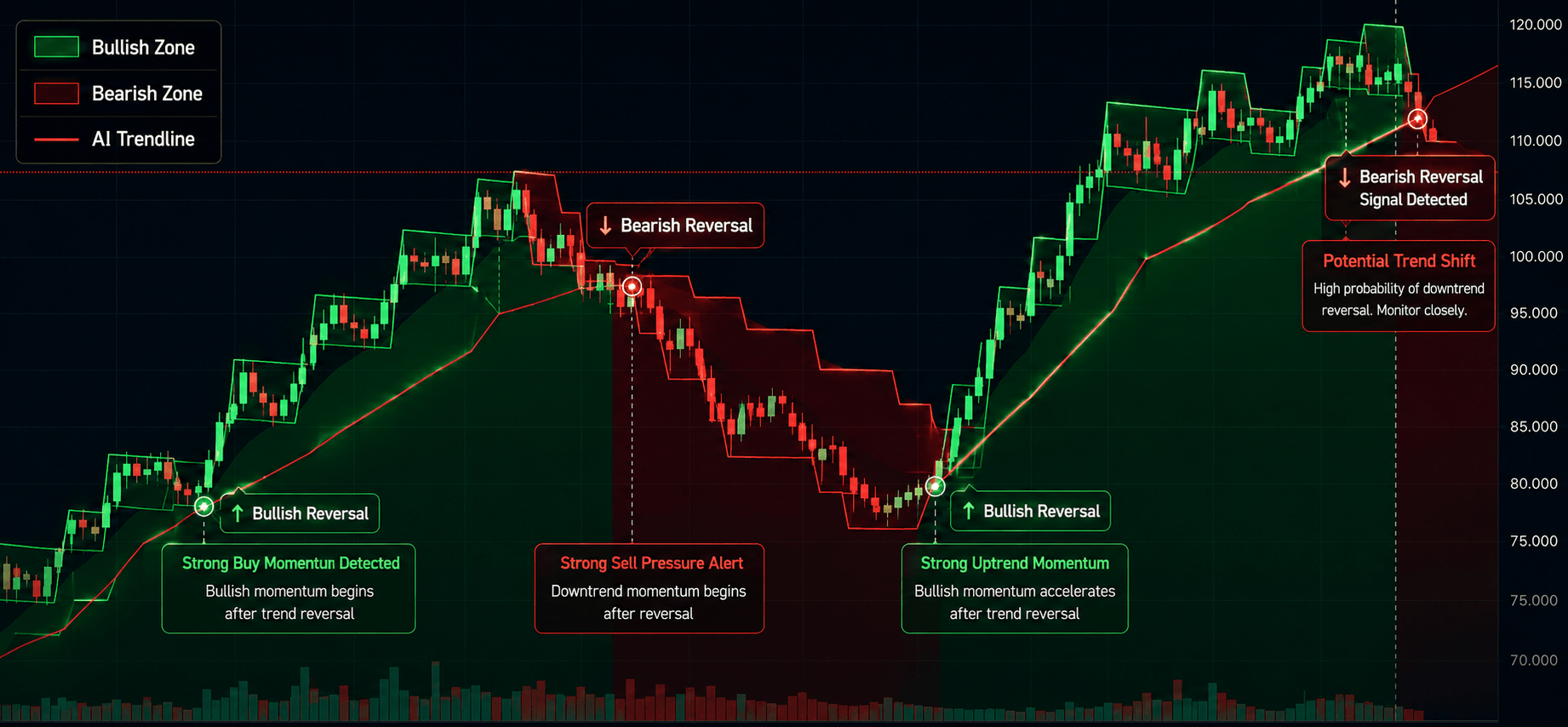
Winning Pattern Detection
Instantly surfaces the high-probability setups that repeat across the charts — a trusted edge for timing your entries and exits.
- Spot momentum building in real time
- Catch trend-reversal points before they break
- Built for active traders who need results, not theory
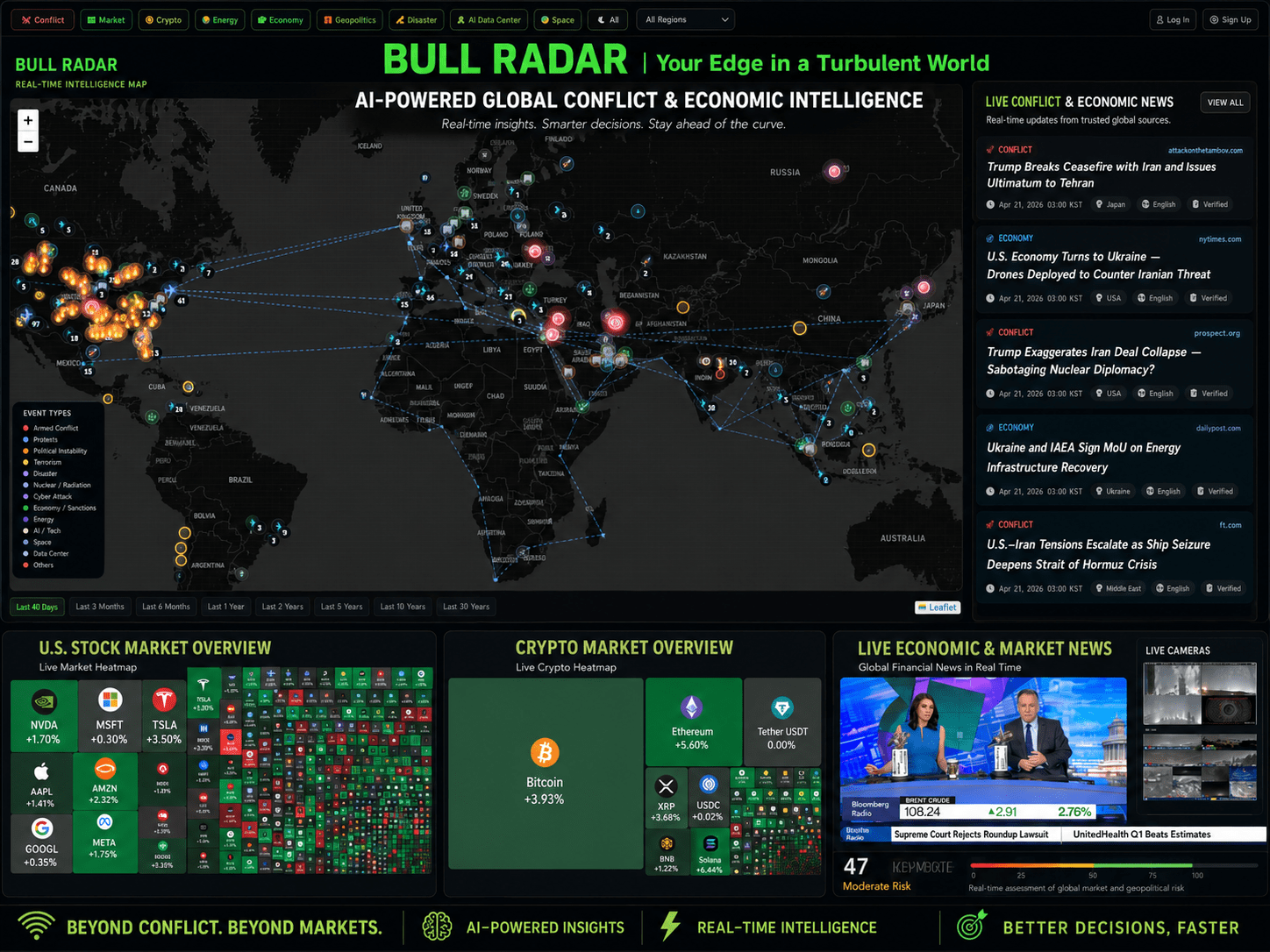
AI Live Economic Dashboard
AI analyzes real-time market data — turning complex, global investment flows into clear insight in seconds.
- Track global stock markets in real time
- See exactly which assets are strong — and which are fading
- Watch how geopolitical events move the markets
About the Author