What Is Bond Duration?
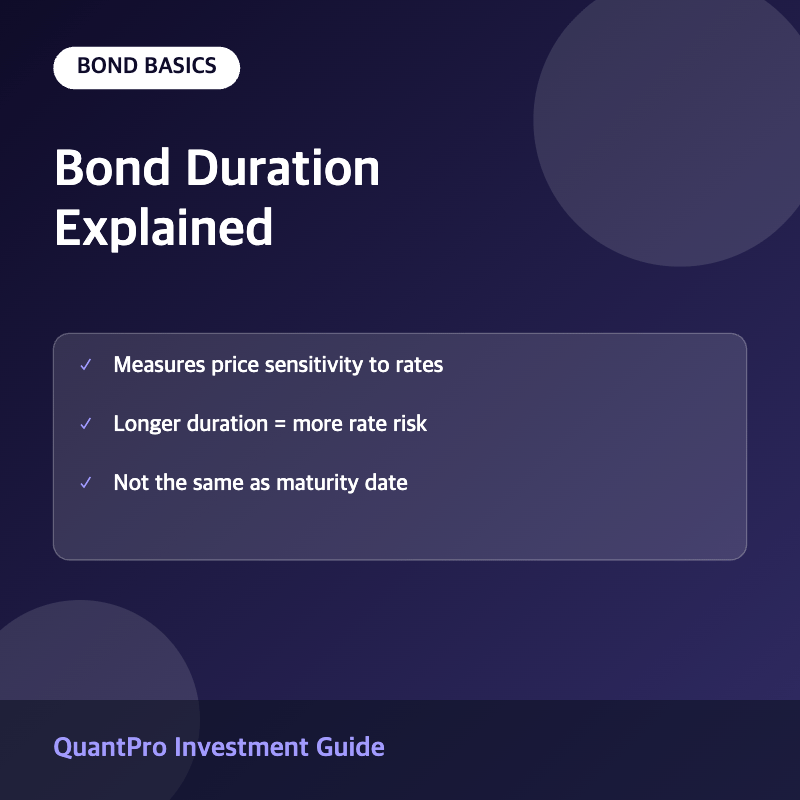
Bond duration is a measure of a bond’s price sensitivity to changes in interest rates, expressed in years, that estimates how much a bond’s price will change for a given change in interest rates, with longer duration indicating greater sensitivity.
Duration vs. Maturity
Duration is often confused with a bond’s maturity date, but they are different measures. Maturity is simply the length of time until the bond’s principal is repaid, while duration accounts for the timing and size of all cash flows, including coupon payments, and is typically shorter than maturity for coupon-paying bonds.
Longer Duration Means More Rate Sensitivity
How to Use Duration
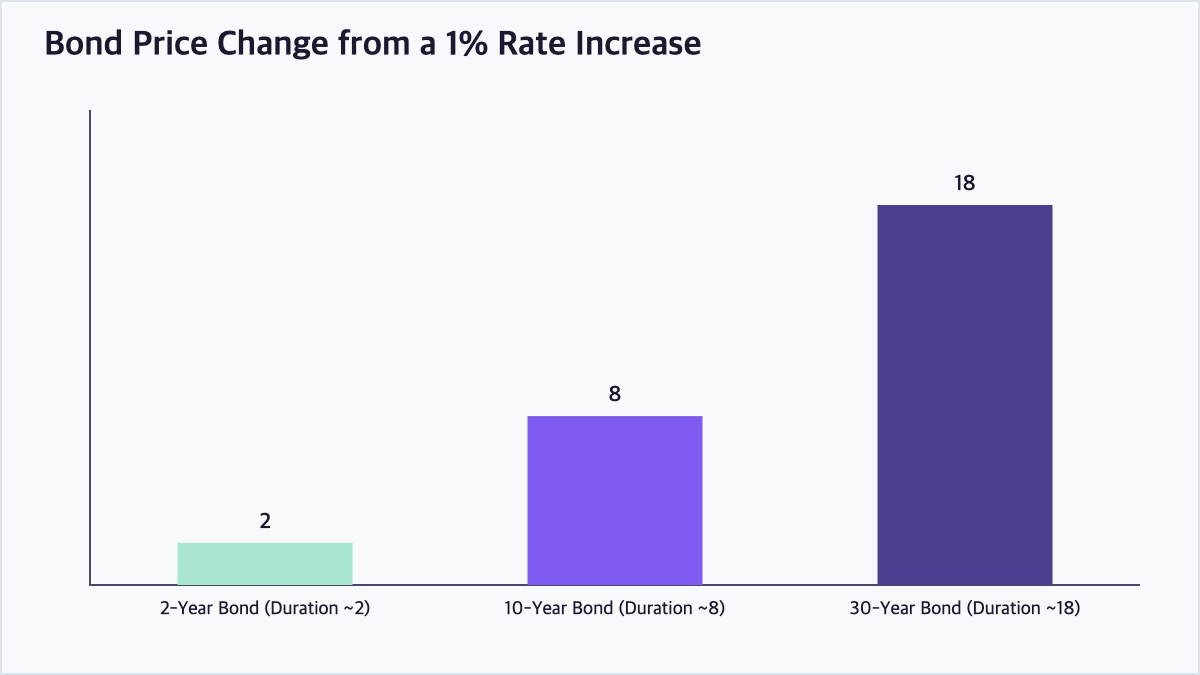
As a rule of thumb, a bond’s price change can be roughly estimated by multiplying its duration by the change in interest rates (in percentage points) and applying it in the opposite direction, since bond prices and interest rates move inversely.
Duration and Interest Rate Risk
| Duration | Interest Rate Sensitivity | Typical Bond Type |
|---|---|---|
| Low (0-3 years) | Low sensitivity | Short-term bonds, money market funds |
| Medium (4-7 years) | Moderate sensitivity | Intermediate-term bonds |
| High (8+ years) | High sensitivity | Long-term bonds, zero-coupon bonds |
Why Duration Matters for Investors
Understanding duration helps investors gauge how much a bond or bond fund’s value might fluctuate as interest rates change, which is especially important during periods of rising rates when longer-duration bonds can see significant price declines.
Frequently Asked Questions
Does a higher coupon rate affect duration?
Yes, bonds with higher coupon rates generally have shorter duration than bonds with lower coupons and the same maturity, because more of the bond’s value is returned to investors earlier through coupon payments.
What is the duration of a zero-coupon bond?
A zero-coupon bond’s duration equals its time to maturity, since there are no interim coupon payments and the entire cash flow occurs at maturity, making it the most interest-rate sensitive type of bond for a given maturity.
How can I reduce interest rate risk in a bond portfolio?
Investors can reduce interest rate risk by shortening the average duration of their bond holdings, using a bond ladder strategy, or diversifying across bonds with different maturities to balance yield and rate sensitivity.
Is duration the same for all bonds with the same maturity?
No, duration varies based on coupon rate, yield, and payment structure, so two bonds with identical maturities can have different durations depending on these other factors.
Key Takeaways
Bond duration measures how sensitive a bond’s price is to changes in interest rates, with longer duration bonds experiencing larger price swings than shorter duration bonds for the same rate change. Understanding duration helps investors manage interest rate risk when building or adjusting a fixed-income portfolio. This article is for informational purposes only and does not constitute investment advice.

QuantPro: AI Finds the Trade Before You Do
From AI-powered chart analysis to real-time market intelligence — everything a serious investor needs, in one platform.
- Automated AI chart analysis with precision trend timing
- Bull Radar: real-time visualization of geopolitical & economic shifts
- Live market-moving news and insights, curated for you
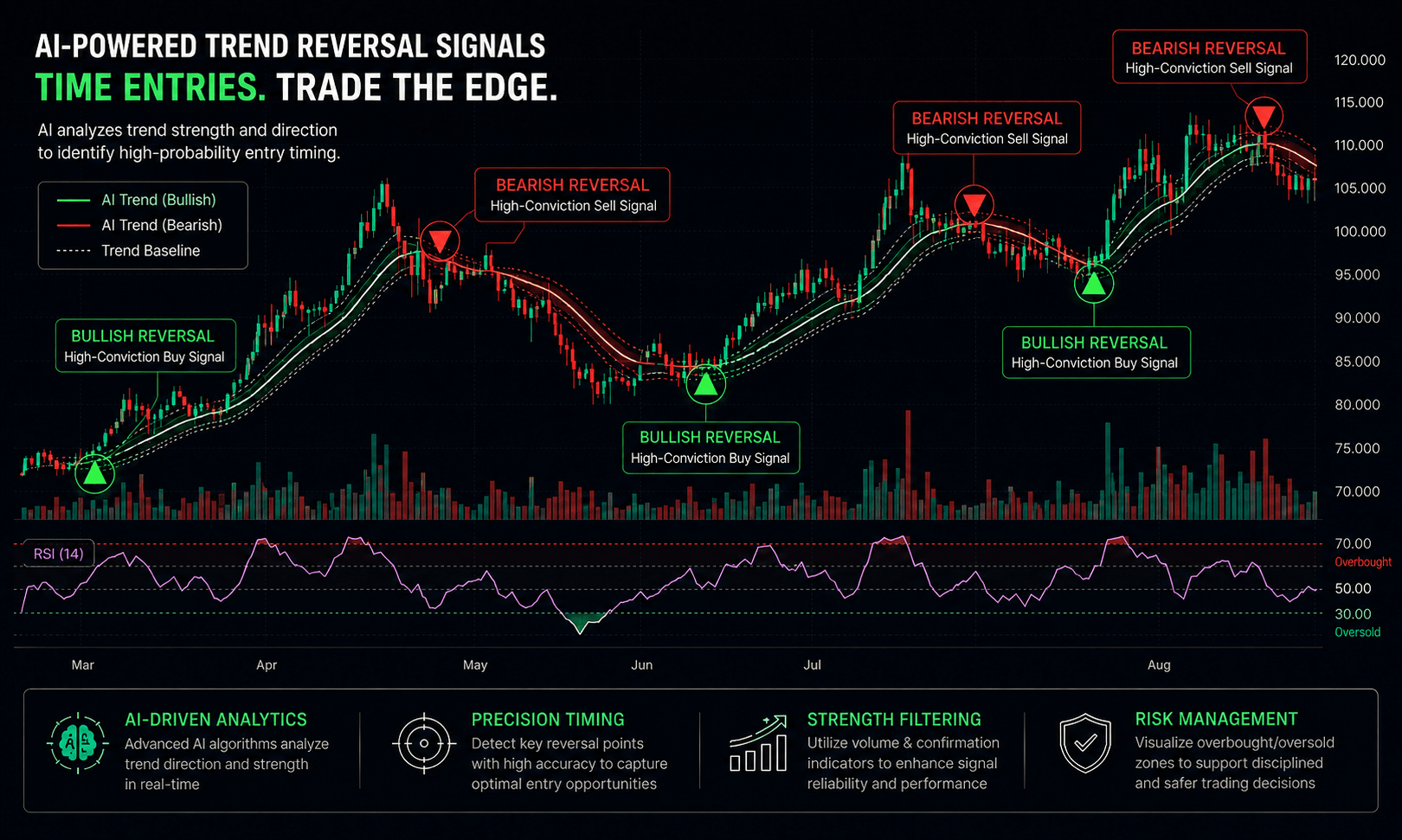
Bull Wave / Bear Wave Forecast Model
Engineered to help you read market direction and momentum faster than the crowd.
- Instantly separate bullish momentum from bearish pressure
- Pinpoint high-probability entry zones with confidence
- Chart signals clear enough for beginners, sharp enough for pros
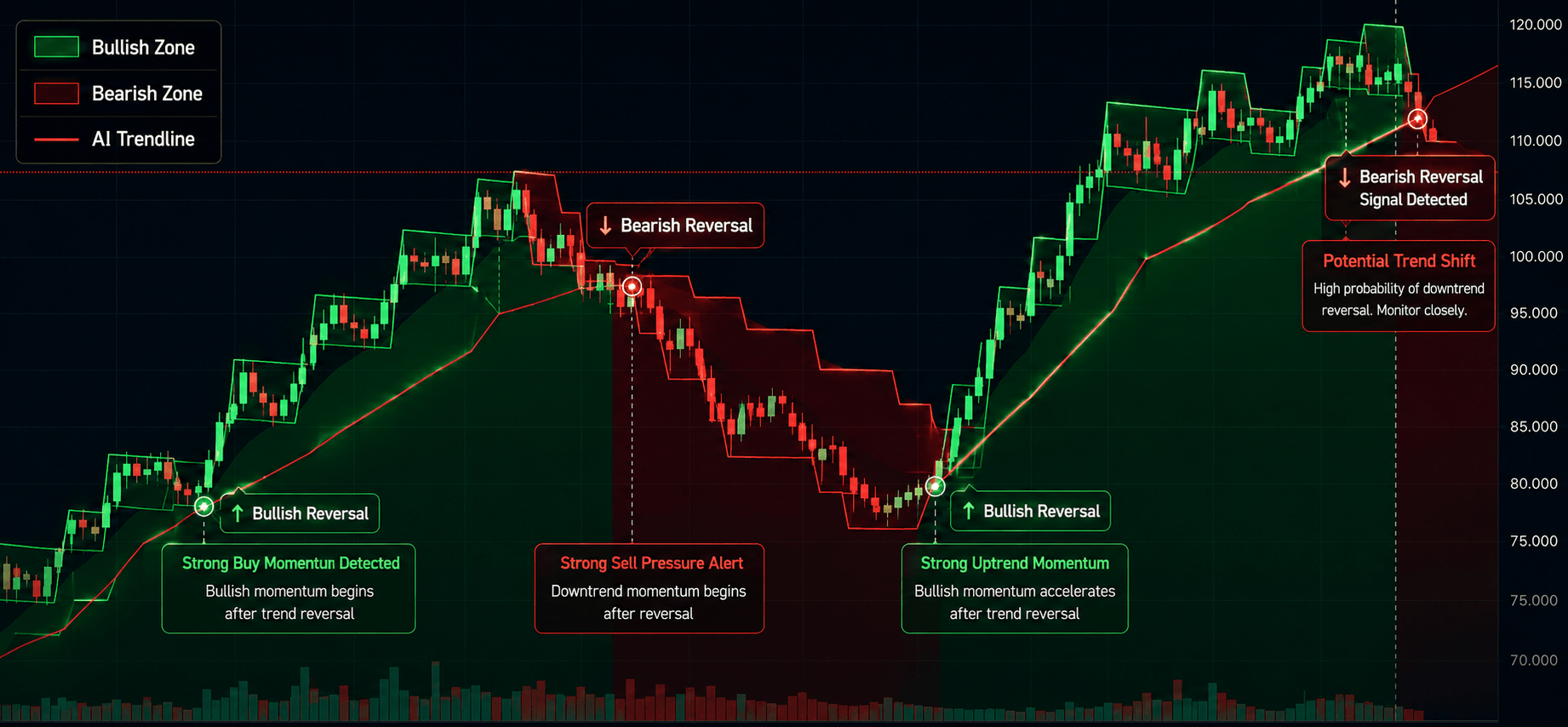
Winning Pattern Detection
Instantly surfaces the high-probability setups that repeat across the charts — a trusted edge for timing your entries and exits.
- Spot momentum building in real time
- Catch trend-reversal points before they break
- Built for active traders who need results, not theory
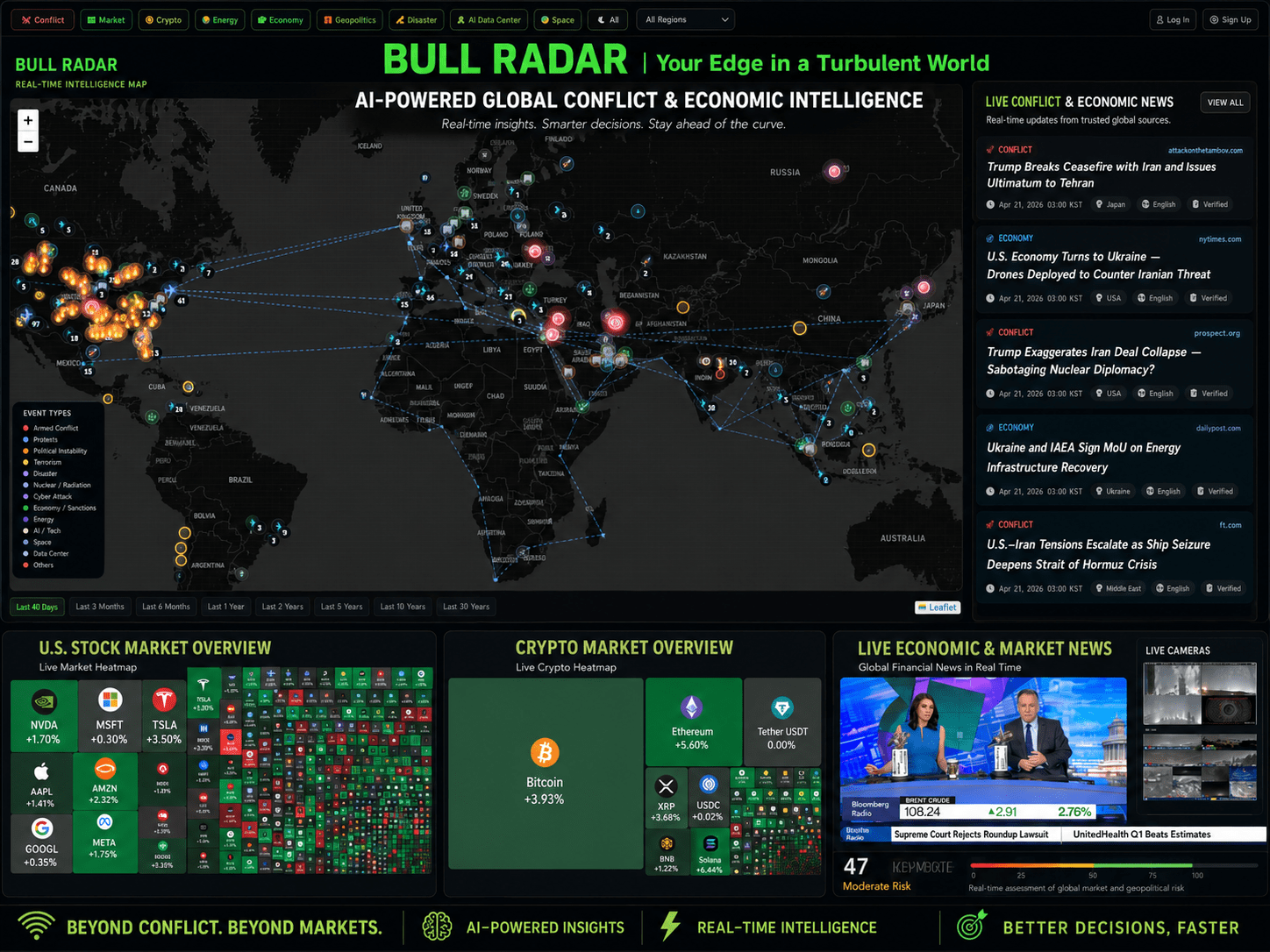
AI Live Economic Dashboard
AI analyzes real-time market data — turning complex, global investment flows into clear insight in seconds.
- Track global stock markets in real time
- See exactly which assets are strong — and which are fading
- Watch how geopolitical events move the markets
About the Author