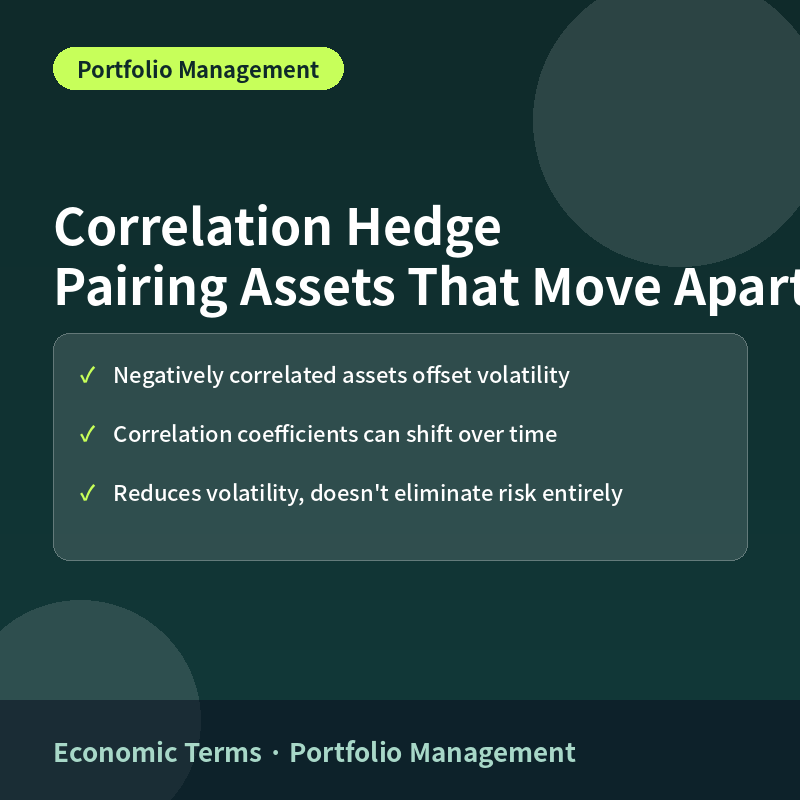
What a Correlation Hedge Is
A correlation hedge adds an asset that tends to move in the opposite direction of an existing holding, in order to reduce overall portfolio volatility. The choice of which asset to add is guided by the correlation coefficient (-1 to +1), a statistical measure of how closely two assets’ price movements track each other.
Reading the Correlation Coefficient
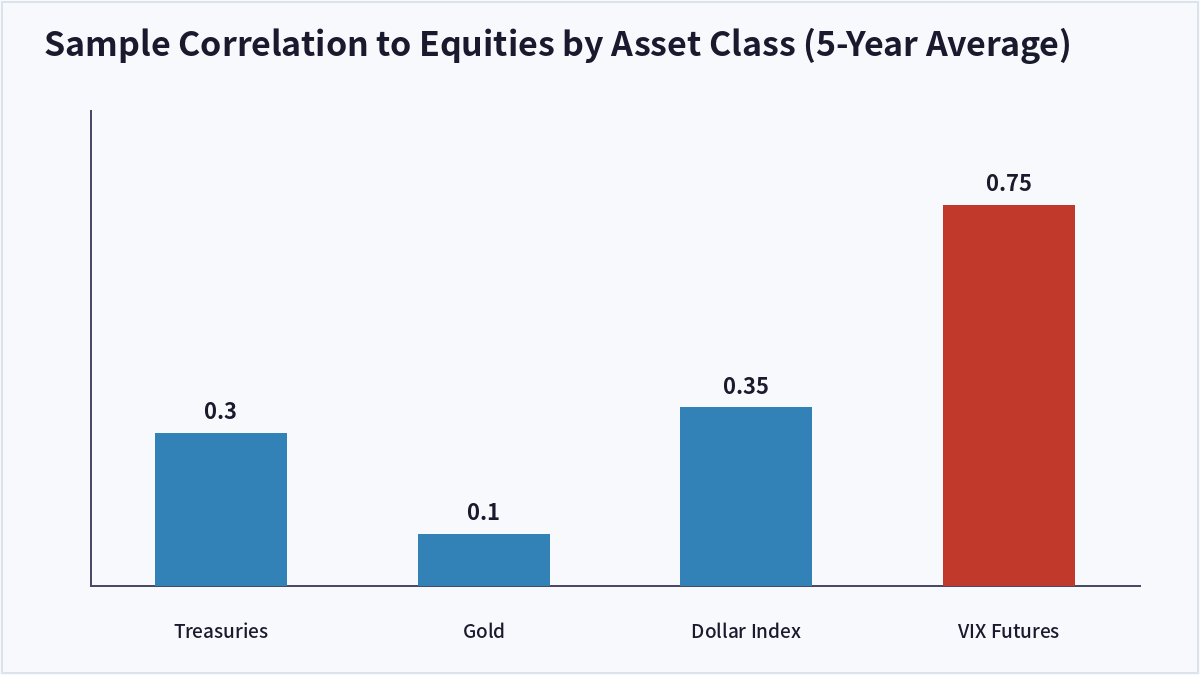
A coefficient near -1 indicates near-perfect opposite movement, while one near +1 indicates near-perfect matching movement. Because a true -1 relationship is rarely found in practice, real-world hedging combines assets with relatively low or negative coefficients to capture diversification benefits.
Commonly Used Hedge Pairings
| Held Asset | Hedge Candidate | Correlation Behavior |
|---|---|---|
| Equities | Government bonds | Negative correlation tends to strengthen during slowdowns |
| Equities | VIX-related products | Strong negative correlation during sharp selloffs |
| Commodity-exporter currency | Commodity prices | Typically positively correlated, unsuitable for an offsetting hedge |
Limits of a Correlation Hedge
Correlation coefficients aren’t fixed — they shift with market regime. Assets that show low correlation in normal times can suddenly converge toward a coefficient of 1 during extreme events like a financial crisis, when nearly all risk assets sell off together, a phenomenon known as correlation breakdown.
Frequently Asked Questions
Does a low correlation always mean a good hedge?
A low coefficient suggests diversification benefit, but it doesn’t guarantee a complete hedge. Correlations can rise sharply during crises, so this possibility should be factored into planning.
How often should correlations be recalculated?
There’s no fixed rule, but recalculating at least quarterly is common practice to check whether the relationship has structurally shifted, with additional reviews after major events like a shift in monetary policy.
How is the hedge sizing determined?
Sizing typically weighs both the strength of the correlation and the volatility of each asset — a stronger correlation or a more volatile hedge asset generally requires a smaller allocation to achieve the same offsetting effect.
How does this differ from a direct options hedge?
An options hedge explicitly protects against a defined amount of downside, while a correlation hedge relies on a statistical tendency rather than a guarantee. It’s generally lower cost but less certain in its protection.
Key Takeaways
A correlation hedge reduces portfolio volatility by adding assets that historically move opposite to existing holdings, but correlation coefficients can shift with market regime and may converge sharply during crises — a limitation worth planning around rather than a guarantee of protection. This article is for informational purposes only and does not constitute investment advice.

QuantPro: AI Finds the Trade Before You Do
From AI-powered chart analysis to real-time market intelligence — everything a serious investor needs, in one platform.
- Automated AI chart analysis with precision trend timing
- Bull Radar: real-time visualization of geopolitical & economic shifts
- Live market-moving news and insights, curated for you
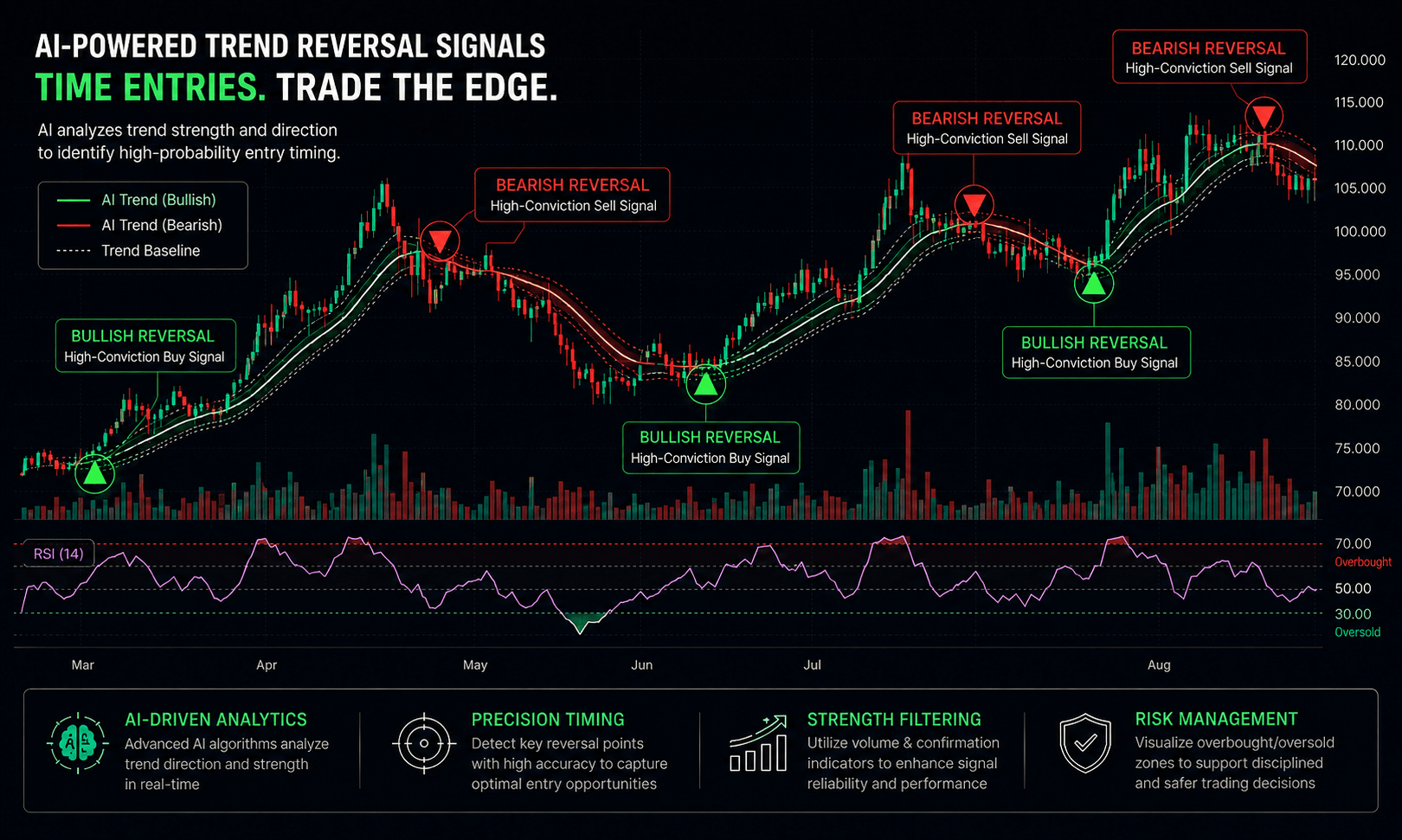
Bull Wave / Bear Wave Forecast Model
Engineered to help you read market direction and momentum faster than the crowd.
- Instantly separate bullish momentum from bearish pressure
- Pinpoint high-probability entry zones with confidence
- Chart signals clear enough for beginners, sharp enough for pros
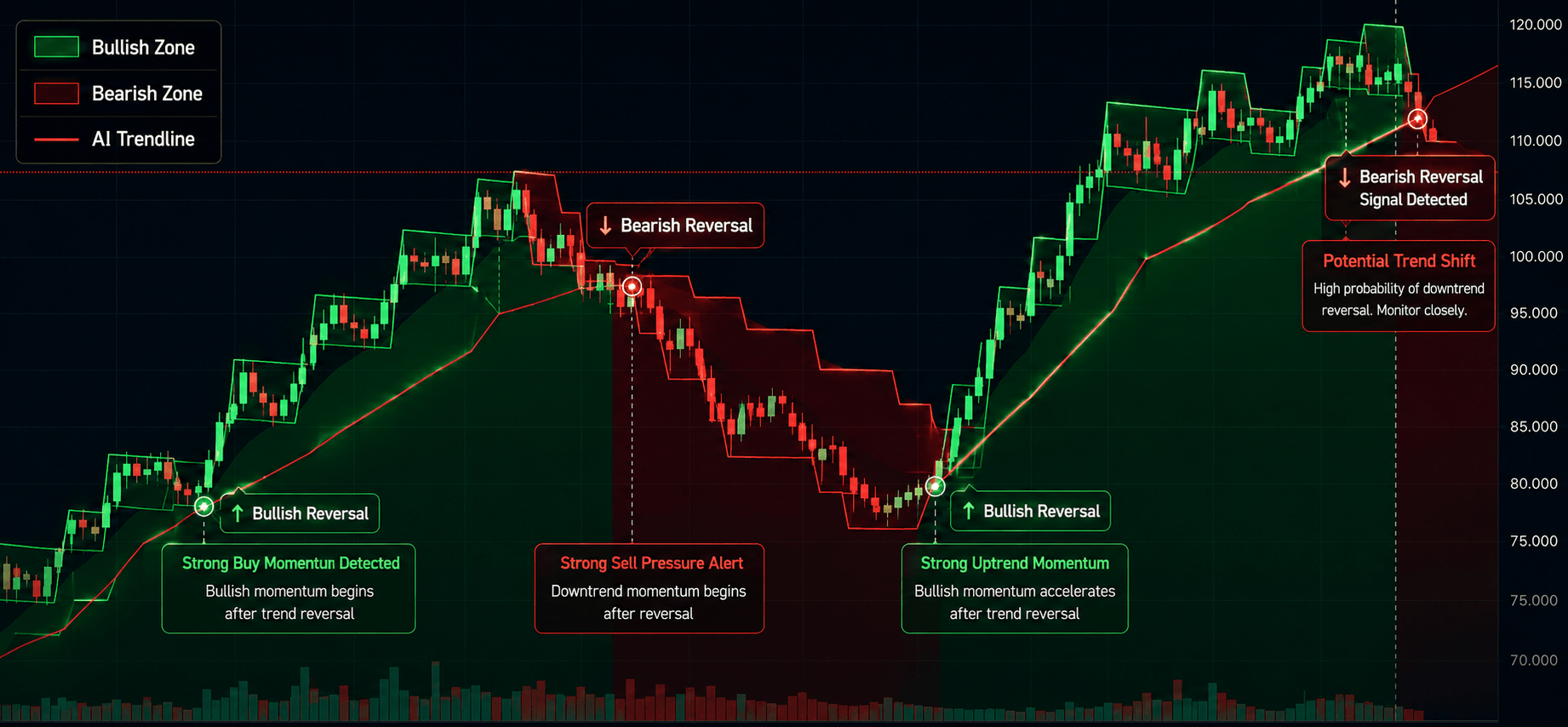
Winning Pattern Detection
Instantly surfaces the high-probability setups that repeat across the charts — a trusted edge for timing your entries and exits.
- Spot momentum building in real time
- Catch trend-reversal points before they break
- Built for active traders who need results, not theory
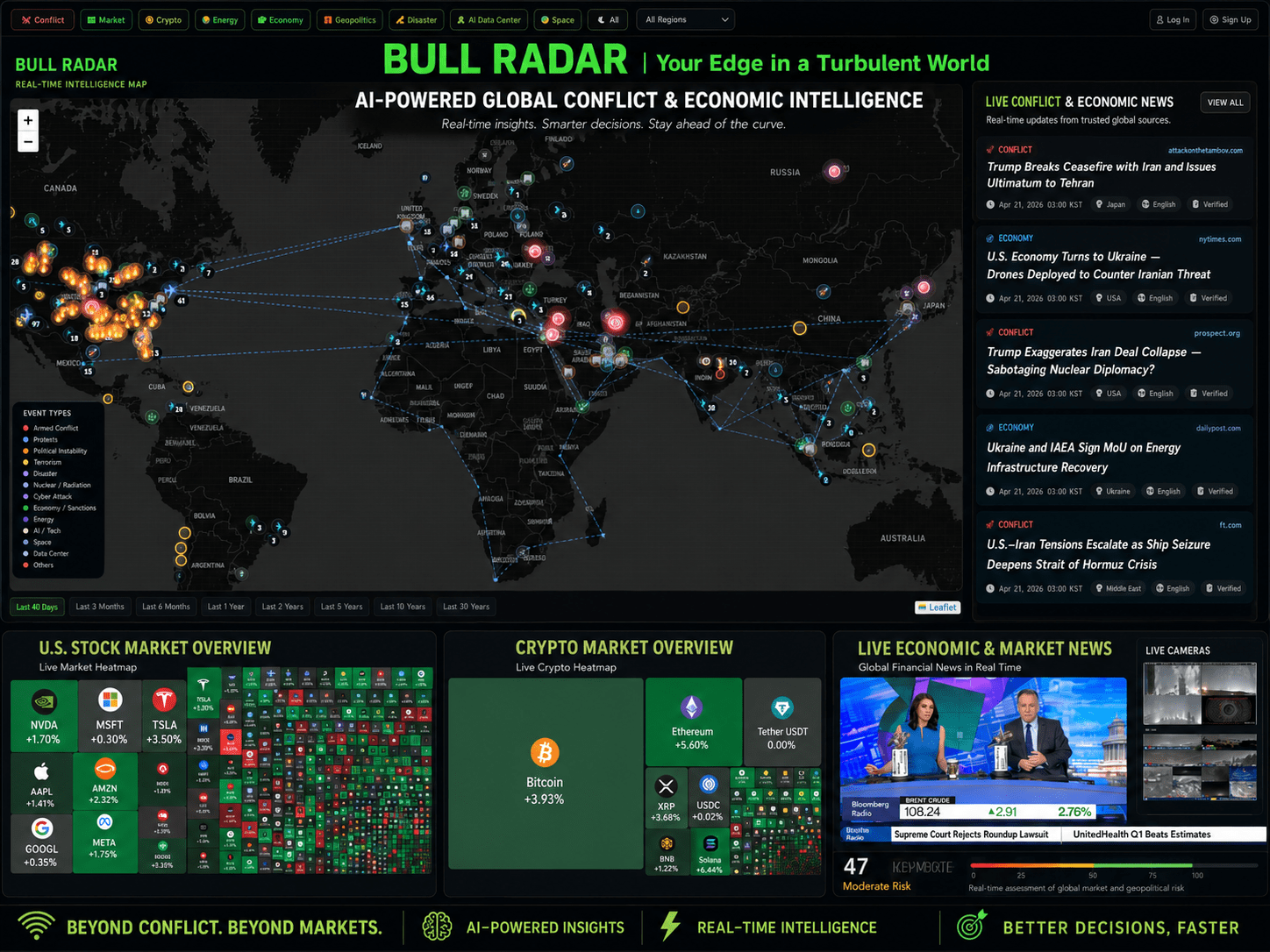
AI Live Economic Dashboard
AI analyzes real-time market data — turning complex, global investment flows into clear insight in seconds.
- Track global stock markets in real time
- See exactly which assets are strong — and which are fading
- Watch how geopolitical events move the markets
About the Author