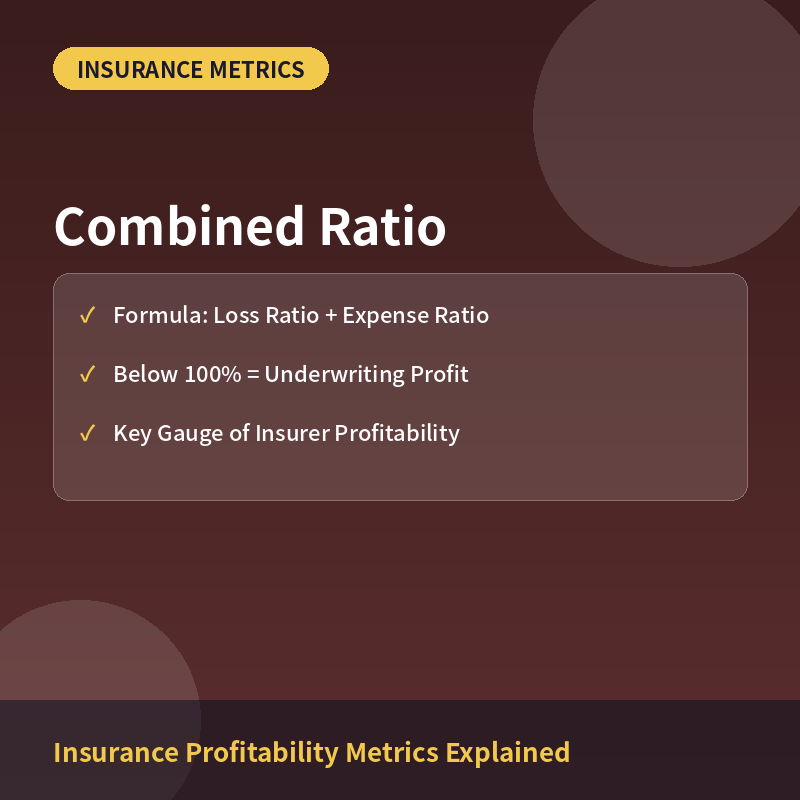
Definition
The combined ratio is an insurance industry metric that measures whether an insurer’s core underwriting business — collecting premiums and paying claims and expenses — is profitable, before accounting for investment income earned on premiums held as reserves. It is one of the most widely watched profitability gauges for property and casualty (P&C) insurers.
How It’s Calculated
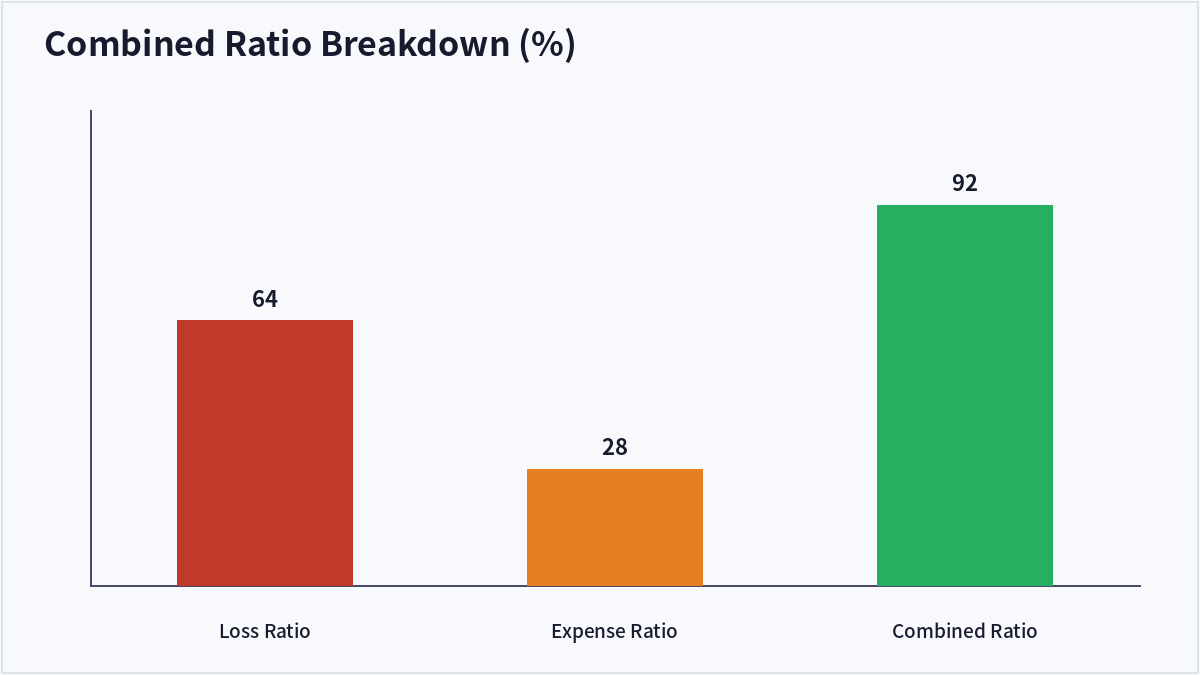
The formula is: Combined Ratio = Loss Ratio + Expense Ratio, where Loss Ratio = Incurred Losses / Earned Premiums and Expense Ratio = Underwriting Expenses / Earned Premiums. Suppose an insurer earns $50 million in premiums during a year, pays out $32 million in claims, and incurs $14 million in underwriting expenses (commissions, administration, and overhead). Its loss ratio is $32M / $50M = 64%, its expense ratio is $14M / $50M = 28%, and its combined ratio is 64% + 28% = 92%.
Why It Matters
A combined ratio below 100% means an insurer’s premiums fully covered its claims and expenses, generating an underwriting profit on top of whatever it earns from investing its reserves. A combined ratio above 100% means claims and expenses exceeded premium income, so the insurer is running an underwriting loss — it can still be overall profitable if investment income on its reserve float is large enough to offset the shortfall, but a combined ratio persistently well above 100% is a warning sign that pricing or claims management needs to improve.
Comparison: Reading Combined Ratio Levels
| Combined Ratio | Interpretation | Example |
|---|---|---|
| Below 100% | Underwriting profit | 92% |
| Exactly 100% | Break-even underwriting | 100% |
| Above 100% | Underwriting loss (needs investment income to offset) | 108% |
Frequently Asked Questions
What is considered a good combined ratio?
Most insurers and analysts consider a combined ratio in the low-to-mid 90s to be strong, since it leaves a comfortable underwriting profit margin. Ratios in the high 90s to around 100% are considered acceptable if investment income supplements returns, while ratios well above 100% for multiple consecutive years typically signal underpriced policies or elevated claims costs.
Does a combined ratio above 100% mean the insurer is unprofitable overall?
Not necessarily. Insurers invest the premium float — the cash collected before claims are paid out — and investment income can offset an underwriting loss, allowing the company to remain net profitable even with a combined ratio above 100%. This is more common in a higher interest-rate environment, where insurers earn more on their invested reserves.
How do the loss ratio and expense ratio differ?
The loss ratio captures how much of each premium dollar goes toward paying policyholder claims, while the expense ratio captures how much goes toward running the business — commissions, underwriting costs, and administrative overhead. Together they make up the full cost side of the combined ratio.
Which types of insurers typically have the lowest combined ratios?
Lines of business with more predictable, lower-severity claims — such as certain specialty and commercial lines with disciplined underwriting — tend to post lower, more stable combined ratios. Lines exposed to catastrophic or highly variable losses, such as property insurance in hurricane-prone regions, tend to see combined ratios swing much more widely from year to year.
Key Takeaways
The combined ratio adds an insurer’s loss ratio and expense ratio to show whether its core underwriting business is profitable on its own, independent of investment income. A ratio below 100% signals an underwriting profit, while a ratio above 100% signals an underwriting loss that must be offset by investment returns to keep the company profitable overall, which is why analysts track the combined ratio closely alongside investment performance. This article is for informational purposes only and does not constitute investment advice.

QuantPro: AI Finds the Trade Before You Do
From AI-powered chart analysis to real-time market intelligence — everything a serious investor needs, in one platform.
- Automated AI chart analysis with precision trend timing
- Bull Radar: real-time visualization of geopolitical & economic shifts
- Live market-moving news and insights, curated for you
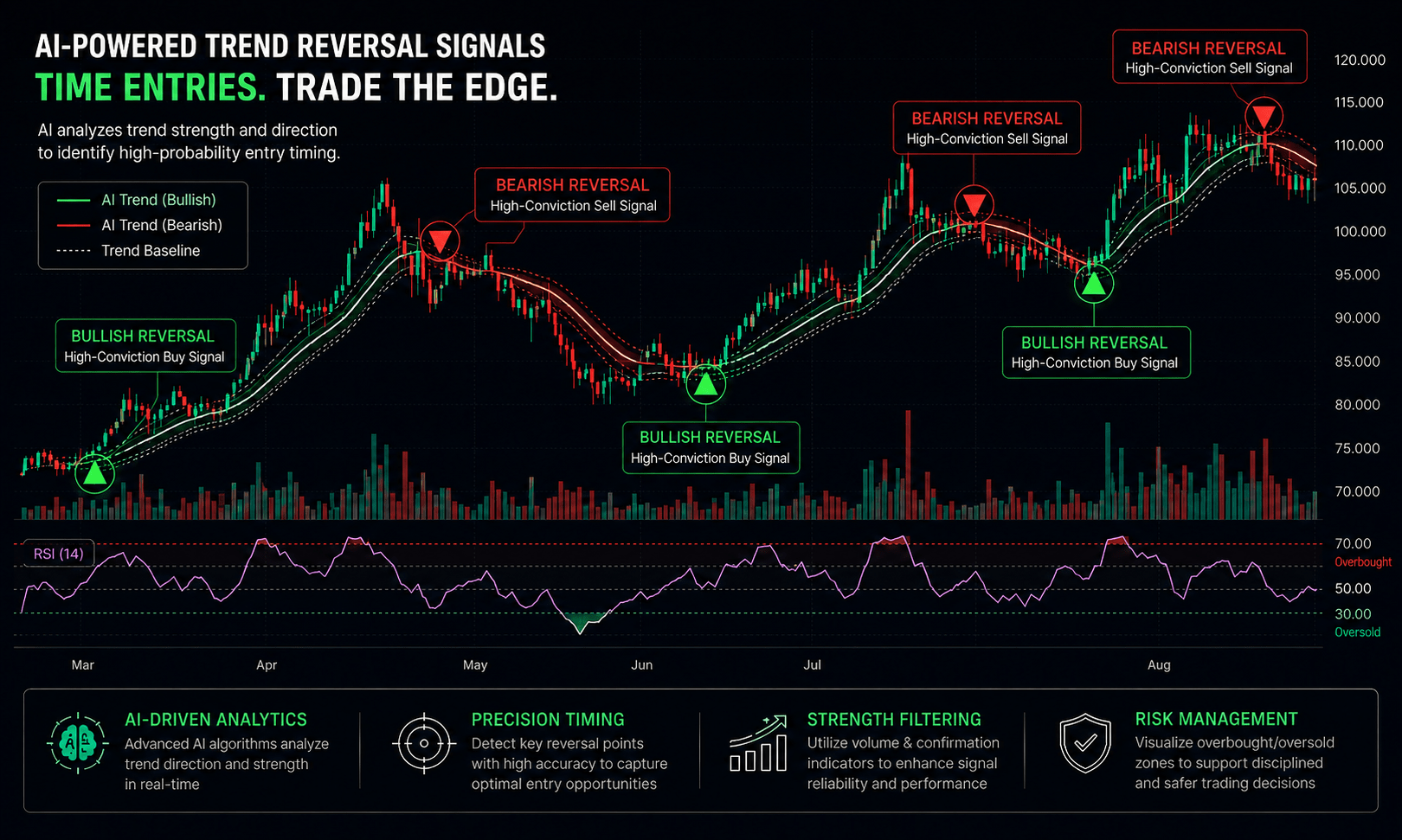
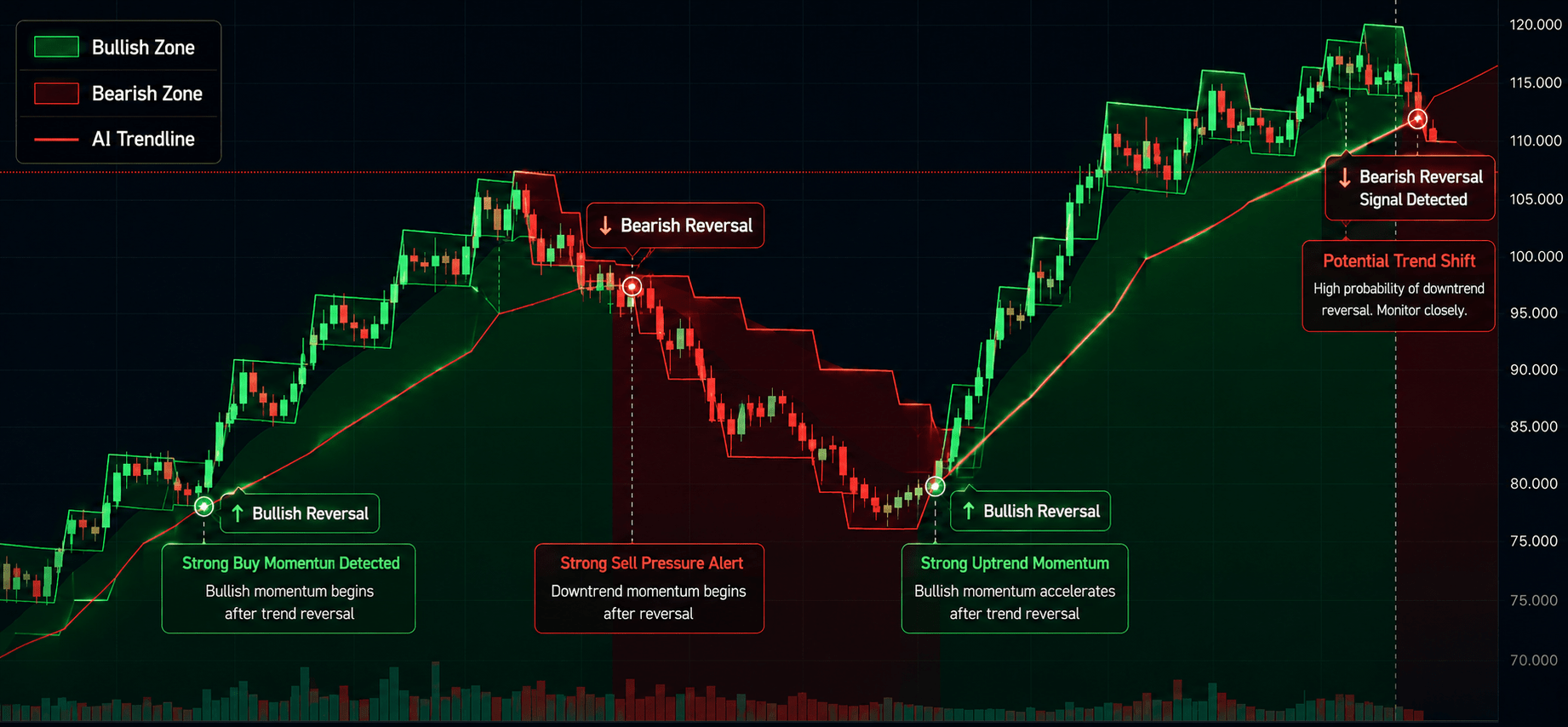
Bull Wave / Bear Wave Forecast Model
Engineered to help you read market direction and momentum faster than the crowd.
- Instantly separate bullish momentum from bearish pressure
- Pinpoint high-probability entry zones with confidence
- Chart signals clear enough for beginners, sharp enough for pros
Winning Pattern Detection
Instantly surfaces the high-probability setups that repeat across the charts — a trusted edge for timing your entries and exits.
- Spot momentum building in real time
- Catch trend-reversal points before they break
- Built for active traders who need results, not theory

AI Live Economic Dashboard
AI analyzes real-time market data — turning complex, global investment flows into clear insight in seconds.
- Track global stock markets in real time
- See exactly which assets are strong — and which are fading
- Watch how geopolitical events move the markets
About the Author