What Are Convertible Bonds
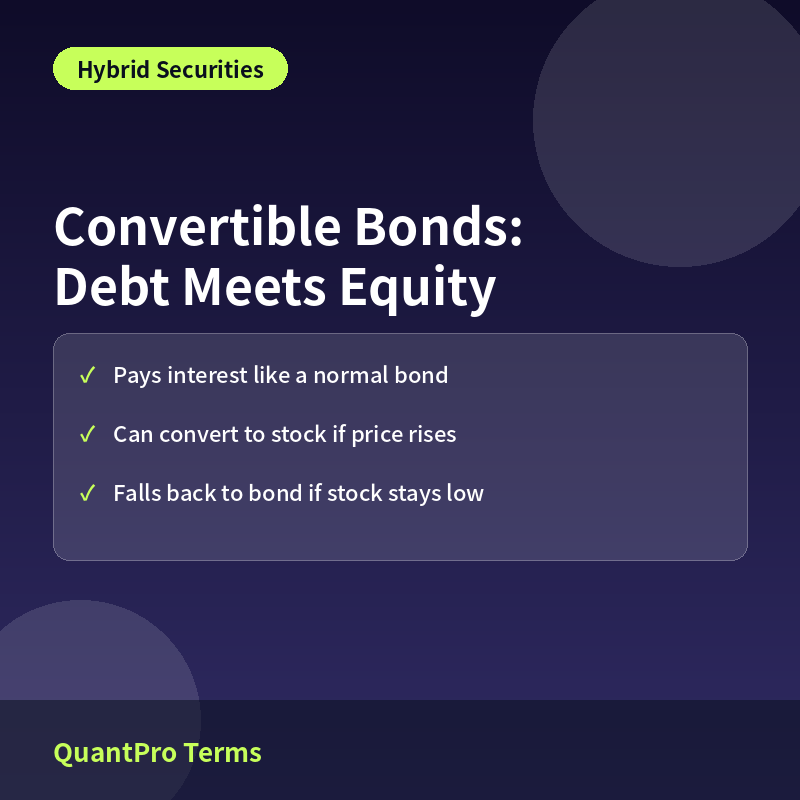
A convertible bond pays regular interest like a standard bond, but gives the holder the option to convert it into a predetermined number of the issuing company’s shares at a set conversion price, if and when they choose. It combines the relative safety of fixed income with the upside potential of equity, which is why it’s often described as a hybrid security.
If the stock price stays below the conversion price, investors can simply hold the bond to maturity and receive their principal and interest like an ordinary bond. If the stock rises well above the conversion price, converting to equity can capture substantial additional upside — offering limited downside with open-ended upside potential.
How Returns Change With the Stock Price
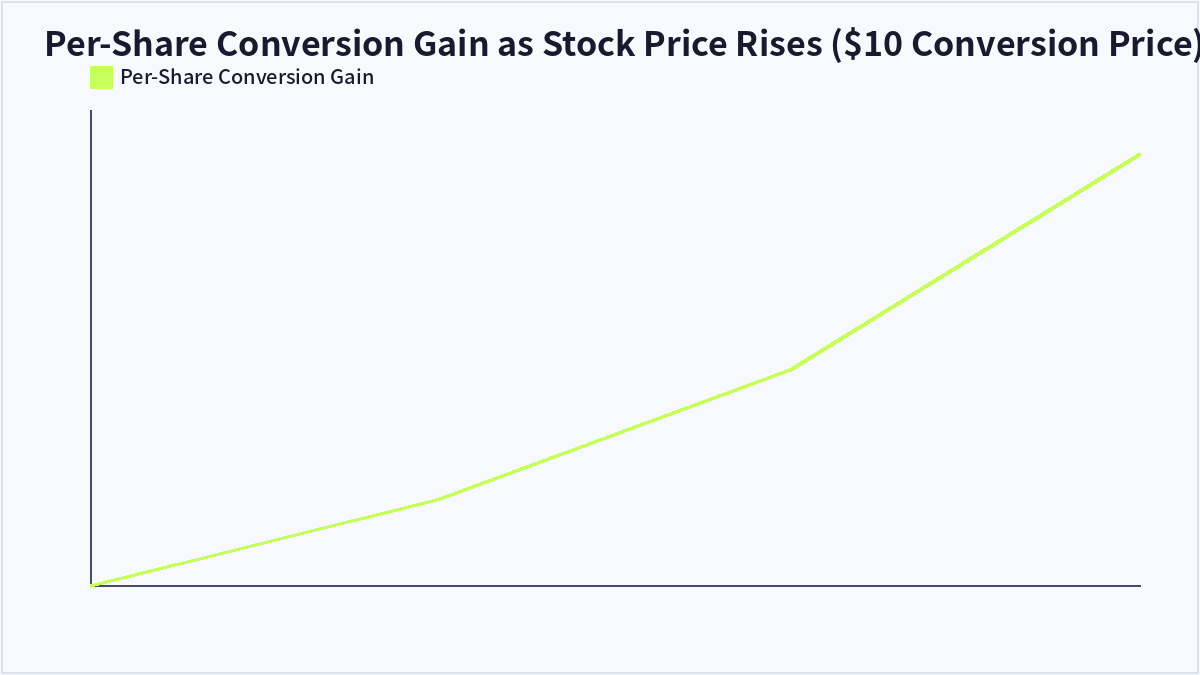
Consider a convertible bond with a $10 conversion price. If the stock trades at $8, conversion offers no benefit, so holding as a bond makes more sense. But as the stock rises to $12, $15, and $20, the per-share gain from converting grows to $2, $5, and $10 respectively.
As a result, a convertible bond’s market price becomes increasingly influenced by the value of the conversion option — rather than pure bond mechanics — as the stock price approaches and then exceeds the conversion price.
Key Considerations for Investors
For issuing companies, convertible bonds typically allow borrowing at a lower interest rate than a standard corporate bond, since investors accept a lower coupon in exchange for the conversion option’s built-in value. If a large volume of convertibles is converted into stock, it increases the total share count and dilutes existing shareholders’ ownership — a factor worth watching for equity holders.
Some convertibles include a ‘reset’ or repricing clause that lowers the conversion price if the stock falls, which can significantly change the bond’s risk-reward profile, so reviewing these terms carefully before investing is important.
| Stock Price | Conversion Price | Gain per Share if Converted | Better Choice |
|---|---|---|---|
| $8 | $10 | -$2 | Hold as bond to maturity |
| $12 | $10 | +$2 | Convert to stock |
| $15 | $10 | +$5 | Convert to stock |
| $20 | $10 | +$10 | Convert to stock |
Frequently Asked Questions
Am I protected from loss if I hold to maturity without converting?
You’ll receive the agreed-upon principal and interest like a standard bond, but you still face credit risk if the issuing company defaults, so it’s not entirely risk-free.
What’s the difference between convertible bonds and warrants?
A convertible bond’s own principal transforms into shares upon conversion, while a warrant is a separate right to buy new shares that exists alongside a bond that continues unaffected.
Why do reset clauses draw criticism?
When a reset clause lowers the conversion price as the stock falls, it benefits convertible bondholders but can result in issuing more shares at lower prices, further diluting existing shareholders — a common point of contention for minority investors.
How does a convertible bond issuance affect the stock price?
Announcements can pressure the stock short-term due to dilution concerns, but if the raised capital funds meaningful growth, the effect can turn positive over the longer term — so the intended use of proceeds matters.
Key Takeaways
Convertible bonds blend the stability of fixed income with the upside potential of equity, with the stock price relative to the conversion price determining whether the bond or equity characteristics dominate. Reviewing the conversion price and any reset provisions carefully is essential before investing. This article is for informational purposes only and does not constitute investment advice.

QuantPro: AI Finds the Trade Before You Do
From AI-powered chart analysis to real-time market intelligence — everything a serious investor needs, in one platform.
- Automated AI chart analysis with precision trend timing
- Bull Radar: real-time visualization of geopolitical & economic shifts
- Live market-moving news and insights, curated for you
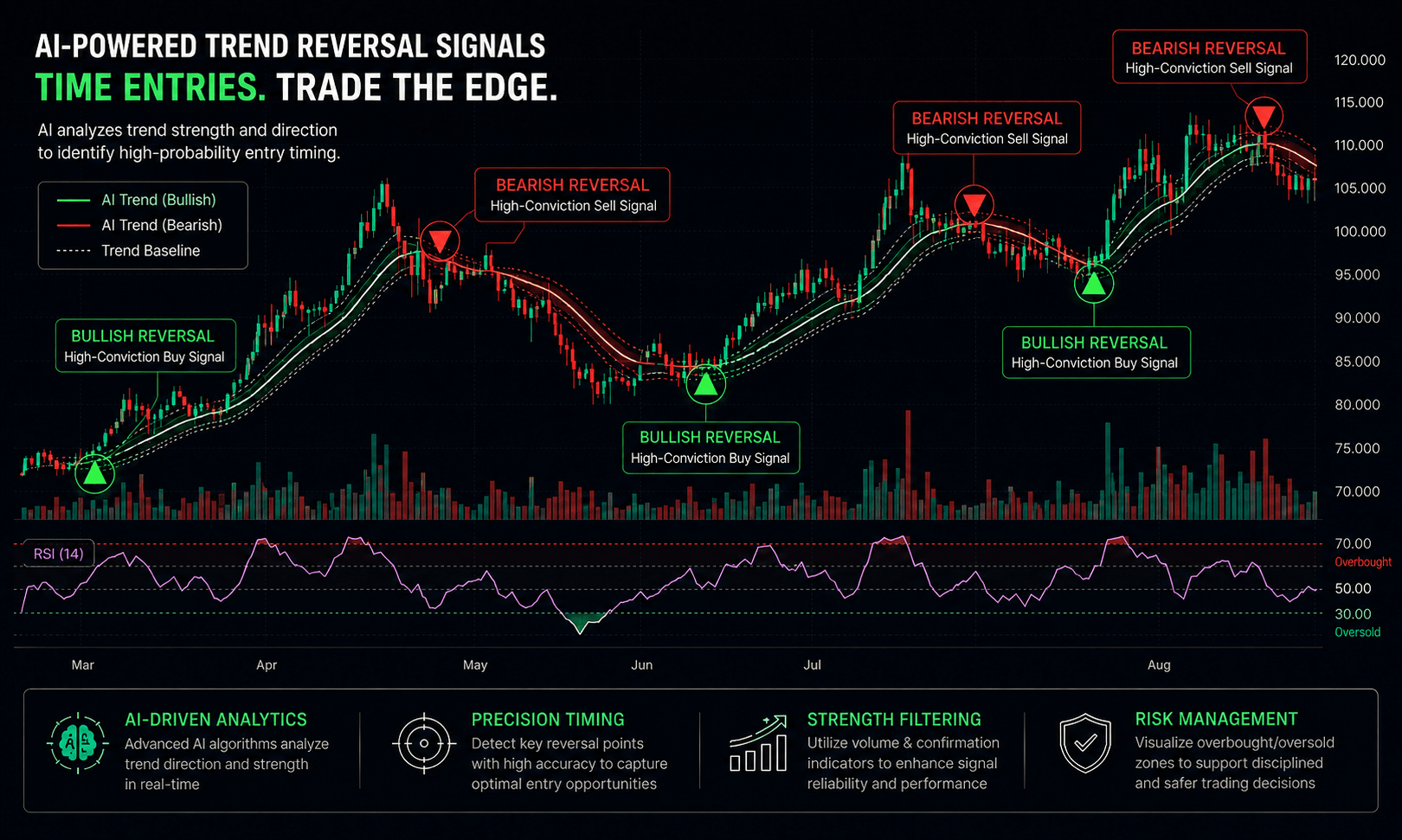
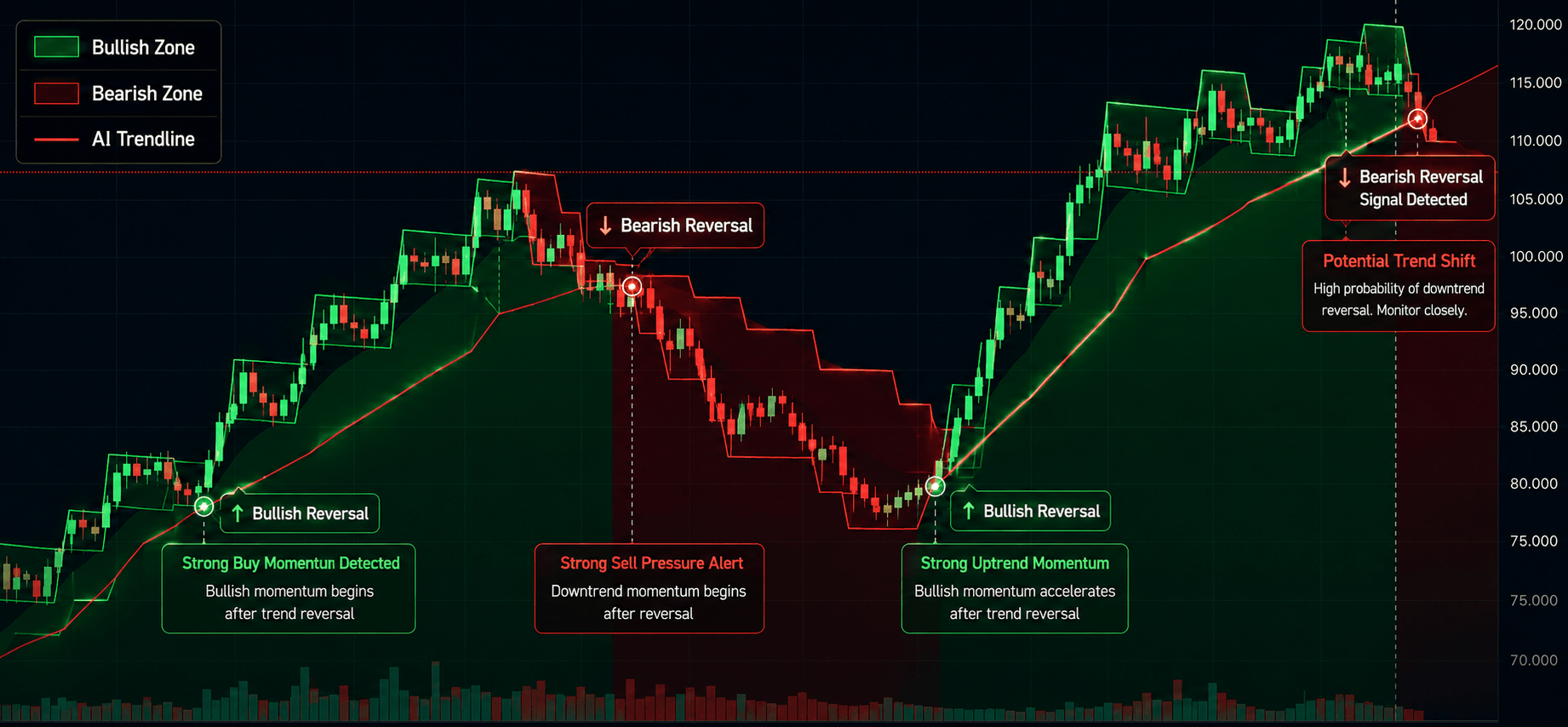
Bull Wave / Bear Wave Forecast Model
Engineered to help you read market direction and momentum faster than the crowd.
- Instantly separate bullish momentum from bearish pressure
- Pinpoint high-probability entry zones with confidence
- Chart signals clear enough for beginners, sharp enough for pros
Winning Pattern Detection
Instantly surfaces the high-probability setups that repeat across the charts — a trusted edge for timing your entries and exits.
- Spot momentum building in real time
- Catch trend-reversal points before they break
- Built for active traders who need results, not theory

AI Live Economic Dashboard
AI analyzes real-time market data — turning complex, global investment flows into clear insight in seconds.
- Track global stock markets in real time
- See exactly which assets are strong — and which are fading
- Watch how geopolitical events move the markets
About the Author