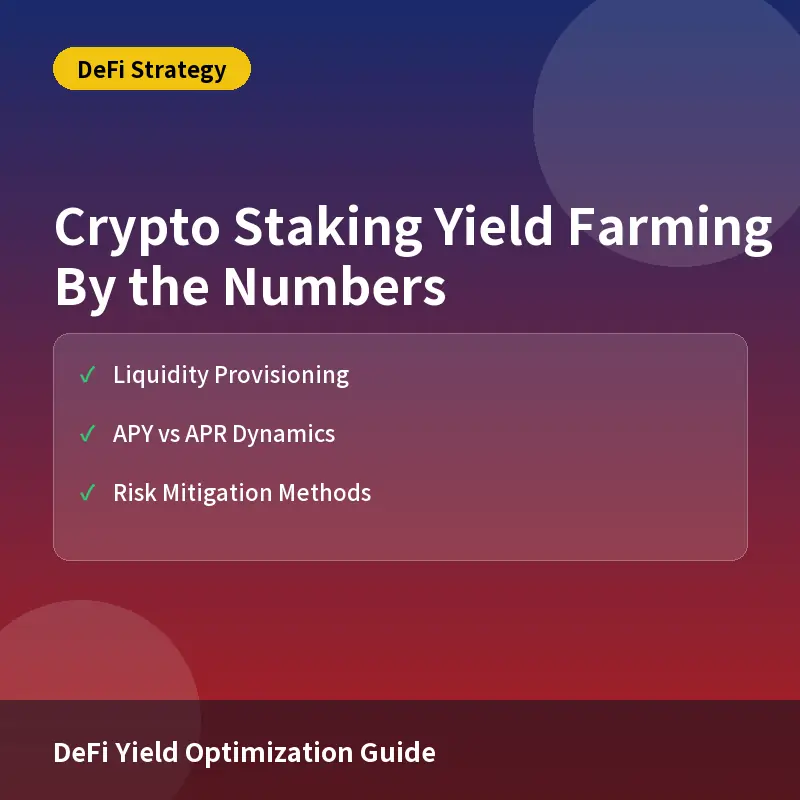
Crypto Staking Yield Farming is a strategy where users deposit assets into DeFi protocols to provide liquidity or secure the network in exchange for rewards. While it offers high yield potential, it requires careful management of impermanent loss, smart contract vulnerabilities, and platform-specific liquidity risks.
What Is Crypto Staking Yield Farming?
Defining the DeFi Mechanism
Crypto Staking Yield Farming is the process of locking up digital assets within a decentralized finance protocol to earn rewards, typically in the form of platform tokens or transaction fees. It bridges two concepts: staking for network consensus and yield farming for liquidity provision.
Core Objectives
The primary goal is to generate passive income from idle crypto holdings. By contributing to liquidity pools, users facilitate decentralized trading, while staking participants contribute to the network security of Proof-of-Stake blockchains.
How Yield Farming Works and Calculations
Calculating Rewards
Yield is typically expressed through Annual Percentage Yield (APY) or Annual Percentage Rate (APR). While APR reflects the raw annual return, APY accounts for the effects of compounding frequency. You can often check the current volatility and historical performance of these pools directly on Bull Radar to assess if the yield is sustainable.
Key Operational Metrics
- Total Value Locked (TVL): The aggregate value of assets deposited in the protocol. – Impermanent Loss: The difference in value between holding assets vs providing them to a pool if prices diverge. – Tokenomics: The issuance schedule of the underlying protocol token.

QuantPro: AI Finds the Trade Before You Do
From AI-powered chart analysis to real-time market intelligence — everything a serious investor needs, in one platform.
- Automated AI chart analysis with precision trend timing
- Bull Radar: real-time visualization of geopolitical & economic shifts
- Live market-moving news and insights, curated for you
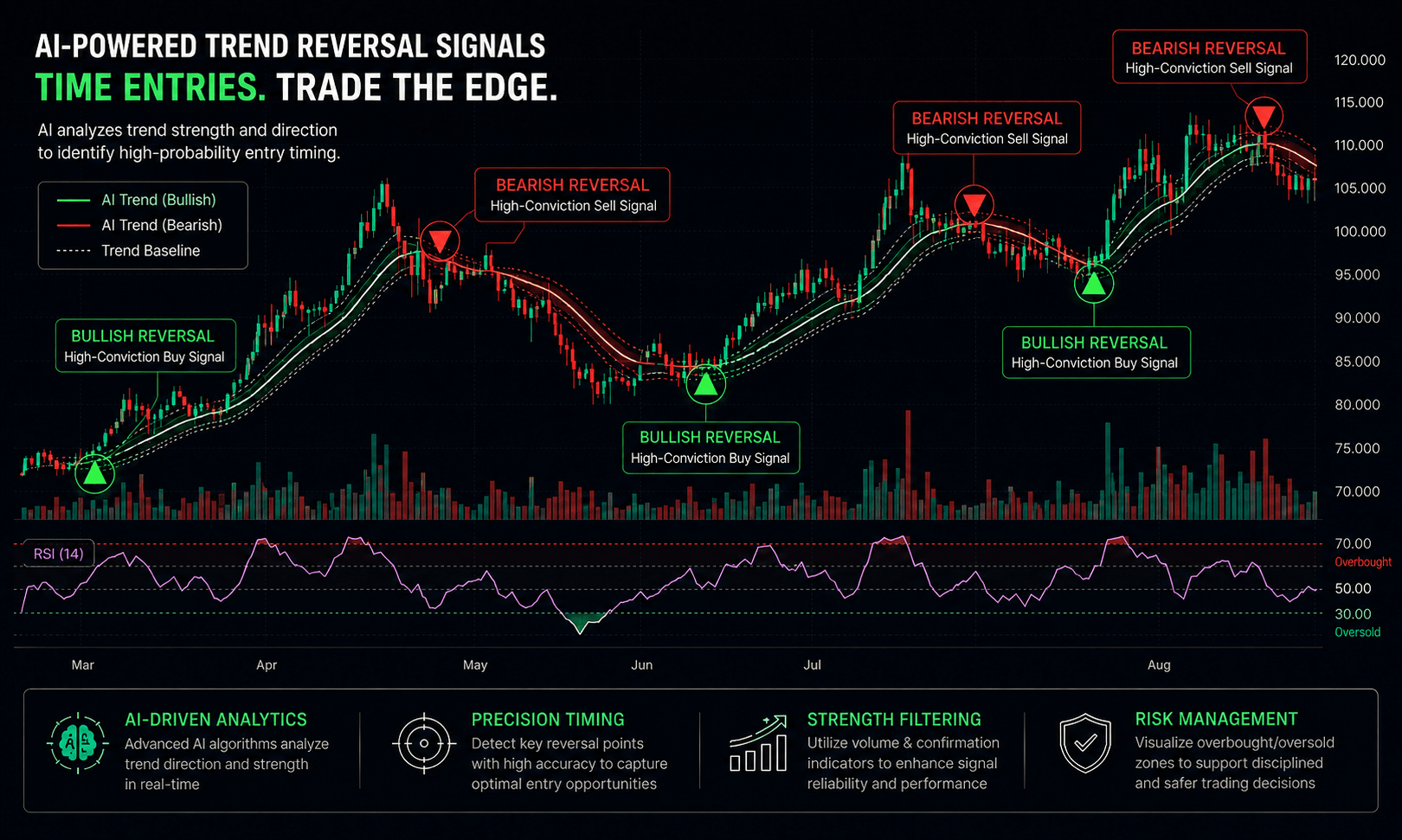
Bull Wave / Bear Wave Forecast Model
Engineered to help you read market direction and momentum faster than the crowd.
- Instantly separate bullish momentum from bearish pressure
- Pinpoint high-probability entry zones with confidence
- Chart signals clear enough for beginners, sharp enough for pros
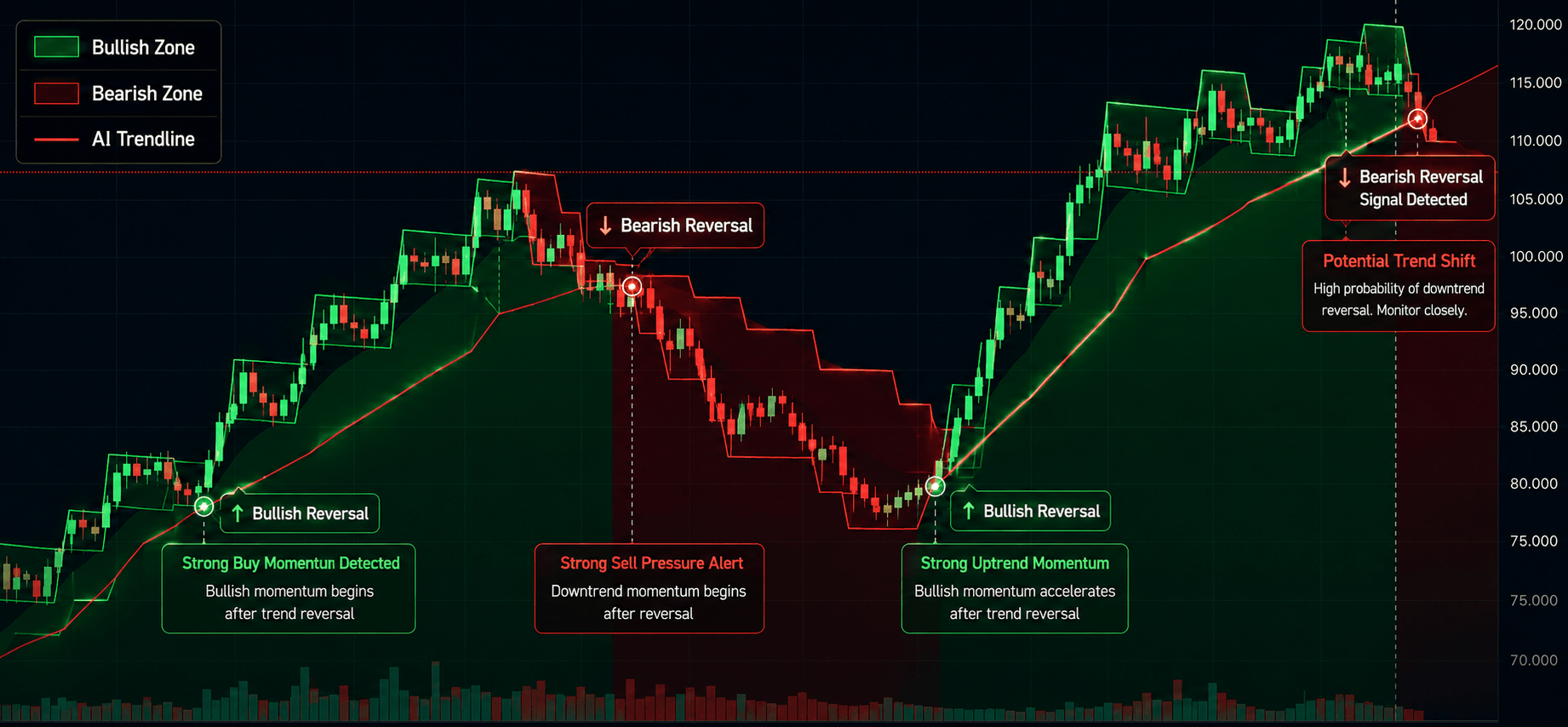
Winning Pattern Detection
Instantly surfaces the high-probability setups that repeat across the charts — a trusted edge for timing your entries and exits.
- Spot momentum building in real time
- Catch trend-reversal points before they break
- Built for active traders who need results, not theory

AI Live Economic Dashboard
AI analyzes real-time market data — turning complex, global investment flows into clear insight in seconds.
- Track global stock markets in real time
- See exactly which assets are strong — and which are fading
- Watch how geopolitical events move the markets
Worked Example: Analyzing Yield Generation
Consider a liquidity pool with $1,000,000 in TVL and a daily reward distribution of $500 worth of protocol tokens. The calculation follows these steps:
- Annual Reward: $500 * 365 days = $182,500.
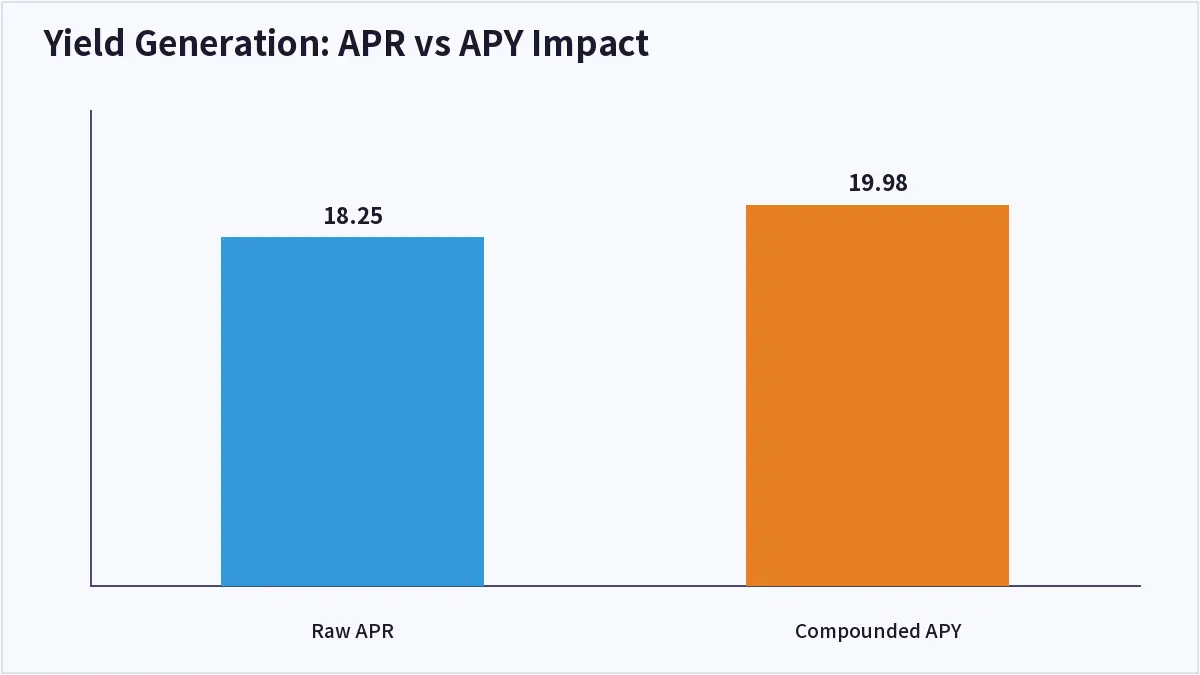
- APR Calculation: ($182,500 / $1,000,000) * 100 = 18.25%.
- Compounding: If rewards are reinvested daily, the APY becomes approximately 19.98%. This illustrates why understanding the difference between simple interest and compounding is vital for long-term yield planning.
Common Mistakes and Misconceptions
Chasing High APY Blindly
Many investors focus solely on high APY without accounting for the token’s inflationary nature. If a token’s price drops by 30% while the APY is 20%, the user realizes a net loss despite the yield.
Ignoring Smart Contract Risks
A significant misconception is that staking is risk-free. Every interaction with a smart contract involves the risk of exploitation or code bugs, which can lead to a complete loss of principal regardless of the advertised yield.
| Metric | Staking | Yield Farming |
|---|---|---|
| Primary Goal | Network Security | Liquidity Provision |
| Risk Profile | Moderate | High |
| Key Risk | Slashing | Impermanent Loss |
Frequently Asked Questions
What is the main difference between staking and yield farming?
Staking is primarily about locking tokens to support blockchain network security in Proof-of-Stake systems. Yield farming is a broader strategy involving liquidity provision to DeFi protocols to earn trading fees and governance tokens.
How does impermanent loss affect my yield?
Impermanent loss occurs when the relative price of the assets in your liquidity pool changes after you deposit them. If the price of your deposited assets diverges significantly, you may end up with less value than if you had simply held the assets in your wallet.
Are there security risks in yield farming?
Yes, yield farming carries smart contract risks, such as potential hacks or code vulnerabilities. It is crucial to use audited protocols and understand that high yields often compensate for these underlying technical risks.
Is yield farming profitable for beginners?
Yield farming requires a firm grasp of DeFi mechanics and risk management. Beginners should start with established, audited platforms and focus on understanding how transaction fees and token price volatility impact net profitability.
Key Takeaways
Crypto staking and yield farming are powerful tools for generating returns on digital assets, but they demand a shift from passive holding to active risk assessment. Success in this field relies on evaluating the sustainability of APY, understanding the technical risks of smart contracts, and accounting for market-driven factors like impermanent loss to ensure long-term portfolio growth. This article is for informational purposes only and does not constitute investment advice.
Last updated: 2026-09-18
About the Author