What a Dark Pool Is
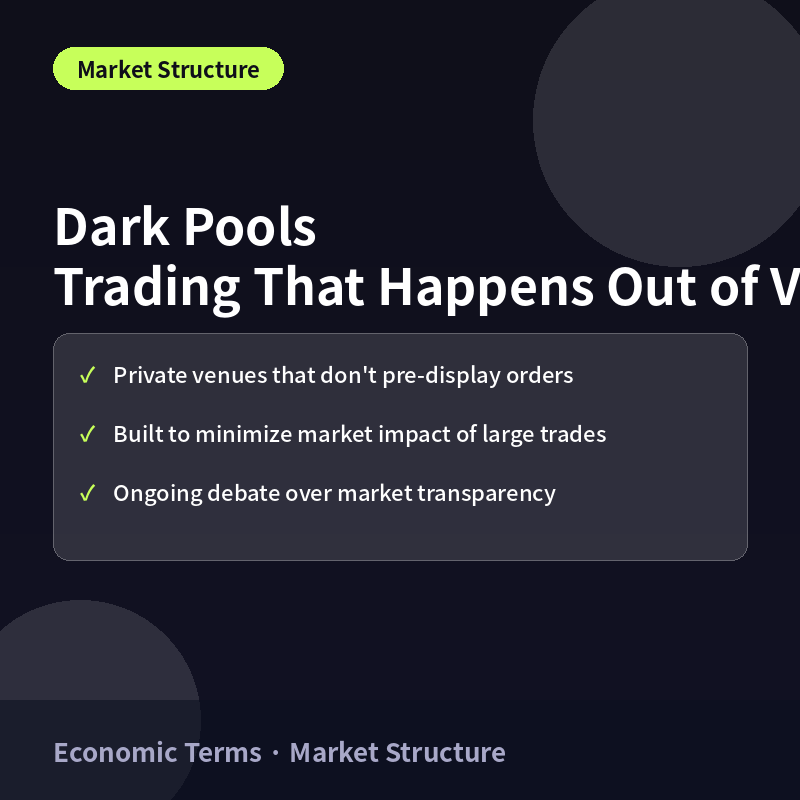
A dark pool is a private trading venue that does not publicly display order information — price or size — before execution. This contrasts with public exchanges (often called ‘lit’ venues), where the full order book is visible in real time; the name refers to the fact that outside observers can’t see the orders stacked up inside.
Why Dark Pools Exist
When a large institution exposes an order for hundreds of thousands of shares on a public exchange, other participants can see it and move prices unfavorably before the order is fully filled — a phenomenon known as information leakage causing market impact. Dark pools were created to match these large orders privately, minimizing both market impact and information leakage.
The Debate Around Dark Pools
| In Favor | Concerns |
|---|---|
| Minimizes market impact of large orders | May weaken price discovery on public exchanges |
| Lowers execution costs for institutions | Raises information asymmetry concerns for retail traders |
| Reduces congestion on public exchanges | Potential for exploiting regulatory gray areas |
What This Means for Retail Investors
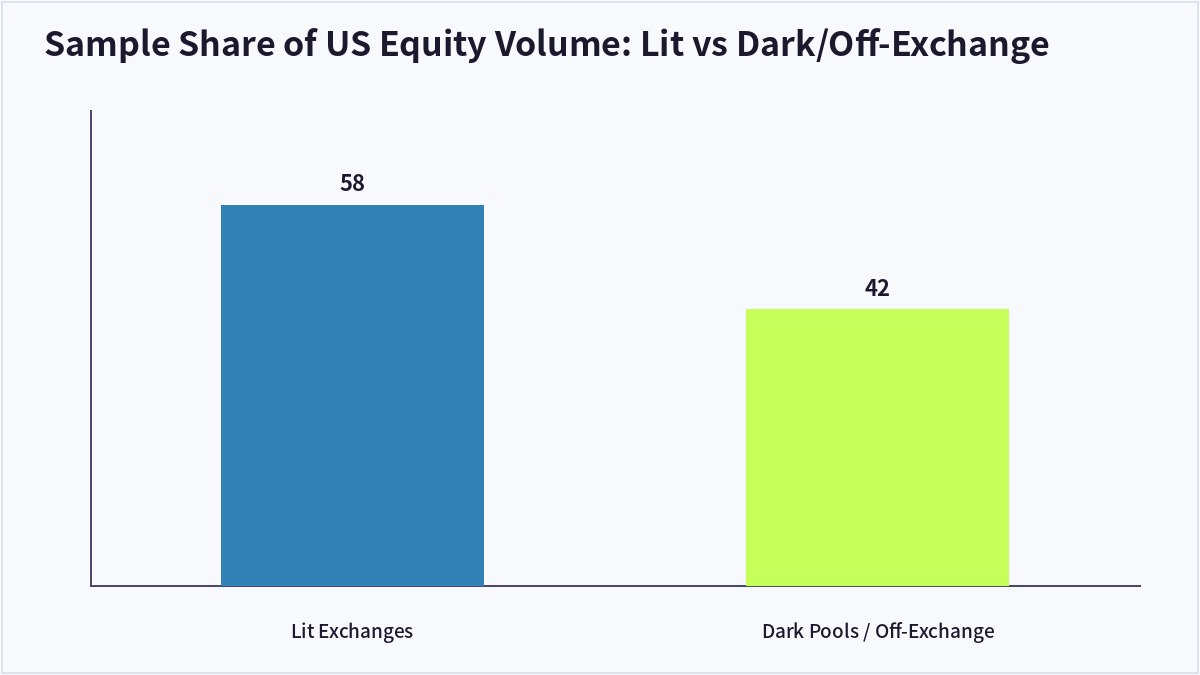
Individual investors generally can’t access dark pools directly, but the fact that a meaningful share of volume executes off-exchange means the visible order book alone doesn’t capture the market’s full supply and demand picture. Some data providers publish aggregated, after-the-fact dark pool volume figures that traders can reference.
Frequently Asked Questions
Are dark pool trades illegal?
No. They operate as regulated alternative trading systems (ATS) approved by securities regulators, and post-trade data is reported to regulatory authorities.
How is price determined inside a dark pool?
Most execute trades using a reference price, such as the midpoint of the best bid and ask on public exchanges, rather than independently discovering new prices.
Can retail investors trade through dark pools?
Direct access is generally unavailable, but retail orders can sometimes be routed through dark pools as part of a broker’s order-routing process, creating indirect exposure.
Is a growing share of dark pool volume a problem for markets?
If too much volume moves off public exchanges, it can weaken the price-discovery function of the visible order book — a concern regulators monitor closely alongside dark pool volume shares and transparency requirements.
Key Takeaways
Dark pools are private trading venues that don’t pre-display order information, designed to let large institutional trades execute without moving the market against them. They lower execution costs for big orders, but the resulting reduction in market transparency remains a genuine point of regulatory debate. This article is for informational purposes only and does not constitute investment advice.

QuantPro: AI Finds the Trade Before You Do
From AI-powered chart analysis to real-time market intelligence — everything a serious investor needs, in one platform.
- Automated AI chart analysis with precision trend timing
- Bull Radar: real-time visualization of geopolitical & economic shifts
- Live market-moving news and insights, curated for you
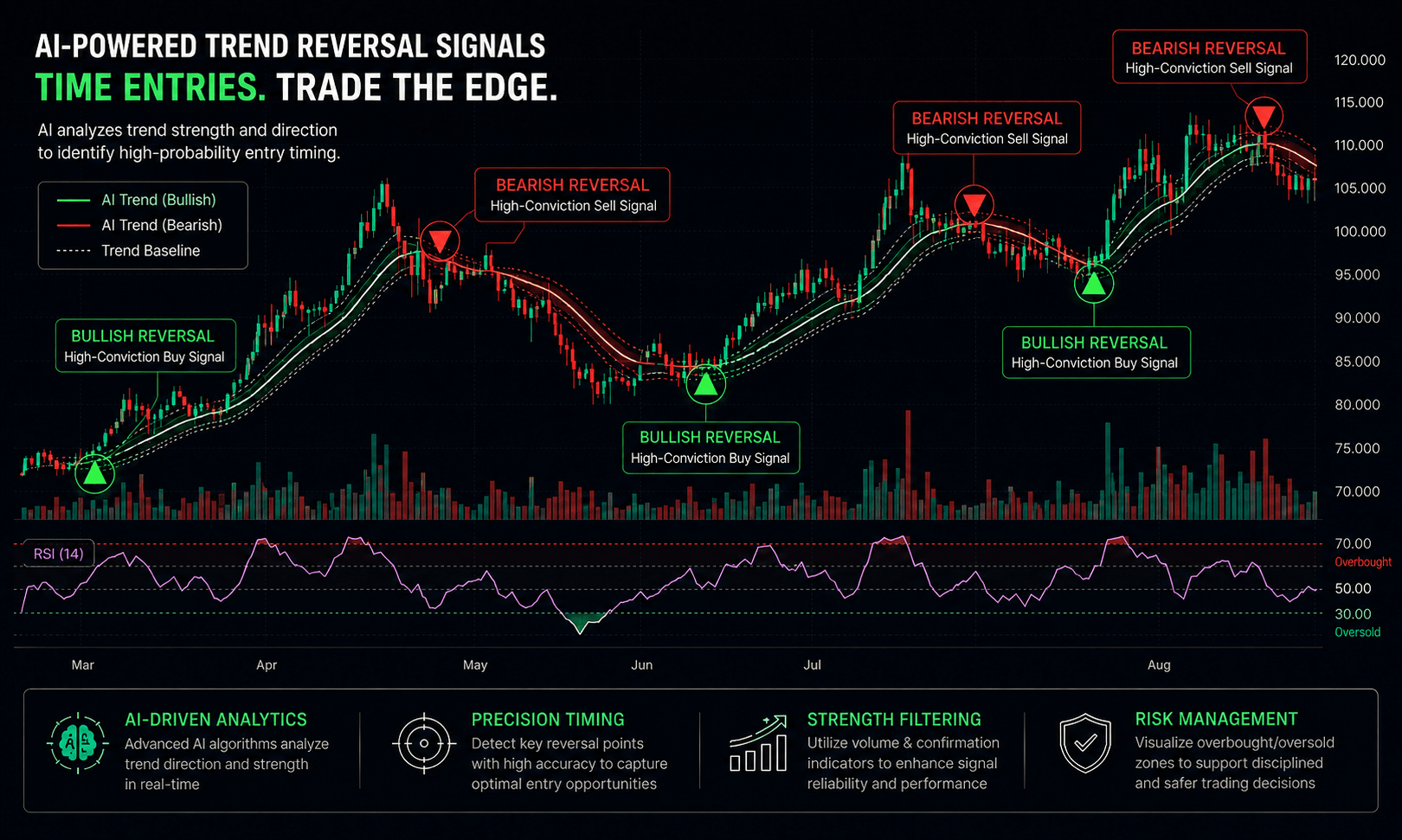
Bull Wave / Bear Wave Forecast Model
Engineered to help you read market direction and momentum faster than the crowd.
- Instantly separate bullish momentum from bearish pressure
- Pinpoint high-probability entry zones with confidence
- Chart signals clear enough for beginners, sharp enough for pros
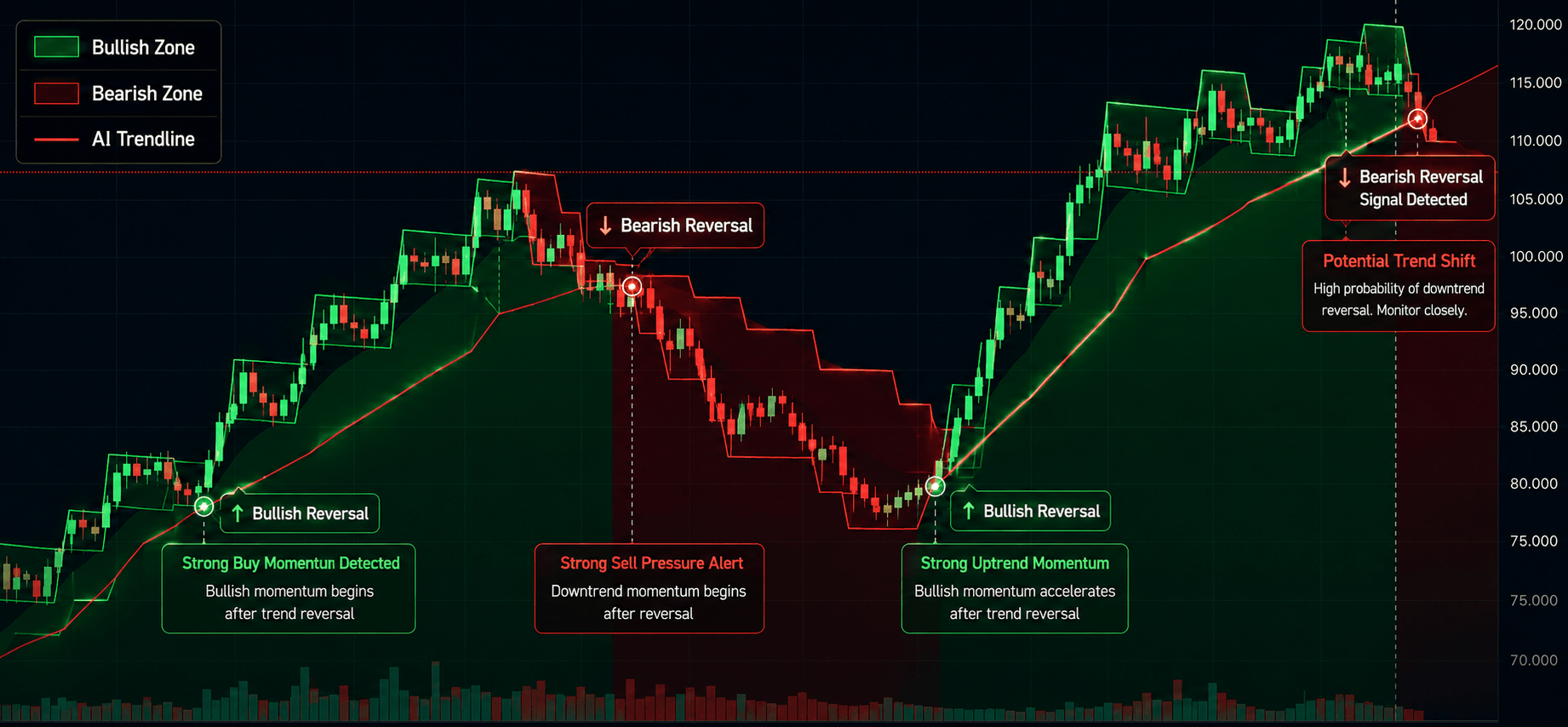
Winning Pattern Detection
Instantly surfaces the high-probability setups that repeat across the charts — a trusted edge for timing your entries and exits.
- Spot momentum building in real time
- Catch trend-reversal points before they break
- Built for active traders who need results, not theory
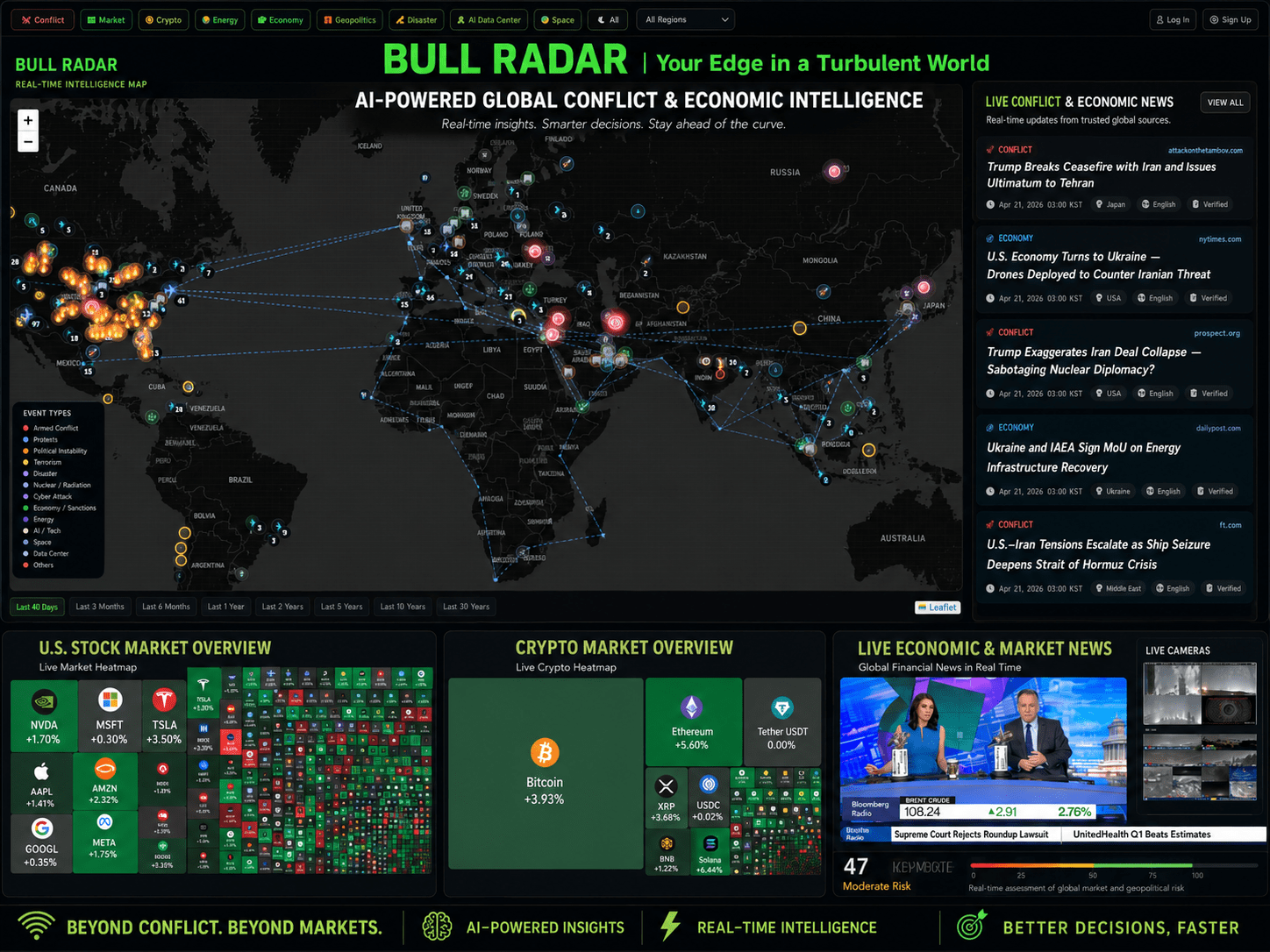
AI Live Economic Dashboard
AI analyzes real-time market data — turning complex, global investment flows into clear insight in seconds.
- Track global stock markets in real time
- See exactly which assets are strong — and which are fading
- Watch how geopolitical events move the markets
About the Author