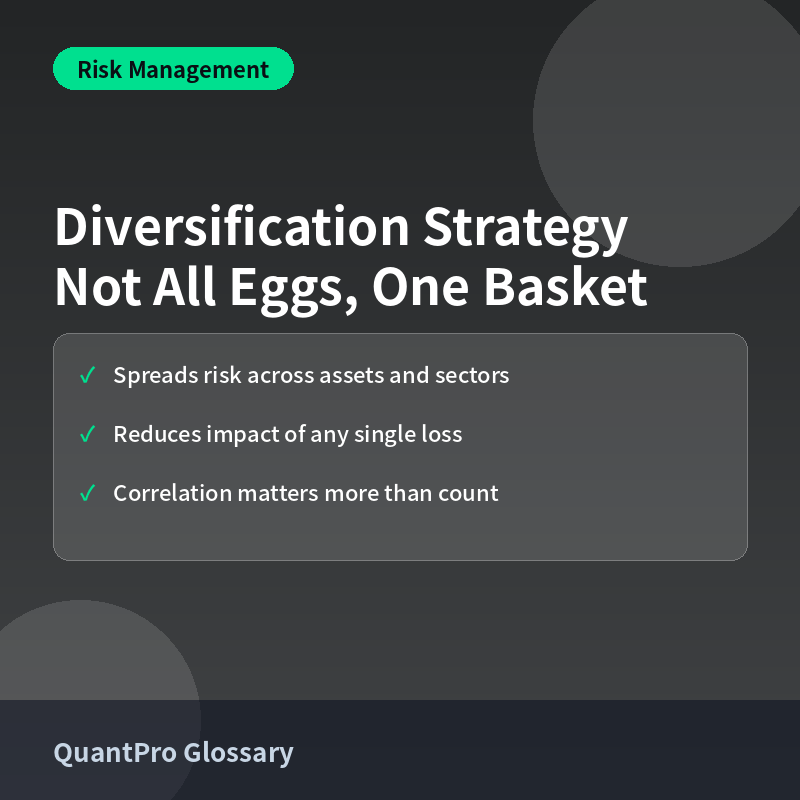
What Is a Diversification Strategy?
Diversification is a risk management strategy that involves spreading investments across a variety of different assets, industries, geographic regions, and asset classes, rather than concentrating capital in a single investment. The core principle is that different investments tend to react differently to the same economic events, so losses in one area can potentially be offset or cushioned by stability or gains in another.
Why Diversification Reduces Risk
When a portfolio is concentrated in a single stock or sector, its overall value is highly dependent on the fortunes of that one investment, exposing the investor to significant company-specific or sector-specific risk. By spreading capital across many different, less correlated investments, the poor performance of any single holding has a proportionally smaller impact on the overall portfolio, generally resulting in a smoother, less volatile return profile over time.
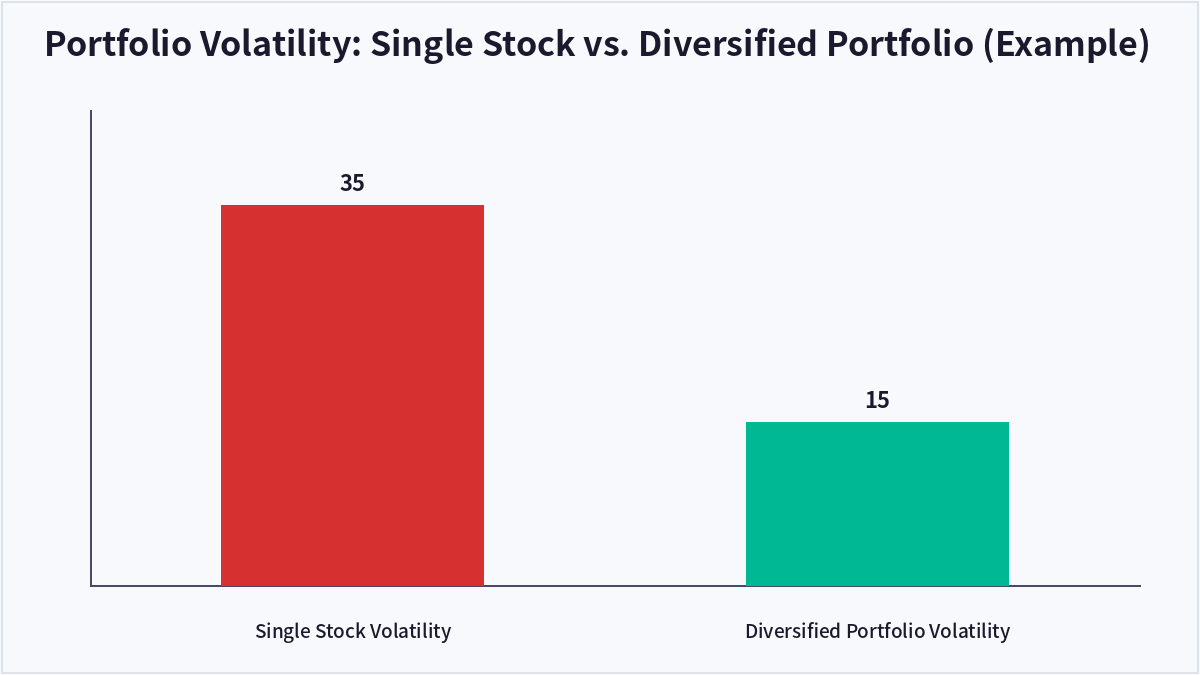
Beyond Just Owning Many Stocks
Correlation Matters More Than Sheer Number
Simply owning many different stocks isn’t enough if they’re all highly correlated — for example, holding twenty different technology stocks still leaves a portfolio heavily exposed to sector-specific downturns. True diversification requires combining assets that behave differently under various economic conditions, such as combining stocks with bonds, or domestic assets with international ones.
Diversification Doesn’t Eliminate All Risk
It’s important to understand that diversification reduces company-specific and sector-specific risk, but it cannot eliminate broader systematic (market-wide) risk — during a severe market-wide downturn, most asset classes can decline together, though typically to varying degrees.
| Diversification Level | Example | Risk Reduced |
|---|---|---|
| Within an Asset Class | Multiple stocks across sectors | Company-specific risk |
| Across Asset Classes | Stocks + bonds + real estate | Asset class-specific risk |
| Across Geographies | Domestic + international markets | Country-specific risk |
Frequently Asked Questions
How many stocks do I need to be well-diversified?
Research suggests that meaningful reductions in company-specific risk can often be achieved with a relatively modest number of stocks (commonly cited estimates range from 20 to 30) across different sectors, though the exact number depends on the correlation between those holdings.
Can a diversified portfolio still lose money?
Yes — diversification reduces but does not eliminate risk, and a well-diversified portfolio can still decline in value, particularly during broad market downturns that affect most asset classes simultaneously.
Is a single diversified ETF enough diversification?
A broad-market index ETF can provide substantial diversification across hundreds of companies and sectors in a single holding, though some investors choose to add further diversification through international funds or other asset classes like bonds.
Does diversification reduce potential returns?
Diversification limits the potential for extreme outperformance that might come from concentrating heavily in a single winning stock, but it’s generally understood as a trade-off that reduces volatility and downside risk in exchange for potentially smoother returns.
Key Takeaways
Diversification spreads investment risk across different assets, sectors, and geographies to reduce the impact of any single loss on an overall portfolio. True diversification depends on combining assets with low correlation to each other, not simply owning a large number of similar holdings. This article is for informational purposes only and does not constitute investment advice.

QuantPro: AI Finds the Trade Before You Do
From AI-powered chart analysis to real-time market intelligence — everything a serious investor needs, in one platform.
- Automated AI chart analysis with precision trend timing
- Bull Radar: real-time visualization of geopolitical & economic shifts
- Live market-moving news and insights, curated for you
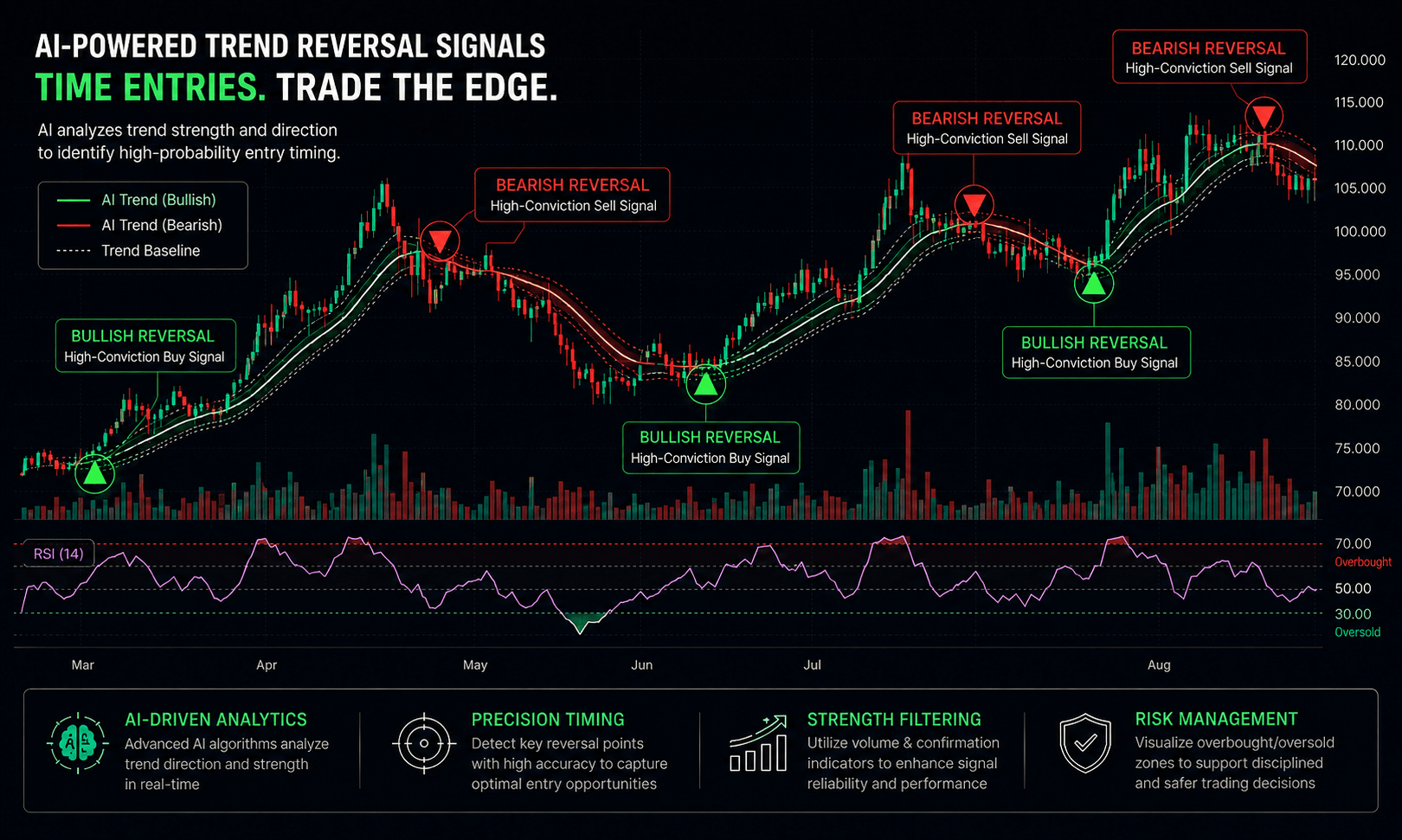
Bull Wave / Bear Wave Forecast Model
Engineered to help you read market direction and momentum faster than the crowd.
- Instantly separate bullish momentum from bearish pressure
- Pinpoint high-probability entry zones with confidence
- Chart signals clear enough for beginners, sharp enough for pros
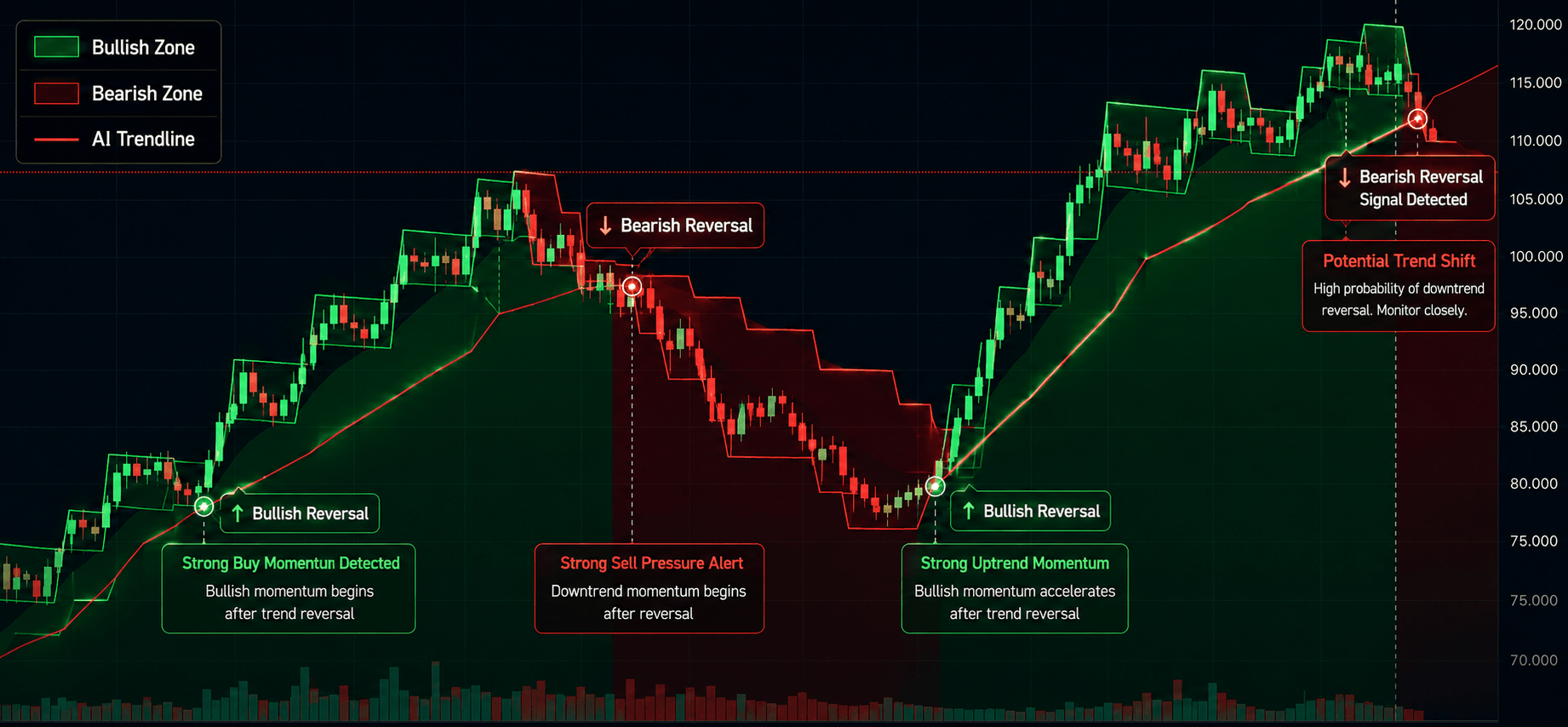
Winning Pattern Detection
Instantly surfaces the high-probability setups that repeat across the charts — a trusted edge for timing your entries and exits.
- Spot momentum building in real time
- Catch trend-reversal points before they break
- Built for active traders who need results, not theory
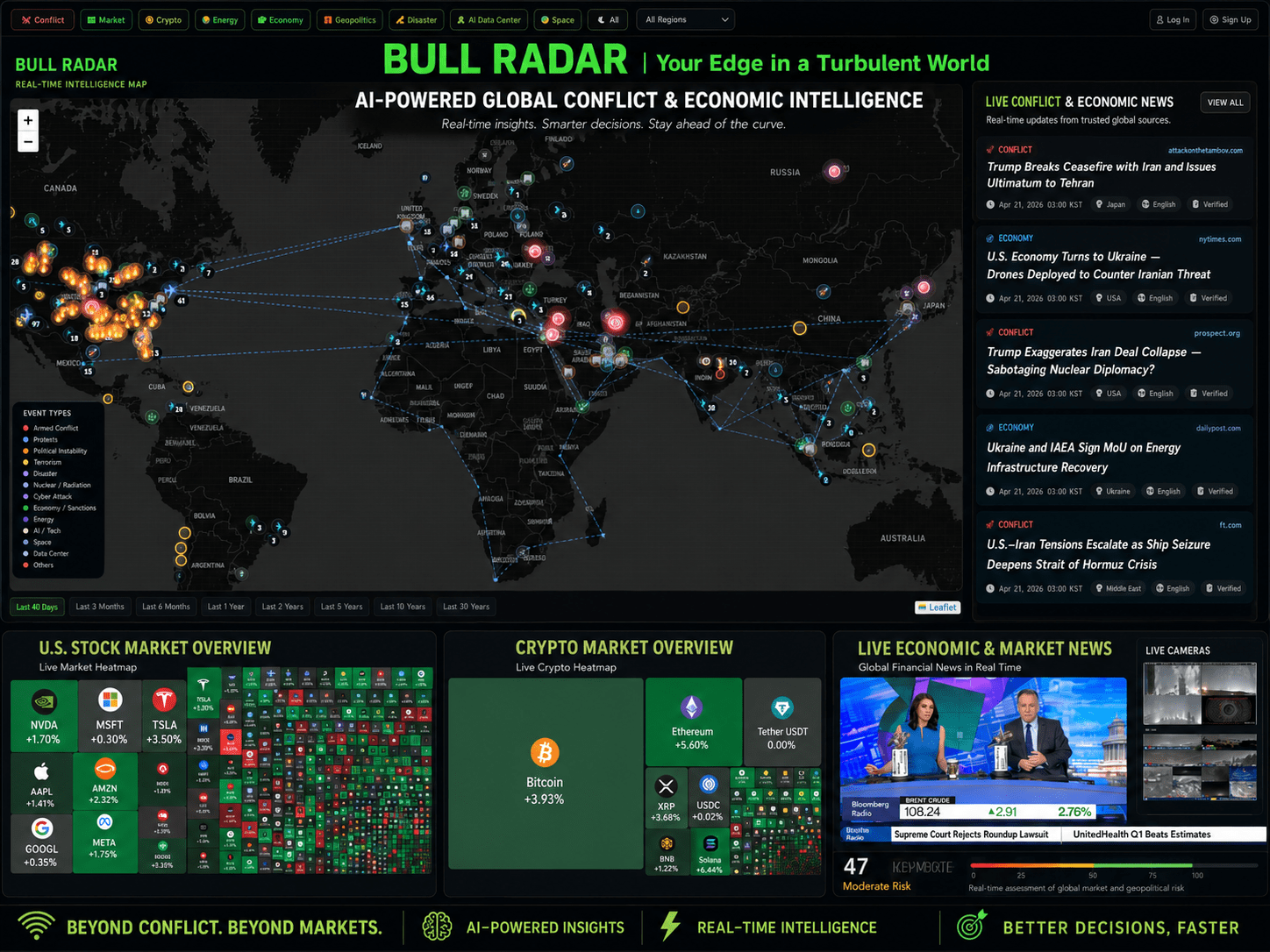
AI Live Economic Dashboard
AI analyzes real-time market data — turning complex, global investment flows into clear insight in seconds.
- Track global stock markets in real time
- See exactly which assets are strong — and which are fading
- Watch how geopolitical events move the markets
About the Author