What DSCR Measures
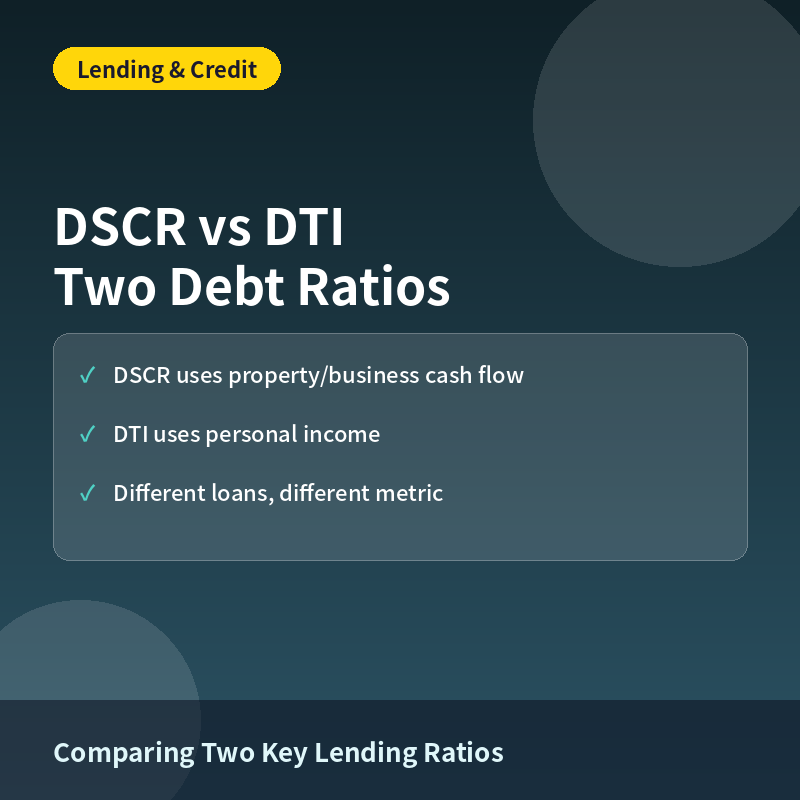
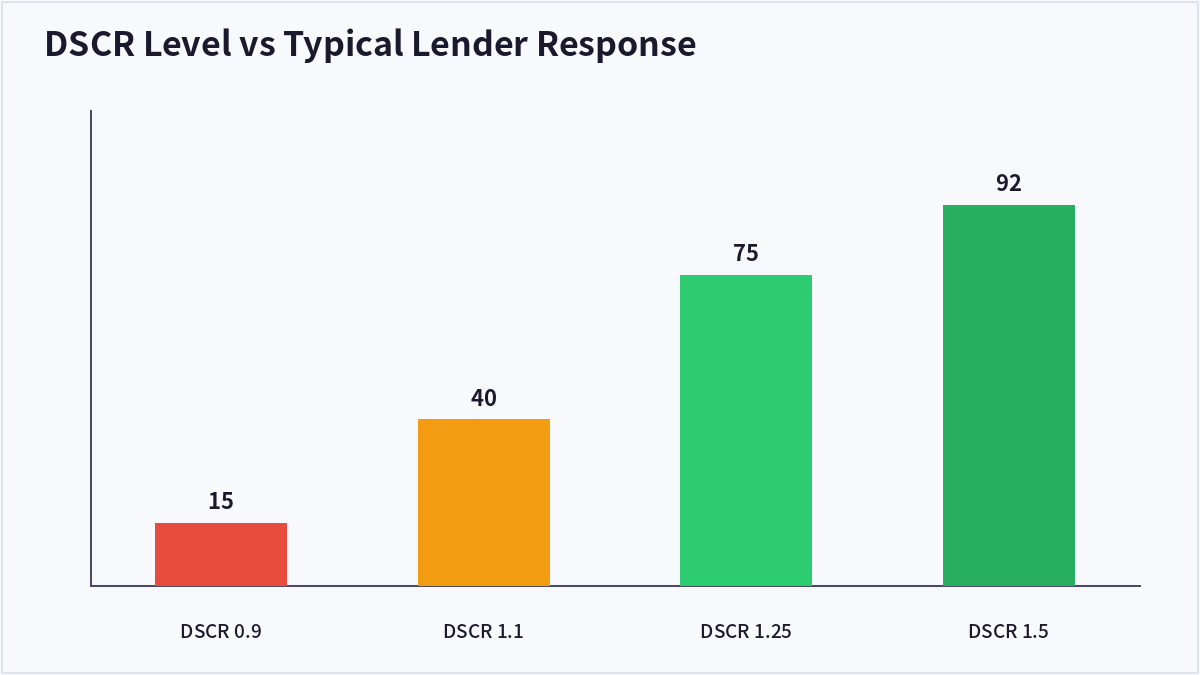
The Debt Service Coverage Ratio (DSCR) measures how many times a property’s or business’s net operating income covers its annual debt payments (principal plus interest). It’s calculated as DSCR = Net Operating Income ÷ Annual Debt Service. A DSCR of 1.25 means the income generated is 25% more than what’s needed to cover the debt payments — a cushion lenders look for in commercial real estate and business lending.
What DTI Measures Instead
The Debt-to-Income ratio (DTI) instead measures an individual borrower’s total monthly debt payments as a percentage of their gross monthly income. It’s the standard metric consumer mortgage lenders use to gauge whether a borrower’s personal income can support a new loan payment alongside their existing debts — credit cards, auto loans, student loans, and the like.
Why the Two Ratios Apply to Different Kinds of Loans
DTI works well when a lender can verify an individual’s paycheck-based income. But for a commercial property purchased primarily to generate rental income, or a business loan, personal income often isn’t the relevant number — what matters is whether the asset itself throws off enough cash to cover its own debt. That’s exactly the gap DSCR is designed to fill, which is why it’s the standard in commercial real estate lending and, increasingly, in investor-focused residential rental loans (sometimes called ‘DSCR loans’) where personal income documentation is minimized.
A Worked Comparison
An investor buying a rental property might qualify based purely on the property’s projected rental income covering the mortgage at a DSCR of 1.2, even with modest personal income on paper. A W-2 employee applying for a primary-residence mortgage, by contrast, will be assessed almost entirely on DTI — their total monthly obligations divided by their gross monthly paycheck.
| Feature | DSCR | DTI |
|---|---|---|
| What’s measured | Property/business income vs its own debt | Personal income vs all personal debt |
| Common use case | Commercial real estate, DSCR investor loans | Consumer mortgages, personal loans |
| Typical minimum threshold | Around 1.2–1.25 | Often 36–43% maximum, varies by lender |
| Personal income documentation | Often minimal or not required | Central to the calculation |
Frequently Asked Questions
Can a DSCR loan be approved with weak personal income?
Often yes, which is exactly the appeal of DSCR loans for real estate investors — the property’s own projected cash flow is the primary underwriting factor rather than the borrower’s personal W-2 income or tax returns.
Is a higher DSCR always better for a borrower?
Generally yes from a lender’s risk perspective, and it typically also unlocks better loan terms, but for the borrower it can also mean less leverage is being used relative to the property’s income, which is a separate business decision from loan approval odds.
Does DTI include the new loan being applied for?
Yes. DTI calculations typically include the proposed new monthly payment alongside all existing recurring debt obligations, then divide that total by gross monthly income.
Which ratio matters more for a small business term loan?
Business lenders overwhelmingly focus on a DSCR-style calculation based on the business’s own cash flow and existing debt service, though a personal guarantee from the owner can bring personal DTI into the underwriting conversation as a secondary factor.
Key Takeaways
DSCR measures whether a property’s or business’s own income covers its debt payments, while DTI measures whether an individual’s personal income covers their total debt obligations — two different ratios built for two different lending contexts. Commercial real estate and investor-focused loans lean on DSCR, while consumer mortgages and personal loans lean on DTI, and understanding which one applies to your situation can clarify what a lender is actually evaluating. This article is for informational purposes only and does not constitute investment advice.

QuantPro: AI Finds the Trade Before You Do
From AI-powered chart analysis to real-time market intelligence — everything a serious investor needs, in one platform.
- Automated AI chart analysis with precision trend timing
- Bull Radar: real-time visualization of geopolitical & economic shifts
- Live market-moving news and insights, curated for you
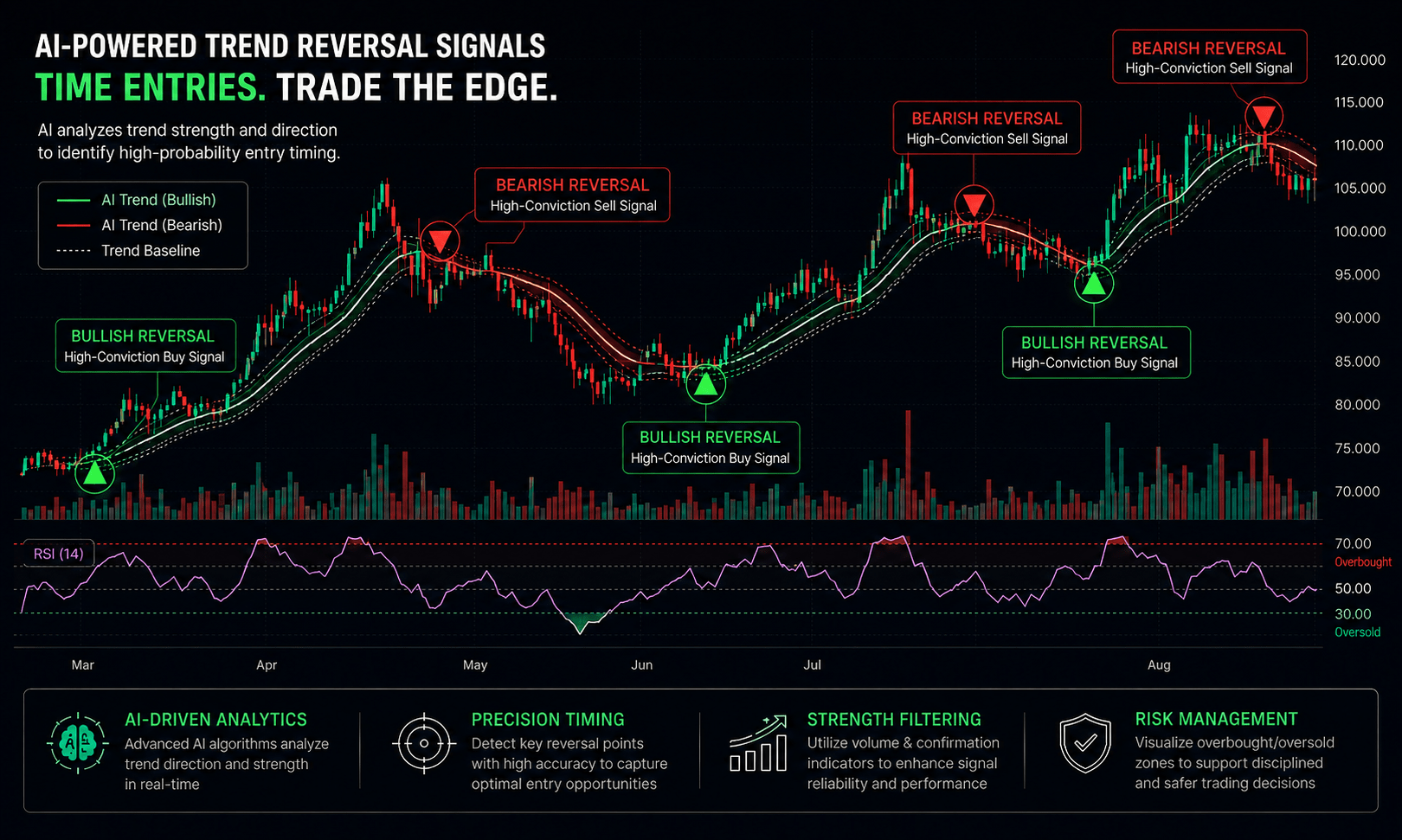
Bull Wave / Bear Wave Forecast Model
Engineered to help you read market direction and momentum faster than the crowd.
- Instantly separate bullish momentum from bearish pressure
- Pinpoint high-probability entry zones with confidence
- Chart signals clear enough for beginners, sharp enough for pros
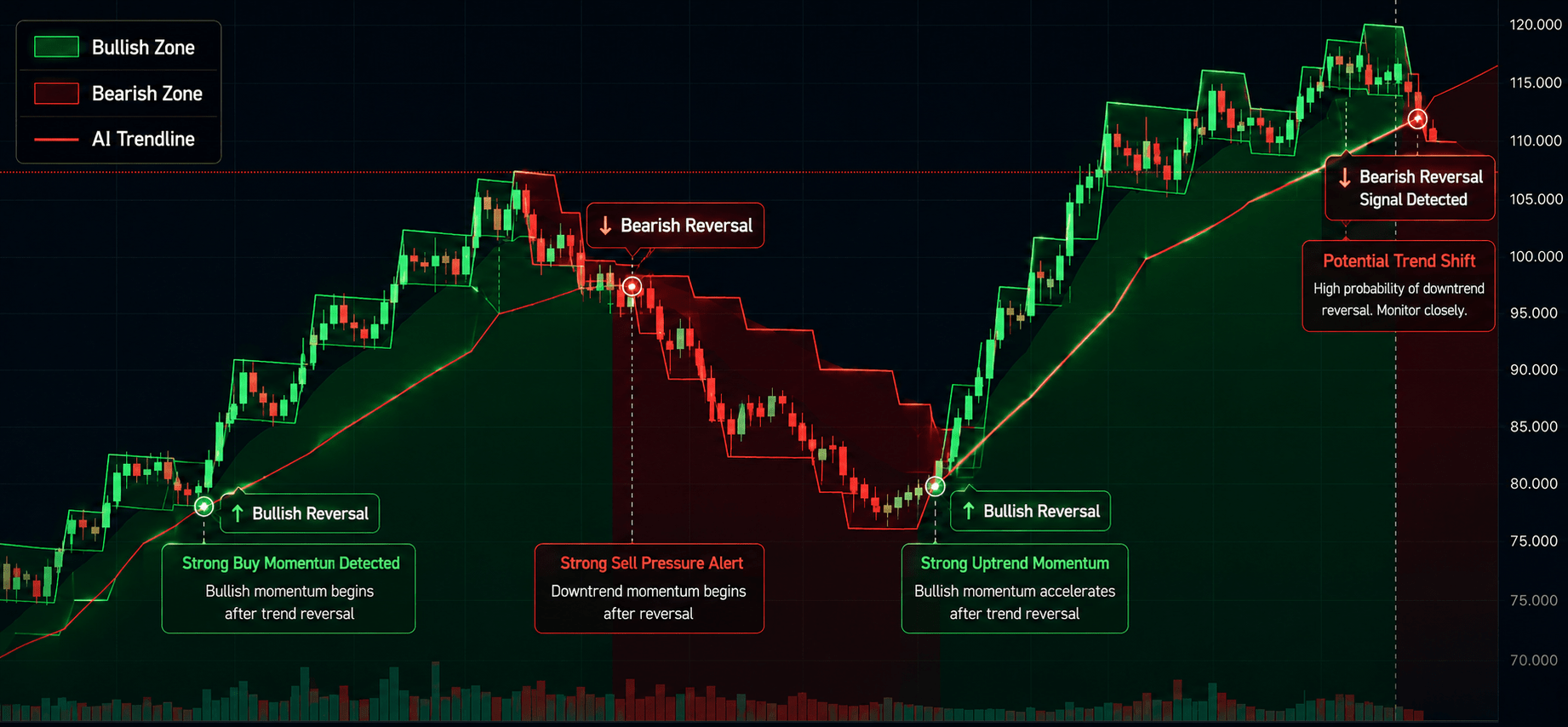
Winning Pattern Detection
Instantly surfaces the high-probability setups that repeat across the charts — a trusted edge for timing your entries and exits.
- Spot momentum building in real time
- Catch trend-reversal points before they break
- Built for active traders who need results, not theory

AI Live Economic Dashboard
AI analyzes real-time market data — turning complex, global investment flows into clear insight in seconds.
- Track global stock markets in real time
- See exactly which assets are strong — and which are fading
- Watch how geopolitical events move the markets
About the Author