What Is a Market Order?
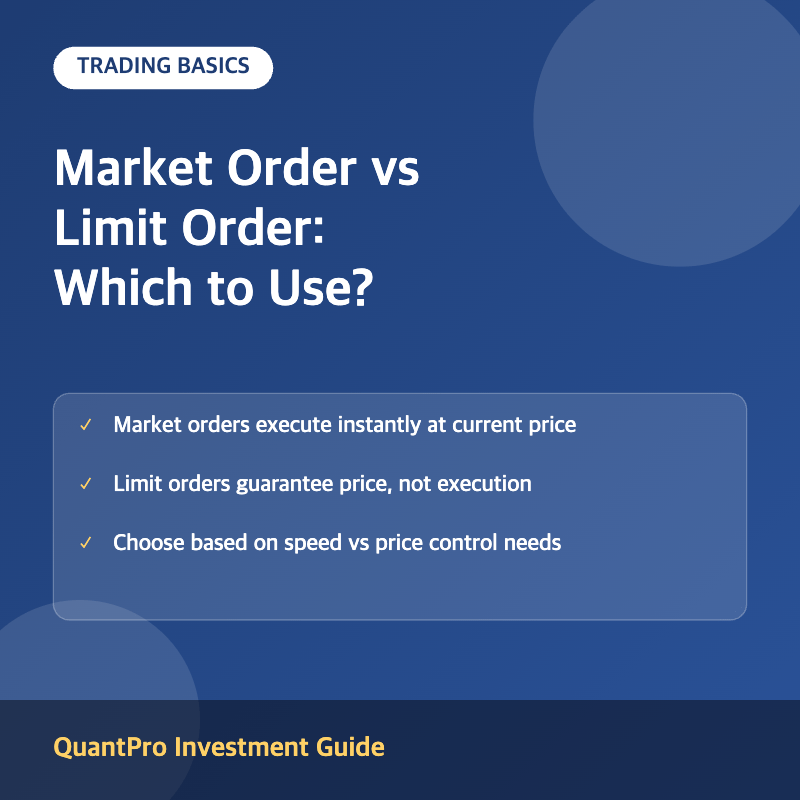
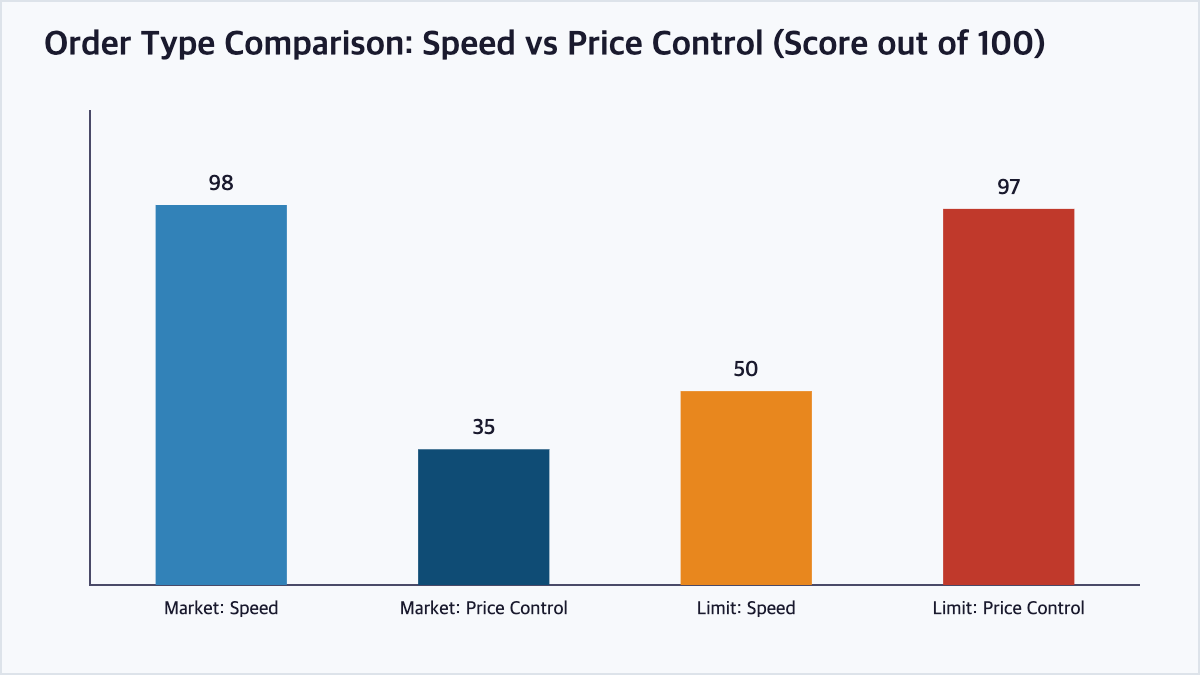
A market order is an instruction to buy or sell a security immediately at the best available current price. It prioritizes speed of execution over price control, making it the default order type for investors who want to enter or exit a position without delay.
Because a market order fills as fast as the exchange can match it, it is best suited for highly liquid stocks and ETFs where the bid-ask spread is narrow and price slippage is minimal. In fast-moving or thinly traded markets, however, the execution price can differ meaningfully from the last quoted price.
When Market Orders Make Sense
Market orders are commonly used when certainty of execution matters more than the exact fill price, such as during routine portfolio rebalancing, dollar-cost averaging into large-cap stocks, or exiting a position quickly during a fast-moving news event.
What Is a Limit Order?
A limit order is an instruction to buy or sell a security only at a specified price or better. A buy limit order executes at the limit price or lower, while a sell limit order executes at the limit price or higher, giving the trader full control over the price paid or received.
The tradeoff for this price control is that a limit order is not guaranteed to execute. If the market never reaches the specified price, the order can remain unfilled indefinitely or until it expires, depending on the time-in-force setting selected.
When Limit Orders Make Sense
Limit orders are preferred when trading volatile or low-volume securities, entering a position at a specific support level, or setting a target exit price for profit-taking without needing to monitor the market continuously.
Market Order vs Limit Order: Side-by-Side Comparison
| Feature | Market Order | Limit Order |
|---|---|---|
| Execution Speed | Immediate | Only when price condition is met |
| Price Certainty | Low — price can slip | High — fixed at limit or better |
| Fill Guarantee | Yes (if market is open) | No — may go unfilled |
| Best For | Liquid, fast execution needs | Price-sensitive, volatile securities |
| Risk | Slippage in fast markets | Missed opportunity if unfilled |
Frequently Asked Questions
Can a limit order execute at a better price than specified?
Yes. A buy limit order can fill below the limit price and a sell limit order can fill above it if better prices become available in the market, but it will never fill at a worse price than the limit set.
Is a market order always executed at the last traded price?
No. A market order fills at the best available price at the moment it reaches the exchange, which can differ from the last traded price, especially during high volatility or low liquidity, a phenomenon known as slippage.
What happens if a limit order is never filled?
If the market price never reaches the specified limit, the order remains open until it is canceled or expires based on its time-in-force setting, such as day order or good-till-canceled.
Can beginners use both order types together?
Yes. Many investors use market orders for quick, liquid trades and limit orders for price-sensitive entries or exits, combining both strategies depending on the specific goal of each trade.
Key Takeaways
Market orders and limit orders serve different purposes: market orders prioritize speed and guaranteed execution, while limit orders prioritize price control at the risk of non-execution. Choosing between them depends on the trader’s priorities, the liquidity of the security, and current market volatility. This article is for informational purposes only and does not constitute investment advice.

QuantPro: AI Finds the Trade Before You Do
From AI-powered chart analysis to real-time market intelligence — everything a serious investor needs, in one platform.
- Automated AI chart analysis with precision trend timing
- Bull Radar: real-time visualization of geopolitical & economic shifts
- Live market-moving news and insights, curated for you
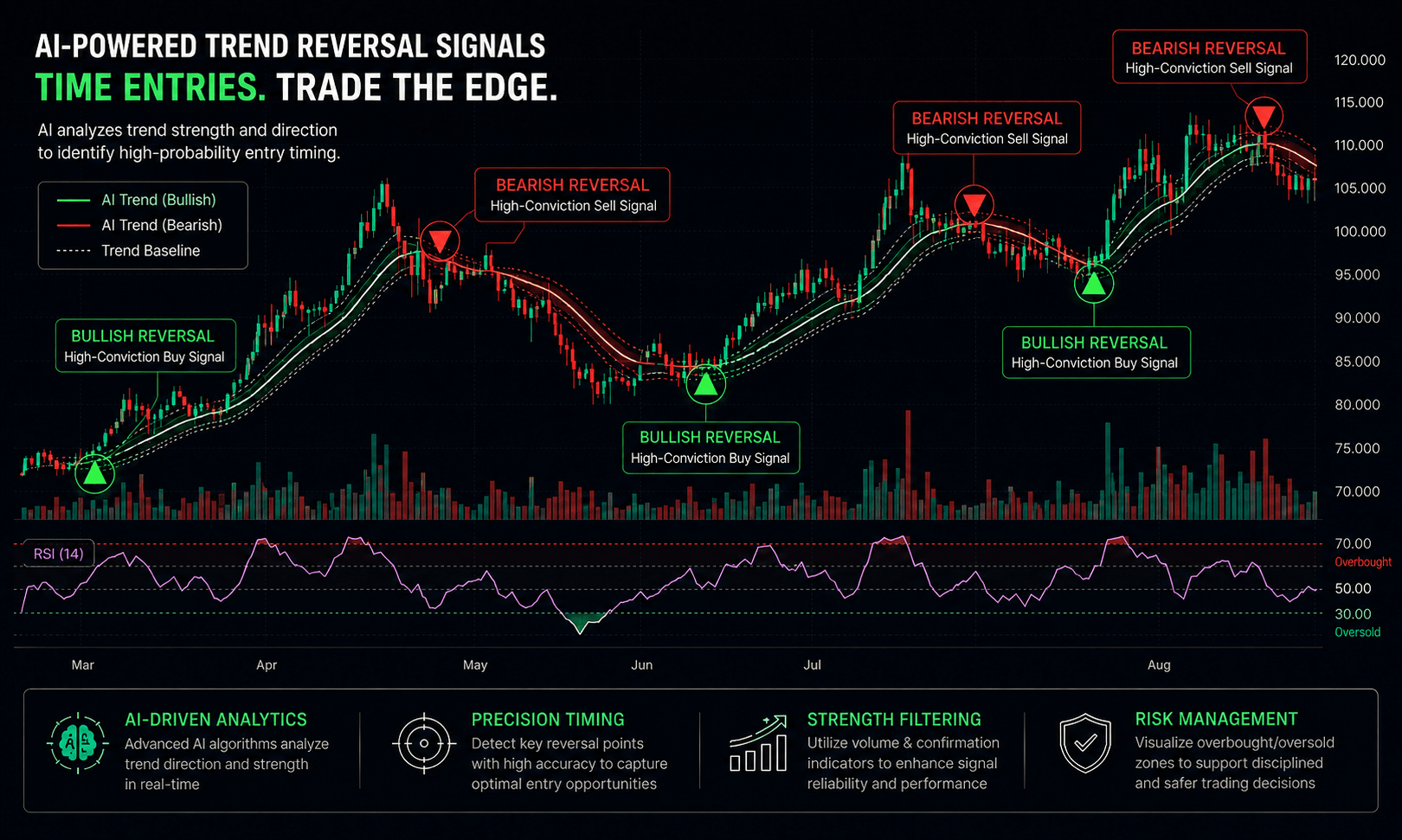
Bull Wave / Bear Wave Forecast Model
Engineered to help you read market direction and momentum faster than the crowd.
- Instantly separate bullish momentum from bearish pressure
- Pinpoint high-probability entry zones with confidence
- Chart signals clear enough for beginners, sharp enough for pros
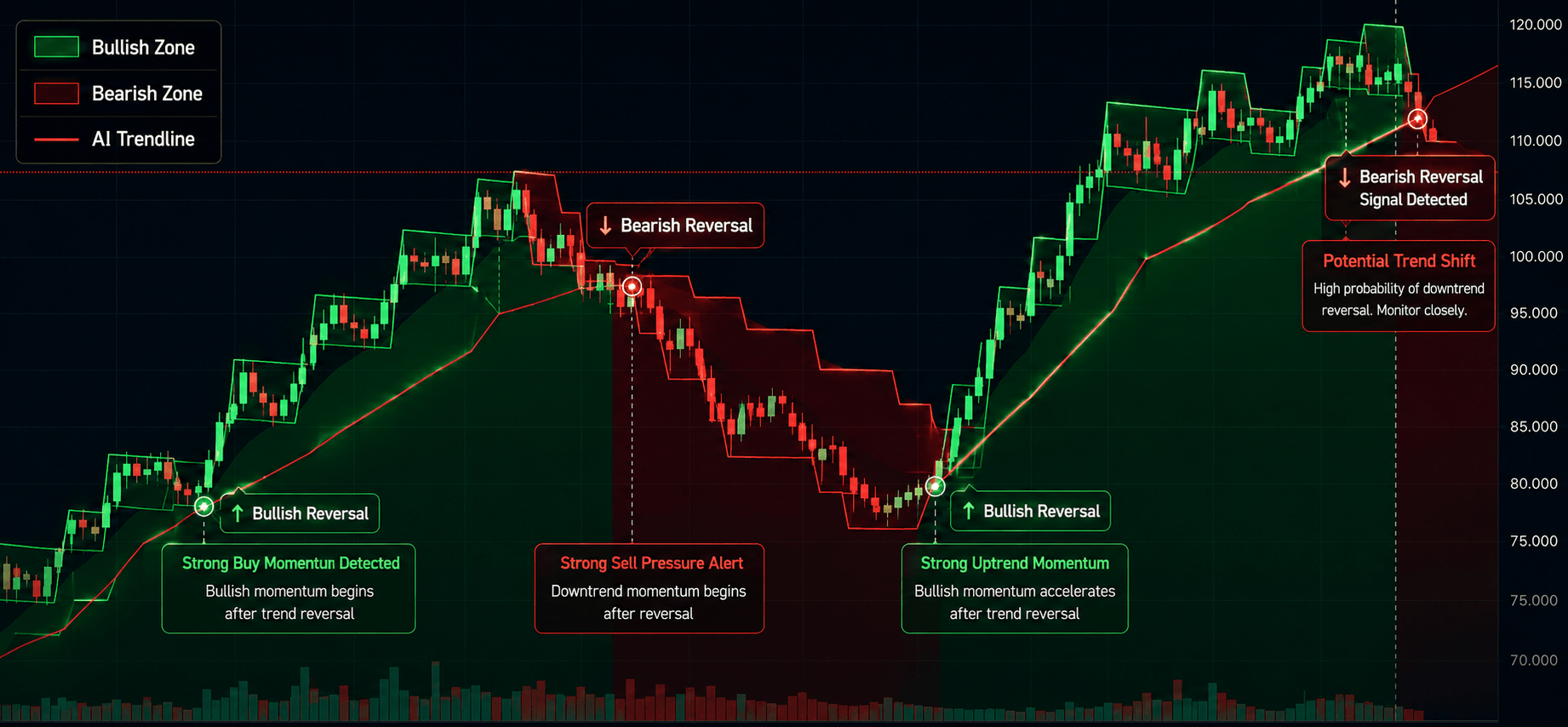
Winning Pattern Detection
Instantly surfaces the high-probability setups that repeat across the charts — a trusted edge for timing your entries and exits.
- Spot momentum building in real time
- Catch trend-reversal points before they break
- Built for active traders who need results, not theory
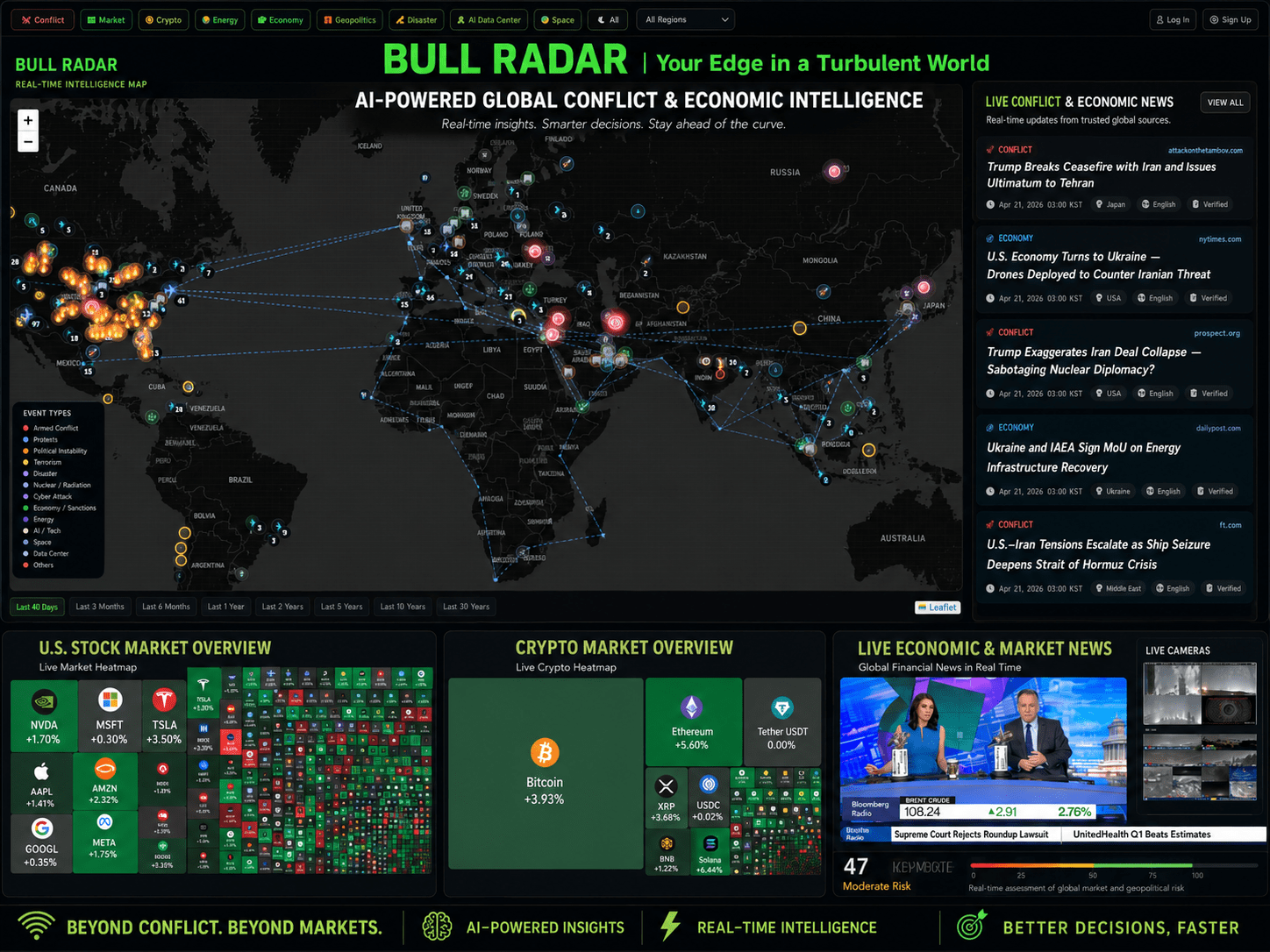
AI Live Economic Dashboard
AI analyzes real-time market data — turning complex, global investment flows into clear insight in seconds.
- Track global stock markets in real time
- See exactly which assets are strong — and which are fading
- Watch how geopolitical events move the markets
About the Author