Definition
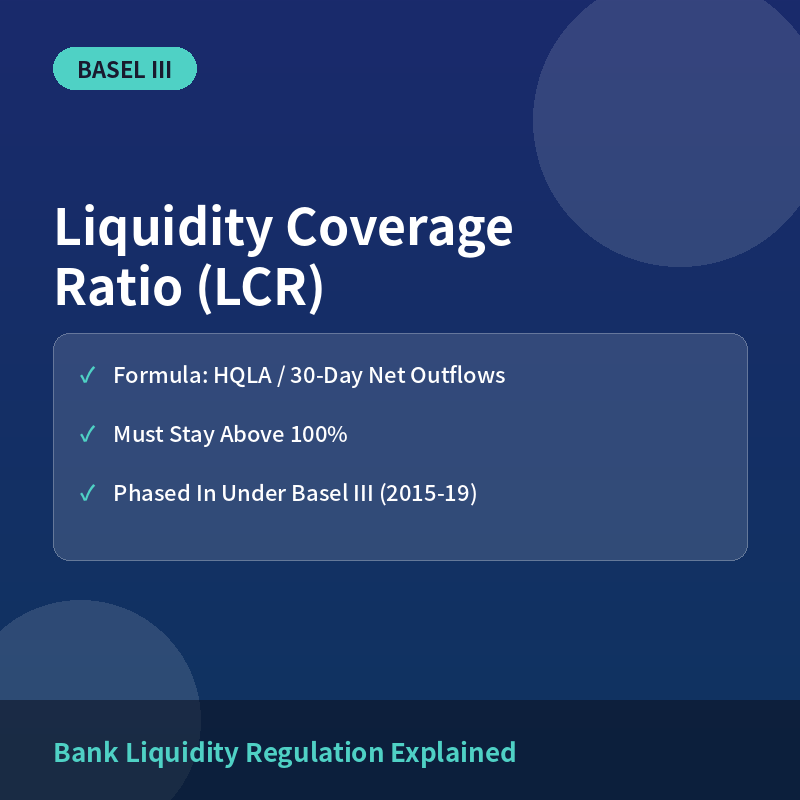
The Liquidity Coverage Ratio (LCR) is a bank regulatory requirement that measures whether a bank holds enough high-quality liquid assets (HQLA) to survive a 30-calendar-day period of significant financial stress. It was introduced under the Basel III international regulatory framework in response to the liquidity failures exposed by the 2008 global financial crisis.
How It’s Calculated
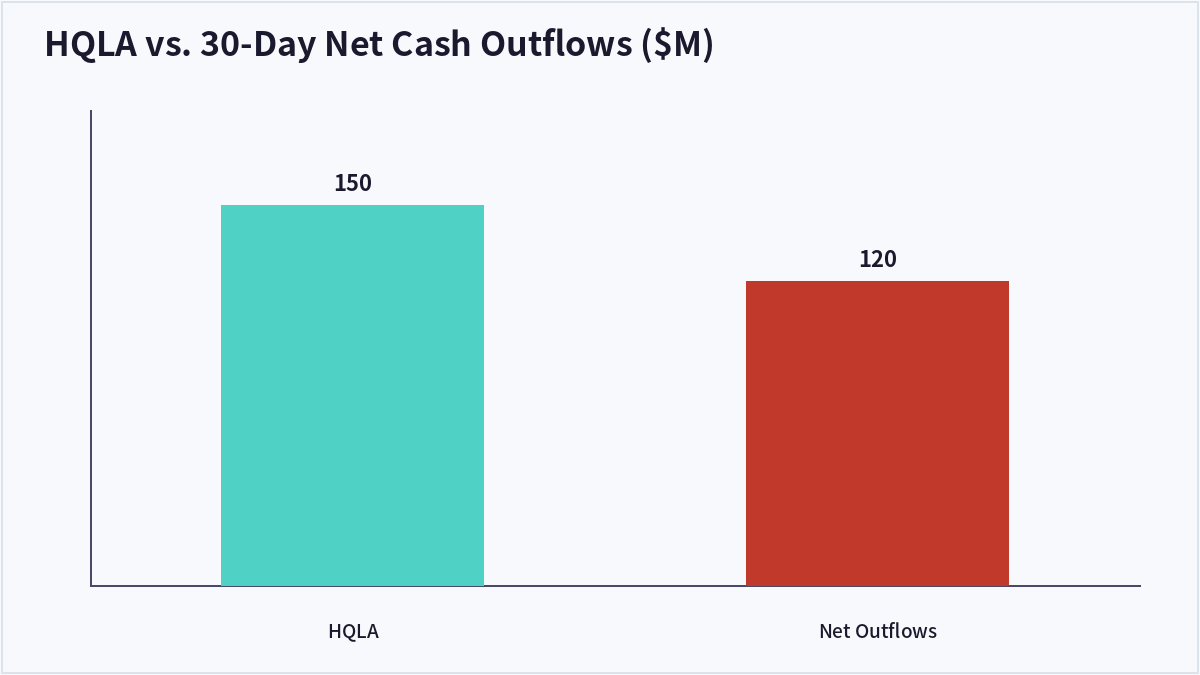
The formula is: LCR = High-Quality Liquid Assets (HQLA) / Total Net Cash Outflows over the next 30 calendar days. HQLA are assets that can be converted to cash quickly and with little loss of value, such as central bank reserves and highly rated government bonds. Suppose a bank holds $150 million in HQLA and, under a modeled 30-day stress scenario, projects net cash outflows of $120 million. Its LCR is $150M / $120M = 125%, meaning the bank’s liquid assets exceed its projected 30-day outflows by 25 percentage points.
Why It Matters: Basel III Context
Before the 2008 crisis, many banks relied on short-term wholesale funding that could disappear overnight, leaving them unable to meet obligations even though they were technically solvent — a liquidity crisis rather than a solvency crisis. Basel III’s LCR requirement directly addresses this by forcing banks to hold enough genuinely liquid assets to weather a 30-day funding freeze without needing emergency central bank support or a fire sale of assets. Regulators phased the requirement in gradually, reaching a 100% minimum by 2019, and require it to stay above 100% under normal conditions so banks carry a buffer rather than operating right at the edge.
Comparison: LCR vs. NSFR and the Phase-In Timeline
| Year | Minimum LCR Requirement (Basel III Phase-In) |
|---|---|
| 2015 | 60% |
| 2016 | 70% |
| 2017 | 80% |
| 2018 | 90% |
| 2019 onward | 100% |
The LCR is often paired with a second Basel III metric, the Net Stable Funding Ratio (NSFR), which requires stable funding to cover a bank’s assets over a one-year horizon rather than 30 days. Where the LCR asks “can this bank survive a one-month liquidity shock,” the NSFR asks “is this bank’s longer-term funding structure sustainably matched to its assets.”
Frequently Asked Questions
What counts as a High-Quality Liquid Asset (HQLA)?
HQLA are split into tiers: Level 1 assets (cash, central bank reserves, and top-rated sovereign debt) can be counted at full value with no limit, while Level 2 assets (certain corporate bonds and lower-rated sovereign debt) are subject to haircuts and caps on how much of the total HQLA pool they can represent, reflecting their somewhat lower liquidity and higher risk.
What is the minimum LCR required by regulators?
Basel III requires banks to maintain an LCR of at least 100% since full implementation in 2019, meaning HQLA must fully cover projected 30-day net cash outflows under a stress scenario. National regulators can and sometimes do set stricter minimums for domestically systemically important banks.
How does LCR differ from the Net Stable Funding Ratio (NSFR)?
LCR is a short-term, 30-day stress test focused on immediate liquidity, while NSFR is a structural, one-year measure ensuring a bank does not fund long-term assets with excessively short-term liabilities. Both are Basel III liquidity standards, but they address different time horizons and different types of liquidity risk.
What happens if a bank’s LCR falls below 100%?
A bank breaching the 100% minimum must notify its regulator and submit a plan to restore compliance, and regulators can impose restrictions such as limits on dividends, share buybacks, or discretionary bonus payments until the ratio recovers. A sustained breach signals a genuine liquidity weakness that can also damage market confidence in the bank.
Key Takeaways
The Liquidity Coverage Ratio requires banks to hold enough high-quality liquid assets to cover 30 days of stressed net cash outflows, and Basel III mandates it stay above 100% so banks carry a real cushion rather than operating at the margin. Introduced after the 2008 financial crisis exposed how quickly short-term funding can vanish, the LCR remains one of the core tools regulators use to keep individual bank liquidity shocks from becoming systemic crises. This article is for informational purposes only and does not constitute investment advice.

QuantPro: AI Finds the Trade Before You Do
From AI-powered chart analysis to real-time market intelligence — everything a serious investor needs, in one platform.
- Automated AI chart analysis with precision trend timing
- Bull Radar: real-time visualization of geopolitical & economic shifts
- Live market-moving news and insights, curated for you
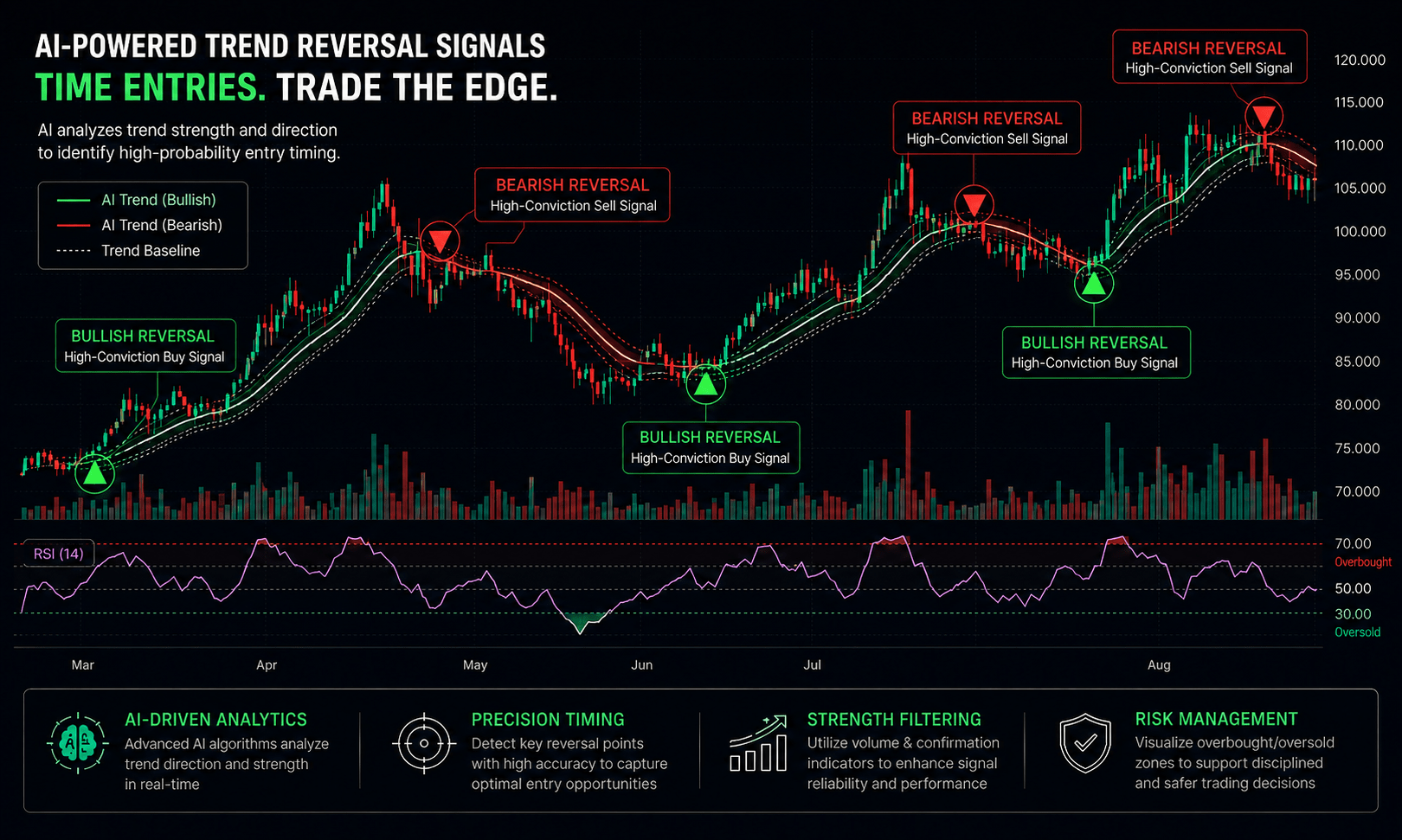
Bull Wave / Bear Wave Forecast Model
Engineered to help you read market direction and momentum faster than the crowd.
- Instantly separate bullish momentum from bearish pressure
- Pinpoint high-probability entry zones with confidence
- Chart signals clear enough for beginners, sharp enough for pros
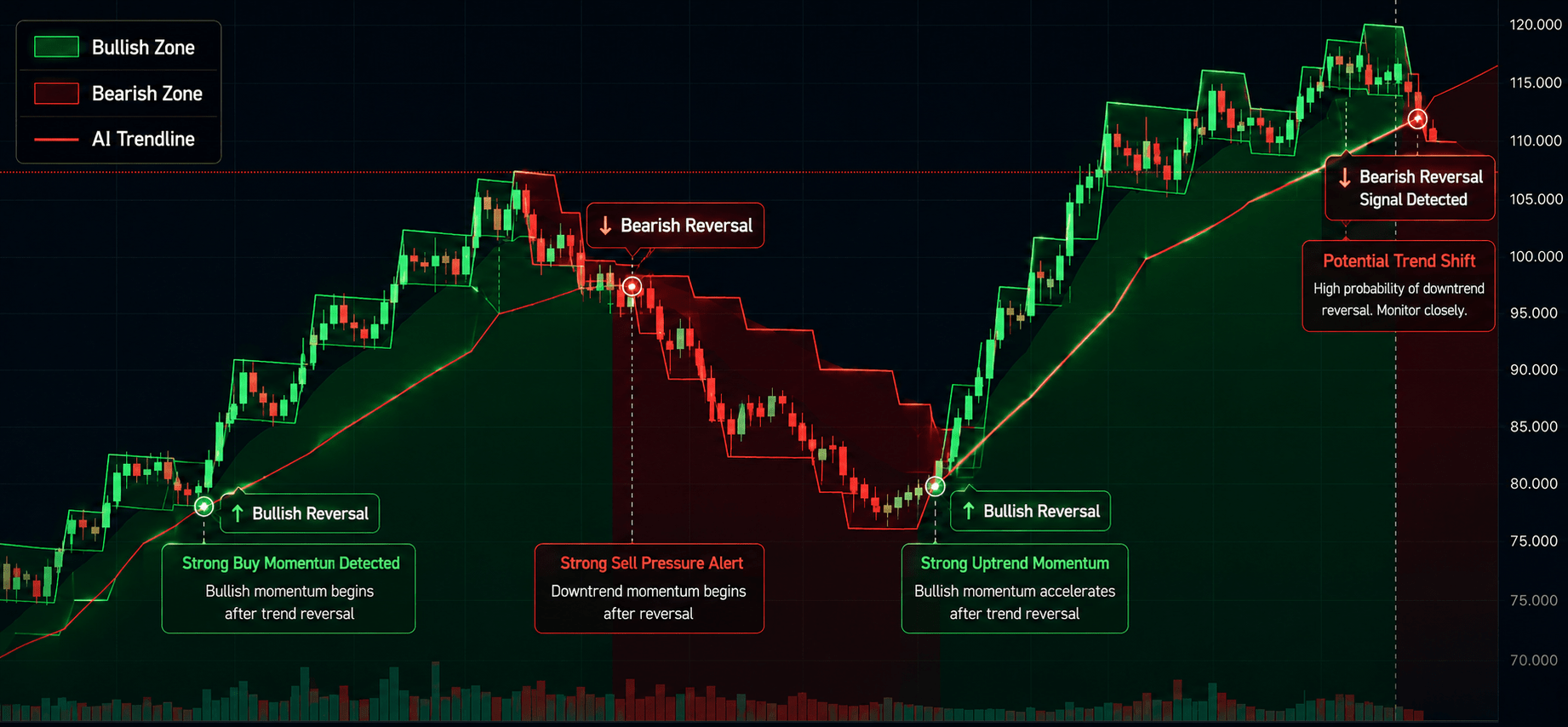
Winning Pattern Detection
Instantly surfaces the high-probability setups that repeat across the charts — a trusted edge for timing your entries and exits.
- Spot momentum building in real time
- Catch trend-reversal points before they break
- Built for active traders who need results, not theory
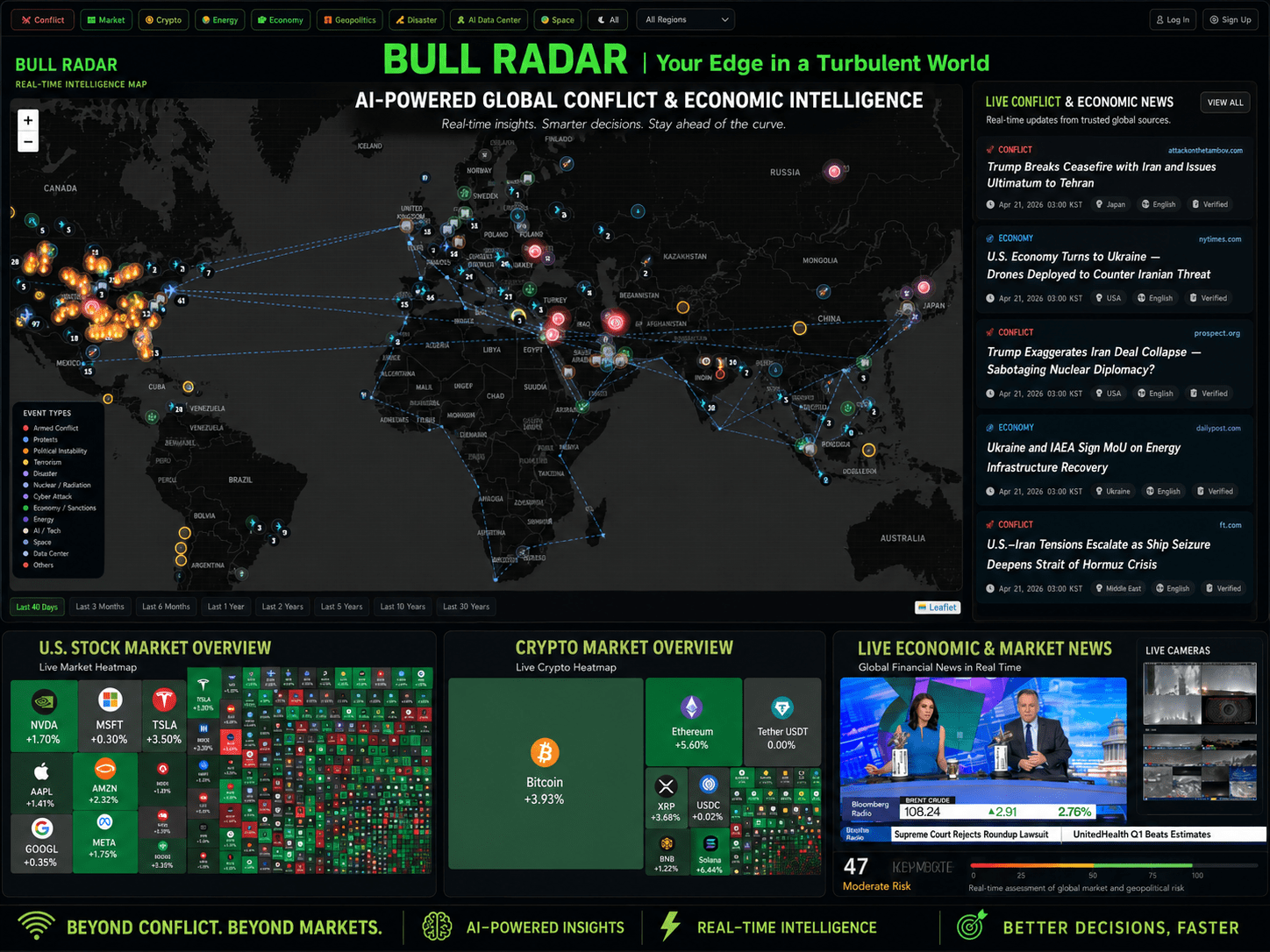
AI Live Economic Dashboard
AI analyzes real-time market data — turning complex, global investment flows into clear insight in seconds.
- Track global stock markets in real time
- See exactly which assets are strong — and which are fading
- Watch how geopolitical events move the markets
About the Author