What Is the P/E Ratio?
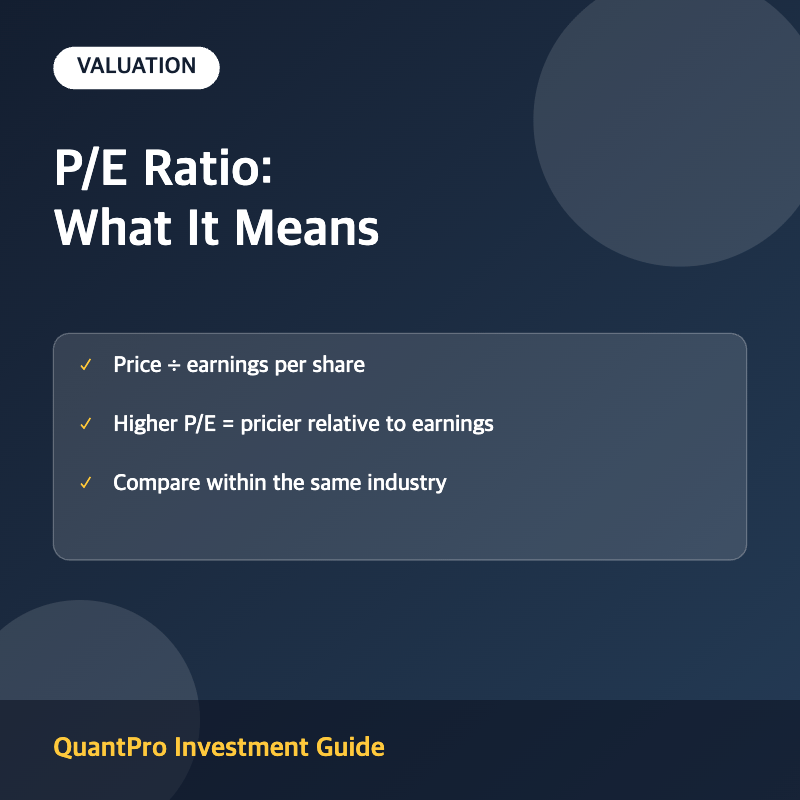
The price-to-earnings (P/E) ratio measures a company’s current share price relative to its earnings per share (EPS), calculated by dividing the stock price by EPS. It is one of the most widely used valuation metrics for comparing how expensive a stock is relative to its profitability.
Trailing vs. Forward P/E
The trailing P/E ratio uses earnings from the past 12 months, providing a backward-looking view based on actual reported results. The forward P/E ratio uses projected earnings for the next 12 months, offering a forward-looking estimate that can be more relevant but relies on analyst forecasts.
What a High or Low P/E Means
A high P/E ratio can indicate that investors expect strong future earnings growth, or that the stock is overvalued. A low P/E ratio can suggest a stock is undervalued, or that the market expects slower growth or higher risk ahead.
P/E Ratio Interpretation Guide
| P/E Range | General Interpretation | Consideration |
|---|---|---|
| Below 15 | Potentially undervalued | Check for underlying business risks |
| 15-25 | Fairly valued (market average range) | Compare to sector average |
| 25-40 | Growth premium priced in | Requires strong earnings growth to justify |
| Above 40 | High growth expectations | Higher risk if growth disappoints |
| Negative or N/A | Company has no earnings | Use other valuation metrics instead |
Limitations of the P/E Ratio
The P/E ratio does not account for growth rates, debt levels, or industry differences, and it is not meaningful for companies with negative earnings. It should always be compared against industry peers and historical averages rather than viewed in isolation.
Frequently Asked Questions
What is considered a good P/E ratio?
There is no single “good” P/E ratio, as it varies significantly by industry and growth expectations. Comparing a company’s P/E to its industry peers and historical average provides more meaningful context than an absolute number.
Why do growth stocks have higher P/E ratios?
Growth stocks often trade at higher P/E ratios because investors are willing to pay a premium for expected future earnings growth, even if current earnings are relatively modest.
Can a stock have a negative P/E ratio?
A negative P/E ratio occurs when a company reports negative earnings (a net loss), in which case the P/E ratio becomes meaningless and analysts typically use alternative metrics like price-to-sales instead.
How does the P/E ratio relate to the PEG ratio?
The PEG ratio adjusts the P/E ratio by dividing it by the company’s expected earnings growth rate, providing a more complete picture of valuation relative to growth than the P/E ratio alone.
Key Takeaways
The P/E ratio measures how much investors are paying for each dollar of a company’s earnings, serving as a key tool for comparing valuation across stocks. While useful, it should be evaluated alongside growth rates, industry norms, and other financial metrics rather than used as a standalone valuation signal. This article is for informational purposes only and does not constitute investment advice.

QuantPro: AI Finds the Trade Before You Do
From AI-powered chart analysis to real-time market intelligence — everything a serious investor needs, in one platform.
- Automated AI chart analysis with precision trend timing
- Bull Radar: real-time visualization of geopolitical & economic shifts
- Live market-moving news and insights, curated for you
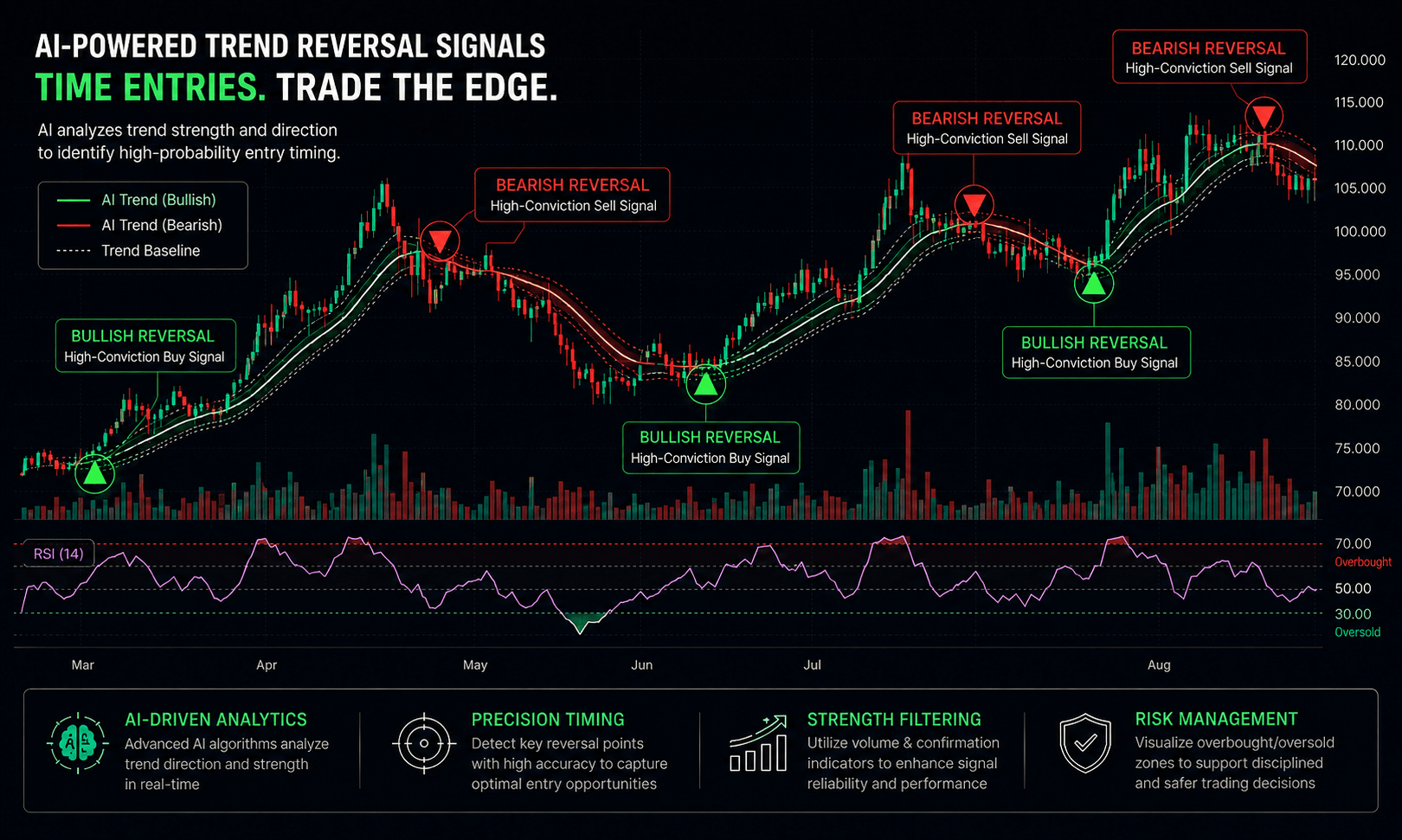
Bull Wave / Bear Wave Forecast Model
Engineered to help you read market direction and momentum faster than the crowd.
- Instantly separate bullish momentum from bearish pressure
- Pinpoint high-probability entry zones with confidence
- Chart signals clear enough for beginners, sharp enough for pros
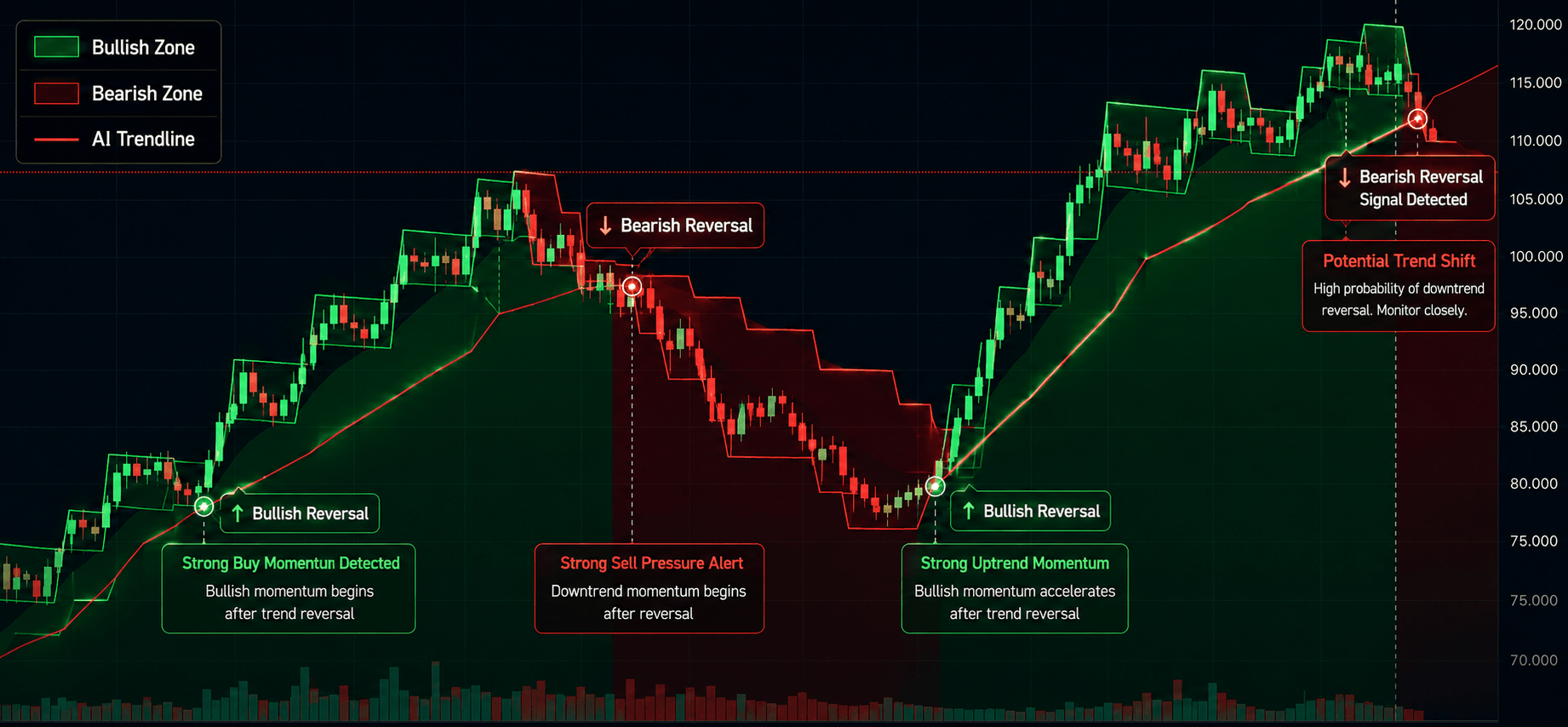
Winning Pattern Detection
Instantly surfaces the high-probability setups that repeat across the charts — a trusted edge for timing your entries and exits.
- Spot momentum building in real time
- Catch trend-reversal points before they break
- Built for active traders who need results, not theory

AI Live Economic Dashboard
AI analyzes real-time market data — turning complex, global investment flows into clear insight in seconds.
- Track global stock markets in real time
- See exactly which assets are strong — and which are fading
- Watch how geopolitical events move the markets
About the Author