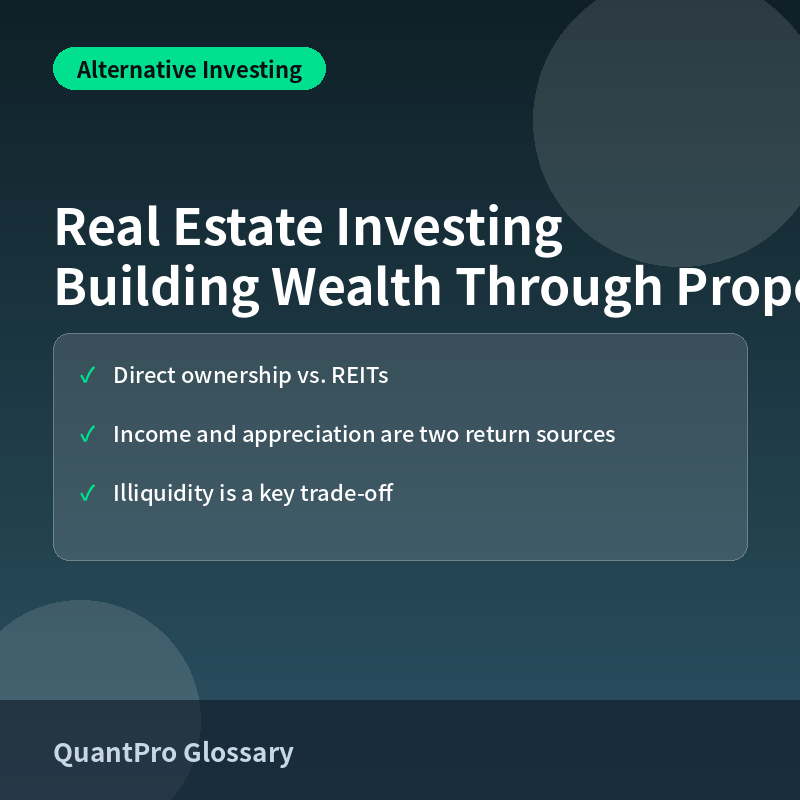
What Is Real Estate Investing?
Real estate investing involves purchasing property with the goal of generating income, capital appreciation, or both, and it spans a wide range of approaches — from directly owning and managing rental properties to passively investing in publicly traded real estate investment trusts (REITs). Each approach offers a different balance of potential returns, required capital, liquidity, and hands-on involvement.
The Two Sources of Real Estate Returns
Rental Income
Direct property ownership can generate regular cash flow through rent payments from tenants, which — after accounting for expenses like maintenance, property taxes, and mortgage payments — can provide ongoing income, though this requires active management or the cost of hiring a property manager.
Capital Appreciation
Properties can also increase in market value over time due to factors like local economic growth, neighborhood development, and inflation, allowing investors to potentially realize gains when the property is eventually sold, in addition to any income generated along the way.
Direct Ownership vs. REITs
Direct Property Ownership
This traditional approach offers the most control and potential for leveraged returns (using a mortgage), but requires significant upfront capital, ongoing hands-on management or oversight, and comes with limited liquidity — properties can’t be sold quickly if cash is suddenly needed.
Real Estate Investment Trusts (REITs)
Publicly traded REITs allow investors to gain diversified real estate exposure by purchasing shares on a stock exchange, offering much greater liquidity and requiring far less capital than direct ownership, though investors give up direct control over specific property decisions.
| Approach | Capital Required | Liquidity |
|---|---|---|
| Direct Property Ownership | High (down payment, closing costs) | Low — can take months to sell |
| Publicly Traded REITs | Low (price of a single share) | High — trades like a stock |
| Private Real Estate Funds | Moderate to high | Low to moderate — often locked up |
Frequently Asked Questions
Is real estate a good hedge against inflation?
Real estate has historically shown a tendency to appreciate over long periods alongside general price levels, and rental income can often be adjusted upward over time, leading many investors to view it as a reasonable long-term inflation hedge, though it’s not without risk.
What are the main risks of direct property ownership?
Key risks include vacancy periods with no rental income, unexpected maintenance costs, property value declines, and the illiquidity of the asset if funds are needed quickly, all of which require careful financial planning.
How do REITs differ from directly owning rental property?
REITs offer much greater liquidity and diversification with far less capital and no direct management responsibility, but investors receive dividend income and market-driven share price movements rather than direct control over specific properties.
Do I need a large amount of money to start investing in real estate?
Not necessarily — while direct property ownership typically requires substantial capital, REIT shares can be purchased for the price of a single share, making real estate exposure accessible to investors with much smaller amounts of capital.
Key Takeaways
Real estate investing spans direct property ownership to publicly traded REITs, with returns coming from rental income and capital appreciation. Each approach involves a distinct trade-off between required capital, liquidity, and hands-on management involvement. This article is for informational purposes only and does not constitute investment advice.

QuantPro: AI Finds the Trade Before You Do
From AI-powered chart analysis to real-time market intelligence — everything a serious investor needs, in one platform.
- Automated AI chart analysis with precision trend timing
- Bull Radar: real-time visualization of geopolitical & economic shifts
- Live market-moving news and insights, curated for you
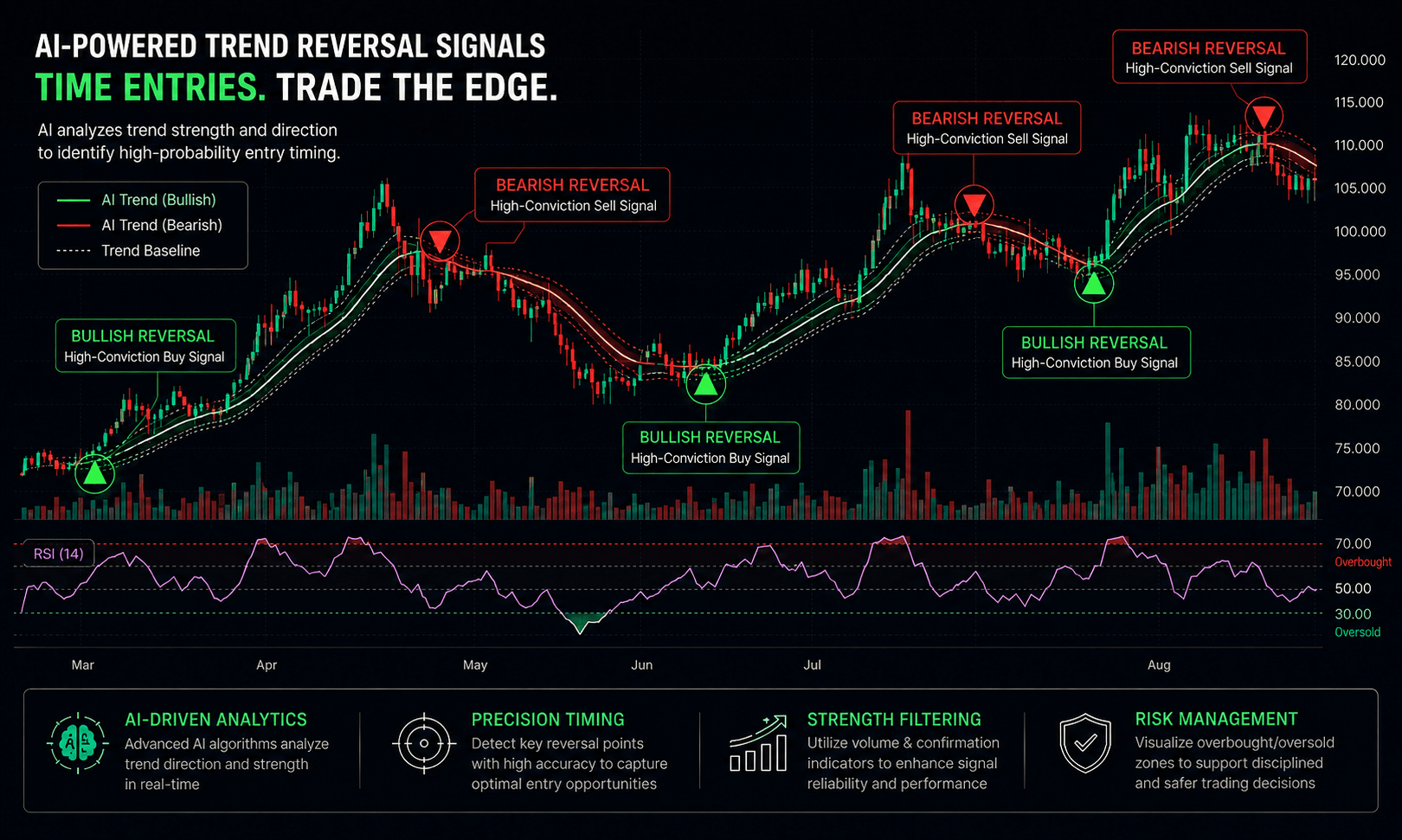
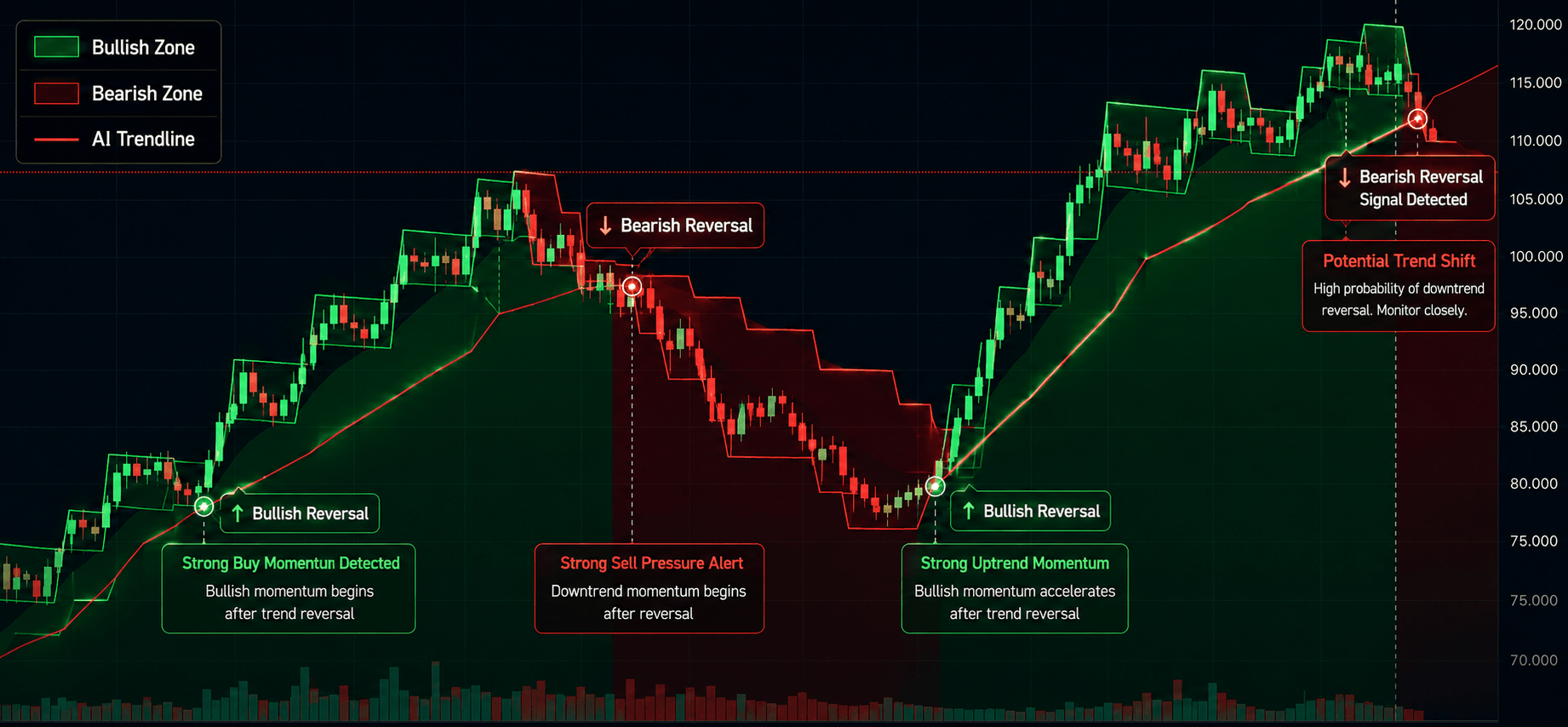
Bull Wave / Bear Wave Forecast Model
Engineered to help you read market direction and momentum faster than the crowd.
- Instantly separate bullish momentum from bearish pressure
- Pinpoint high-probability entry zones with confidence
- Chart signals clear enough for beginners, sharp enough for pros
Winning Pattern Detection
Instantly surfaces the high-probability setups that repeat across the charts — a trusted edge for timing your entries and exits.
- Spot momentum building in real time
- Catch trend-reversal points before they break
- Built for active traders who need results, not theory

AI Live Economic Dashboard
AI analyzes real-time market data — turning complex, global investment flows into clear insight in seconds.
- Track global stock markets in real time
- See exactly which assets are strong — and which are fading
- Watch how geopolitical events move the markets
About the Author