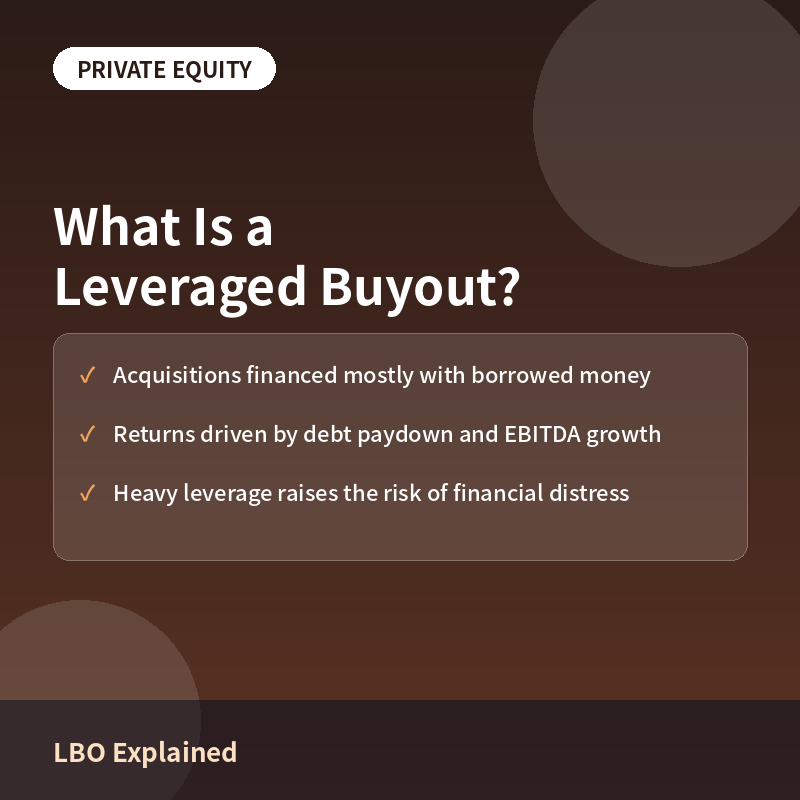
What Is a Leveraged Buyout?
A leveraged buyout (LBO) is the acquisition of a company financed largely with borrowed money, with the target company’s own assets and future cash flows frequently used as collateral for that debt. The acquiring party, most often a private equity firm, contributes a comparatively small amount of its own equity relative to the total purchase price.
Typical LBO Capital Structure
A typical LBO might finance roughly 60–70% of the purchase price with debt and the remaining 30–40% with equity contributed by the private equity sponsor, though the exact mix varies with credit market conditions and the target’s cash flow stability.
| Financing Source | Typical % of Purchase Price |
|---|---|
| Senior secured debt | 40% – 50% |
| Subordinated / high-yield debt | 10% – 20% |
| Sponsor equity | 30% – 40% |
How Private Equity Firms Generate Returns
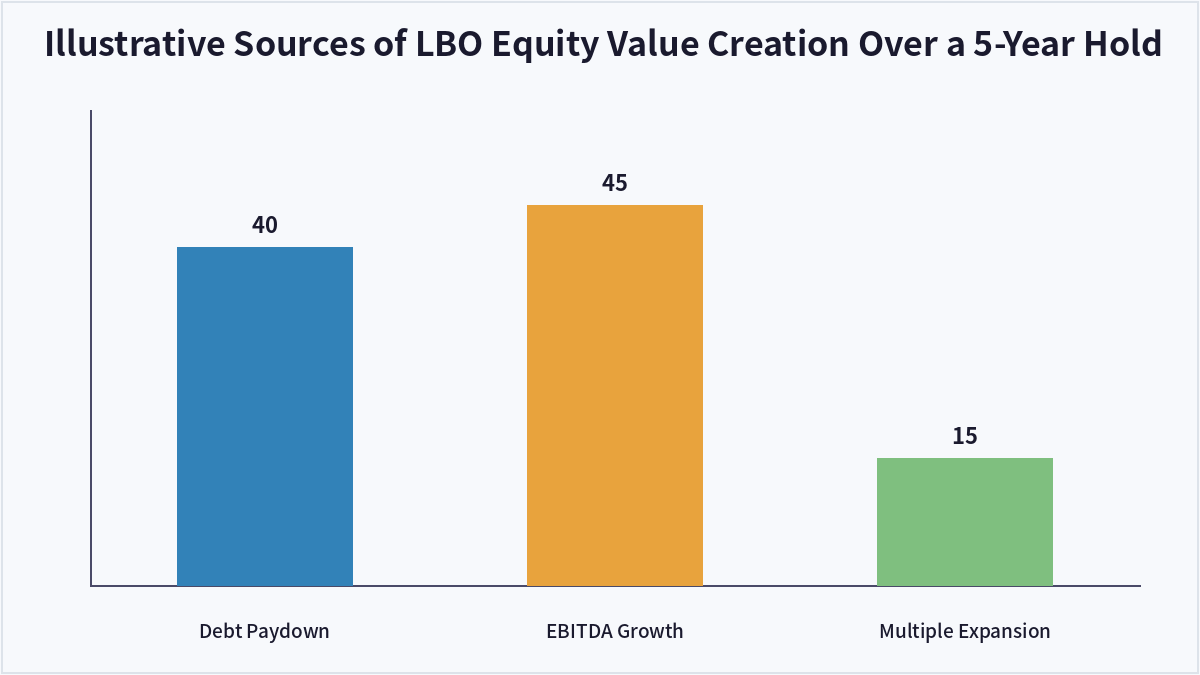
Debt Paydown
Using the target company’s own cash flow to steadily pay down acquisition debt over the holding period builds equity value even if the company’s overall enterprise value never changes.
EBITDA Growth
Operational improvements, revenue growth initiatives, and margin expansion increase the company’s EBITDA, directly increasing enterprise value at whatever valuation multiple the market applies.
Multiple Expansion
Selling the company later at a higher EV/EBITDA multiple than was paid at entry can add further equity value, though this lever is generally considered the least reliable of the three, since it depends on market conditions outside the sponsor’s control.
Risks of Leveraged Buyouts
The heavy debt load that makes LBOs work also makes them risky: if the target’s cash flows falter, its interest coverage ratio can deteriorate quickly, raising the risk of default or bankruptcy. Economic downturns tend to be especially damaging to highly leveraged companies, since fixed debt service obligations don’t shrink along with a slowing business.
Frequently Asked Questions
Who typically executes leveraged buyouts?
Private equity firms are the most common acquirers in LBOs, though management teams (management buyouts) and, occasionally, corporations pursuing strategic acquisitions can also use leveraged structures.
What happens to the target company’s existing shareholders in an LBO?
Existing public shareholders are typically bought out entirely, receiving cash (often at a premium to the pre-deal share price) in exchange for their shares, after which the company is taken private.
Why is EBITDA so important in LBO analysis?
EBITDA serves as a proxy for the cash flow available to service acquisition debt, and it is the standard basis for the valuation multiples used to price the deal at both entry and exit, making it central to both the financing and the return calculation.
Can an LBO fail, and what happens if it does?
Yes. If the target company cannot generate enough cash flow to service its debt — due to poor operating performance, an economic downturn, or overly aggressive leverage at the outset — it can default, potentially resulting in bankruptcy or a debt restructuring that wipes out some or all of the sponsor’s equity.
Key Takeaways
A leveraged buyout uses substantial borrowed capital to acquire a company, with returns typically built from debt paydown, EBITDA growth, and, to a lesser extent, multiple expansion at exit. That same leverage that amplifies returns also raises the risk of financial distress if the target’s cash flows weaken. This article is for informational purposes only and does not constitute investment advice.

QuantPro: AI Finds the Trade Before You Do
From AI-powered chart analysis to real-time market intelligence — everything a serious investor needs, in one platform.
- Automated AI chart analysis with precision trend timing
- Bull Radar: real-time visualization of geopolitical & economic shifts
- Live market-moving news and insights, curated for you
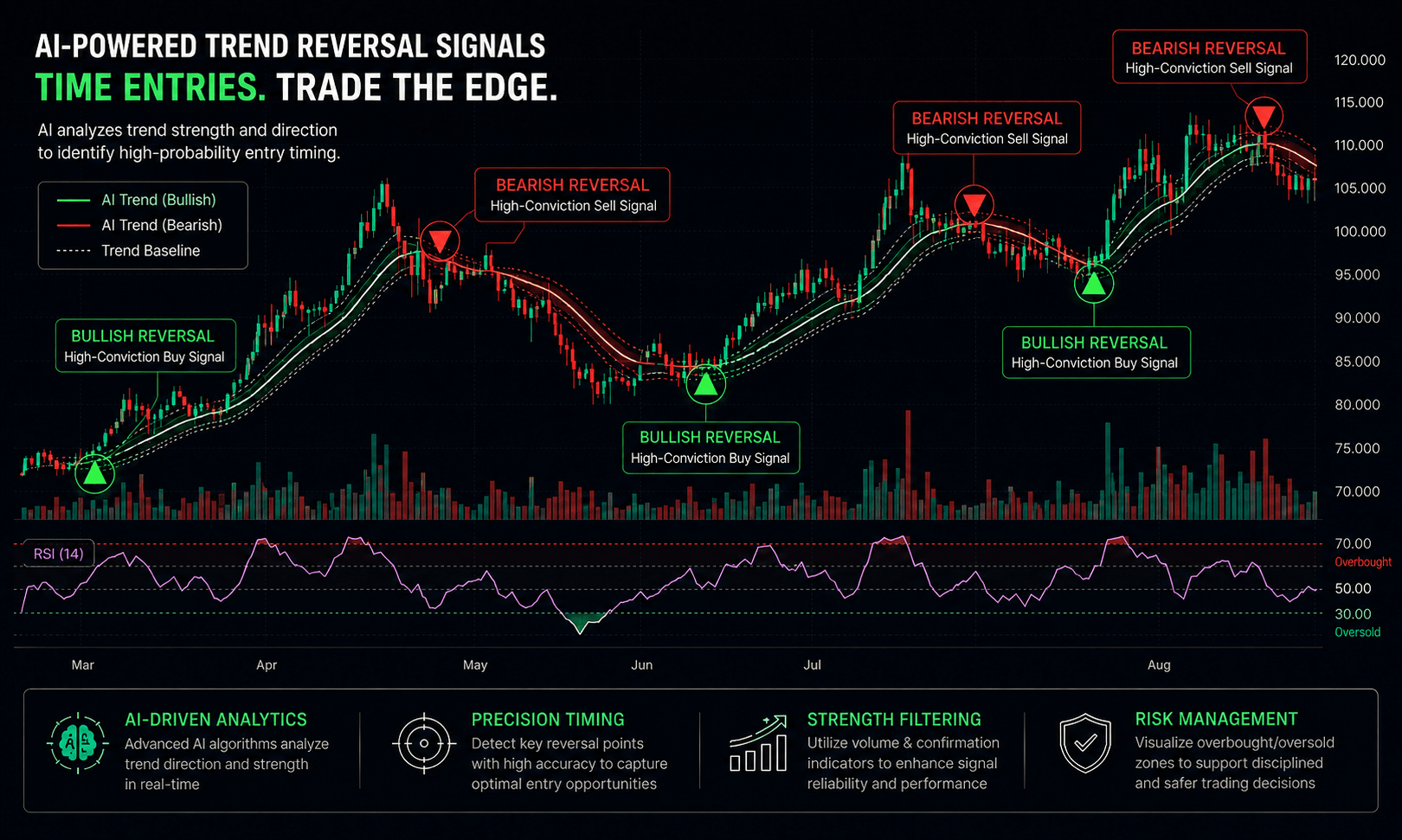
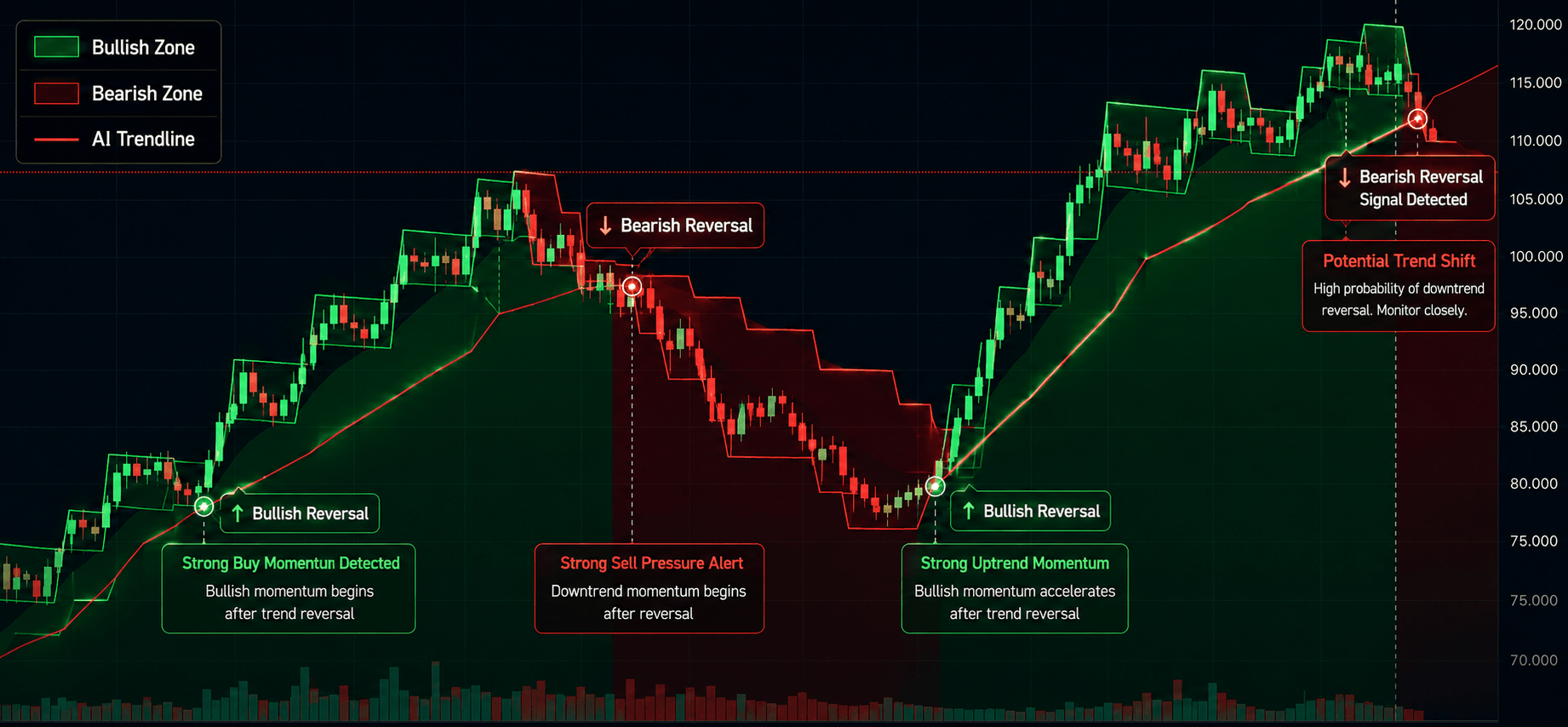
Bull Wave / Bear Wave Forecast Model
Engineered to help you read market direction and momentum faster than the crowd.
- Instantly separate bullish momentum from bearish pressure
- Pinpoint high-probability entry zones with confidence
- Chart signals clear enough for beginners, sharp enough for pros
Winning Pattern Detection
Instantly surfaces the high-probability setups that repeat across the charts — a trusted edge for timing your entries and exits.
- Spot momentum building in real time
- Catch trend-reversal points before they break
- Built for active traders who need results, not theory

AI Live Economic Dashboard
AI analyzes real-time market data — turning complex, global investment flows into clear insight in seconds.
- Track global stock markets in real time
- See exactly which assets are strong — and which are fading
- Watch how geopolitical events move the markets
About the Author