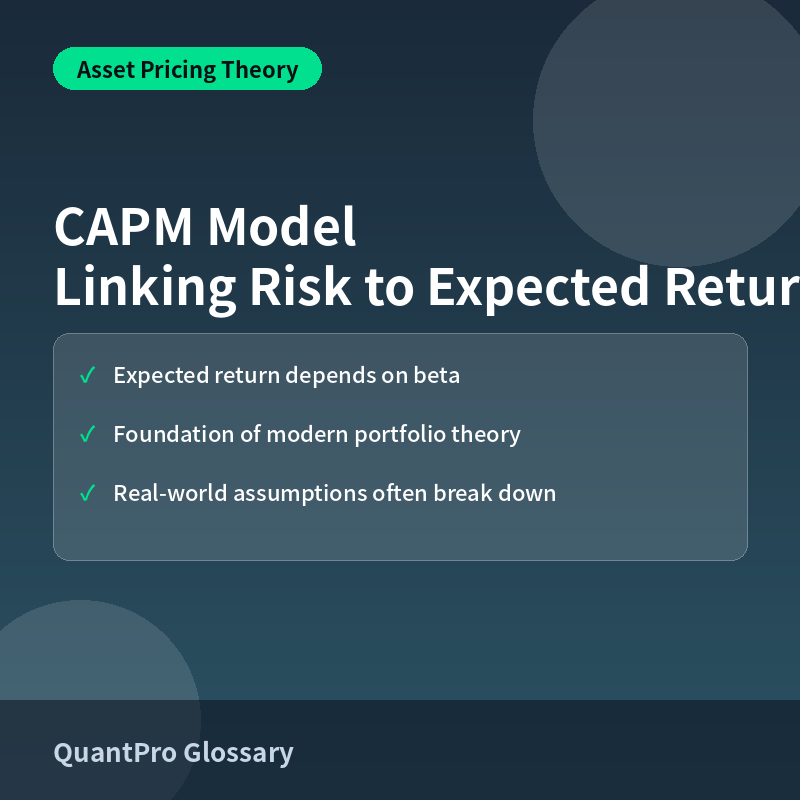
What Is the CAPM Model?
The Capital Asset Pricing Model (CAPM) is a foundational financial theory that describes the relationship between an asset’s systematic (market) risk and its expected rate of return. Developed in the 1960s, it provides a formula for calculating the return investors should theoretically require to compensate them for taking on a given level of non-diversifiable market risk, relative to a risk-free investment.
The CAPM Formula
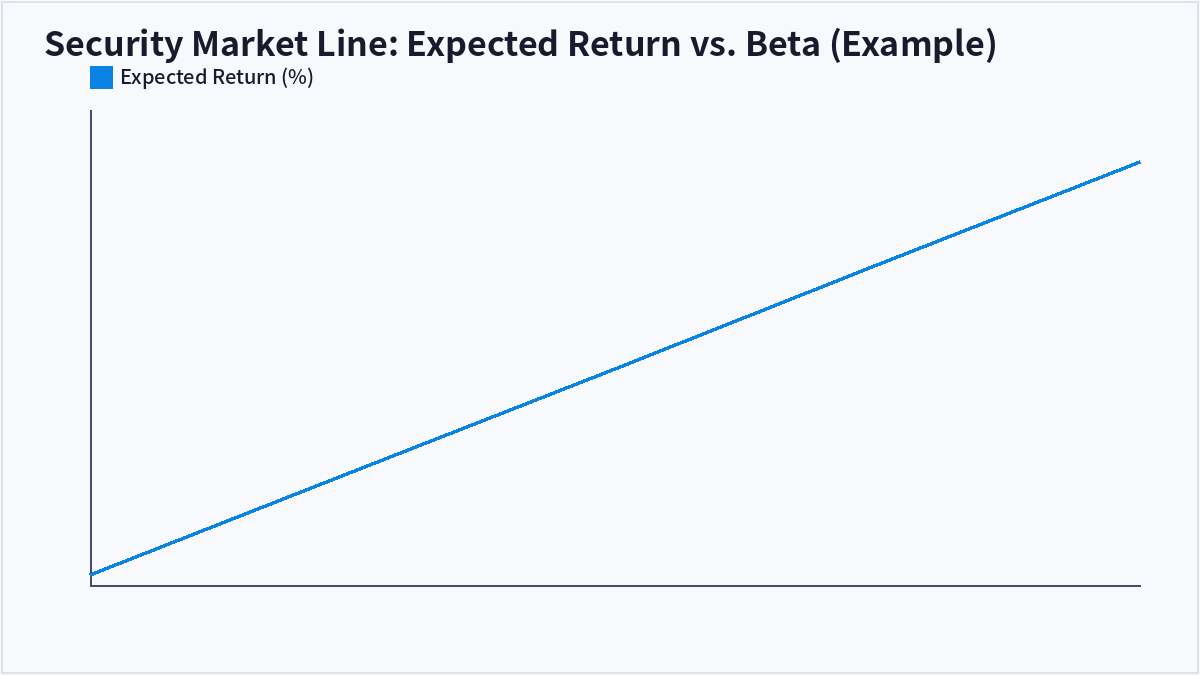
The formula is expressed as: Expected Return = Risk-Free Rate + Beta × (Market Return − Risk-Free Rate). Beta measures a stock’s sensitivity to overall market movements — a beta of 1.5 implies the stock tends to move 50% more than the market in either direction. The formula essentially states that riskier stocks (higher beta) should be expected to deliver higher returns to compensate investors for that additional risk.
Why CAPM Remains Influential — and Its Limitations
Foundation for Modern Portfolio Theory
Despite its limitations, CAPM remains deeply embedded in financial practice, forming the theoretical basis for calculating a company’s cost of equity in corporate finance, and providing the conceptual framework (beta) that underlies the alpha calculation discussed elsewhere in this glossary.
Real-World Assumptions Often Don’t Hold
CAPM relies on several simplifying assumptions — such as investors being perfectly rational, markets being fully efficient, and the ability to borrow and lend freely at a single risk-free rate — that don’t perfectly reflect real-world market conditions, leading many researchers to develop more complex multi-factor models as extensions or alternatives.
| Component | What It Represents | Example |
|---|---|---|
| Risk-Free Rate | Return with zero risk | Government treasury yield |
| Beta | Sensitivity to market movements | 1.5 = 50% more volatile than market |
| Market Risk Premium | Extra return for taking market risk | Market return minus risk-free rate |
Frequently Asked Questions
Is CAPM still used in practice today?
Yes, despite its known limitations, CAPM remains widely used in corporate finance and valuation work, often serving as a practical starting point that is sometimes supplemented with more sophisticated multi-factor models.
What does a beta of less than 1 mean?
A beta below 1 indicates the stock has historically been less volatile than the overall market, meaning CAPM would predict a lower required expected return compared to the broader market, all else being equal.
How is CAPM different from the Fama-French three-factor model?
The Fama-French model extends CAPM by adding two additional factors — company size and value characteristics — based on academic research showing these factors help explain return differences that beta alone does not fully capture.
Can CAPM be used for individual stock investment decisions?
While CAPM offers a useful conceptual framework for understanding the risk-return relationship, many practitioners view it as too simplified for precise individual stock selection and prefer to combine it with other fundamental and quantitative analysis.
Key Takeaways
The CAPM model links an asset’s expected return to its systematic risk (beta) relative to the overall market, forming a foundational framework in modern finance. While its simplifying assumptions limit its real-world precision, it remains widely used as a starting point for estimating required returns. This article is for informational purposes only and does not constitute investment advice.

QuantPro: AI Finds the Trade Before You Do
From AI-powered chart analysis to real-time market intelligence — everything a serious investor needs, in one platform.
- Automated AI chart analysis with precision trend timing
- Bull Radar: real-time visualization of geopolitical & economic shifts
- Live market-moving news and insights, curated for you
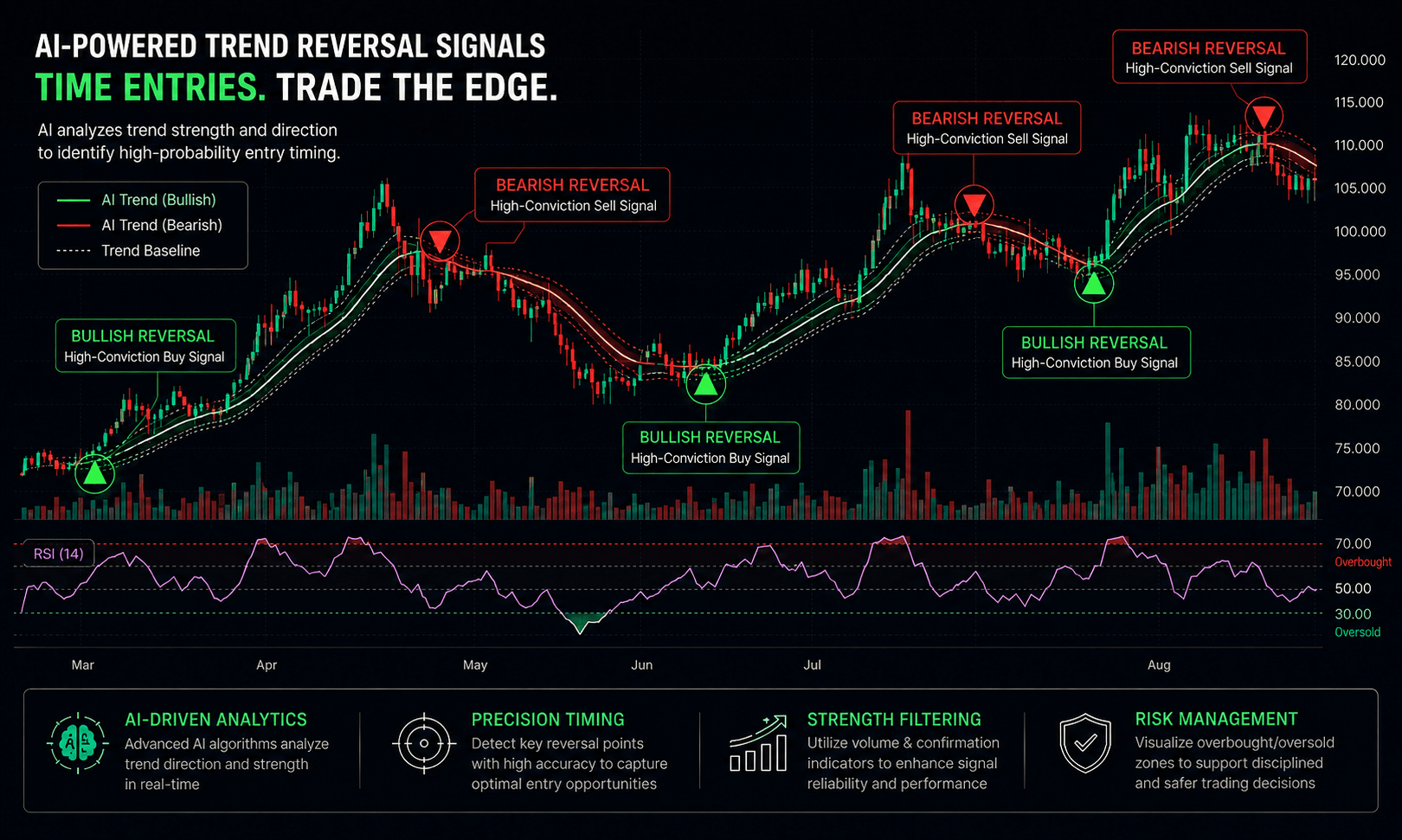
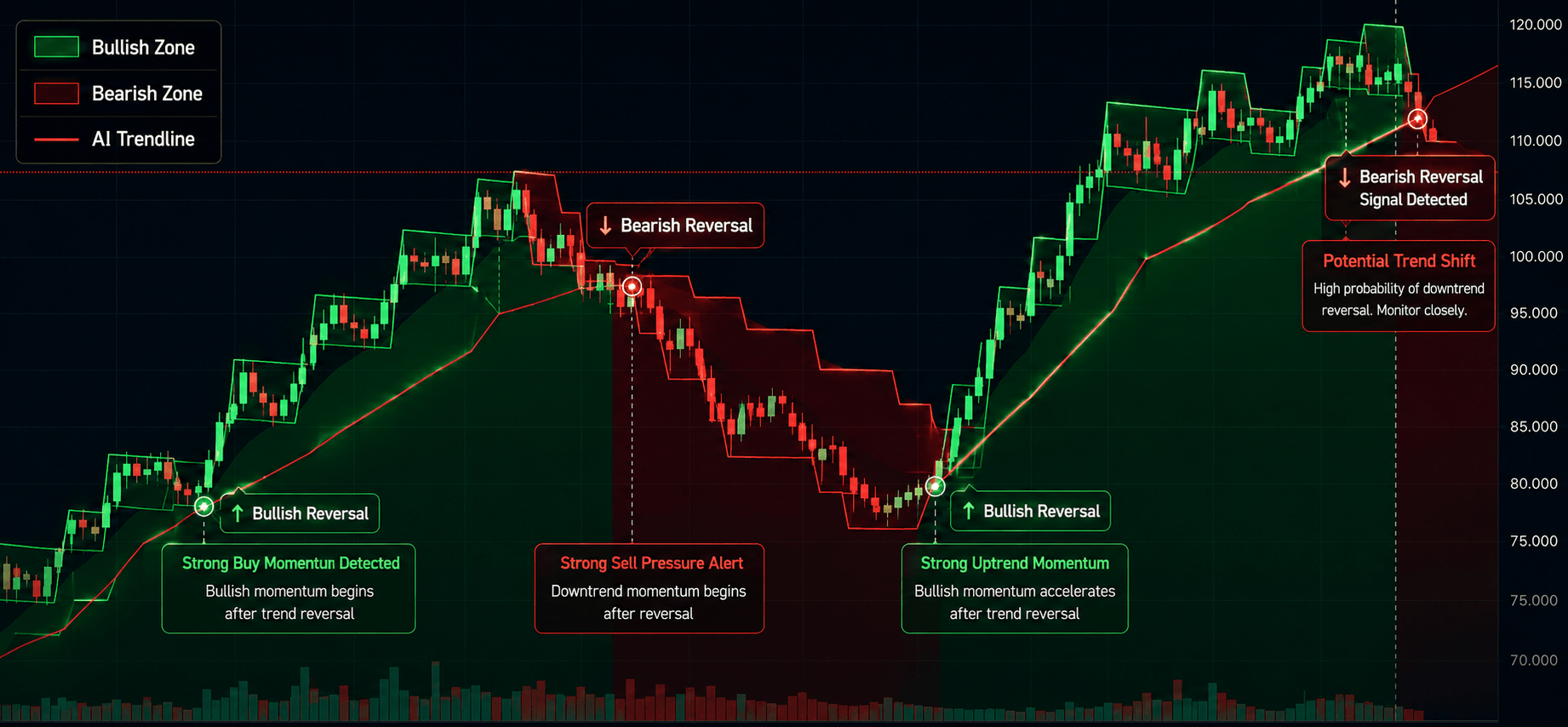
Bull Wave / Bear Wave Forecast Model
Engineered to help you read market direction and momentum faster than the crowd.
- Instantly separate bullish momentum from bearish pressure
- Pinpoint high-probability entry zones with confidence
- Chart signals clear enough for beginners, sharp enough for pros
Winning Pattern Detection
Instantly surfaces the high-probability setups that repeat across the charts — a trusted edge for timing your entries and exits.
- Spot momentum building in real time
- Catch trend-reversal points before they break
- Built for active traders who need results, not theory

AI Live Economic Dashboard
AI analyzes real-time market data — turning complex, global investment flows into clear insight in seconds.
- Track global stock markets in real time
- See exactly which assets are strong — and which are fading
- Watch how geopolitical events move the markets
About the Author