What Is a Mortgage-Backed Security?
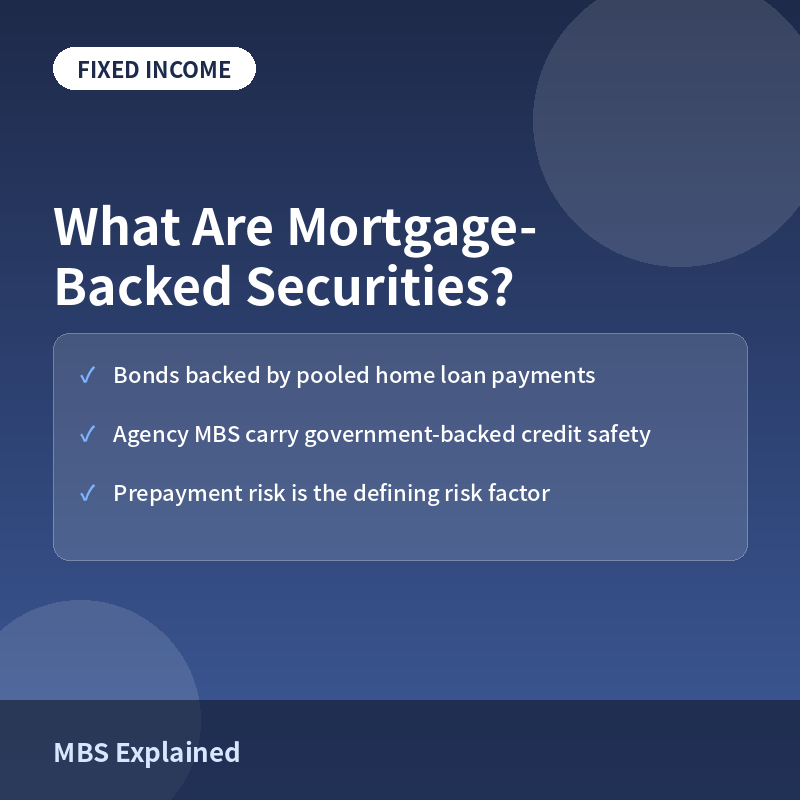
A mortgage-backed security (MBS) is a bond backed by a pool of home loans. Instead of receiving a fixed coupon from a single borrower, MBS investors receive a share of the principal and interest payments made by all the homeowners in the underlying mortgage pool. These securities are created through a process called securitization.
How Mortgage-Backed Securities Are Created
Lenders originate individual home mortgages, which are then pooled together and sold to an issuer — either a government-sponsored entity like Ginnie Mae, Fannie Mae, or Freddie Mac, or a private financial institution. The issuer packages the pooled loans into securities, such as simple pass-through certificates or more complex collateralized mortgage obligations (CMOs), and sells them to investors.
Agency vs. Non-Agency MBS
| Feature | Agency MBS | Non-Agency (Private-Label) MBS |
|---|---|---|
| Issuer | Ginnie Mae, Fannie Mae, Freddie Mac | Private banks and institutions |
| Credit backing | Government guarantee (explicit or implied) | No government guarantee |
| Credit risk | Very low | Varies, can be significant |
| Typical yield | Lower, reflecting the safety | Higher, reflecting the added risk |
Prepayment Risk — the Defining Risk of MBS
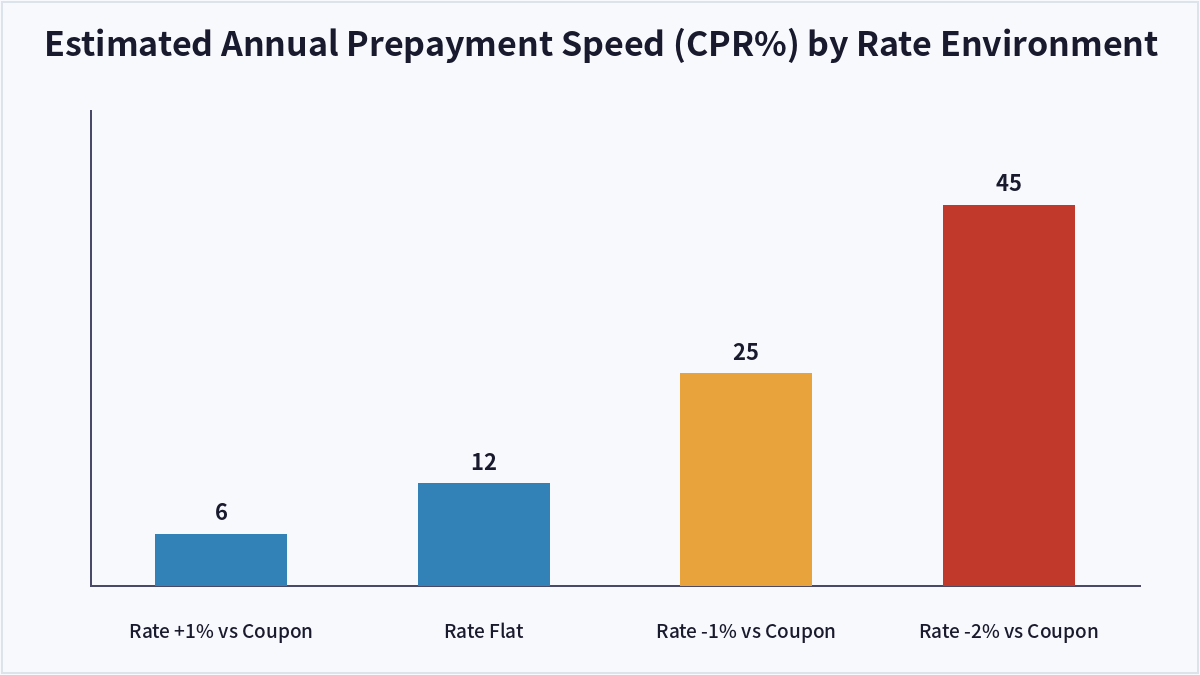
Unlike most corporate or government bonds, MBS carry prepayment risk: homeowners can pay off their loans early, most commonly by refinancing when rates fall, returning investors’ principal ahead of schedule and forcing reinvestment at the new, lower rates. Consider a pool of mortgages carrying a 6% coupon, issued when market rates were also near 6%. If rates later fall 2% below that coupon, a wave of refinancing can push the pool’s annual prepayment speed from roughly 12% up toward 45%, sharply shortening the security’s expected average life at exactly the moment reinvestment options look worst — a dynamic known as negative convexity.
Why Investors Hold MBS
Despite prepayment risk, MBS remain attractive to many fixed-income investors for the yield pickup they typically offer over comparable Treasuries, the diversification they add to a bond portfolio, and the deep liquidity of the agency MBS market, one of the largest bond markets in the world.
Frequently Asked Questions
Are mortgage-backed securities safe investments?
It depends heavily on the type. Agency MBS carry very low credit risk due to government backing, though they still carry interest rate and prepayment risk. Non-agency MBS can carry substantial credit risk, since there is no government guarantee if underlying borrowers default.
What role did MBS play in the 2008 financial crisis?
Large volumes of non-agency MBS backed by lower-quality (subprime) mortgages were rated far more safely than their underlying loans justified. When those loans began defaulting in large numbers, the resulting losses cascaded through the securities and the institutions holding them, contributing significantly to the 2008 crisis.
What is prepayment risk in simple terms?
It’s the risk that homeowners pay off their mortgages earlier than expected, most often by refinancing when rates drop, which returns investors’ capital sooner than planned and often forces them to reinvest at lower prevailing rates.
Can individual investors buy MBS directly?
Yes, though many retail investors gain exposure more easily through MBS-focused mutual funds or ETFs, which offer diversification across many pools and professional management of prepayment and interest rate risk.
Key Takeaways
Mortgage-backed securities turn pools of home loans into tradable bonds, offering investors yield and diversification in exchange for taking on prepayment risk — the chance that falling rates trigger early payoffs. Agency MBS carry government-backed credit safety, while non-agency MBS require closer credit scrutiny. This article is for informational purposes only and does not constitute investment advice.

QuantPro: AI Finds the Trade Before You Do
From AI-powered chart analysis to real-time market intelligence — everything a serious investor needs, in one platform.
- Automated AI chart analysis with precision trend timing
- Bull Radar: real-time visualization of geopolitical & economic shifts
- Live market-moving news and insights, curated for you
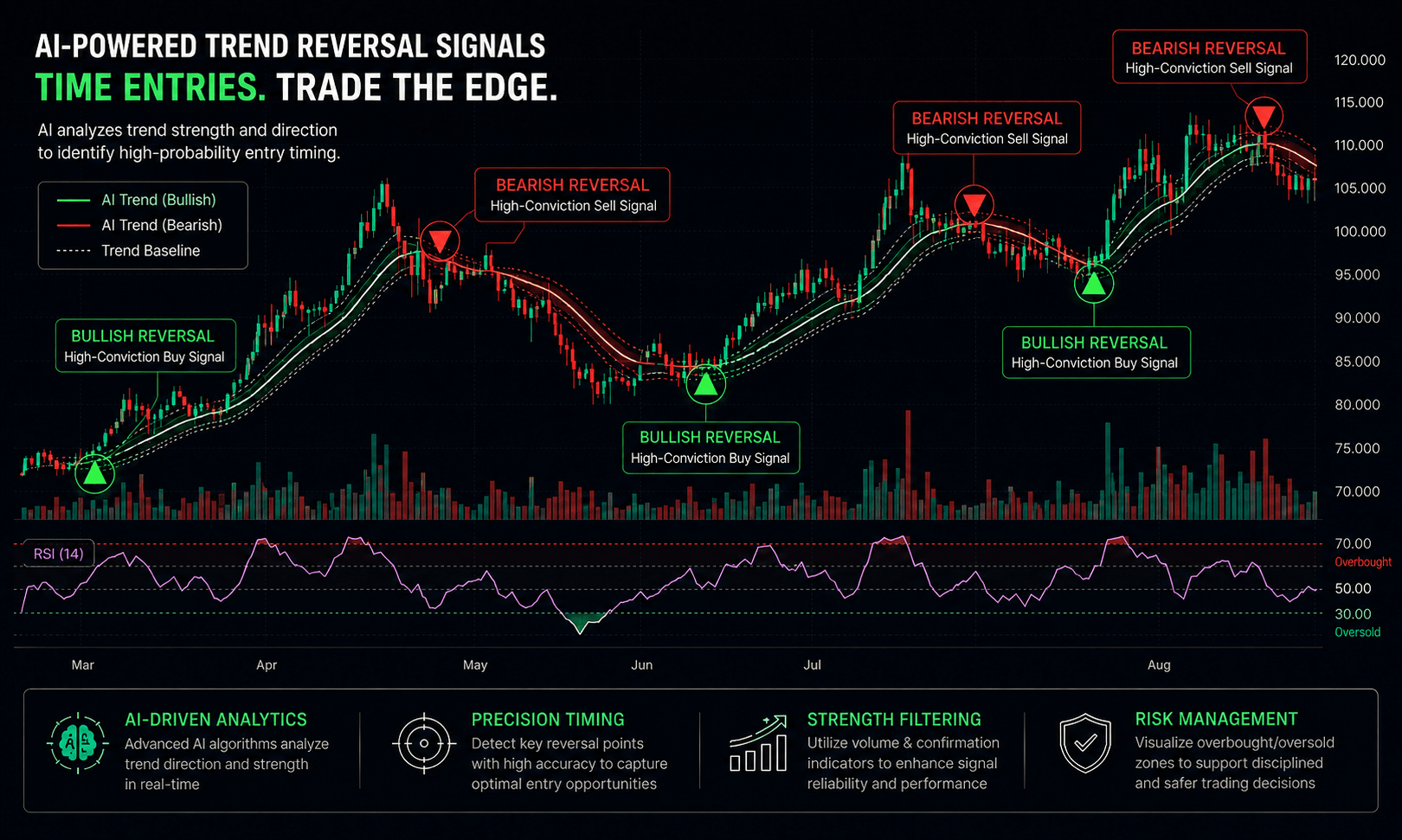
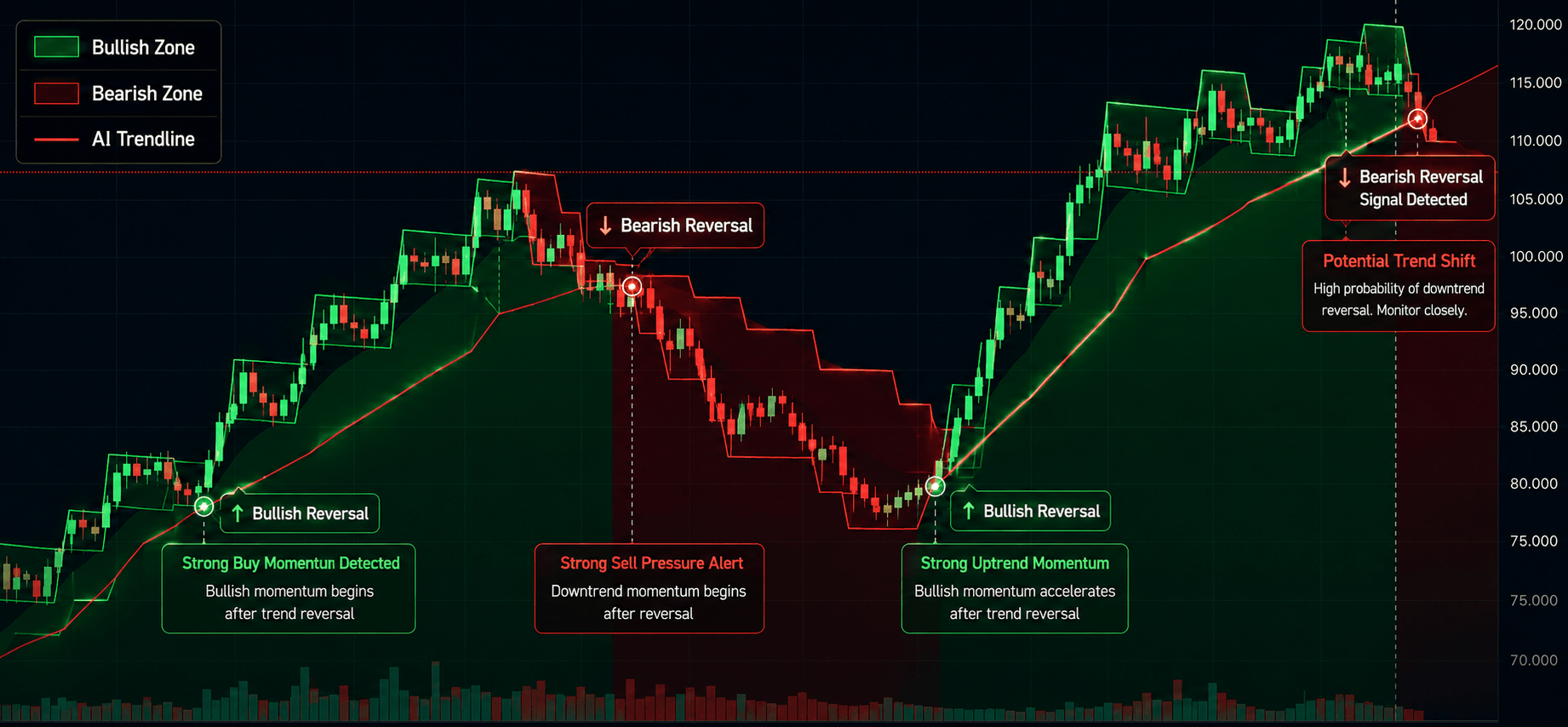
Bull Wave / Bear Wave Forecast Model
Engineered to help you read market direction and momentum faster than the crowd.
- Instantly separate bullish momentum from bearish pressure
- Pinpoint high-probability entry zones with confidence
- Chart signals clear enough for beginners, sharp enough for pros
Winning Pattern Detection
Instantly surfaces the high-probability setups that repeat across the charts — a trusted edge for timing your entries and exits.
- Spot momentum building in real time
- Catch trend-reversal points before they break
- Built for active traders who need results, not theory

AI Live Economic Dashboard
AI analyzes real-time market data — turning complex, global investment flows into clear insight in seconds.
- Track global stock markets in real time
- See exactly which assets are strong — and which are fading
- Watch how geopolitical events move the markets
About the Author